
Real flicker and supplemental heat, no venting required in Saline County.
With winter lows averaging 19°F and a long seven-month heating season, Saline County gets a genuine four-season heating load, but not every room here has a chimney or a gas line to tap. An electric fireplace plugs into what you already have. I'll match you with a trusted local dealer who knows which units need a dedicated circuit and which don't.
Every Project Starts From One of These Five Situations
A practical fit for farmhouses, additions, and oak-and-hickory country.
Saline County sits along the Missouri River bottomlands between Marshall, Slater, Sweet Springs, and Malta Bend, with historic Arrow Rock anchoring the county's older housing stock. Climate zone 4A and a solid seven-month heating season mean the county has a real, sustained heating season—milder than the northern Plains around Fargo, ND, but cold enough that supplemental heat in bedrooms, additions, and finished basements is a genuine need, not a novelty. Oak, hickory, walnut, and maple grow throughout the county and still fuel plenty of primary wood heat in rural households, but a lot of Saline County's housing—manufactured homes outside Marshall, rental properties in Slater, and additions built without a flue in mind—simply has no chimney to work with.
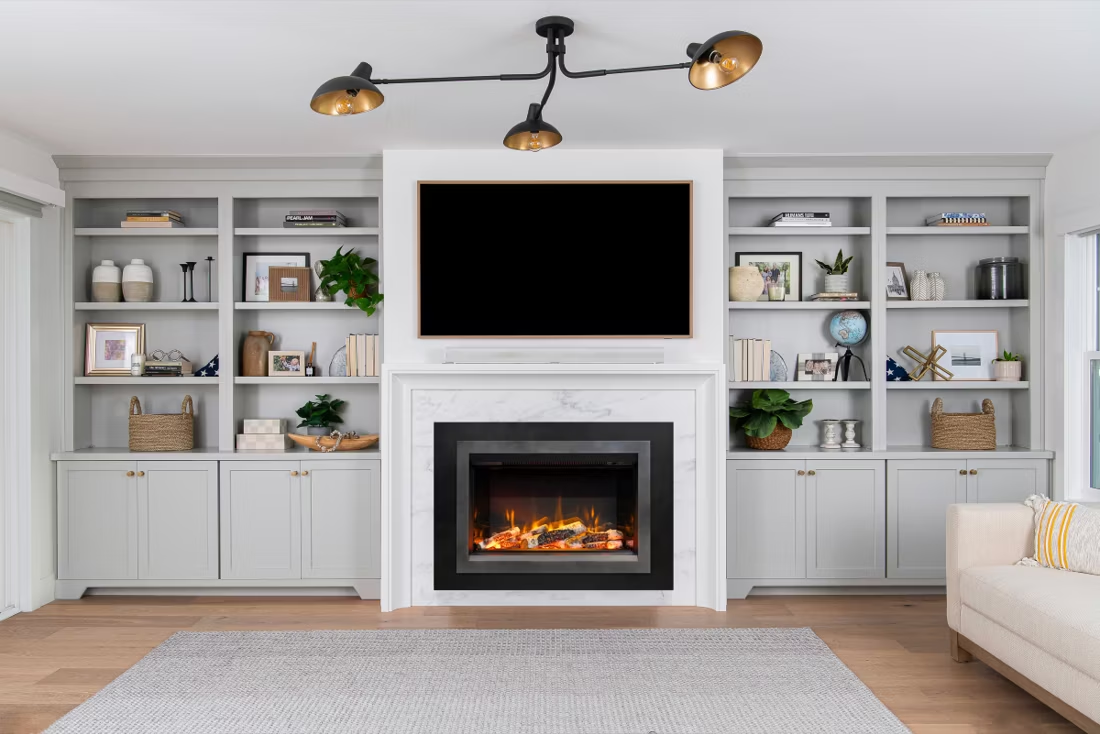
That's where electric fireplaces do their best work. A plug-in unit needs nothing more than a standard outlet and clears the room in minutes on cold mornings; a built-in electric insert or wall unit gives a farmhouse living room real flame-effect ambiance and 1,500-watt heat output without opening up a wall for gas line or venting. They're also a sensible answer for older Arrow Rock-era homes where the original masonry chimney has gone unused for decades and a full flue relining isn't worth the cost for occasional supplemental heat. No combustion means no carbon monoxide risk and no insurance flag for an open flame, which matters for landlords and older homeowners across the county alike.
Three steps. No salesperson until you're ready.
Tell us about your project
Your zip code, your situation, and the fuel you're leaning toward—or let the answers point you to one.
See what's actually available
The brands dealers within 100 miles genuinely carry—real options, never a catalog mirage.
Get your dealer & Project Guide
A trusted local dealer, plus the free Project Guide & Parts List that names every component of the job.
Frequently Asked Questions
How much does an electric fireplace installation cost in Saline County?
A plug-in electric fireplace or insert that uses an existing standard outlet typically runs $300 to $1,200 installed, including the unit and any surround or mantel work. A built-in wall unit or a larger insert that draws enough wattage to need its own dedicated 20-amp circuit runs higher, generally $1,500 to $3,000, once an electrician is brought in to run new wiring—a common scenario in older farmhouses around Slater or Gilliam where the existing panel wasn't built for a high-draw appliance. Getting a firm number usually comes down to whether your electrical panel already has room and how far the unit sits from it.
Do I need a permit to install an electric fireplace in Saline County?
A simple plug-in unit generally doesn't trigger a permit since there's no new wiring or gas work involved. If you're adding a built-in unit that requires a new dedicated circuit, that electrical work typically does need a permit and inspection—through the City of Marshall Building Department if you're inside city limits, or through Saline County if you're in unincorporated territory. A licensed electrician handling the circuit work will usually pull that permit as part of the job, which is one reason to route a built-in install through a full-service dealer rather than a DIY outlet swap.
Can I replace an old wood-burning fireplace with an electric insert?
Yes, and it's a common project in Saline County's older housing stock, particularly historic homes around Arrow Rock and Marshall where the original masonry chimney hasn't been used in years and a full liner replacement isn't worth the cost. An electric insert slides into the existing firebox opening, uses the mantel and surround you already have, and needs only a nearby outlet or a short electrical run—no chimney sweep, no flue repair, no creosote to manage. It's a fast way to get the look of a working fireplace back without touching the masonry.
How much does it cost to run an electric fireplace through a Saline County winter?
Most electric fireplaces run 1,000 to 1,500 watts on the heat setting, and running one for a few hours a day as supplemental heat in a bedroom or den adds a modest amount to a monthly bill rather than a dramatic one. Saline County's rural areas are often served by electric cooperatives rather than a single investor-owned utility, so your actual rate per kilowatt-hour varies by provider—check your bill's rate before assuming a specific dollar figure. Most homeowners here use electric heat as a supplement to a primary wood, propane, or gas system rather than as the whole-house solution, which keeps the running cost manageable even through a long, seven-month winter.
What size electric fireplace do I need?
Electric units are usually rated by heat output for a specific room size rather than the whole house—most models comfortably heat 400 to 1,000 square feet, which covers a bedroom, den, or open living area in a typical Saline County home. If you're installing in a larger farmhouse living room or an open-concept addition, size up or plan on the unit as pure ambiance with your existing furnace or wood stove carrying the real heat load. A local dealer can walk the room and confirm before you buy rather than guessing off a box label.
Electric vs. wood—which makes more sense for my Saline County home?
Wood—burned as oak, hickory, walnut, or maple, all common in county woodlots—remains the lower-cost choice for serious heat output and works with no power at all, which matters when winter storms knock out rural lines. Electric can't compete on raw heat-per-dollar or off-grid reliability, but it wins on convenience: no splitting, stacking, ash cleanup, or chimney maintenance, and it installs in rooms with no flue whatsoever. A lot of Saline County households end up running both—wood or a stove as primary heat in the main living space, electric in a bedroom, basement, or addition where running a chimney was never practical.
Electric vs. pellet stove—which is the better fit?
A pellet stove from a regional brand like Lignetics or Indeck Energy Services delivers meaningfully more heat output and can serve as a genuine primary or backup heat source, but it needs venting, a hopper to refill, and electricity to run its auger and blower—so it still goes dark in a power outage unless you add a battery backup. An electric fireplace needs none of that: no venting, no fuel storage, no moving parts to maintain, just less raw heat. For a supplemental room or a rental property in Marshall or Sweet Springs, electric is usually the simpler call; for a household wanting pellet as a real furnace substitute, that's a different project entirely.
Is an electric fireplace a good fit for a manufactured or rental home in Saline County?
Yes—it's one of the more common reasons homeowners in the county's manufactured and rental housing look at electric units. There's no chimney or gas line to install or maintain, no open flame for a landlord to worry about from an insurance standpoint, and most plug-in models are designed to sit flush against a wall without any structural modification. For manufactured homes outside Marshall or Slater where adding a masonry chimney was never realistic, an electric fireplace is often the only fireplace-style option that makes practical sense.
How much maintenance does an electric fireplace need?
Very little compared to a wood or gas unit—there's no chimney to sweep, no gas line to inspect, and no combustion byproducts to manage. Periodically dust the heater vents and wipe down the glass or screen, and check that the flame-effect bulb or LED module still functions since that's usually the first component to need replacement after several years of daily use. Most quality units run 10 or more years with essentially no service calls, which is part of the appeal for a supplemental unit in a room you don't want to think about twice a year.
Can I put a TV above my fireplace?
Yes—with an asterisk. Fireplaces are hot and TVs don't like heat. Either put a mantel between them to deflect rising warmth, or choose a fireplace with heat-management technology that creates a cool zone on the wall above—the wall stays around 125 degrees, barely warm, while the room still gets full heat. If you like clean lines and don't want a mantel, heat management is the answer.
Does an electric fireplace need a vent or chimney?
No—that's its superpower. An electric fireplace needs a wall and an outlet, period. No vent pipe, no gas line, no clearances to design around, which is why it works in bedrooms, offices, apartments, and walls where venting a gas or wood unit would be impractical or impossible. Installation is typically the simplest and least expensive of any fireplace type.
Can I install a fireplace myself?
If you're putting a fire in your house on purpose, it's best to work with an expert. Unless you're genuinely experienced in framing, gas line, vent pipe, and the national code on clearances to combustibles, have a professional do it—and ideally the same company that sells you the fireplace, so warranty, service, and liability all live under one roof.
Can a fireplace actually lower my heating bill?
Yes—by creating a comfort zone. A furnace heats every square foot of the house just to warm the one room you're in; a gas fireplace on low burns roughly a sixth of the gas a typical furnace does. Set the furnace around 55–60 degrees as a baseline, then heat the rooms your family actually uses. Families who heat this way commonly save $20–$60 a month.
Stove and Fireplace Dealers in Saline County
Get your free Project Guide & Parts List for an electric fireplace in Saline County.
Tell me about your room, your electrical panel, and how you want to use the fireplace, and I'll match you with a trusted local dealer and send over a free Project Guide & Parts List—the right unit, any wiring your electrician needs to know about, and a recommended local installer for your Saline County project.
Find Your Fireplace →