
Steady, low-maintenance heat for Ripley County's Ozark winters.
From Doniphan to the Current River valley, pellet stoves give Ripley County homeowners real heat without the cordwood work. Find the right unit and get matched with a trusted local dealer.
Every Project Starts From One of These Five Situations
Consistent heat without cutting, hauling, or splitting wood.
Ripley County sits in the Ozark foothills of southeastern Missouri, cut through by the Current River, with Doniphan as the county seat and a population just over 3,093 spread across mostly rural terrain. At climate zone 4A with a winter heating season on par with places like Springfield or Columbia, Missouri, and an average winter low of 24 degrees, the county's winters are real but comparatively mild—noticeably gentler than Madison, WI or Minneapolis, where the heating season runs nearly twice as long. That still means a solid five months of heating season, and it's long enough that homeowners are looking for something more consistent than tending a firebox every few hours.
The Ozark hills around Ripley County are thick with oak, hickory, walnut, and maple, and plenty of longtime residents still burn cordwood cut from their own land. Pellet stoves have found a real niche alongside that tradition—they appeal to homeowners who want the radiant warmth of a wood-burning appliance without splitting and stacking, to owners of Current River cabins and weekend places who want a low-fuss heat source, and to anyone downsizing from a full wood-burning setup. Hardwood pellets from producers like Lignetics and Indeck Energy Services are readily available in the region, and with no local air quality restrictions or burn curtailment periods on the books here, there's nothing standing between a homeowner and a hopper full of fuel.
Three steps. No salesperson until you're ready.
Tell us about your project
Your zip code, your situation, and the fuel you're leaning toward—or let the answers point you to one.
See what's actually available
The brands dealers within 100 miles genuinely carry—real options, never a catalog mirage.
Get your dealer & Project Guide
A trusted local dealer, plus the free Project Guide & Parts List that names every component of the job.
Frequently Asked Questions
How much does a pellet stove installation cost in Ripley County?
Most pellet stove installations in this part of the Ozarks run in the $3,000 to $6,000 range once you factor in the unit, a code-compliant hearth pad, and the vent kit that runs through an exterior wall or existing chimney chase. Pellet inserts that slide into an existing masonry fireplace tend to land toward the lower end since the chimney chase is already framed. Homes on acreage outside Doniphan or further out toward the county line may see a modest travel charge added by installers covering the wider rural service area. A local dealer will give you a firm number after seeing your home.
What size pellet stove do I need for my Ripley County home?
Ripley County's winter lows average around 24 degrees, which is a moderate cold-climate load compared to the upper Midwest, so most single-family homes here do fine with a stove rated for 1,000 to 1,800 square feet as a primary or near-primary heat source. Older farmhouses and cabins near the Current River with less insulation often need to size up slightly, while newer, tighter-built homes in and around Doniphan can often get by with a smaller unit. A local dealer will walk your floor plan and ceiling height before recommending a model—oversizing a pellet stove wastes fuel just as much as undersizing leaves you cold on the harder nights.
Where can I find certified pellet stove installers near me?
Look for installers with NFI (National Fireplace Institute) certification, which covers proper hearth clearance, vent sizing, and code compliance for hopper-fed appliances. Given Ripley County's small population and rural footprint, most installers cover a wide service radius out of Doniphan or nearby Poplar Bluff, so expect a short travel fee for jobs further out in the county. Working with a certified dealer rather than a general handyman matters here—improper vent termination on a pellet unit is one of the more common causes of nuisance smoke complaints and warranty denials.
What's the difference between a pellet stove and a pellet insert?
A pellet stove is a freestanding unit that sits on a hearth pad and vents through a wall or existing chimney—it can go almost anywhere in the house with the right clearances. A pellet insert is built to slide into an existing masonry fireplace opening, which is a common upgrade for older Ripley County farmhouses that already have a wood-burning fireplace but want the lower-maintenance convenience of pellets. If you've got an existing hearth, an insert usually makes more sense than tearing it out for a freestanding stove.
Do I need a permit to install a pellet stove in Ripley County?
Yes, a building permit is generally required for a new pellet stove installation, handled through the Ripley County building department for work outside city limits or the city of Doniphan for in-town projects. Most established dealers pull this permit as part of the installation, so it's rarely something the homeowner has to manage directly. Unlike counties dealing with winter inversion or non-attainment air quality designations, Ripley County has no burn curtailment periods or seasonal restrictions on solid-fuel appliances, so once it's installed and inspected, there's no additional red tape to burning it.
What's the best pellet stove for Ripley County's climate?
For a climate zone 4A county with moderate winter lows around 24 degrees, most homeowners don't need the largest hopper capacity on the market—a mid-size stove with a 40-to-60-pound hopper is usually plenty, giving 24 to 40 hours of burn time between refills depending on the thermostat setting. Look for a model with a reliable auger feed system and an easy-clean burn pot, since ash removal is the main weekly maintenance task. Hardwood pellets from Lignetics or Indeck Energy Services burn cleanly and are the fuel most local dealers stock or can order, so confirming a stove's compatibility with those brands up front is worth asking about.
How often does a pellet stove need to be cleaned and serviced?
Plan on emptying the ash pan every few days during regular use and giving the burn pot a deeper clean weekly. A full professional service—checking the auger motor, exhaust fan, gaskets, and venting—is recommended once a year, ideally before the heating season starts in late fall. Because pellet stoves run on electric-powered augers and blowers, keep an eye on the exhaust vent for any blockage after a Current River flood season or heavy storm debris, since that's a more common issue here than in dry-climate regions.
Where can I buy pellets in Ripley County?
Hardwood pellets from regional producers like Lignetics and Indeck Energy Services are the most common bags found at farm and hardware stores serving Doniphan and the surrounding county, typically sold by the 40-pound bag or by the ton on pallets. Given the abundance of oak and hickory in the surrounding Ozark forests, hardwood-blend pellets tend to be the local standard rather than softwood pellets more common out West. Buying a season's supply in late summer, before demand picks up, is the usual local strategy for avoiding shortages.
Pellet stove vs. wood stove—which is right for my Ripley County home?
Wood stoves work without electricity, which matters during the ice storms and downed-line outages that hit rural parts of the county, and they pair naturally with the oak, hickory, walnut, and maple many landowners already have access to. Pellet stoves are more hands-off day to day—load the hopper, set the thermostat, and skip the splitting and stacking—but they need power to run the auger and blower, so a stove without a battery backup goes cold in an outage. For a full-time residence in town, pellet's convenience is hard to beat. For a cabin or acreage property where self-sufficiency and backup heat matter more, wood often makes more sense. Local dealers carry both and can help you weigh it against your specific property.
How often does a pellet stove need cleaning?
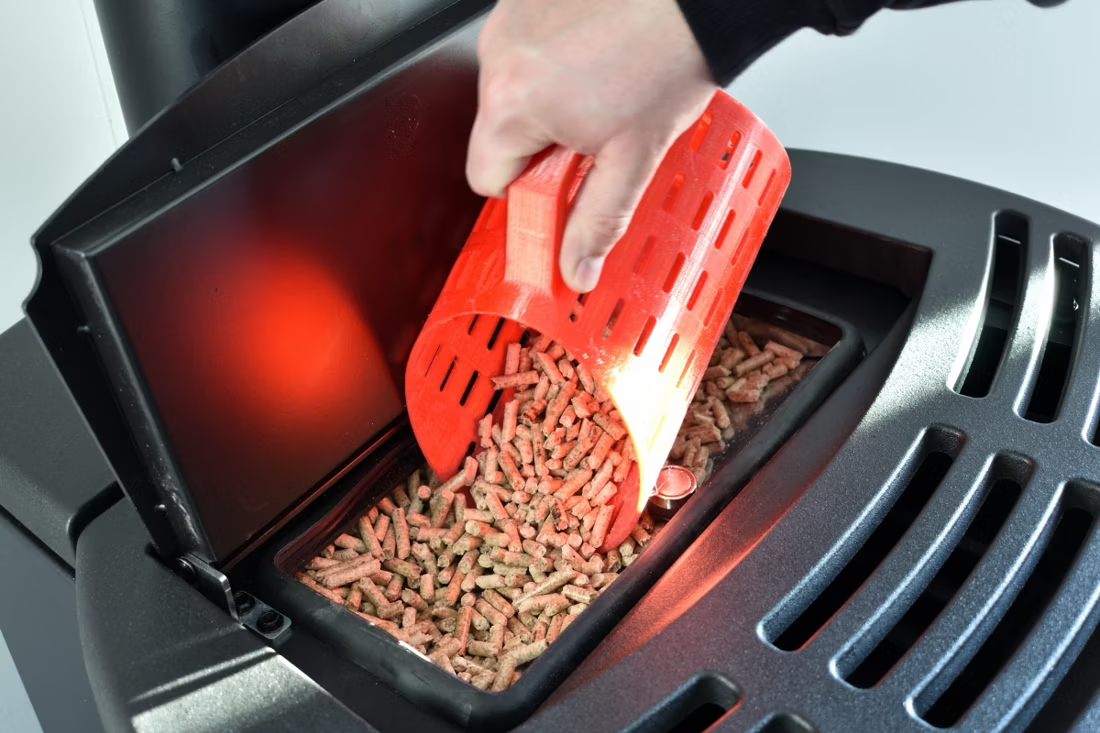
A clean pellet stove is a happy pellet stove. Plan on cleaning the burn pot about once a week when you're burning regularly—ash and clinkers gum up the air holes just like a pellet barbecue. Most pellet stove problems trace back to skipped cleaning that nobody explained up front. Some designs make it easy with a trapdoor burn pot: pull a lever and the gunk drops into the ash pan.
Why is a fireplace insert so efficient?
An insert does two things: it seals the chimney completely, so you stop losing air you already paid to heat, and it radiates warmth into the room through the firebox and glass. Most add a heat-exchange fan that pulls cool room air underneath, wraps it around the hot firebox, and pushes it back out warm. Your home is more efficient before you've even lit the first fire.
Can I install a fireplace myself?
If you're putting a fire in your house on purpose, it's best to work with an expert. Unless you're genuinely experienced in framing, gas line, vent pipe, and the national code on clearances to combustibles, have a professional do it—and ideally the same company that sells you the fireplace, so warranty, service, and liability all live under one roof.
What is an in-home preview and do I need one?
It's a visit where a hearth professional measures your space, confirms the model you picked actually works in your home, and walks the specs—framing, gas line, venting, finish work—before anything is ordered. Some details you just can't know until you see the house. Never make a down payment without one; it's the single most-skipped step that burns buyers.
Pellet Brands Stocked Around Ripley County
Manufacturers will point you to the nearest stocking dealer.
Find your pellet stove in Ripley County.
Tell us a bit about your home and we'll put together a free Project Guide & Parts List—the right pellet stove or insert, the vent kit it needs, and a trusted local dealer near Doniphan to install it.
Find Your Fireplace →