
Dependable gas heat for Ripley County's rural homes.
From Doniphan to the farms and cabins along the Current River, propane-fired gas heat means warmth at the flip of a switch—no wood splitting required. Find the right unit and get matched with a trusted local dealer.
Every Project Starts From One of These Five Situations
Convenient heat for a spread-out county.
Ripley County is home to just over 3,000 people spread across a wide stretch of the southern Missouri Ozarks, with Doniphan and the Current River at its center. Winters here aren't brutal by northern standards—average lows sit around 24°F and the county sees a solid, months-long stretch of cold weather each season—but that's still enough sustained cold, especially in older farmhouses and river cabins with drafty rooms, to make a reliable secondary heat source worth having beyond the furnace.
Because the county is so rural and lightly populated, natural gas mains don't reach most homes outside Doniphan's core—propane is the fuel that actually gets gas fireplaces running here, delivered by tank rather than piped from a utility. That tradeoff doesn't change what a gas fireplace or insert delivers: instant heat with no ash to haul, no wood to split (even though oak, hickory, and walnut are plentiful and popular for wood burning elsewhere in the county), and in many models, a way to keep a room warm even when an ice storm knocks out the power lines that serve this stretch of the Ozarks.
Three steps. No salesperson until you're ready.
Tell us about your project
Your zip code, your situation, and the fuel you're leaning toward—or let the answers point you to one.
See what's actually available
The brands dealers within 100 miles genuinely carry—real options, never a catalog mirage.
Get your dealer & Project Guide
A trusted local dealer, plus the free Project Guide & Parts List that names every component of the job.
Frequently Asked Questions
How much does a gas fireplace installation cost in Ripley County?
Most gas fireplace and insert installations in Ripley County run somewhere between $3,500 and $9,000, with the spread driven mainly by whether you already have a propane tank on the property, how much line work is needed to reach the unit, and whether you're installing into an existing masonry fireplace or building new. Homes without an existing propane tank should budget for tank installation or a lease agreement with a local propane supplier as a separate line item. A local dealer will walk your property and give you a firm number rather than a phone estimate—tank placement and line runs vary a lot on rural acreage.
Can I convert my existing wood fireplace to gas?
Yes, and it's a common project in a county full of older farmhouses with existing masonry fireplaces built for oak and hickory. A gas insert typically drops into that existing firebox, running a stainless liner up your current chimney, with a propane line routed from an outdoor tank. The look of the original fireplace stays, but you get instant on-off heat instead of tending a wood fire. Expect the conversion itself to land in a similar range to a standalone install—usually $4,000 to $8,500—depending on liner length and how far the tank sits from the house.
Is natural gas available in Ripley County, or is it all propane?
For nearly all of Ripley County, it's propane. Natural gas mains are limited even within Doniphan, and most homes throughout the rest of the county—including the farms and river properties along the Current—run on tank propane for cooking, water heating, and any gas-fired hearth appliance. That's not a downside for a gas fireplace; propane burns just as cleanly and most fireplace models sold today are convertible between the two fuels. Your local dealer will confirm what's practical for your specific property and set the unit up for propane accordingly.
Will my gas fireplace still work if the power goes out?
Most will, which matters in a county where ice storms can take down power lines for days at a time. Units with IPI (intermittent pilot ignition) run on a small battery backup that kicks in the moment power drops, so the fireplace lights and operates normally on demand. Some brands, including Valor, go a step further—their pilot assembly generates its own electricity through the thermocouple, so there's no battery to remember at all. For a rural Ripley County property where the furnace itself may be electric-dependent, a battery-backed or self-powered gas fireplace can be genuinely useful emergency heat, not just ambiance.
What's the difference between a gas fireplace, gas insert, and gas stove?
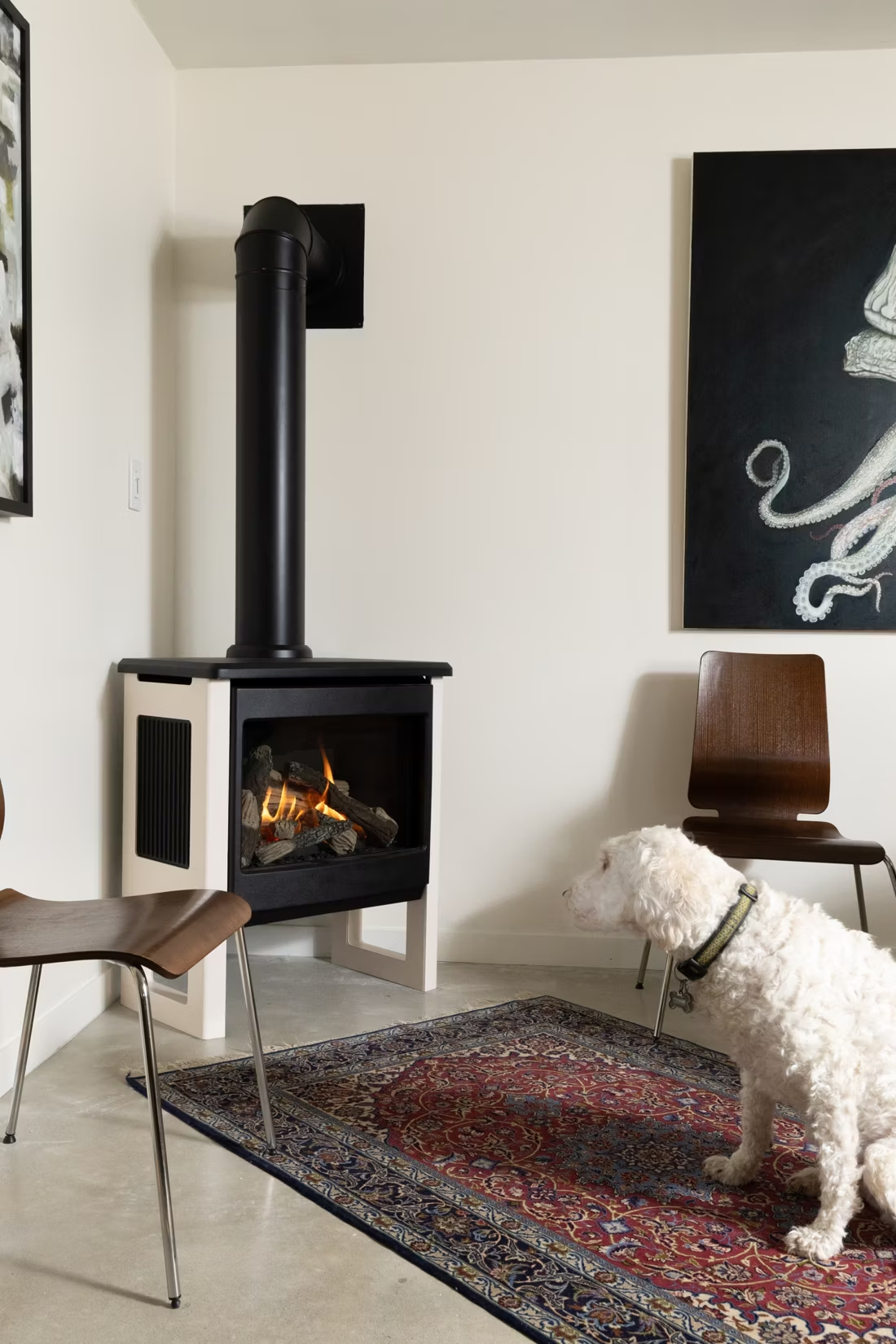
A gas fireplace is a built-in unit framed into a wall, typically chosen for new construction or a full remodel. A gas insert slides into an existing masonry firebox—the option most Ripley County homeowners with an older oak-burning fireplace end up choosing, since it reuses the chimney you already have. A gas stove is a freestanding cabinet unit that sits on the floor, often preferred in smaller rooms, cabins, or additions where there's no existing fireplace to retrofit. Which one fits depends mostly on whether you're starting with an empty wall or an existing hearth.
Do I need a permit to install a gas fireplace in Ripley County?
Requirements are lighter here than in more urban counties, but any propane line work still needs to be done by a licensed gas-fitter or propane technician regardless of local permitting. For anything involving new construction or structural changes to accommodate a fireplace, check with the Ripley County Courthouse in Doniphan before starting work. A local hearth dealer who regularly installs in the county will already know what's required and can coordinate the propane hookup and any inspection directly, which is usually simpler than sorting it out yourself.
What's the difference between vented and vent-free gas fireplaces?
Vented units—direct-vent or B-vent—pull combustion air from outside and exhaust the byproducts back outside through a sealed vent pipe. Vent-free units burn propane directly into the room air, with no external venting at all. Missouri doesn't restrict vent-free units, and they can be a practical option in a cabin or outbuilding along the Current River where running a vent pipe isn't feasible. That said, vent-free models require careful room-size matching and an oxygen depletion sensor, and most local dealers will steer primary living spaces toward a direct-vent unit for the cleaner air and more consistent heat output.
How often should my gas fireplace be serviced?
Plan on an annual inspection, ideally in late summer or early fall before the propane furnace and fireplace are both getting heavy use. A technician will check the burner, pilot assembly, gas connections, and venting, and clean the glass. It's a shorter visit than a wood chimney sweep, but it matters just as much for safety—loose gas fittings and pilot issues are the most common problems caught during these checks, and they're cheap to fix before winter rather than during an ice storm.
Gas vs. wood—which makes more sense for a Ripley County home?
Wood has deep roots here—oak, hickory, walnut, and maple are all abundant locally, and plenty of Ripley County households still heat primarily with a wood stove, especially on larger rural parcels where cutting your own is practical. Gas trades that self-sufficiency for convenience: no splitting, no ash, and heat that starts with a switch rather than a match. Pellet stoves, using regionally available brands like Lignetics or Indeck Energy Services, sit in between—less labor than cordwood but still dependent on hopper loading and, unlike battery-backed gas units, on electricity to run the auger. For a primary living space where daily convenience matters most, gas is usually the easier fit; for backup heat during an outage or a workshop out on the property, wood still holds its own.
Can I put a TV above my fireplace?
Yes—with an asterisk. Fireplaces are hot and TVs don't like heat. Either put a mantel between them to deflect rising warmth, or choose a fireplace with heat-management technology that creates a cool zone on the wall above—the wall stays around 125 degrees, barely warm, while the room still gets full heat. If you like clean lines and don't want a mantel, heat management is the answer.
Are new gas fireplaces really better than old ones?
Two ways, and they're both big. Looks: modern gas fireplaces are realistic enough that it's hard to believe they aren't burning wood. Cost: old units burn a standing pilot year-round (roughly $200 a year), while new ones use pilot-on-demand ignition and modern burners. Add remote controls and thermostat operation, and the day-to-day experience isn't close.
What is an in-home preview and do I need one?
It's a visit where a hearth professional measures your space, confirms the model you picked actually works in your home, and walks the specs—framing, gas line, venting, finish work—before anything is ordered. Some details you just can't know until you see the house. Never make a down payment without one; it's the single most-skipped step that burns buyers.
Can I install a fireplace myself?
If you're putting a fire in your house on purpose, it's best to work with an expert. Unless you're genuinely experienced in framing, gas line, vent pipe, and the national code on clearances to combustibles, have a professional do it—and ideally the same company that sells you the fireplace, so warranty, service, and liability all live under one roof.
Find the right gas fireplace for your Ripley County home.
Tell us about your home and propane setup, and we'll match you with a trusted local dealer and send over a free Project Guide & Parts List—the exact parts, including the vent kit, for your Ripley County gas fireplace project.
Find Your Fireplace →