
Load it once, walk away—pellet heat built for the Ozark backcountry.
Reynolds County is Ozark hills, oak-hickory timber, and about 1,500 people spread across a lot of ground. A pellet stove gives you steady, automated heat without tending a fire—and I'll match you with a real local dealer who can size it, vent it, and install it correctly.
Every Project Starts From One of These Five Situations
Convenient heat for one of Missouri's most rural counties.
Reynolds County sits deep in the Missouri Ozarks—steep hollows, the Black River, and stands of oak, hickory, walnut, and maple that have supplied firewood here for generations. With a population under 1,600 spread across the county, homes are often far apart, and a lot of them rely on wood or propane rather than natural gas. The climate here (zone 4A) brings genuine cold snaps and ice in January but nothing like the sustained arctic stretches of Duluth or International Falls—winters are cold enough to need serious heat, but mild enough that a well-sized pellet stove can carry a home through most of the season on its own.
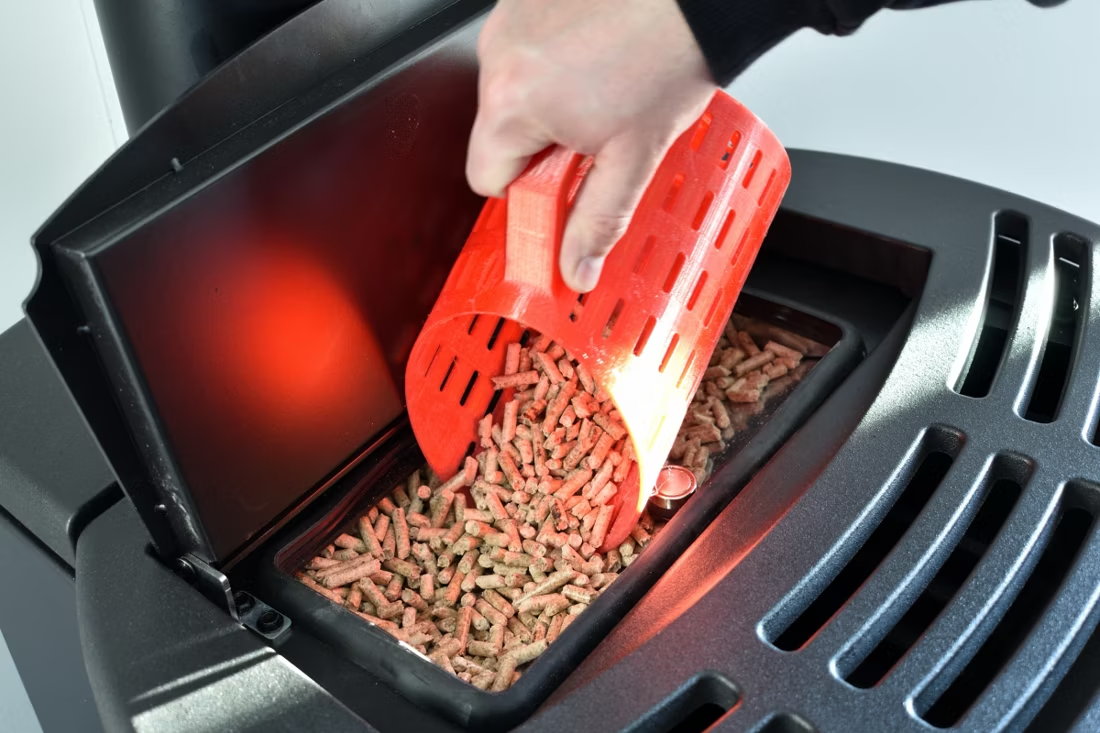
For homeowners who grew up splitting oak and hickory but don't want to keep doing it every winter, a pellet stove is the natural next step: load the hopper, set the thermostat, and let the auger do the work. There's no local air quality regulation limiting solid-fuel burning in Reynolds County, so the appeal here is almost entirely about convenience and consistent heat rather than compliance. Regional pellet supply comes through brands like Lignetics and Indeck Energy Services, both of which distribute into rural southeast Missouri—but because dealer density is thin out here, the bigger question isn't which stove to buy, it's which local installer actually services your part of the county and can keep you stocked with fuel through a full heating season.
Three steps. No salesperson until you're ready.
Tell us about your project
Your zip code, your situation, and the fuel you're leaning toward—or let the answers point you to one.
See what's actually available
The brands dealers within 100 miles genuinely carry—real options, never a catalog mirage.
Get your dealer & Project Guide
A trusted local dealer, plus the free Project Guide & Parts List that names every component of the job.
Frequently Asked Questions
How much does a pellet stove installation cost in Reynolds County?
Pellet stove installs in rural southeast Missouri typically run somewhere in the $3,000 to $6,500 range, depending on the stove size, whether venting is straightforward through an exterior wall, and whether you're converting an existing wood fireplace to a pellet insert. Given how spread out Reynolds County is—Ellington, Centerville, Lesterville, and Bunker cover a lot of distance—expect installers based in Salem, Poplar Bluff, or Farmington to factor a travel charge into the quote. Ask for that broken out separately so you can compare it against a closer option if one exists.
What size pellet stove do I need for my home?
Most Reynolds County homes fall into one of two categories: a smaller stove (up to 1,500 sq ft) for a cabin, single-story ranch, or supplemental heat in a larger house, or a larger unit (1,500–2,500 sq ft) for whole-home heating in an older farmhouse with less insulation. Older homes in the county—many built before modern insulation standards—often need to size up compared to a newer, tightly built house of the same square footage. A local dealer will walk your home, check ceiling height and insulation, and size the stove based on actual heat loss rather than square footage alone.
Where can I find pellet stove dealers near Reynolds County?
Because Reynolds County's population is small and spread thin, there isn't a hearth dealer on every corner—most homeowners end up working with an installer based in Salem, Poplar Bluff, Farmington, or Fredericktown who covers the county as part of a wider service territory. Look for NFI-certified technicians specifically, since pellet stoves involve electrical hookups, venting, and hopper/auger setup that a general contractor typically hasn't trained on. A dealer who already services this part of the Ozarks will know the travel realities and can usually bundle delivery of your first batch of pellets with the install.
What's the difference between a pellet stove and a pellet insert?
A pellet stove is a freestanding unit that sits on its own hearth pad and vents through a wall or existing chimney chase—it can go almost anywhere in the house with proper clearances. A pellet insert is built to slide into an existing masonry wood fireplace, converting it into an automated, thermostat-controlled heat source while reusing the chimney opening. For Reynolds County's older farmhouses with existing wood fireplaces, an insert is often the simpler retrofit. For newer construction or homes without a fireplace already in place, a freestanding stove is usually the better fit.
Do I need a permit to install a pellet stove in Reynolds County?
Many rural Missouri counties, including much of unincorporated Reynolds County, don't enforce a formal residential building code the way a city would—but that doesn't mean skipping code compliance is a good idea. Insurance carriers still expect installations to follow NFPA 211 clearance and venting standards, and if you're inside city limits in Ellington or Centerville, check with local officials before you install. Reputable installers follow manufacturer specs and NFPA guidelines regardless of whether a permit is formally required, which protects your insurance coverage and your home.
What's the best pellet stove for Reynolds County's climate?
Zone 4A winters here bring real cold—ice storms and stretches in the teens and single digits aren't unusual—but they're shorter and milder overall than a true northern-climate winter. A mid-size pellet stove from a mainstream brand carried by regional dealers, paired with a steady fuel supply from distributors like Lignetics or Indeck Energy Services, covers most Reynolds County homes without needing a top-tier or oversized unit. The bigger factor than brand is making sure your dealer stocks pellets locally or has a reliable delivery route—running out of fuel mid-January in a county this rural is a real inconvenience, not a hypothetical.
Will my pellet stove work if the power goes out?
No—this is the trade-off with pellet heat. Unlike a wood stove, a pellet stove needs electricity to run its auger, igniter, and blower, so a power outage shuts it down. That matters in Reynolds County, where rural electric service through cooperatives like Black River Electric Cooperative can mean longer restoration times after ice storms or high winds than you'd see in town. Some homeowners here pair a pellet stove with a small backup generator, or keep a wood-burning option available as well, specifically for outage coverage. If uninterrupted heat during outages is your top priority, that's worth discussing with a local dealer before you commit to pellet-only.
Where can I buy pellets in or near Reynolds County?
Regional supply comes primarily through brands like Lignetics and Indeck Energy Services, both of which distribute into rural southeast Missouri through farm supply stores, hardware stores, and hearth dealers in the Salem, Poplar Bluff, and Farmington areas. Given how rural Reynolds County is, it's worth confirming with your installer whether they deliver pellets directly or can point you to the nearest reliable stocking location—running short mid-winter and having to drive 40 minutes for a few bags is a real planning issue here, not a minor inconvenience.
Pellet stove vs. wood stove—which makes more sense in Reynolds County?
This is a genuinely close call here. Reynolds County sits in oak-hickory-walnut country, with plenty of self-cut and locally sold firewood available, and a wood stove keeps working even when the power's out—a real consideration given rural electric service. A pellet stove trades that off-grid resilience for convenience: no splitting, stacking, or hauling, more consistent heat output, and far less ash and mess. If you already have a wood-cutting setup or land you manage, wood may still make sense as your primary heat. If convenience and hands-off operation matter more than self-sufficiency, pellet is usually the better fit—and some Reynolds County households keep a wood stove as backup specifically for outages.
Why is my open fireplace making my house colder?
Open fireplaces suck—literally. As the fire burns, it consumes air your furnace already paid to heat and pulls it out through the chimney, so the house is actually colder after the fire goes out than before you lit it. An insert fixes this: it seals the chimney, puts fixed glass across the front, and turns that hole in your house into a real heat source.
What's the difference between an insert and a zero-clearance fireplace?
An insert is a fireplace that slides into a pre-existing wood-burning fireplace—if you don't have one, there's nothing to insert it into. A zero-clearance fireplace is built into a framed wall, which makes it the answer for remodels and new construction. Simple test: existing masonry fireplace means insert; blank or framed wall means zero-clearance.
Can a fireplace actually lower my heating bill?
Yes—by creating a comfort zone. A furnace heats every square foot of the house just to warm the one room you're in; a gas fireplace on low burns roughly a sixth of the gas a typical furnace does. Set the furnace around 55–60 degrees as a baseline, then heat the rooms your family actually uses. Families who heat this way commonly save $20–$60 a month.
What is an in-home preview and do I need one?
It's a visit where a hearth professional measures your space, confirms the model you picked actually works in your home, and walks the specs—framing, gas line, venting, finish work—before anything is ordered. Some details you just can't know until you see the house. Never make a down payment without one; it's the single most-skipped step that burns buyers.
Pellet Brands Stocked Around Reynolds County
Manufacturers will point you to the nearest stocking dealer.
Find your pellet stove in Reynolds County.
Tell me a bit about your home and I'll match you with a trusted local dealer and send over your free Project Guide & Parts List—the exact stove, vent kit, and install plan for your Reynolds County home.
Find Your Fireplace →