
Find the right gas fireplace for your Reynolds County home.
Clean, on-demand heat for the hills around Ellington, Centerville, and Lesterville. I'll match you with a trusted local dealer who can size and install it right.
Every Project Starts From One of These Five Situations
Reliable heat for a rural, wood-rich county.
Reynolds County sits deep in Missouri's Ozark hill country—climate zone 4A, with cold but not brutal winters and a population under 1,600 spread across small towns like Ellington, Centerville, and Lesterville plus a lot of rural acreage in between. Wood heat has deep roots here, with oak, hickory, walnut, and maple all readily available on private timberland, but gas fireplaces have carved out a real niche for homeowners who want dependable, low-maintenance warmth without stacking cordwood or running a chainsaw every fall.
Natural gas mains are limited to nonexistent across most of rural Reynolds County, so propane is the practical fuel choice for the vast majority of gas fireplace installations here—supplied by tank from regional propane providers rather than a municipal utility. That means most projects involve either an existing propane tank already serving the house (for cooking or water heating) or a new tank setup coordinated as part of the installation. Either way, a properly vented gas unit gives you instant heat at the flip of a switch, works well as supplemental or zone heat alongside a wood stove, and—with the right ignition system—can keep running through the kind of winter power outages that aren't uncommon in this stretch of the Ozarks.
Three steps. No salesperson until you're ready.
Tell us about your project
Your zip code, your situation, and the fuel you're leaning toward—or let the answers point you to one.
See what's actually available
The brands dealers within 100 miles genuinely carry—real options, never a catalog mirage.
Get your dealer & Project Guide
A trusted local dealer, plus the free Project Guide & Parts List that names every component of the job.
Frequently Asked Questions
How much does a gas fireplace installation cost in Reynolds County?
Expect a typical gas fireplace or insert installation in Reynolds County to run in the same general range seen across rural Missouri—roughly $4,000 to $10,000 depending on the unit, venting requirements, and propane setup. Homes with an existing propane tank and gas lines already in place (common in houses that already use propane for cooking or water heat) land on the lower end. Projects that require a new propane tank installation, a longer gas line run, or venting through a masonry chimney with a new liner will run higher. Because Reynolds County is rural, expect your local dealer to factor in some travel time to more remote parts of the county.
Can I convert my existing wood fireplace to gas?
Yes, and it's a common project for older farmhouses and cabins throughout Reynolds County that already have a masonry fireplace built for wood. A gas insert typically drops into the existing firebox and vents through the current chimney using a stainless liner, converting a drafty wood-burning fireplace into a sealed, efficient gas unit. Since natural gas isn't available in most of the county, this usually means pairing the insert with propane—either an existing tank or a new one sized for the household's fireplace and other propane appliances.
Is natural gas or propane the right choice for my home in Reynolds County?
For the overwhelming majority of Reynolds County addresses, propane is the answer—natural gas distribution simply doesn't reach most of the county outside of small pockets near the larger towns. If your home already runs on propane for a furnace, water heater, or range, adding a fireplace on the same tank is often the simplest and most cost-effective route. A local dealer can tell you quickly whether natural gas is even an option at your specific address, but plan on propane as the default when budgeting your project.
Will my gas fireplace still work if the power goes out?
Most gas fireplaces with intermittent pilot ignition (IPI) include a battery backup that keeps the unit firing even when the grid is down—just remember to swap the batteries periodically so they're ready when you need them. Some manufacturers, like Valor, use a self-powered pilot system that generates its own electricity through the thermocouple, so there's no battery to maintain at all. For rural Reynolds County homes where winter storms can knock out power for a stretch, that kind of independence from the grid is worth asking about when you're comparing units with a local dealer.
What's the difference between a gas fireplace, insert, and stove?
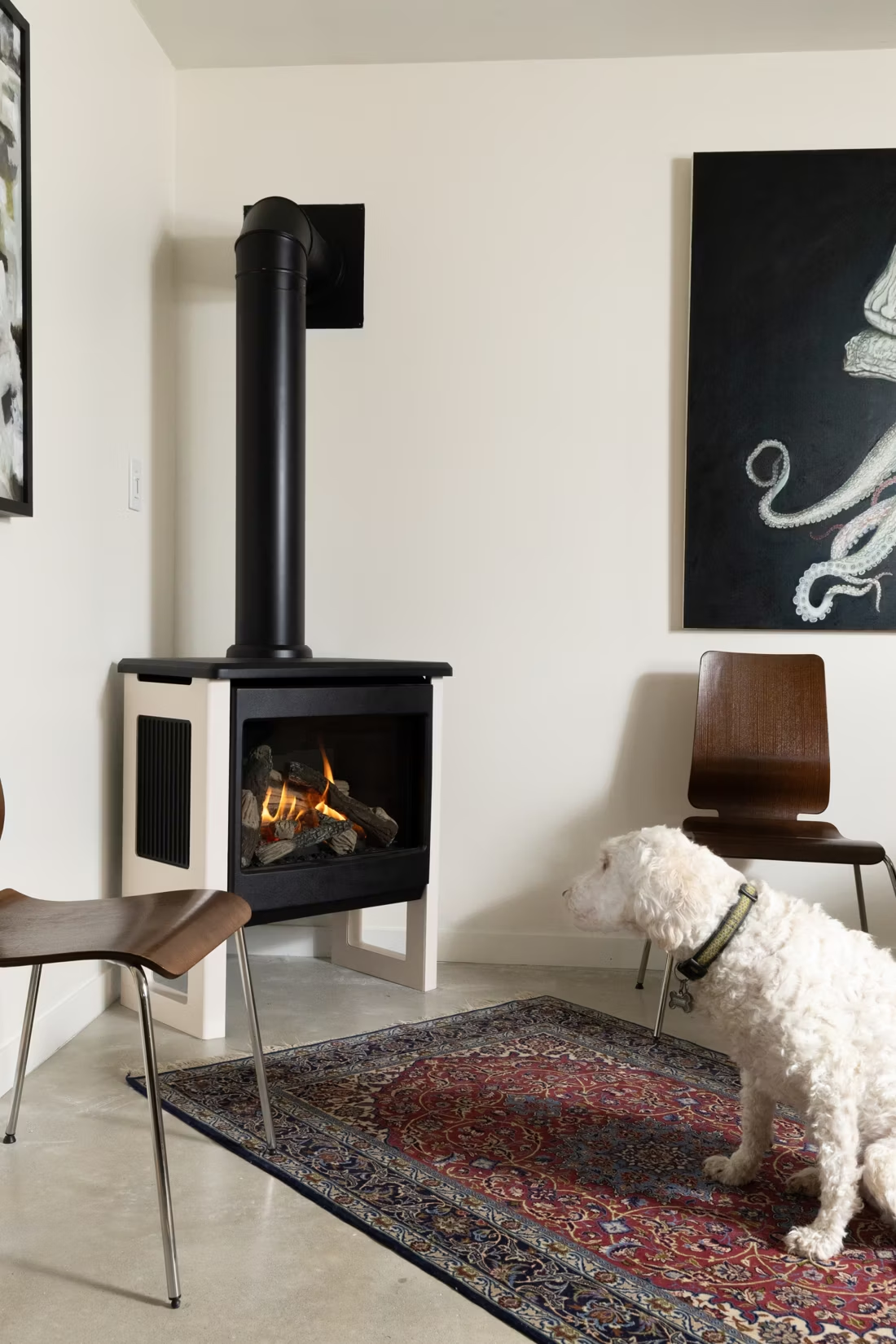
A gas fireplace is a fully built-in unit, framed into a wall for new construction or a remodel. A gas insert slides into an existing masonry firebox, which is the common route for older Reynolds County homes that already have a wood fireplace they want to upgrade. A gas stove is a freestanding cabinet-style unit that sits on the floor and vents through a wall or chimney, similar in footprint to a wood stove but running on gas—a good fit for cabins or additions without an existing fireplace. A local dealer can walk your specific space and tell you which format actually fits.
Do I need a permit to install a gas fireplace in Reynolds County?
Most of Reynolds County is unincorporated, and permitting requirements can vary depending on whether your project falls within Ellington or Centerville city limits versus the surrounding county. Gas line work should always be handled by a licensed installer regardless of jurisdiction, since propane connections carry real safety stakes. A trusted local hearth dealer will know exactly which permits apply to your address and typically manages that paperwork as part of the installation, so it's one less thing for you to track down yourself.
What's the difference between vented and vent-free gas fireplaces?
Vented (direct-vent) gas fireplaces pull combustion air from outside and exhaust it back outside through a sealed pipe, which keeps combustion byproducts out of the living space entirely. Vent-free units burn without any outside venting and release some water vapor and trace combustion gases into the room, which means they come with strict room-size and ventilation rules. Vent-free models are legal in Missouri, but for a Reynolds County home—especially a smaller cabin or tightly built newer house—a direct-vent unit is usually the safer, more universally recommended choice. Ask your local dealer which option makes sense given your room size and how tightly your home is sealed.
How often does a gas fireplace need to be serviced?
Plan on an annual inspection, ideally before the first cold snap each fall. A technician will check the burner, pilot assembly, gas connections, and venting, and clean the glass and interior components—a much lighter lift than sweeping a wood chimney but just as important for safe operation. In a rural county like Reynolds, it's worth asking your installing dealer whether they offer service visits directly, since finding a separate technician willing to make the drive out can be harder than in a larger metro area.
Gas vs. wood—which makes more sense for my Reynolds County property?
Wood has deep roots here, with oak, hickory, walnut, and maple all common on local timberland, and it keeps working during a power outage without any electric or battery dependence. Gas trades that self-sufficiency for convenience—instant on-off heat, no splitting or hauling firewood, and a consistent flame with none of the ash cleanup. A lot of Reynolds County households end up running both: a wood stove for backup heat and the classic fire experience, and a gas unit in the main living space for everyday, low-effort warmth. If your propane tank already serves your furnace or water heater, adding a gas fireplace on that same line is often the more practical near-term move.
Can I put a TV above my fireplace?
Yes—with an asterisk. Fireplaces are hot and TVs don't like heat. Either put a mantel between them to deflect rising warmth, or choose a fireplace with heat-management technology that creates a cool zone on the wall above—the wall stays around 125 degrees, barely warm, while the room still gets full heat. If you like clean lines and don't want a mantel, heat management is the answer.
Is my gas fireplace wasting gas?
If it was installed more than 15 years ago, probably. Older gas fireplaces keep a standing pilot light burning all the time, and that little flame can cost a couple hundred dollars a year. Newer models use pilot-on-demand ignition—the pilot lights only when you use the fireplace and goes out when you turn it off.
Can I install a fireplace myself?
If you're putting a fire in your house on purpose, it's best to work with an expert. Unless you're genuinely experienced in framing, gas line, vent pipe, and the national code on clearances to combustibles, have a professional do it—and ideally the same company that sells you the fireplace, so warranty, service, and liability all live under one roof.
Can a fireplace actually lower my heating bill?
Yes—by creating a comfort zone. A furnace heats every square foot of the house just to warm the one room you're in; a gas fireplace on low burns roughly a sixth of the gas a typical furnace does. Set the furnace around 55–60 degrees as a baseline, then heat the rooms your family actually uses. Families who heat this way commonly save $20–$60 a month.
Get your free Project Guide & Parts List for a gas fireplace in Reynolds County.
Tell me a bit about your home and propane setup, and I'll match you with a trusted local dealer and send over a free Project Guide & Parts List—the exact parts, vent kit included, for your project.
Find Your Fireplace →