
Set It, Forget It—Warm Through a Ray County Winter.
Thermostat-controlled heat for the farmhouses and exurban homes between Richmond and the Crooked River bottoms—no daily wood hauling required. Find the right unit and connect with a trusted local dealer.
Every Project Starts From One of These Five Situations
Automated heat for a county built on cordwood and cornfields.
Ray County sits in Missouri's Climate Zone 4A, with about 5,597 heating degree days and winter lows that average 15°F—cold enough to matter, but nowhere near the routine sub-zero stretches of a place like Bismarck, ND. Winters here run long enough that a lot of households, especially the older farmhouses scattered between Richmond, Hardin, and Rayville, need a real secondary or primary heat source from November through March. The oak, hickory, walnut, and maple forests along the Crooked River and Missouri River bottoms have kept woodstoves common in this county for generations, but pellet appliances have carved out their own niche for a different reason: consistent, thermostat-set heat that doesn't require someone home splitting and feeding wood all day.
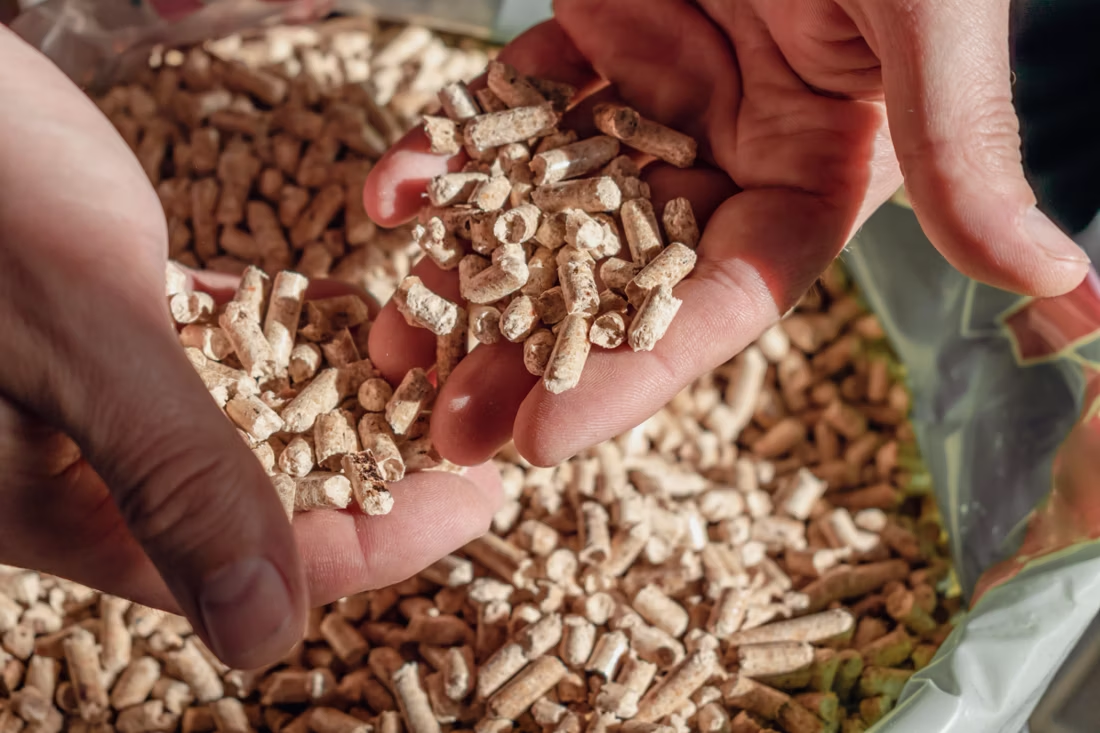
That convenience matters in a county of about 10,148 people spread across working farms and a growing number of Kansas City-area commuters. A pellet stove or insert holds a steady burn on a timer, runs cleaner than cordwood, and fits into the increasingly common pattern of households that are out of the house for long stretches during the day. Ray County has no air-quality nonattainment designation and no winter burn curtailment periods, so pellet appliances run without the scheduling restrictions some Missouri metro counties impose. Regional pellet brands like Lignetics and Indeck Energy Services are both distributed through farm and hearth suppliers serving this part of northwest Missouri, and bags are also commonly available through local MFA-style agricultural co-op stores.
Three steps. No salesperson until you're ready.
Tell us about your project
Your zip code, your situation, and the fuel you're leaning toward—or let the answers point you to one.
See what's actually available
The brands dealers within 100 miles genuinely carry—real options, never a catalog mirage.
Get your dealer & Project Guide
A trusted local dealer, plus the free Project Guide & Parts List that names every component of the job.
Frequently Asked Questions
How much does a pellet stove installation cost in Ray County?
A freestanding pellet stove installation in Ray County typically runs $3,000 to $6,000, depending on the unit, whether an existing chimney or wall penetration can be used for the vent, and any electrical work needed for the outlet the stove requires. A pellet insert going into an existing masonry fireplace—common in the older farmhouses around Hardin and Rayville—usually runs a bit higher, often $4,000 to $7,500, because of the stainless liner needed to adapt the vent path. Local dealers will give you a firm number after seeing your fireplace or the wall you're venting through.
What size pellet stove do I need for my home?
Sizing depends on square footage, ceiling height, and how well-insulated the home is—and Ray County has a wide mix, from newer builds near the Kansas City exurbs to drafty pre-war farmhouses along the river bottoms. As a rough guide: small units (up to 1,000 sq ft) suit a single living area or a supplemental setup, medium units (1,000–1,800 sq ft) cover most main floors, and larger units handle open-concept or poorly insulated older homes. If you're heating an uninsulated farmhouse through a 15°F average winter low, size up and look at hopper capacity too—a bigger hopper means fewer refills during a cold stretch when you're busy with chores rather than tending a stove.
Where can I find a certified pellet stove dealer near me?
Because Ray County's population is under 11,000, most certified hearth dealers carrying pellet stoves and doing installs are based in nearby towns like Excelsior Springs or Liberty, with service routes covering Richmond, Lawson, and the rest of the county. Look for NFI (National Fireplace Institute) certification—it signals proper training on venting, clearances, and electrical requirements specific to pellet appliances. Avoid having a general contractor or handyman install a pellet unit; incorrect vent slope or clearance work is the most common cause of poor performance and safety issues down the line.
What's the difference between a pellet stove and a pellet insert?
A pellet stove is a freestanding unit that sits on its own base and vents through a wall or existing chimney—it can go almost anywhere with the right clearances, which makes it a good fit for newer Ray County homes without a masonry fireplace. A pellet insert is built to slide into an existing masonry fireplace opening, using a liner run through the old chimney, and is the more common upgrade path for the county's older farmhouses that already have a fireplace they want to make useful again. Both burn the same fuel and run on the same hopper-and-auger system—the choice mostly comes down to whether you're starting from an empty wall or an existing hearth.
Do I need a permit to install a pellet stove in Ray County?
Permit requirements depend on where in the county you're located. Within city limits—Richmond, Lawson, or Hardin, for example—you'll typically need a building permit through that city's office, since a pellet stove involves both a vent penetration and a dedicated electrical outlet. In unincorporated parts of Ray County, permitting generally runs through the county building requirements out of Richmond. Most local dealers handle the permit application as part of the installation, so it's worth confirming that upfront when you get a quote.
What's the best pellet stove for Ray County's climate?
With Ray County averaging about 5,597 heating degree days and winter lows around 15°F, you don't need the extreme-cold-rated units built for places like Fargo or Duluth—a solidly built mid-size EPA-certified stove handles the season here without issue. What matters more locally is hopper size and auger reliability: farm schedules mean a lot of households want a stove that can run 24 to 40 hours on a full hopper without a refill, since Lignetics and Indeck bags are usually bought by the ton and it's easier to load once than twice a day. Ask a local dealer to match hopper capacity and BTU output to your square footage and daily routine, not just the coldest night of the year.
How much maintenance does a pellet stove need?
Pellet stoves need more routine attention than people expect, even though they skip the chimney-sweep requirements of a wood stove. Plan on emptying the ash pan every few days during regular use, wiping down the burn pot weekly to keep the auger feeding cleanly, and cleaning the glass as needed. A full professional service—checking the exhaust fan, gaskets, and igniter—is recommended annually, ideally before the season starts in the fall. Skipping this tends to show up as poor ignition or uneven burns right when you need the stove most, in the middle of a January cold snap.
Where can I buy pellet fuel in Ray County?
Pellet bags are typically sold through farm and agricultural supply stores in this part of Missouri, often alongside feed and hardware—a common setup for a county built around row-crop and livestock operations. Lignetics and Indeck Energy Services are both widely distributed regional brands you'll find carried locally or within a short drive. Expect to pay roughly $220 to $300 per ton depending on brand and whether you buy by the pallet (typically 50 forty-pound bags) or by individual bag. Buying a full ton pallet ahead of the season is usually cheaper per bag and worth the storage space if you have a dry garage or outbuilding—pellets that pick up moisture won't feed or burn properly.
Pellet stove vs. wood stove—which makes more sense in Ray County?
Wood is the traditional choice here for good reason—oak, hickory, walnut, and maple are abundant along the Crooked River and Missouri River bottoms, and a lot of Ray County households already have access to a woodlot or a neighbor who does. Wood stoves also keep working during a power outage, which matters in a rural county where ice storms occasionally take the grid down for a day or more. Pellet stoves need electricity to run the auger and blower, so they go dark in an outage unless you have a battery backup or generator. What pellet stoves offer in return is real convenience: no splitting, no stacking, no chimney creosote buildup, and a thermostat that holds the temperature steady while you're out running the farm. Plenty of Ray County homes end up with both—pellet for daily convenience, a wood stove or fireplace as the backup plan.
What's the difference between an insert and a zero-clearance fireplace?
An insert is a fireplace that slides into a pre-existing wood-burning fireplace—if you don't have one, there's nothing to insert it into. A zero-clearance fireplace is built into a framed wall, which makes it the answer for remodels and new construction. Simple test: existing masonry fireplace means insert; blank or framed wall means zero-clearance.
How often does a pellet stove need cleaning?
A clean pellet stove is a happy pellet stove. Plan on cleaning the burn pot about once a week when you're burning regularly—ash and clinkers gum up the air holes just like a pellet barbecue. Most pellet stove problems trace back to skipped cleaning that nobody explained up front. Some designs make it easy with a trapdoor burn pot: pull a lever and the gunk drops into the ash pan.
Can a fireplace actually lower my heating bill?
Yes—by creating a comfort zone. A furnace heats every square foot of the house just to warm the one room you're in; a gas fireplace on low burns roughly a sixth of the gas a typical furnace does. Set the furnace around 55–60 degrees as a baseline, then heat the rooms your family actually uses. Families who heat this way commonly save $20–$60 a month.
Does a fireplace add value to my home?
On average, a fireplace adds back to the home about the same amount you spent installing it. Add the monthly savings from heating the rooms you actually use instead of the whole house—often hundreds of dollars a year—and the value case is strong before you even count what a fire does for how your family uses the room.
Pellet Brands Stocked Around Ray County
Manufacturers will point you to the nearest stocking dealer.
Find your pellet stove in Ray County.
Tell us a bit about your home and we'll match you with the right pellet stove or insert, then hand you a free Project Guide & Parts List—the vent kit and parts you need, plus your recommended local Ray County dealer.
Find Your Fireplace →