
Warmth for Ray County—no chimney, no gas line, no fuss.
From Richmond to Hardin to the edges of Excelsior Springs, electric fireplaces bring real supplemental heat to Ray County homes without venting, permits, or a woodpile to maintain.
Every Project Starts From One of These Five Situations
A simple plug-in answer to Ray County's cold, gray months.
Ray County sits in climate zone 4A along the Missouri River bluffs northeast of Kansas City, with roughly 5,597 heating degree days a year and winter lows that average around 15°F. That's a real heating season—cold enough that homes in Richmond, Hardin, and Henrietta need dependable supplemental heat, but not so severe that a full wood-fired heating system is the only answer. Plenty of Ray County households still burn oak, hickory, walnut, and maple in wood stoves for primary heat, but electric fireplaces have become the go-to choice for finished basements, sunrooms, converted porches, and older farmhouses where running gas line or a masonry chimney just isn't practical.
The appeal is simplicity. A smaller electric unit runs off a standard household outlet, while a larger built-in model typically needs a dedicated 240-volt circuit run by a licensed electrician—a much smaller project than venting a wood or gas appliance. That matters in parts of rural Ray County served by a rural electric cooperative rather than a large investor-owned utility, where knowing your panel capacity ahead of time saves a service call. Electric heat also comes with an honest tradeoff worth naming up front: it won't run during a power outage, which is a real consideration in a county that sees its share of Missouri ice storms each winter. For everyday zone heating, ambiance, and rooms without a flue, though, it's hard to beat.
Three steps. No salesperson until you're ready.
Tell us about your project
Your zip code, your situation, and the fuel you're leaning toward—or let the answers point you to one.
See what's actually available
The brands dealers within 100 miles genuinely carry—real options, never a catalog mirage.
Get your dealer & Project Guide
A trusted local dealer, plus the free Project Guide & Parts List that names every component of the job.
Frequently Asked Questions
How much does an electric fireplace installation cost in Ray County?
Electric fireplaces are the most affordable hearth option available in Ray County. A plug-in insert or freestanding unit that uses a standard 120-volt outlet can run a few hundred dollars installed, since there's no venting or gas line involved. A built-in wall unit or larger insert that requires a dedicated 240-volt circuit run by a licensed electrician typically pushes the total into the $1,000-$2,500 range once wiring, mounting, and finish work are included. Homes in older parts of Richmond or rural farmhouses with dated electrical panels sometimes need panel upgrades first, which a local dealer can flag during an in-home consultation.
What size electric fireplace do I need for my Ray County home?
Most electric fireplaces are rated for supplemental heat in a single room—typically 400 to 1,000 square feet per unit, depending on the model's wattage and your ceiling height. For a finished basement or a converted porch in Ray County's climate zone 4A winters, a unit with a strong 4,600-5,100 BTU heater setting will noticeably take the edge off on a 15°F night, but it isn't meant to replace whole-home heat. If you're trying to warm an open-concept living area or an older, drafty farmhouse near Hardin or Rayville, a local dealer can help you decide between one larger unit and two smaller ones placed strategically.
Where can I find electric fireplace dealers near me in Ray County?
Ray County itself is small, so most homeowners in Richmond, Lawson, or Henrietta end up working with dealers based in the greater Kansas City area who service the county, or with a handful of independent hearth shops closer to Excelsior Springs. Look for a dealer who will actually visit your home to check panel capacity and wall framing before recommending a unit—that in-home step is what separates a proper install from a big-box unit that gets returned because it doesn't fit or trips a breaker. We match Ray County homeowners with trusted local dealers rather than sending you shopping blind.
What's the difference between an electric fireplace, insert, and stove?
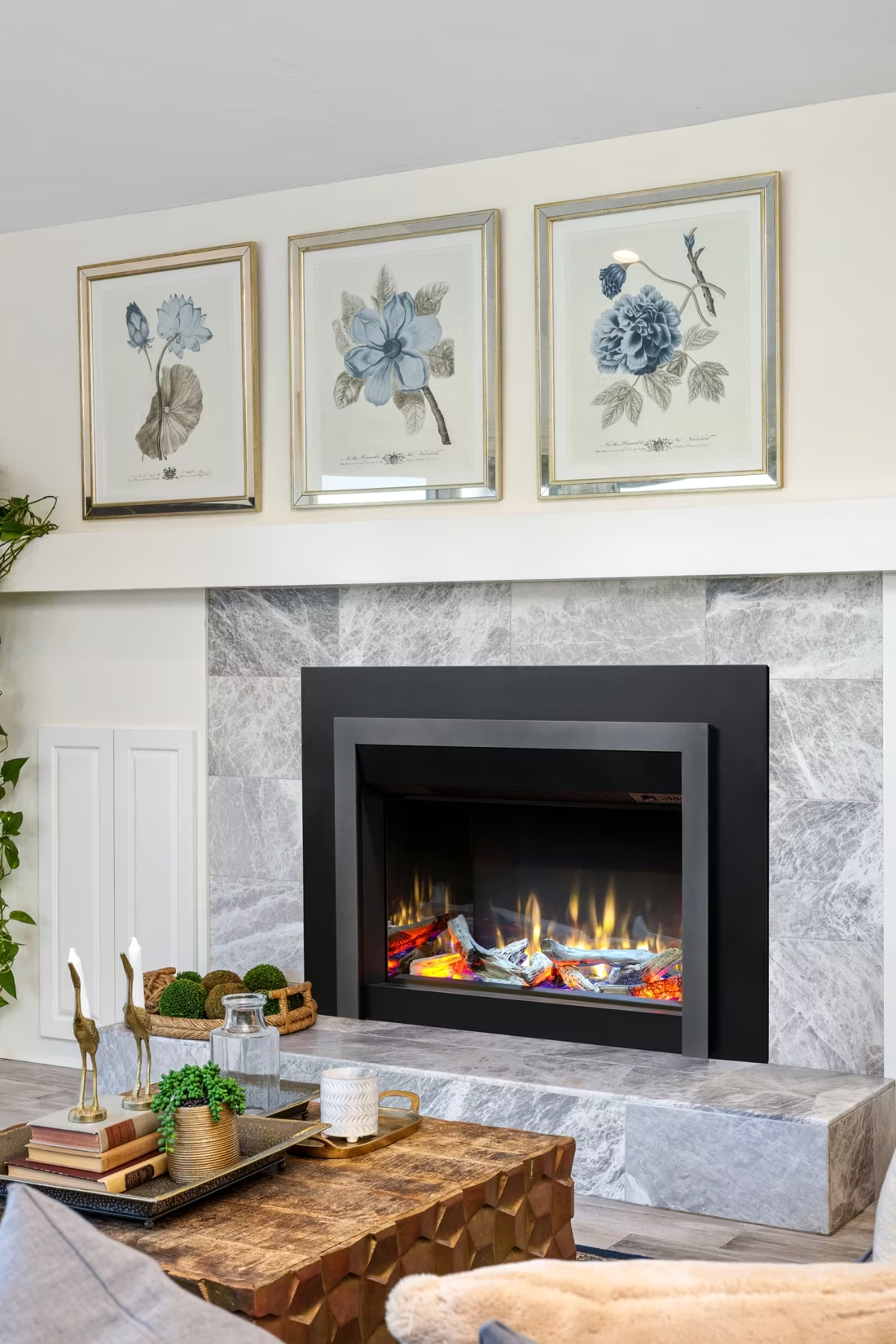
An electric fireplace is typically a built-in or wall-mounted unit designed to look like a framed fireplace, often with a mantel surround. An electric insert is sized to slide into an existing masonry or wood-stove firebox, letting you keep the look of an old fireplace while retiring the chimney draft and ash cleanup. An electric stove is a freestanding cabinet-style unit meant to mimic a wood or pellet stove's footprint, popular in Ray County farmhouses that want stove styling without the wood handling. All three use the same basic heating cartridge technology—the choice comes down to your existing opening and the look you want.
Do I need a permit to install an electric fireplace in Ray County?
A simple plug-in electric fireplace generally doesn't require a permit since no new wiring or gas work is involved. If your unit needs a dedicated 240-volt circuit, that electrical work should be pulled and inspected by a licensed electrician under the applicable Ray County or municipal building code, whether you're in Richmond, Excelsior Springs, or unincorporated county land. There's no burn permit or air-quality restriction to worry about with electric heat, which is one of the appeals for homeowners who don't want to deal with wood-smoke curtailment rules that apply elsewhere in Missouri.
What's the best electric fireplace for Ray County's winters?
For a county averaging 15°F winter lows and around 5,600 heating degree days, look for a unit with a true heater function rated at least 4,600 BTU with a built-in thermostat, rather than a purely decorative flame-effect model. Brands with dual-fuel-style heat settings let you run the flame without the heater in shoulder-season months and crank the heat during a January cold snap. For older Ray County farmhouses with drafty rooms, a slightly larger insert with a fan-forced heater will recover heat faster than a radiant-only panel. A local dealer can match wattage to your specific room.
How much maintenance does an electric fireplace need?
Very little compared to wood or gas. There's no chimney to sweep, no gas line to inspect, and no ash to clean out. Maintenance is limited to occasionally dusting the heater vents and cleaning the front glass, plus replacing the LED flame bulbs every several years on older models—most newer units use long-life LEDs that rarely need replacement at all. This low-maintenance profile is one reason electric units are popular as secondary heat sources in Ray County rental properties and finished basements where nobody wants to schedule annual service.
How much does it cost to run an electric fireplace in Ray County?
Running cost depends on your electric rate and how many hours you run the heater setting, but a typical 1,500-watt heater costs roughly 15-25 cents per hour to run at full output, depending on whether your home is served by a rural electric cooperative or a larger regional utility. Many Ray County homeowners run their electric fireplace's flame effect without the heater for ambiance most of the time, reserving the heater setting for the coldest stretches, which keeps monthly cost modest. It's worth noting that because electric fireplaces need grid power, they won't provide heat during an outage—a real consideration during Missouri's occasional winter ice storms, when some rural Ray County residents lose power for days at a time.
Electric vs. wood—which is right for my Ray County home?
Wood heat runs deep in Ray County, where oak, hickory, walnut, and maple are all locally abundant and many rural properties still burn wood as primary or backup heat—which matters during the ice storms that occasionally knock out power for days. Electric fireplaces can't function without grid power, so they're not a storm-outage solution, but they beat wood on convenience: no venting, no ash, no annual chimney sweep, and instant on-off operation. For a finished basement, a converted porch, or a room in a Richmond or Lawson home where running a chimney isn't practical, electric is usually the better fit. Many local households run both—wood for backup and ambiance, electric for everyday supplemental heat in secondary rooms.
Do electric fireplaces actually produce heat?
Yes—most put out around 4,800–5,000 BTUs from a standard outlet, which comfortably warms a bedroom, office, or den as a comfort-zone heater. What they won't do is carry a whole house the way wood, gas, or pellet can. Think of electric as ambiance-first with honest supplemental heat: flames on with no heat in July, flames plus warmth in January.
How much does an electric fireplace cost to run?
With the heater on, a typical unit draws about 1,500 watts—at average electric rates that's roughly 20 cents an hour. Run the flame effect alone and it costs pennies; the flames are LED-driven and use about as much power as a light bulb. There's no pilot light, no fuel delivery, and essentially no maintenance.
What is an in-home preview and do I need one?
It's a visit where a hearth professional measures your space, confirms the model you picked actually works in your home, and walks the specs—framing, gas line, venting, finish work—before anything is ordered. Some details you just can't know until you see the house. Never make a down payment without one; it's the single most-skipped step that burns buyers.
Does a fireplace add value to my home?
On average, a fireplace adds back to the home about the same amount you spent installing it. Add the monthly savings from heating the rooms you actually use instead of the whole house—often hundreds of dollars a year—and the value case is strong before you even count what a fire does for how your family uses the room.
Find your electric fireplace in Ray County.
Tell us a bit about your home and we'll match you with the right electric fireplace, insert, or stove, plus a free Project Guide & Parts List and a trusted local dealer to install it.
Find Your Fireplace →