
The heat source that works whether you own, rent, or live on post.
From Waynesville and St. Robert to the gates of Fort Leonard Wood, electric fireplaces give Pulaski County households zone heat and real ambiance without a chimney, a gas line, or a landlord's permission slip. Find the right unit and connect with a trusted local dealer.
Every Project Starts From One of These Five Situations
Electric heat for a county built around mobility.
Pulaski County sits in the Missouri Ozarks in climate zone 4A, with average winter lows around 22°F and a moderate cold-climate profile—well under half the winter heating load of a place like Fargo, ND in a typical winter. The county is also home to Fort Leonard Wood, the largest employer in the region, which means a high share of residents in on-post housing, off-post rentals in St. Robert and Waynesville, or homes they expect to sell or leave within a few years. On-post housing and many rental agreements simply don't allow open-flame wood or gas appliances, and that reality shapes what actually gets installed here.
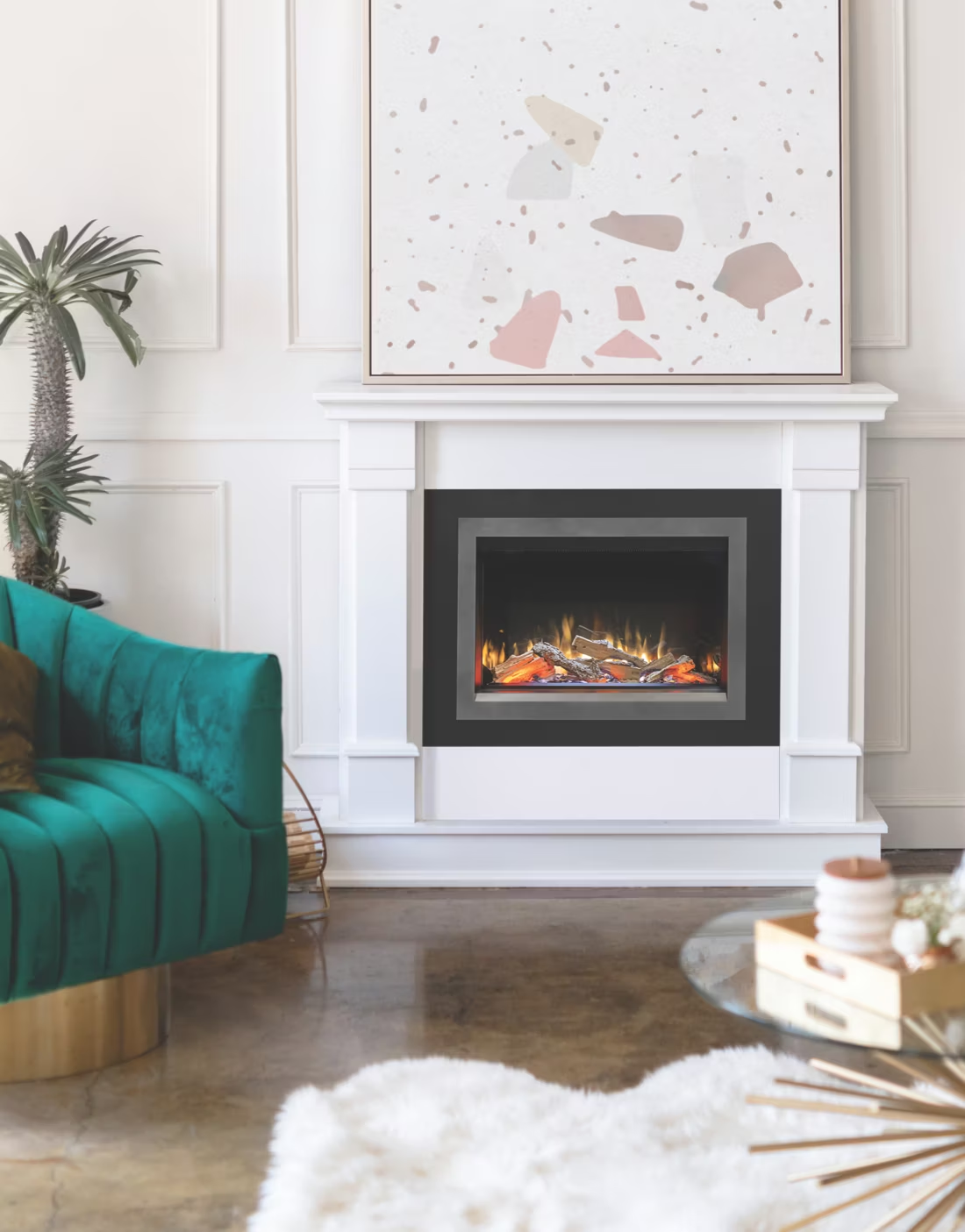
Plenty of Pulaski County homes still burn wood—the Ozark hardwood forests here are thick with oak, hickory, walnut, and maple, and a wood stove or fireplace remains a practical choice for homeowners who plan to stay put. But for renters, PCS-ready military families, condo and apartment dwellers, and anyone adding heat to a finished basement or bonus room without touching the chimney, an electric fireplace is often the more realistic answer. No venting, no gas line, and—for plug-in units—no permit at all. I'll match you with a local dealer who can walk you through what fits your specific address, whether that's a simple insert or a built-in unit wired to its own circuit, and send over a free Project Guide & Parts List so you know exactly what's involved before anyone shows up to install it.
Three steps. No salesperson until you're ready.
Tell us about your project
Your zip code, your situation, and the fuel you're leaning toward—or let the answers point you to one.
See what's actually available
The brands dealers within 100 miles genuinely carry—real options, never a catalog mirage.
Get your dealer & Project Guide
A trusted local dealer, plus the free Project Guide & Parts List that names every component of the job.
Frequently Asked Questions
How much does an electric fireplace installation cost in Pulaski County?
Costs vary widely because electric fireplaces span such a range of products. A plug-in insert or freestanding stove that drops into an existing opening can run as little as $300 to $800 installed, since it just needs a standard outlet. A built-in wall unit or a full mantel package with a linear electric firebox typically runs $1,500 to $3,500 once you factor in framing, a dedicated 20-amp circuit, and finish work. If your electrician needs to run new wiring from the panel—common in older homes around Waynesville and Dixon—expect an added $150 to $400 for that portion of the job.
Do I need a permit to install an electric fireplace in Pulaski County?
A plug-in electric fireplace that runs off a standard household outlet doesn't require a permit anywhere in the county. If you're installing a hardwired built-in unit that needs a new dedicated circuit, that electrical work typically requires a permit through your local jurisdiction—Waynesville, St. Robert, Richland, and Dixon each handle their own permitting, while unincorporated areas fall under Pulaski County. A licensed electrician pulling the permit as part of the job is standard practice and keeps the install code-compliant, especially if you're doing it ahead of a home sale or a PCS move.
Can I install an electric fireplace in on-post or rental housing near Fort Leonard Wood?
In most cases, yes—this is one of the biggest reasons electric fireplaces do well in Pulaski County. Because plug-in and many built-in electric units produce no open flame, no combustion byproducts, and no venting requirement, they're generally allowed in situations where a wood stove or gas insert would not be, including on-post housing and standard rental leases. That said, always confirm with post housing management or your landlord before any wall-mounted or hardwired installation, since some leases restrict permanent alterations even for low-risk appliances.
Will an electric fireplace actually heat my home?
Most electric fireplaces are built for supplemental zone heating, not whole-home heat—they typically put out around 5,000 to 9,000 BTUs, enough to comfortably warm a single room or open living area. Given Pulaski County's relatively moderate winters (average lows around 22°F and a moderate cold-climate profile), that's often plenty to take the chill off a bedroom, den, or finished basement without running the central furnace as hard. For anyone hoping to offset heating costs on a colder day, an electric fireplace is a solid assist—but it's not a substitute for your home's primary HVAC system.
What's the difference between a plug-in electric fireplace and a built-in unit?
A plug-in electric fireplace is a self-contained insert or freestanding stove that runs off a standard 120-volt outlet—it can go into an existing fireplace opening, on a wall shelf, or as a standalone furniture piece, and it's the fastest, least invasive option for renters or on-post housing. A built-in unit is installed into a wall or custom mantel surround, often on its own dedicated circuit, and is meant to look like a permanent architectural feature. For homeowners planning to stay in Pulaski County long-term, a built-in often makes more sense; for renters or families expecting a PCS move, a plug-in unit that can travel with you is usually the better call.
How does electric compare to wood heat for Pulaski County homes?
Wood remains a genuine option here—the Ozark forests around Pulaski County are full of oak, hickory, walnut, and maple, and a wood stove can meaningfully cut heating costs for homeowners willing to source and season their own firewood. But wood requires a chimney, clearances, and ongoing maintenance that many renters and on-post residents simply can't take on. Electric fireplaces trade the lower operating cost of wood for zero maintenance, no chimney sweep, no ash cleanup, and full flexibility for anyone who doesn't own their home outright or expects to move.
Electric vs. propane—which fits my Pulaski County home better?
Propane is common in the rural parts of Pulaski County where natural gas lines don't reach, and a propane fireplace can put out more heat than most electric units. But propane means a tank, fuel deliveries, and a gas line permit—real commitments for a renter or a family that might relocate with Fort Leonard Wood in a few years. Electric fireplaces skip all of that: no tank, no delivery schedule, no combustion venting, just an outlet or a dedicated circuit. For ambiance and light supplemental heat without a long-term fuel commitment, electric is usually the simpler choice.
How much maintenance does an electric fireplace need?
Very little. There's no chimney to sweep, no ash to clean, and no combustion byproducts to worry about. Routine care is mostly dusting the interior, occasionally wiping the glass front, and replacing the LED light strip or heating element after years of use—most units are rated for 10,000+ hours of LED life. This low-maintenance profile is part of why electric fireplaces show up so often in rental properties and on-post housing throughout the county, where nobody wants to inherit a chimney inspection schedule.
Are there rebates available for electric fireplaces in Pulaski County?
Rebate programs for electric fireplaces specifically are limited compared to programs for heat pumps or high-efficiency furnaces, but it's worth checking with your electric provider—whether that's Ameren Missouri or a rural cooperative like Intercounty Electric Cooperative Association, which serves parts of the Ozark region including Pulaski County—for any seasonal efficiency incentives tied to supplemental heating equipment. A local dealer can also flag whether a specific model qualifies for any manufacturer rebate at the time of purchase.
Can I put a TV above my fireplace?
Yes—with an asterisk. Fireplaces are hot and TVs don't like heat. Either put a mantel between them to deflect rising warmth, or choose a fireplace with heat-management technology that creates a cool zone on the wall above—the wall stays around 125 degrees, barely warm, while the room still gets full heat. If you like clean lines and don't want a mantel, heat management is the answer.
Does an electric fireplace need a vent or chimney?
No—that's its superpower. An electric fireplace needs a wall and an outlet, period. No vent pipe, no gas line, no clearances to design around, which is why it works in bedrooms, offices, apartments, and walls where venting a gas or wood unit would be impractical or impossible. Installation is typically the simplest and least expensive of any fireplace type.
Can a fireplace actually lower my heating bill?
Yes—by creating a comfort zone. A furnace heats every square foot of the house just to warm the one room you're in; a gas fireplace on low burns roughly a sixth of the gas a typical furnace does. Set the furnace around 55–60 degrees as a baseline, then heat the rooms your family actually uses. Families who heat this way commonly save $20–$60 a month.
What is an in-home preview and do I need one?
It's a visit where a hearth professional measures your space, confirms the model you picked actually works in your home, and walks the specs—framing, gas line, venting, finish work—before anything is ordered. Some details you just can't know until you see the house. Never make a down payment without one; it's the single most-skipped step that burns buyers.
Get matched with a Pulaski County electric fireplace dealer.
Tell us a bit about your home—whether it's on post, a rental in St. Robert, or a house you own outright—and we'll match you with a trusted local dealer and send over a free Project Guide & Parts List for your project.
Find Your Fireplace →