
Heat Your Home Near Fort Leonard Wood—Any Fuel, Any Season.
Wood, gas, pellet, and electric fireplace resources for every city and rural corner of Pulaski County—from Waynesville and St. Robert along I-44 to Richland, Dixon, Crocker, and Devils Elbow. Find the right unit and connect with a trusted local hearth retailer.
Every Project Starts From One of These Five Situations
Ozark hardwood country, anchored by Fort Leonard Wood.
Pulaski County sits in the Missouri Ozarks, where the Big Piney and Gasconade rivers cut through oak-hickory forest and the terrain climbs from river bottoms into rocky, timbered ridges. Winters here are moderate by national standards—climate zone 4A, an average winter low of 22°F, and a moderate winter heating season, less than half the heating load of a place like Duluth, Minnesota. Cold snaps below zero still happen most winters, and the region's abundant oak, hickory, walnut, and maple make wood heat a practical, low-cost option for anyone with land or access to it. Fort Leonard Wood, the county's dominant employer and the reason for its unusually young, transient population, means a large share of local housing is newer construction—subdivisions and rentals in Waynesville and St. Robert built in recent decades, much of it already wired or piped for gas and electric rather than built around a masonry chimney.
This hub rolls up every hearth resource in the county—retailers, chimney sweeps and gas techs, and fuel suppliers—serving the whole footprint from Waynesville and St. Robert along I-44, south to Richland and Crocker, and out to Dixon and Devils Elbow. Pick a fuel below to see local dealers, typical installation costs, and the specifics for your project, whether you're heating a farmhouse outside Swedeborg or a rental near the Fort Leonard Wood gate.
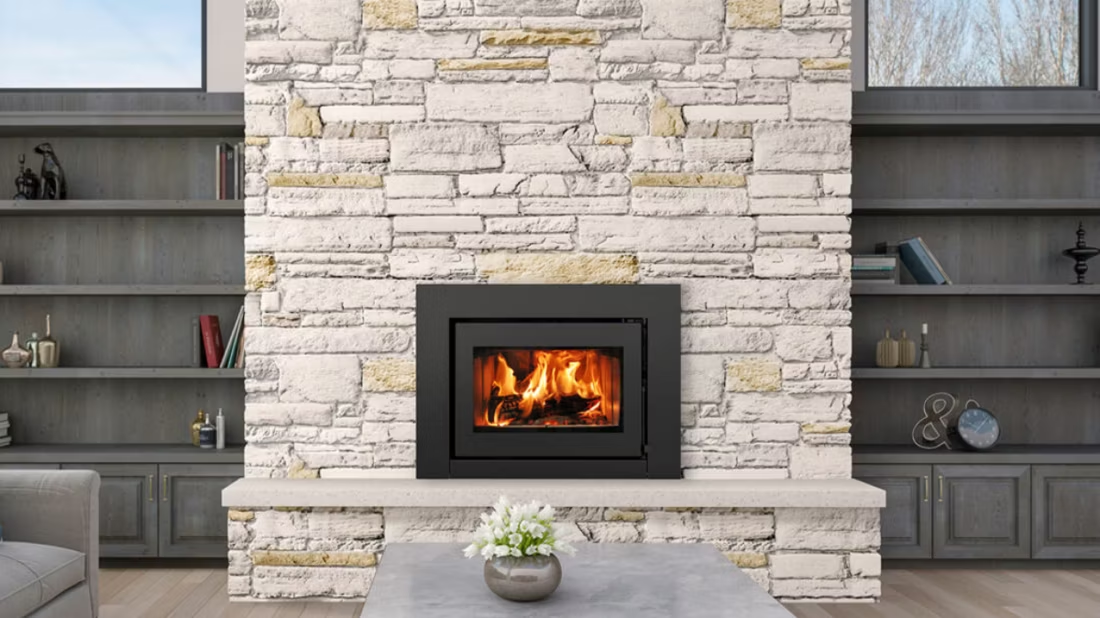
Four fuels. One honest answer for Pulaski County.
Three steps. No salesperson until you're ready.
Tell us about your project
Your zip code, your situation, and the fuel you're leaning toward—or let the answers point you to one.
See what's actually available
The brands dealers within 100 miles genuinely carry—real options, never a catalog mirage.
Get your dealer & Project Guide
A trusted local dealer, plus the free Project Guide & Parts List that names every component of the job.
Frequently Asked Questions
Which fuel works best in Pulaski County?
It depends on the home and the household. Wood is the traditional choice in rural Pulaski County—oak, hickory, walnut, and maple are all locally abundant, and a lot of homeowners outside Waynesville and St. Robert either cut their own or buy from Ozark landowners, which keeps fuel cost low. Gas is the practical choice for the newer subdivisions and rental housing built up around Fort Leonard Wood—no wood to split and stack, and it suits a population that turns over every few years with PCS moves. Pellet stoves are a middle ground, giving wood-style ambiance without the labor; Lignetics and Indeck Energy Services both supply pellets to regional dealers here, so availability isn't an issue. Electric fireplaces work well as supplemental heat in bedrooms, dens, or rentals where a full hearth isn't practical, but with an average winter low around 22°F, electric alone usually isn't enough for whole-home heating. Many households here end up mixing fuels—wood or pellet for the main living space, gas or electric for secondary rooms.
Do I need a permit to install a fireplace in Pulaski County?
It depends on where in the county you are. Waynesville and St. Robert each run their own building permit process for wood stoves, inserts, gas appliances, and pellet stoves, and any gas installation also needs a licensed gas-fitter for the line work. Outside those city limits, unincorporated Pulaski County has historically had a lighter permitting structure than the incorporated towns, so requirements can vary by project—your installer should be able to tell you exactly what's needed for your address. If you live in Fort Leonard Wood family housing, installation and any modification runs through the base's housing office rather than the county, since that's federal land. In all cases, a local hearth retailer who installs regularly in the area will know which office to call and typically handles the paperwork as part of the job.
Are there air quality restrictions on wood burning in Pulaski County?
No. Pulaski County has no non-attainment designation and no local ordinance restricting wood burning—there's no burn-ban advisory system here the way there is in some western basin counties prone to winter inversions. That said, installing an EPA-certified wood stove or insert is still worth doing on its own merits: certified units burn 60-80% less wood than an old pre-EPA stove for the same heat output, which matters given how much of the local wood supply is self-cut oak and hickory. It's a cost and efficiency decision here, not a regulatory one.
Can one local hearth retailer handle all four fuel types?
Several dealers along the Waynesville/St. Robert corridor carry three or four fuel types, since Fort Leonard Wood's transient population means retailers benefit from stocking something for every kind of housing—from older farmhouses that want a wood insert to base-adjacent rentals that need a plug-in electric unit. If a dealer's showroom only has wood and gas units on the floor, ask directly about pellet and electric—many keep pellet stoves and electric inserts in back stock or order-to-spec rather than displaying them. The county + fuel pages above list which dealers carry which fuel, so you can narrow down before you drive out.
How does service work for homes near Fort Leonard Wood or in rural parts of the county?
Technicians based in Waynesville and St. Robert cover most of the county, including Richland, Dixon, and Crocker, usually within a same-day or next-day window; travel further out toward Devils Elbow or the Gasconade River bottoms may add a small trip fee. Because Fort Leonard Wood turns over a large share of its housing population every two to three years with PCS moves, service demand spikes in summer during the peak moving season—booking your fall chimney sweep or gas inspection in August or September, ahead of that rush, is easier than waiting until the first cold snap in November.
What's the typical cost range for fireplace installation across all fuel types in Pulaski County?
Ranges vary by fuel. Wood stove or insert: $3,500-$7,500 for typical installs, up to $11,000 for new construction requiring a full chimney build. Gas fireplace, insert, or stove: $3,500-$8,500 depending on gas line work and whether the home already has service. Pellet stove or insert: $3,500-$6,000 for typical installs. Electric fireplace: $150-$2,500 for the unit, plus $300-$900 in labor for anything beyond plug-and-play. For specific pricing tied to local retailers, see the county + fuel pages above.
Does a fireplace add value to my home?
On average, a fireplace adds back to the home about the same amount you spent installing it. Add the monthly savings from heating the rooms you actually use instead of the whole house—often hundreds of dollars a year—and the value case is strong before you even count what a fire does for how your family uses the room.
Can I install a fireplace myself?
If you're putting a fire in your house on purpose, it's best to work with an expert. Unless you're genuinely experienced in framing, gas line, vent pipe, and the national code on clearances to combustibles, have a professional do it—and ideally the same company that sells you the fireplace, so warranty, service, and liability all live under one roof.
Wood, gas, pellet, or electric—how do I choose?
Match the fuel to your life, not the other way around. Wood: lowest fuel cost and total power-outage independence, but you're hauling and stacking. Gas: press a button, set a thermostat, no maintenance to speak of. Pellet: wood economics with automatic feeding, in exchange for weekly cleaning and a need for electricity. Electric: plugs in anywhere with honest supplemental heat. Nobody regrets the fuel that fits how they actually live.
What are the biggest mistakes people make buying a fireplace?
Five come up constantly: budgeting for the unit but not the full job (vent, gas line, electrical, finish work); drowning in options instead of starting from style and fuel; buying without an in-home preview; handing installation to a handyman instead of a pro; and giving up out of sheer indecision. Every one is avoidable with a clear plan—step one, step two, step three.
Stove and Fireplace Dealers in Pulaski County
Listings include WhyFire partner dealers, dealers we have verified as authorized for the brands we recommend, and established local businesses that carry hearth products. Every listing shows which one it is. The ones marked Preferred run on WhyFire's software, so they can show you real pricing and book your appointment right here. No manufacturer pays for placement. How we verify dealers →
Titan Propane
Hmi Fireplace Shop
Hartley's Climate Control & Fireplace
Dr Soot Chimney Sweep
Get matched with a hearth pro in Pulaski County.
Pick your fuel below and we'll match you with a trusted local dealer plus a free Project Guide & Parts List—a plan for your project with the exact parts, including the vent kit, and the retailer who can install it near Waynesville, St. Robert, or wherever you're located in the county.
Find Your Fireplace →