
Consistent Heat, Set-and-Forget Convenience—All Winter Long.
Pellet heat for the Ozark Plateau winters of Phelps County—from Rolla and St. James to Newburg and the surrounding countryside. Find the right stove or insert, and connect with a trusted local dealer.
Every Project Starts From One of These Five Situations
Pellet heat fits Phelps County's moderate, wooded winters.
Phelps County sits on the eastern edge of the Ozark Plateau, a landscape of oak-hickory forest cut through by the Big Piney and Gasconade river valleys. Winters here are real but not extreme—climate zone 4A, an average winter low around 22°F, and a heating season that adds up to a fraction of what a place like Madison, WI logs in a typical winter. That's cold enough to need dependable heat from late fall through early spring, but mild enough that homeowners in Rolla, St. James, Newburg, and the county's smaller communities have real choice in how they heat—and pellet stoves have become one of the most popular answers.
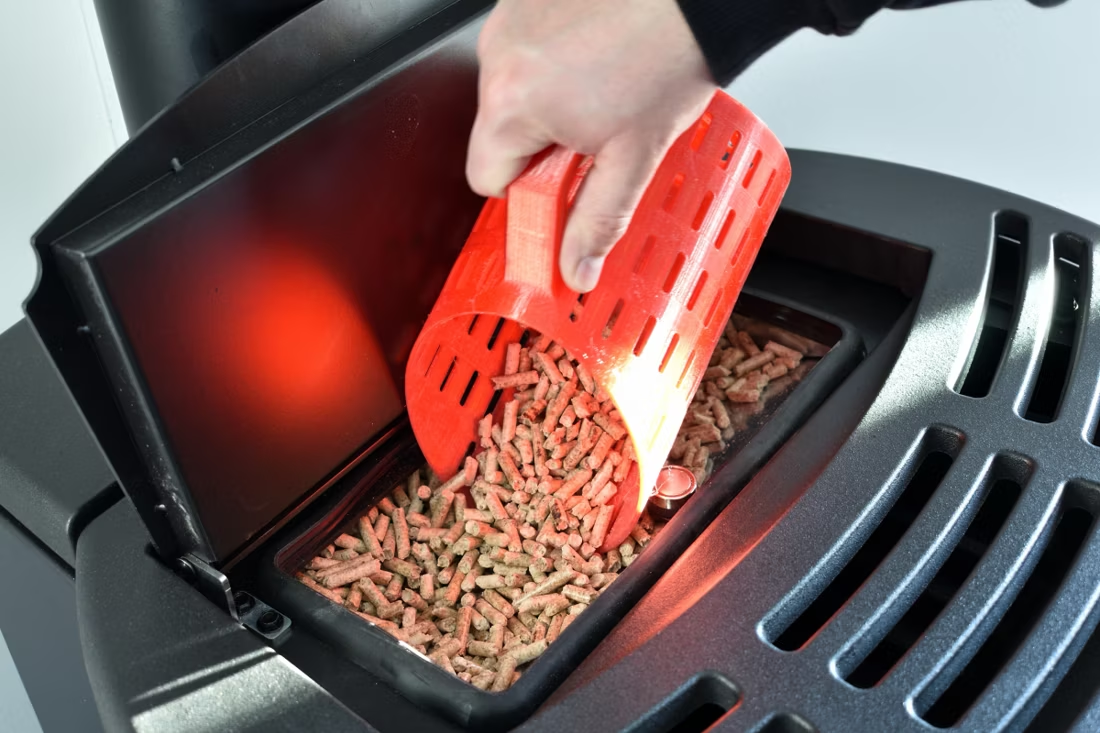
Part of the appeal is practical: Phelps County has no non-attainment status or winter burn restrictions, so pellet appliances aren't competing with air-quality rules the way they might elsewhere—homeowners choose pellet for the convenience, not because wood is restricted. Load the hopper, set the thermostat, and a pellet stove or insert holds a steady burn for a day or more without splitting, stacking, or seasoning cordwood. Regional suppliers including Lignetics and Indeck Energy Services keep bagged pellets flowing through local hardware and farm supply outlets, which matters in a county where a supply run into Rolla is less appealing on a cold January morning.
Three steps. No salesperson until you're ready.
Tell us about your project
Your zip code, your situation, and the fuel you're leaning toward—or let the answers point you to one.
See what's actually available
The brands dealers within 100 miles genuinely carry—real options, never a catalog mirage.
Get your dealer & Project Guide
A trusted local dealer, plus the free Project Guide & Parts List that names every component of the job.
Frequently Asked Questions
How much does a pellet stove or insert installation cost in Phelps County?
Cost depends mainly on whether you're installing a freestanding pellet stove with a through-wall vent kit, or a pellet insert that slides into an existing masonry fireplace and uses a stainless liner run up the chimney. A through-wall install is generally the simpler and less expensive route since there's no existing flue to line. Add-ons that push the price up include a dedicated electrical outlet (pellet stoves need power for the auger and blower), hearth pad work if your floor isn't already rated for a hearth appliance, and any wall or floor protection required by code. A local dealer can walk your home and give you a firm number—it's worth getting that in-home look rather than estimating from a stove's sticker price alone.
Pellet stove vs. wood stove—which makes more sense for my Phelps County home?
Both work well here—Phelps County's oak, hickory, walnut, and maple forests mean firewood is genuinely abundant and cheap for anyone willing to season it. Wood stoves also keep working during a power outage, which matters if an ice storm takes down lines. Pellet stoves trade that off-grid resilience for convenience: no splitting, no stacking, minimal creosote buildup, and a burn that's easier to dial in and leave alone overnight. If you want heat with minimal hands-on maintenance and don't mind needing electricity to run it, pellet is usually the better fit. If backup heat during outages matters more than convenience, wood stays the safer bet.
What size pellet stove do I need for my home?
Sizing depends on square footage, insulation, and how much of the home you're trying to heat. As a general guide for a 4A climate with winter lows around 22°F: a small pellet stove (up to roughly 1,000 sq ft) suits a single room, den, or smaller ranch home; a medium stove (1,000–2,000 sq ft) covers most main living areas in the older farmhouses and two-story homes common around Rolla and St. James; and a larger unit is worth considering for open floor plans or less-insulated houses. Older, drafty homes in the county's rural areas often need to size up a notch compared to a newer, tightly built house of the same square footage. A local dealer will size this for free during an in-home visit rather than off a generic chart.
Where can I buy pellet fuel in Phelps County?
Bagged pellets from regional producers like Lignetics and Indeck Energy Services are typically available through local hardware stores and farm supply retailers serving Rolla and the surrounding towns. Because winter demand spikes and weather can complicate deliveries, it's smart to buy your season's supply early—many Phelps County homeowners stock up in late summer or early fall before the first cold snap rather than shopping bag-by-bag once winter sets in. Storage matters too: pellets need to stay dry, so a garage or covered shed works better than an open carport.
Do I need a permit to install a pellet stove in Phelps County?
Most jurisdictions require a building permit for a new hearth appliance installation, including pellet stoves and inserts, and Phelps County is no exception—check with your local building department, whether that's the City of Rolla, St. James, or the county office if you're in an unincorporated area. In practice, most local dealers handle the permit application as part of the installation, so you typically aren't the one filing paperwork. It's worth confirming this is included before you sign an install agreement.
What's the difference between a pellet stove and a pellet insert?
A pellet stove is a freestanding unit that sits on a hearth pad and vents through an exterior wall or existing chimney—it can go almost anywhere in the home with the right clearances. A pellet insert is built to slide into an existing masonry fireplace opening, converting an old wood-burning fireplace into an efficient pellet-fed heat source while reusing the existing chimney, typically with a liner. For Phelps County homes with an existing fireplace that doesn't get much use, an insert is often the more cost-effective upgrade. Homes without an existing fireplace, or new construction, are usually better suited to a freestanding stove.
How much maintenance does a pellet stove need?
Pellet stoves need more frequent attention than gas but far less than wood. Plan on emptying the ash pan every few days to weekly depending on how much you're burning, wiping down the glass regularly, and vacuuming the burn pot and heat exchanger tubes every couple of weeks during heavy use. A full professional cleaning and inspection once a year—typically before the season starts each fall—keeps the auger, exhaust fan, and venting in good shape. Local dealers who sell pellet appliances in Phelps County generally offer this annual service.
Will my pellet stove work during a power outage?
Not without backup power. Pellet stoves rely on electricity to run the auger that feeds fuel and the fan that distributes heat, so a standard unit goes dark the moment the power does. Some homeowners pair a pellet stove with a small battery backup or generator for exactly this reason, especially in the county's rural areas where an ice storm can knock out power for longer stretches. If uninterrupted heat during outages is a top priority, a wood stove or wood insert is worth considering alongside—or instead of—pellet, since it needs no electricity to run.
Pellet stove vs. gas fireplace—which is right for my home?
Gas fireplaces offer instant on-off operation with the flip of a switch or a wall control, and many models can run during a power outage on battery backup. Pellet stoves burn a renewable, regionally sourced fuel and give a more traditional flame appearance, but need the hopper reloaded every day or two and electricity to operate. If your priority is zero-maintenance daily convenience, gas usually wins. If you like the idea of a real, visible fire and don't mind loading fuel every day or so, pellet is the better match. A local dealer carrying both product lines can walk you through the tradeoffs for your specific space.
What's the difference between an insert and a zero-clearance fireplace?
An insert is a fireplace that slides into a pre-existing wood-burning fireplace—if you don't have one, there's nothing to insert it into. A zero-clearance fireplace is built into a framed wall, which makes it the answer for remodels and new construction. Simple test: existing masonry fireplace means insert; blank or framed wall means zero-clearance.
Are pellet stoves loud?
They make some noise—there are two fans running plus an auger motor that turns as it feeds pellets. But there's a real range: premium models are engineered quiet, and the best offer a whisper-quiet mode you can comfortably watch TV next to. If noise matters in your room, ask to hear a stove running before you buy—it's a five-minute test that saves years of annoyance.
How much should I budget for a fireplace?
For an average home—covering the fireplace, the vent pipe, and basic installation—a budget between $3,900 and $5,500 gives you a lot of options across wood, gas, and pellet. By the time you add finish work, gas line, and electrical, the average complete installation lands between $5,000 and $12,000 all-in. In a remodel or new build, a good rule is to put about 2.5% of the total project cost toward the fireplace.
Can a fireplace actually lower my heating bill?
Yes—by creating a comfort zone. A furnace heats every square foot of the house just to warm the one room you're in; a gas fireplace on low burns roughly a sixth of the gas a typical furnace does. Set the furnace around 55–60 degrees as a baseline, then heat the rooms your family actually uses. Families who heat this way commonly save $20–$60 a month.
Stove and Fireplace Dealers in Phelps County
Pellet Brands Stocked Around Phelps County
Manufacturers will point you to the nearest stocking dealer.
Find your pellet stove in Phelps County.
Tell us a bit about your home and we'll match you with the right pellet stove or insert, plus a free Project Guide & Parts List—the exact parts, including the vent kit, and our recommended local dealer for your Phelps County project.
Find Your Fireplace →