
Add warmth to Phelps County homes—no gas line, no chimney, no permit headaches.
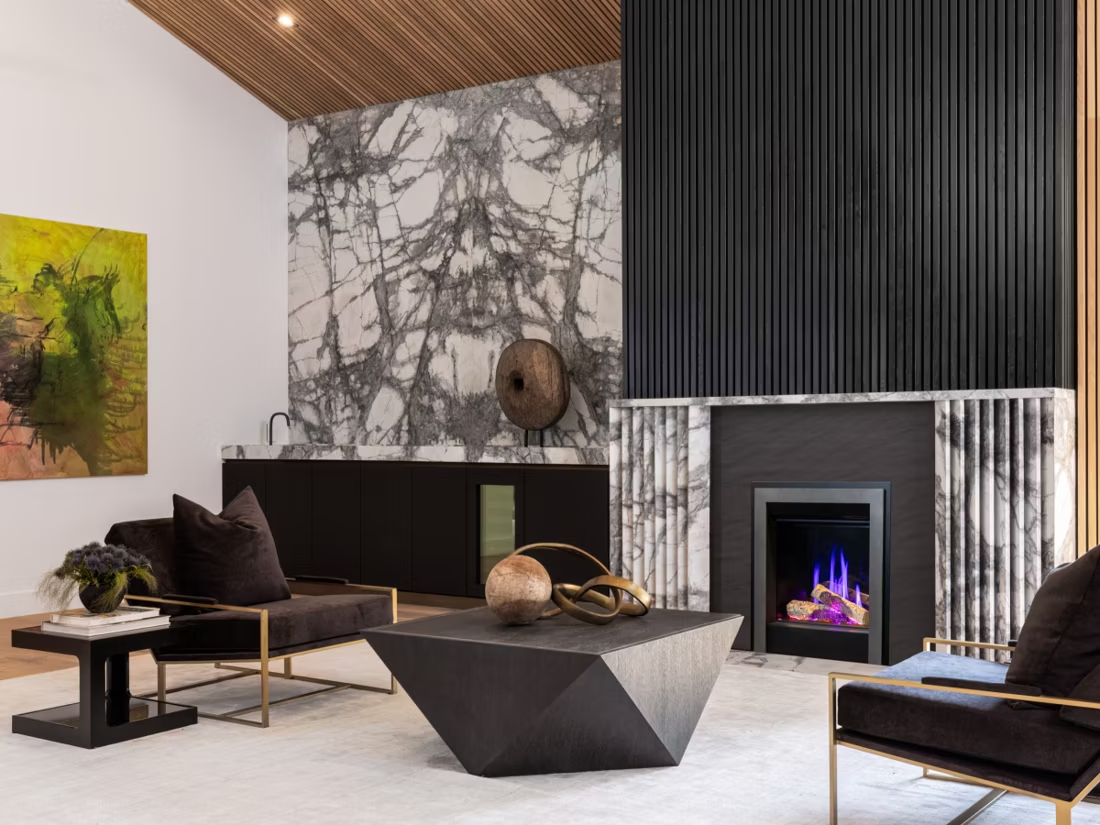
From century-old homes near Missouri S&T in Rolla to newer construction in St. James and rural properties served by Intercounty Electric Cooperative, electric fireplaces add supplemental heat and real ambiance without combustion, venting, or a chimney. Find the right unit and connect with a trusted local dealer.
Every Project Starts From One of These Five Situations
Zone heat that fits any home in Phelps County.
Phelps County sits in USDA climate zone 4A, with a moderate winter heating season and winter lows that average around 22°F. That's a moderate heating climate—nowhere near the sub-zero stretches that hit places like Madison, WI or Minneapolis, MN—which is exactly why electric fireplaces do so well here. Most Phelps County homes, whether in Rolla, St. James, Newburg, or the unincorporated stretches served by Intercounty Electric Cooperative Association, don't need a primary wood or gas system running around the clock. They need supplemental zone heat for the rooms people actually live in, plus the ambiance of a real-looking flame on a cold February evening.
Rolla's housing stock is a mix of century-old homes near the Missouri S&T campus—many without an existing chimney or gas line—and newer subdivisions on the edges of town. Electric fireplaces solve both problems: no combustion, no venting, and no gas permit required. A plug-in insert or wall-mounted unit can go into a rental near campus in an afternoon. A built-in electric fireplace with a dedicated 240V circuit takes a bit more electrical work, but it's still a fraction of the cost and complexity of running a gas line or building a masonry chimney. Rolla Municipal Utilities and Intercounty Electric Cooperative Association both keep reliable power flowing across the county, which matters since these units draw on the grid rather than burning fuel on-site.
Three steps. No salesperson until you're ready.
Tell us about your project
Your zip code, your situation, and the fuel you're leaning toward—or let the answers point you to one.
See what's actually available
The brands dealers within 100 miles genuinely carry—real options, never a catalog mirage.
Get your dealer & Project Guide
A trusted local dealer, plus the free Project Guide & Parts List that names every component of the job.
Frequently Asked Questions
How much does an electric fireplace installation cost in Phelps County?
Plug-in electric fireplace inserts and freestanding units typically run $300 to $1,500 for the unit itself, and most simply plug into a standard 120V household outlet—no professional installation required. Built-in electric fireplaces or units that call for a dedicated 240V circuit add $150 to $400 in electrician labor, plus the cost of the unit, framing, and any mantel or hearth surround. Most full built-in projects in Phelps County—unit, circuit work, and finish carpentry—land somewhere between $1,000 and $3,500 depending on size and features. Local dealers can give you a firm number once they know your room and whether you're doing a simple insert or a full built-in.
Do I need a permit to install an electric fireplace in Phelps County?
Plug-in units that use an existing standard outlet don't require a permit. If you're adding a dedicated circuit for a built-in electric fireplace, that electrical work typically requires a permit through the City of Rolla Building Department if you're inside city limits, or through Phelps County if you're in an unincorporated area. Most licensed electricians pull this permit as part of the job, so it's rarely something homeowners have to handle themselves. There's no combustion involved, so there's no venting inspection or chimney requirement to worry about—a big part of why electric installs move faster than wood or gas projects.
Can an electric fireplace actually heat a room, or is it just for looks?
Most electric fireplaces put out 4,000 to 5,000 BTU—enough to comfortably supplement heat in a 400 to 1,000 square foot space, depending on insulation and ceiling height. In Phelps County's moderate climate (a moderate winter heating season, average winter lows around 22°F), that's plenty to take the chill off a living room, den, or bedroom without running the furnace harder. Electric fireplaces aren't designed to replace a home's primary heating system—they're built for zone heating and ambiance. If you're trying to heat an entire home with no other heat source, an electric fireplace isn't the right tool for that job.
Are electric fireplaces a good fit for rental properties near Missouri S&T?
Yes—plug-in electric fireplace inserts and freestanding units are one of the most common upgrades landlords and tenants make in Rolla's older rental housing near the Missouri S&T campus. Many of these homes were built decades before central gas heat was standard, and adding a masonry chimney or running a gas line isn't practical for a rental. A plug-in unit needs nothing more than an outlet, adds real supplemental warmth on cold nights, and can move with a tenant or come out entirely at the end of a lease without any structural changes.
Will my electric fireplace work if the power goes out?
No—electric fireplaces run entirely on grid power, so they'll shut down along with everything else during an outage. This matters more in the rural stretches of Phelps County served by Intercounty Electric Cooperative Association, where storm-related outages can occasionally run longer than in town. If backup heat during outages is a priority for your household, a wood stove or a battery-backed gas fireplace is worth considering alongside an electric unit for daily use. Many Phelps County homes actually run both: electric for everyday convenience, wood for the occasional outage.
Electric vs. gas fireplace—which is right for my home?
Gas fireplaces put out more heat and can serve as a legitimate secondary heat source, but they require either a natural gas line or a propane tank, plus venting and a gas permit. Electric fireplaces skip all of that—no fuel line, no venting, no combustion byproducts—in exchange for lower heat output and a dependence on grid power. For Phelps County homes without existing gas service, or for rooms where running a gas line isn't practical (a converted attic bedroom, a finished basement, an addition), electric is usually the simpler and cheaper answer. For a primary living room where you want real supplemental heat, gas is worth a look too.
Electric vs. wood-burning fireplace—which makes more sense here?
Wood heat has deep roots in rural Phelps County, where oak, hickory, walnut, and maple are all common locally, and a good wood stove can genuinely carry a home through winter without any grid dependence. Electric fireplaces don't compete on raw heat output or off-grid reliability, but they win on simplicity—no firewood to split and stack, no chimney to sweep, no ash to clean up. If you already have a working wood stove or fireplace for real heat and just want ambiance and a little extra warmth in a second room, electric is a natural add-on rather than a replacement.
What's the difference between an electric insert, a wall-mount unit, and a built-in electric fireplace?
An electric insert is sized to slot into an existing fireplace opening, often replacing an old wood-burning unit or an unused masonry firebox, and typically just plugs into an outlet behind the surround. A wall-mount unit hangs on the wall like a large flat-screen TV and needs only a nearby outlet. A built-in electric fireplace is designed to be framed into new construction or a remodel, often with a mantel and hearth surround built around it, and usually calls for a dedicated circuit. For most Phelps County homes with an existing fireplace opening, an insert is the fastest and least disruptive upgrade.
What features actually matter when choosing an electric fireplace?
Flame realism varies a lot between brands—look at units in person or watch video before buying, since photos rarely do the flame effect justice. Heater output (measured in BTU or watts) matters if you want real supplemental warmth rather than just the visual effect; many units let you run the flame with the heater off, which is useful in Phelps County's shoulder seasons when you want ambiance but not more heat in the room. Also check the amperage draw if you're installing on an existing circuit shared with other appliances—a local dealer can confirm whether your panel and wiring can handle a higher-output unit without an upgrade.
Can I put a TV above my fireplace?
Yes—with an asterisk. Fireplaces are hot and TVs don't like heat. Either put a mantel between them to deflect rising warmth, or choose a fireplace with heat-management technology that creates a cool zone on the wall above—the wall stays around 125 degrees, barely warm, while the room still gets full heat. If you like clean lines and don't want a mantel, heat management is the answer.
How much does an electric fireplace cost to run?
With the heater on, a typical unit draws about 1,500 watts—at average electric rates that's roughly 20 cents an hour. Run the flame effect alone and it costs pennies; the flames are LED-driven and use about as much power as a light bulb. There's no pilot light, no fuel delivery, and essentially no maintenance.
Does a fireplace add value to my home?
On average, a fireplace adds back to the home about the same amount you spent installing it. Add the monthly savings from heating the rooms you actually use instead of the whole house—often hundreds of dollars a year—and the value case is strong before you even count what a fire does for how your family uses the room.
How much should I budget for a fireplace?
For an average home—covering the fireplace, the vent pipe, and basic installation—a budget between $3,900 and $5,500 gives you a lot of options across wood, gas, and pellet. By the time you add finish work, gas line, and electrical, the average complete installation lands between $5,000 and $12,000 all-in. In a remodel or new build, a good rule is to put about 2.5% of the total project cost toward the fireplace.
Stove and Fireplace Dealers in Phelps County
Find your electric fireplace in Phelps County.
Tell us a bit about your home—in Rolla, St. James, or anywhere else in Phelps County—and we'll match you with the right electric fireplace or insert, plus a free Project Guide & Parts List with the exact parts and your recommended local dealer.
Find Your Fireplace →