
Steady, low-maintenance heat for Oregon County's Ozark winters.
From Alton to Thayer to Koshkonong, pellet stoves give Oregon County homes thermostat-like heat without the wood-splitting labor. Get matched with a trusted local dealer who'll size and install it right.
Every Project Starts From One of These Five Situations
Consistent warmth without the woodpile.
Oregon County sits deep in the Missouri Ozarks, a landscape of hardwood ridges and hollows where oak, hickory, walnut, and maple have long supplied the region's wood stoves. At roughly 4,180 heating degree days and average winter lows around 23°F, the climate here is a notch milder than places like Duluth MN or Fargo ND, but it still delivers real stretches of cold—enough that a supplemental or primary heat source matters, especially for the county's many rural properties outside town limits in Alton, Thayer, and Koshkonong.
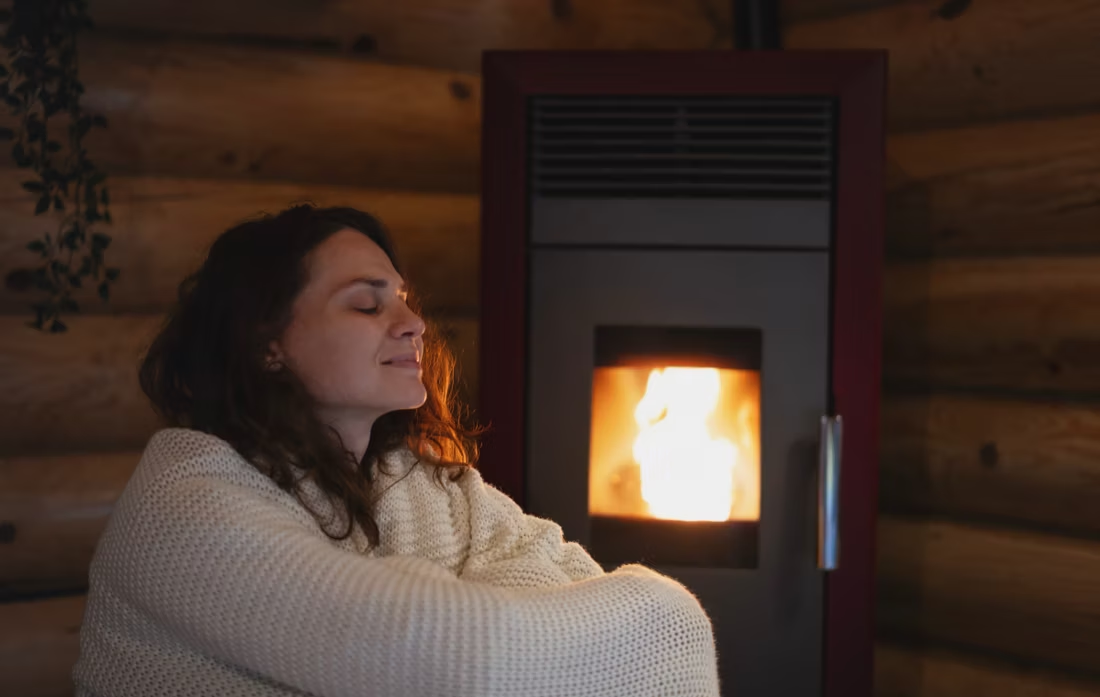
For homeowners who want the radiant comfort of a stove without cutting, splitting, and stacking cordwood, pellet appliances have become a practical alternative across the county. Bagged pellets from regional producers like Lignetics and Indeck Energy Services are widely available through farm supply and hardware retailers in south-central Missouri, and a hopper-fed stove holds a steady burn for hours with a simple thermostat-style dial—a meaningful convenience for older homeowners or anyone managing a household on a tight schedule. A trusted local dealer will size the unit to your square footage, confirm venting clearances, and handle the permit paperwork so the install meets code the first time.
Three steps. No salesperson until you're ready.
Tell us about your project
Your zip code, your situation, and the fuel you're leaning toward—or let the answers point you to one.
See what's actually available
The brands dealers within 100 miles genuinely carry—real options, never a catalog mirage.
Get your dealer & Project Guide
A trusted local dealer, plus the free Project Guide & Parts List that names every component of the job.
Frequently Asked Questions
How much does a pellet stove installation cost in Oregon County?
Pellet stove installations in this part of the Ozarks typically run in the range you'd see across most of Missouri—roughly $2,500 to $5,500 depending on the unit, whether it's a freestanding stove or an insert going into an existing masonry fireplace, and how far the vent run has to travel through an exterior wall. Homes on larger rural lots around Alton or Koshkonong may see a modest travel charge added if the dealer is coming a distance to install and commission the unit. A local retailer can give you a firm number after seeing your home.
What size pellet stove do I need for my home?
Sizing depends on square footage, ceiling height, and how well-insulated the home is—older farmhouses common throughout Oregon County often run drafty and need more heat output than the square footage alone would suggest. Small pellet stoves suit a single room or cabin, mid-size units handle 1,000 to 1,800 square feet of open living space, and larger stoves can serve as a home's primary heat source in well-sealed construction. Given the average winter lows here in the low 20s, most local dealers recommend sizing on the generous side rather than undersizing to save on upfront cost.
Do pellet stoves need electricity to run?
Yes—this is the biggest practical difference from a wood stove. Pellet stoves rely on an electric auger to feed fuel and a blower to distribute heat and exhaust combustion gases, so they stop working during a power outage unless you have a battery backup or generator. For Oregon County's rural stretches, where ice storms occasionally take down power for extended periods, some homeowners keep a wood stove or fireplace as backup alongside a pellet unit used for daily convenience. It's worth discussing with your dealer whether a small battery backup system makes sense for your situation.
What's the difference between a pellet stove and a pellet insert?
A pellet stove is a freestanding appliance that sits on a hearth pad and can go almost anywhere in a room with proper clearances and a vent path to the outside. A pellet insert is built to slide into an existing masonry fireplace opening, converting an old open hearth into a sealed, efficient heat source while reusing the existing chimney chase for venting (with an appropriate liner). For Oregon County homes with an existing but underused wood fireplace, an insert is often the more cost-effective path since it doesn't require new floor space or a hearth pad build-out.
Where do I buy pellets locally, and how much do they cost?
Bagged pellets from producers like Lignetics and Indeck Energy Services are typically stocked at farm supply stores and hardware retailers throughout south-central Missouri, with pricing generally landing in the national mid-range for premium hardwood or softwood blends. Buying a full winter's supply in fall, before demand and shipping costs climb, is standard practice for rural Ozark households. Your local dealer can point you toward the closest reliable pellet source and give you a rough seasonal quantity estimate based on your stove size and how many hours a day you plan to run it.
Do I need a permit to install a pellet stove in Oregon County?
Most pellet stove installations require a building permit to confirm the venting and clearances meet code, though requirements can vary between incorporated towns like Alton and Thayer and the unincorporated parts of the county. The good news is that pellet stoves are exempt from the kind of air-quality curtailment rules you'll find in parts of the West, since Oregon County has no listed air quality nonattainment concerns. A local installer will typically pull the permit as part of the job so you're not navigating it on your own.
How often does a pellet stove need cleaning and service?
Pellet stoves need more frequent light maintenance than wood stoves but far less heavy chimney work. Plan on emptying the ash pan every few days during regular use, cleaning the burn pot weekly, and scheduling a full professional service—including the exhaust venting and hopper mechanism—once a year, ideally before the start of the heating season. Homes running the stove as a primary heat source through a full Ozark winter should lean toward the more frequent end of that maintenance schedule.
Is a pellet stove a good fit for a home in a rural, off-the-grid part of Oregon County?
It depends on your power situation. Because pellet stoves need continuous electricity for the auger and combustion blower, homes without reliable grid power or a dependable backup generator will find a wood stove—burning locally abundant oak or hickory—a more resilient primary heat choice. Pellet stoves work best where power is generally reliable and the homeowner wants convenience without the labor of processing cordwood. A local dealer can walk through both options honestly based on your specific property.
Pellet vs. wood—which is right for my Oregon County home?
Wood stoves burn the oak, hickory, walnut, and maple that are abundant across the county's ridges, work with no electricity at all, and appeal to homeowners who already have a source of cordwood or enjoy the process. Pellet stoves trade that self-sufficiency for convenience—load the hopper, set the dial, and let it run for hours with far less mess and no splitting maul required. For most in-town properties in Alton or Thayer with reliable power, pellet is an easy, low-labor choice. For remote rural properties concerned about ice-storm outages, wood remains the more dependable backup. Either way, a local dealer can size the right unit for your home.
What's the difference between an insert and a zero-clearance fireplace?
An insert is a fireplace that slides into a pre-existing wood-burning fireplace—if you don't have one, there's nothing to insert it into. A zero-clearance fireplace is built into a framed wall, which makes it the answer for remodels and new construction. Simple test: existing masonry fireplace means insert; blank or framed wall means zero-clearance.
Why is a fireplace insert so efficient?
An insert does two things: it seals the chimney completely, so you stop losing air you already paid to heat, and it radiates warmth into the room through the firebox and glass. Most add a heat-exchange fan that pulls cool room air underneath, wraps it around the hot firebox, and pushes it back out warm. Your home is more efficient before you've even lit the first fire.
How much should I budget for a fireplace?
For an average home—covering the fireplace, the vent pipe, and basic installation—a budget between $3,900 and $5,500 gives you a lot of options across wood, gas, and pellet. By the time you add finish work, gas line, and electrical, the average complete installation lands between $5,000 and $12,000 all-in. In a remodel or new build, a good rule is to put about 2.5% of the total project cost toward the fireplace.
Does a fireplace add value to my home?
On average, a fireplace adds back to the home about the same amount you spent installing it. Add the monthly savings from heating the rooms you actually use instead of the whole house—often hundreds of dollars a year—and the value case is strong before you even count what a fire does for how your family uses the room.
Pellet Brands Stocked Around Oregon County
Manufacturers will point you to the nearest stocking dealer.
Get matched with a pellet dealer near Oregon County.
Tell us about your home and heating goals, and we'll match you with a trusted local dealer plus a free Project Guide & Parts List—the exact pellet stove or insert, vent kit, and install plan for your Oregon County property.
Find Your Fireplace →