
Gas heat that keeps up with Ozark winters.
Propane-powered warmth for Oregon County homes, from Alton to Thayer to Koshkonong—no natural gas main required. Find the right unit and connect with a trusted local dealer.
Every Project Starts From One of These Five Situations
Propane fills the gap where natural gas lines don't reach.
Oregon County sits in the Ozark Highlands of south-central Missouri, cut through by the Eleven Point National Scenic River and bordered by stretches of Mark Twain National Forest. It's rural country—the kind of place where a lot of firewood still gets split from the oak, hickory, walnut, and maple that cover the hillsides. With a winter low average around 23°F and a solidly cold, months-long heating season, winters here are noticeably colder than Memphis or the Mid-South but nowhere near the brutal stretch Fargo or Duluth sees—enough cold to matter, not enough to demand extreme equipment.
What sets gas heat apart in a county this size and this rural is the absence of a natural gas utility main reaching most homes. Propane is the standard fuel for gas fireplaces, inserts, and stoves throughout Oregon County, delivered and stored in a tank on the property rather than piped in from the street. That means every gas fireplace project here starts with a tank decision—buy or lease, above ground or buried—before the fireplace itself even enters the conversation. Once that's sorted, propane delivers the same instant, thermostat-controlled heat homeowners in gas-main cities get, without waiting on a fire to build or hauling wood in from the truck.
Three steps. No salesperson until you're ready.
Tell us about your project
Your zip code, your situation, and the fuel you're leaning toward—or let the answers point you to one.
See what's actually available
The brands dealers within 100 miles genuinely carry—real options, never a catalog mirage.
Get your dealer & Project Guide
A trusted local dealer, plus the free Project Guide & Parts List that names every component of the job.
Frequently Asked Questions
How much does a gas fireplace installation cost in Oregon County?
A propane fireplace or insert installation in Oregon County typically runs $3,500 to $9,500, depending on the unit, the venting path, and whether a propane tank is already on the property. A direct-vent insert going into an existing masonry fireplace on a property with an existing tank sits at the lower end. A new built-in unit for a remodel—plus a new propane tank installation and gas line run from tank to appliance—pushes toward the higher end. Because there's no natural gas main serving most of the county, budget for the tank itself as a separate line item if you don't already have propane service at the house.
Can I convert my existing wood fireplace to gas?
Yes, and it's a common project for older farmhouses around Alton and Thayer that still have a working masonry chimney from decades of burning oak and hickory. A propane insert typically goes into the existing firebox with a stainless liner run up the chimney for venting, which preserves the look of the original fireplace while swapping in push-button heat. The main added step in Oregon County is confirming propane service—if the property doesn't already have a tank, that gets added to the project alongside the insert and liner.
Do I need natural gas, or does propane work for a gas fireplace in Oregon County?
Propane is the fuel almost every homeowner in Oregon County will use—there's no natural gas utility main reaching the vast majority of the county, including Alton, Thayer, Koshkonong, and the rural stretches in between. Most gas fireplace models are built to run on either fuel with the correct orifice and regulator, so the appliance selection isn't limited by using propane instead of piped gas. You'll need either an existing propane tank on the property or a new tank set by a regional propane supplier, sized to the fireplace's BTU draw along with any other propane appliances in the house.
Will my gas fireplace work during a power outage?
Most modern propane fireplaces will, which matters in a county where winter ice storms can knock out power for a day or more at a time. Units with IPI (intermittent pilot ignition) run on AA battery backup that kicks in the moment the power drops, so the fireplace still lights on demand. A smaller number of models, including some from Valor, generate their own electricity through the pilot's thermocouple and never need batteries at all. Either way, ask your local dealer about the ignition system on any unit you're considering—it's the difference between a fireplace that's decorative during an outage and one that's actually functional heat.
What's the difference between a gas fireplace, gas insert, and gas stove?
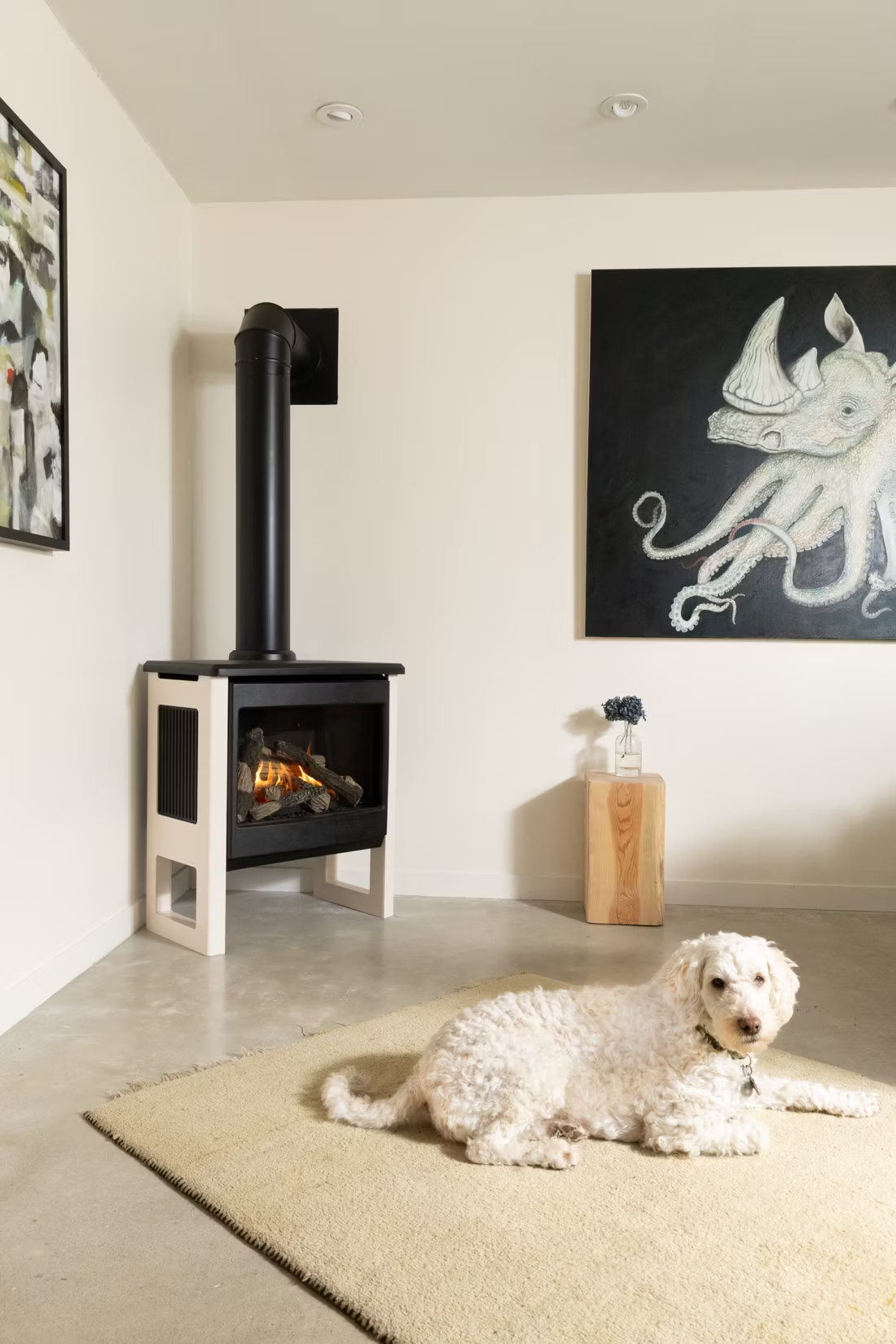
A gas fireplace is a fully built-in unit framed into a wall, typical for new construction or a remodel. A gas insert is sized to slide into an existing masonry firebox, turning an old wood-burning fireplace into a sealed, efficient propane heater using the existing chimney as the vent path. A gas stove is a freestanding cabinet-style unit that sits on the floor, similar in footprint to a wood stove but running on propane. For the many Oregon County homes with an older masonry fireplace already in place, an insert is usually the simplest and most cost-effective upgrade.
Do I need a permit to install a gas fireplace in Oregon County?
Oregon County, like many rural Missouri counties, doesn't enforce a countywide building code the way a city or more populated county might. That doesn't mean there's no oversight, though—propane tank placement and gas line work still have to meet National Fuel Gas Code clearances, and your propane supplier will typically inspect the tank set and connections as part of getting service turned on. If you're inside the city limits of Alton or Thayer, check with the town office, since municipal rules can differ from the unincorporated county. A dealer who installs propane fireplaces regularly in the area will know exactly what's required for your address.
What's the difference between vented and vent-free gas fireplaces?
Vented (direct-vent) gas fireplaces draw combustion air from outside and exhaust it back outside through a sealed pipe—cleaner, safer, and accepted everywhere. Vent-free units burn propane directly into the room with no outside venting; they're simpler to install in a home without existing chimney access, but they release some combustion byproducts indoors and come with strict room-size and ventilation rules. Vent-free units are legal in Missouri, and they show up more often in older Oregon County homes where running a vent through a wall or roof isn't practical. Still, direct-vent is the more commonly recommended option where installation allows for it, since it delivers real heat without any indoor air quality tradeoff.
How often should my propane fireplace be serviced?
Plan on an annual inspection, ideally before the coldest part of winter sets in. A technician checks the burner, pilot assembly, gas connections, and venting, and cleans the glass and interior. This matters more in a propane-fueled county than it might elsewhere, since a technician can also confirm the regulator is set correctly for your tank pressure—an issue that doesn't come up with a piped natural gas connection. Expect to pay roughly $150 to $250 for a standard annual service call.
Gas vs. wood—which is right for my Oregon County home?
Wood has deep roots here—Oregon County sits in oak, hickory, walnut, and maple country, and plenty of homes still burn a mix of self-cut and purchased firewood, especially since wood keeps producing heat during a power outage with no propane delivery needed. Propane fireplaces trade that self-sufficiency for convenience: instant on-off heat, no splitting or hauling, and a cleaner appearance with no ash or soot. For a primary living room where you want heat at the flip of a switch, propane usually wins. For a hunting cabin, workshop, or as backup heat when winter storms roll through the Ozarks, wood still holds its place. Plenty of homes in the county run both.
Why is my open fireplace making my house colder?
Open fireplaces suck—literally. As the fire burns, it consumes air your furnace already paid to heat and pulls it out through the chimney, so the house is actually colder after the fire goes out than before you lit it. An insert fixes this: it seals the chimney, puts fixed glass across the front, and turns that hole in your house into a real heat source.
Why is a fireplace insert so efficient?
An insert does two things: it seals the chimney completely, so you stop losing air you already paid to heat, and it radiates warmth into the room through the firebox and glass. Most add a heat-exchange fan that pulls cool room air underneath, wraps it around the hot firebox, and pushes it back out warm. Your home is more efficient before you've even lit the first fire.
How much should I budget for a fireplace?
For an average home—covering the fireplace, the vent pipe, and basic installation—a budget between $3,900 and $5,500 gives you a lot of options across wood, gas, and pellet. By the time you add finish work, gas line, and electrical, the average complete installation lands between $5,000 and $12,000 all-in. In a remodel or new build, a good rule is to put about 2.5% of the total project cost toward the fireplace.
What is an in-home preview and do I need one?
It's a visit where a hearth professional measures your space, confirms the model you picked actually works in your home, and walks the specs—framing, gas line, venting, finish work—before anything is ordered. Some details you just can't know until you see the house. Never make a down payment without one; it's the single most-skipped step that burns buyers.
Find your gas fireplace in Oregon County.
Tell us about your home and propane setup, and we'll put together a free Project Guide & Parts List—the right unit, the exact vent kit, and a trusted local dealer to install it.
Find Your Fireplace →