
Pellet Stoves Are Rare in Oakland—Here's What Still Works.
In this St. Louis County suburb, natural gas is the default heat source. Pellet stoves are a niche choice here—but for the right home, they still make sense. We'll help you find out.
Every Project Starts From One of These Five Situations
Pellet heat isn't the norm here—and that's by design, not oversight.
Oakland is a small, established suburb inside St. Louis County—about 1,600 residents tucked near Kirkwood and Des Peres, at 613 feet elevation with a moderate Zone 4A climate. Winters here average a low around 25°F and add up to a heating season on par with a typical St. Louis winter—cold enough to need real heat, but nowhere near the extremes that drive Midwest households toward independent, off-grid appliances. Most homes in Oakland are already piped for natural gas furnaces and water heaters, and that existing infrastructure makes gas fireplaces and inserts the practical default for supplemental heat rather than pellet.
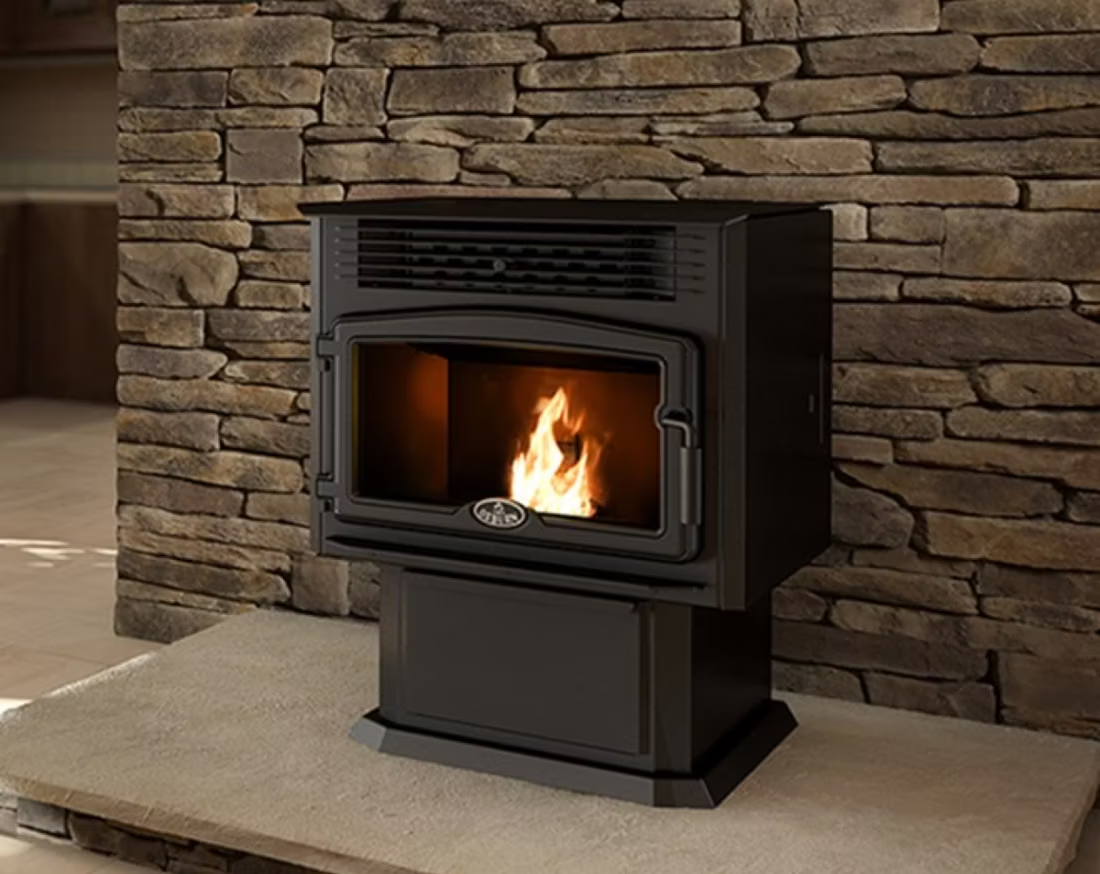
That's why pellet stoves show up as a genuine rarity in this market rather than a mainstream option—there isn't a deep local dealer or installer bench built around them the way there might be in a rural, off-grid-leaning part of the state. That said, a small number of Oakland homeowners still choose pellet: for the low-maintenance real-flame look without a wood supply to manage, for a stove that can be added to a home with no existing masonry chimney, or simply because they like the control a thermostat-fed hopper offers over a raw wood fire. Bagged pellets from regional producers like Lignetics and Indeck Energy Services are available through hardware and farm-supply channels in the greater St. Louis area, even though local retail pellet-stove dealers are thin on the ground.
Three steps. No salesperson until you're ready.
Tell us about your project
Your zip code, your situation, and the fuel you're leaning toward—or let the answers point you to one.
See what's actually available
The brands dealers within 100 miles genuinely carry—real options, never a catalog mirage.
Get your dealer & Project Guide
A trusted local dealer, plus the free Project Guide & Parts List that names every component of the job.
Frequently Asked Questions
Are pellet stoves actually available in Oakland, MO?
They're available, but they're a minority choice. Because natural gas service already reaches most Oakland homes and gas fireplaces cover the same supplemental-heat need with less hardware and less hopper-filling, the local hearth market here leans heavily toward gas and electric units. If you want a pellet stove specifically, expect to work with a dealer who serves the broader St. Louis metro rather than one based right in Oakland—but that dealer can still order, size, and install a unit correctly for your home.
How much does a pellet stove installation cost in the St. Louis area?
Regional installers typically price a pellet stove installation between about $3,000 and $6,500, depending on the unit, whether it vents through an existing chimney or needs a new through-wall vent kit, and whether you need a dedicated electrical outlet added nearby (pellet stoves require power to run the auger and combustion blower). Homes without an existing fireplace usually land toward the higher end because of the added venting and hearth pad work. Get a firm number from a local installer after they've seen your space.
Where do I buy wood pellets near Oakland?
Bagged pellets from regional producers like Lignetics and Indeck Energy Services show up at hardware stores and farm-supply retailers throughout the St. Louis metro, typically sold by the 40-pound bag rather than by the ton in this market. Because pellet heat is a smaller niche here than in more rural or colder parts of Missouri, it's worth calling ahead in late summer to confirm stock before the season ramps up, rather than assuming a store keeps pellets on hand year-round.
Will a pellet stove keep working during a power outage?
No—not without a battery backup. Pellet stoves rely on an electric auger to feed fuel and a blower to distribute heat, so a standard outage shuts the unit down even with a full hopper. If backup heat during ice storms or outages is your priority in Oakland, a battery-backup UPS sized for the stove's draw is worth discussing with your installer, or you may want to weigh a fuel type less dependent on electricity for that specific need.
Pellet stove vs. gas insert—which makes more sense for an Oakland home?
Given how widely natural gas already reaches homes in this part of St. Louis County, a gas insert is usually the simpler, lower-maintenance path—no fuel storage, no hopper to refill, and instant on-off operation. A pellet stove makes more sense if you specifically want the look and feel of a real flame with visible fuel, don't have (or don't want to run) a gas line to the install location, or like the idea of a renewable, wood-byproduct fuel. Both can be sized and installed by a local dealer—the right call comes down to what you value more, convenience or the real-fire experience.
Do I need a permit to install a pellet stove in Oakland?
Yes—a building permit is standard for any new solid-fuel or pellet-burning appliance installation, typically handled through the St. Louis County Building Department given Oakland's size and municipal setup. Most installers fold the permit application into the installation process, so you're not usually the one filing paperwork directly. Because pellet installs are less common here, confirm with your chosen installer that they're familiar with the local inspection process before work begins.
Can a pellet stove be installed in a home without an existing fireplace?
Yes, and this is actually one of pellet's practical advantages. Unlike a wood stove, a pellet unit doesn't need a masonry chimney—it vents through a small-diameter pipe that can run straight out a side wall. For older Oakland homes that were never built with a hearth, that makes a pellet stove installable in rooms a wood-burning option simply couldn't reach without major construction.
Why are wood stoves and pellet stoves both uncommon in Oakland, while gas is standard?
It comes down to what's already built into the neighborhood. Oakland's lots and homes sit close together in an established inner-ring St. Louis suburb, and natural gas lines already reach nearly every property—so gas fireplaces and furnaces became the path of least resistance for supplemental heat decades ago. Solid-fuel and pellet appliances require more site-specific work (venting, hearth pads, fuel storage) that most homeowners here simply haven't needed to take on when a gas line is already at the curb. That's a matter of local infrastructure and habit, not a reason pellet heat can't work well in the right house.
If I still want a pellet stove, how do I find someone who installs them near Oakland?
You'll want a dealer who services the greater St. Louis market rather than searching only within Oakland's zip code—the specialty is real, it's just spread across a wider service radius here than in areas where pellet heat is the norm. A qualified installer will size the unit to your square footage, confirm venting can be run to an exterior wall, and coordinate the St. Louis County permit. We can match you with one of those dealers directly.
How often does a pellet stove need cleaning?
A clean pellet stove is a happy pellet stove. Plan on cleaning the burn pot about once a week when you're burning regularly—ash and clinkers gum up the air holes just like a pellet barbecue. Most pellet stove problems trace back to skipped cleaning that nobody explained up front. Some designs make it easy with a trapdoor burn pot: pull a lever and the gunk drops into the ash pan.
Why is my open fireplace making my house colder?
Open fireplaces suck—literally. As the fire burns, it consumes air your furnace already paid to heat and pulls it out through the chimney, so the house is actually colder after the fire goes out than before you lit it. An insert fixes this: it seals the chimney, puts fixed glass across the front, and turns that hole in your house into a real heat source.
How much should I budget for a fireplace?
For an average home—covering the fireplace, the vent pipe, and basic installation—a budget between $3,900 and $5,500 gives you a lot of options across wood, gas, and pellet. By the time you add finish work, gas line, and electrical, the average complete installation lands between $5,000 and $12,000 all-in. In a remodel or new build, a good rule is to put about 2.5% of the total project cost toward the fireplace.
What is an in-home preview and do I need one?
It's a visit where a hearth professional measures your space, confirms the model you picked actually works in your home, and walks the specs—framing, gas line, venting, finish work—before anything is ordered. Some details you just can't know until you see the house. Never make a down payment without one; it's the single most-skipped step that burns buyers.
Nearby Dealers
Hearth shops serving Oakland and the surrounding area. Every listing shows whether it is a WhyFire partner, a dealer we have verified as authorized for the brands we recommend, or a local business carrying hearth products. No manufacturer pays for placement. How we verify dealers →
Savvy Surroundings
Forshaws
English Sweep
Fireplace And Grill Center
Fireside Hearth & Grill Center
Villa Lighting Supply
Gas Appliance Service LLC
Arnold Stove & Fireplace Center
Summer Classics By Forshaw
Brighthouse Living
Hearthside Grill & Fireplace
Pellet Brands Stocked Around Oakland
Manufacturers will point you to the nearest stocking dealer.
See if a pellet stove fits your Oakland home.
Pellet heat is a niche fit in this part of St. Louis County, but it's not off the table. Tell us about your home and we'll give you an honest read—and if it makes sense, connect you with a local dealer and a free Project Guide & Parts List for your install.
Find Your Fireplace →