
Steady, thermostat-like heat for Newton County's Ozark winters.
From Neosho to Diamond and Seneca, Newton County sees a moderate but real heating season—running late October through March, with winter lows averaging 25°F. Pellet stoves deliver automated, thermostat-like heat without the splitting and stacking that oak and hickory firewood demand. I'll match you with a trusted local dealer who knows what's actually available and installable in your home, plus a free planning packet.
Every Project Starts From One of These Five Situations
A hardwood county that still burns by the bag, not the cord.
Newton County sits along the western edge of the Ozark Plateau in southwest Missouri, home to Neosho, Diamond, Seneca, and Granby. The climate here falls in zone 4A—a mixed-humid pattern with winter lows averaging 25°F and a real but moderate heating season, typically running from late October through March. The county's oak, hickory, walnut, and maple forests have supported wood heat here for generations, but a growing number of homeowners are choosing pellet stoves and inserts for the same BTU output without cutting, splitting, and seasoning cordwood.
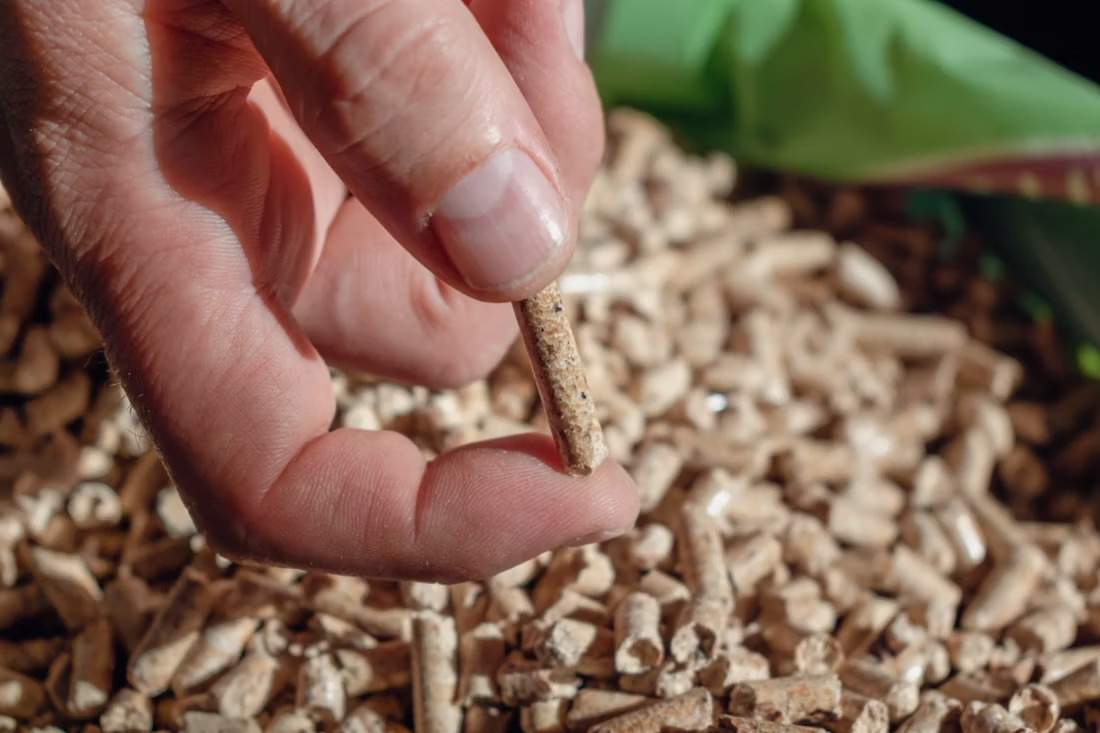
Newton County carries no listed air quality restrictions or non-attainment status, so there's no curtailment schedule or burn-ban complexity to navigate—pellet appliances here are a straightforward, year-round heating choice rather than a workaround for local smoke rules. Pellets themselves come through regional suppliers like Lignetics and Indeck Energy Services, typically sold by the ton through farm and hearth retailers rather than cut under a permit, which makes fuel planning simpler than sourcing cordwood from county timberland.
Three steps. No salesperson until you're ready.
Tell us about your project
Your zip code, your situation, and the fuel you're leaning toward—or let the answers point you to one.
See what's actually available
The brands dealers within 100 miles genuinely carry—real options, never a catalog mirage.
Get your dealer & Project Guide
A trusted local dealer, plus the free Project Guide & Parts List that names every component of the job.
Frequently Asked Questions
How much does a pellet stove installation cost in Newton County?
Cost depends mainly on whether you're installing a freestanding stove with a new through-wall vent, or a pellet insert going into an existing masonry fireplace. A local dealer will factor in hearth pad requirements, the length of PL vent pipe needed, and whether a dedicated electrical outlet has to be added for the auger and blower motor. Homes in Neosho or Diamond with an existing fireplace opening generally see a simpler, less expensive install than a new-construction stove needing a fresh vent run through an exterior wall.
Where do I buy pellets in Newton County?
Pellets aren't something you cut or forage—they come by the bag or by the ton from regional suppliers. Lignetics and Indeck Energy Services both distribute into the southwest Missouri market and are common brands carried by local hearth and farm supply retailers. Most Newton County homeowners buy a season's supply—often a ton or more—in late summer or early fall before demand and pricing tighten up going into the winter push.
Do I need a permit to install a pellet stove in Newton County?
Most installations require a building permit, and the process depends on where in the county you're located—Neosho, Diamond, and Seneca each handle their own permitting inside city limits, while unincorporated areas go through Newton County. A licensed installer typically pulls this permit as part of the job and makes sure the vent termination clearances and hearth pad meet code. Because Newton County has no listed air quality non-attainment status, you won't run into the burn-curtailment permitting layer that some regions add on top of standard building code.
What size pellet stove do I need for my home?
Zone 4A winters here are moderate compared to the northern Plains or Rockies, so most Newton County homes are well served by a small to mid-size pellet stove rated for 1,000 to 1,800 square feet, depending on layout and insulation. Older farmhouses around Granby or Seneca with less insulation may need a slightly larger unit to hold temperature during the coldest stretches of a 25°F average winter low. A local dealer sizing the stove in person, rather than off a generic chart, is the best way to avoid a unit that short-cycles or one that runs on low most of the season.
Pellet stove vs. wood stove—which makes more sense in Newton County?
Wood has deep roots here, with oak, hickory, walnut, and maple all common on county timberland and easy to source or cut for anyone with access to private land. A wood stove also keeps working with no electricity, which matters during an ice storm. A pellet stove trades that off-grid resilience for genuinely automated heat—load the hopper, set the thermostat, and it modulates itself without tending. If convenience and consistent output matter more than off-grid backup, and you don't already have a standing woodpile, pellet is usually the easier appliance to live with day to day.
What happens to my pellet stove during a power outage?
This is worth planning for in Newton County, where winter ice storms occasionally take down power for a day or more. Pellet stoves need electricity to run the auger, igniter, and combustion blower, so they won't operate on their own during an outage. Many homeowners pair a pellet stove with a small battery backup unit or a portable generator sized to carry the stove's modest power draw, which is usually well under what's needed to run larger appliances. If backup heat during outages is your top priority, ask your local dealer to compare that against a wood stove for a secondary heat source.
How often does a pellet stove need to be cleaned and serviced?
Plan on emptying the ash pan every few days to weekly depending on use, and a full cleaning of the burn pot, glass, and venting once a season—ideally in early fall before the heating season starts. Annual professional service is a good idea to inspect the auger motor, gaskets, and vent termination, especially for a stove that runs daily through a Newton County winter. Regular cleaning keeps the stove burning efficiently and prevents the clinker buildup that can happen with lower-quality pellets.
Is natural gas or propane a better option than pellet in Newton County?
It depends on what's already run to your home. In town—Neosho, Diamond, Seneca—many homes have natural gas service for a furnace or water heater already, which makes a gas fireplace or insert a low-effort add-on. Out in the county's rural stretches, propane is the common alternative, delivered and stored in a tank on the property. Pellet stoves sidestep both of those infrastructure questions—no gas line, no propane tank—but they do need pellets delivered or picked up and stored dry, and they draw electricity to run. Which makes more sense usually comes down to whether you're set up for reliable pellet storage or already have gas or propane in place.
Are pellet stoves eligible for any efficiency rebates in Missouri?
EPA-certified pellet stoves generally qualify for the federal biomass stove tax credit, which applies to the cost of the unit and installation. Missouri doesn't currently layer additional statewide pellet-specific rebates on top of that, but your electric utility may occasionally offer efficiency incentives worth checking. A local dealer can tell you which current-model pellet stoves qualify and help you keep the paperwork you'll need at tax time.
What's the difference between an insert and a zero-clearance fireplace?
An insert is a fireplace that slides into a pre-existing wood-burning fireplace—if you don't have one, there's nothing to insert it into. A zero-clearance fireplace is built into a framed wall, which makes it the answer for remodels and new construction. Simple test: existing masonry fireplace means insert; blank or framed wall means zero-clearance.
Why is a fireplace insert so efficient?
An insert does two things: it seals the chimney completely, so you stop losing air you already paid to heat, and it radiates warmth into the room through the firebox and glass. Most add a heat-exchange fan that pulls cool room air underneath, wraps it around the hot firebox, and pushes it back out warm. Your home is more efficient before you've even lit the first fire.
Can I install a fireplace myself?
If you're putting a fire in your house on purpose, it's best to work with an expert. Unless you're genuinely experienced in framing, gas line, vent pipe, and the national code on clearances to combustibles, have a professional do it—and ideally the same company that sells you the fireplace, so warranty, service, and liability all live under one roof.
Does a fireplace add value to my home?
On average, a fireplace adds back to the home about the same amount you spent installing it. Add the monthly savings from heating the rooms you actually use instead of the whole house—often hundreds of dollars a year—and the value case is strong before you even count what a fire does for how your family uses the room.
Pellet Brands Stocked Around Newton County
Manufacturers will point you to the nearest stocking dealer.
Get your Newton County pellet heat Project Guide & Parts List.
Tell me about your home and how you plan to use the stove, and I'll match you with a trusted local Newton County dealer and send a free Project Guide & Parts List—the exact parts, including the vent kit, for your pellet heat project.
Find Your Fireplace →