
Find your electric fireplace in Newton County.
No chimney, no gas line, no venting—just plug-in or hardwired warmth for homes from Neosho to Seneca to the rural stretches along Highway 71. Find the right unit and connect with a trusted local dealer.
Every Project Starts From One of These Five Situations
Zero venting, real heat, for Ozark foothill homes.
Newton County sits in the Ozark foothills of southwest Missouri, anchored by the county seat of Neosho and stretching through Granby, Seneca, Diamond, and Racine into the edge of the Joplin metro. The climate here (Zone 4A) is mixed-humid rather than brutally cold—winter lows average around 25°F and the county logs roughly 3,976 heating degree days a season, a fraction of what a place like Bismarck, ND or Duluth, MN sees each winter. That means Newton County homes don't need a heating system built for weeks of sub-zero cold, but they do need something to take the edge off chilly mornings and shoulder-season nights from late October through March.
That's exactly where electric fireplaces earn their keep. There's no chimney to maintain, no gas line to run, and no combustion byproducts to vent—which matters in a county where a lot of the housing stock is older farmhouses, manufactured homes, and rentals around Neosho and Granby where adding gas service or a masonry chimney isn't practical. Electric units run on standard household power from Liberty Utilities (formerly Empire District Electric), the primary provider across most of the county, and because there's no combustion, there's no wood-smoke or air-quality concern to navigate—Newton County has no non-attainment or inversion issues to work around. A real local dealer can size the right unit for a supplemental heat need, a mobile-home retrofit, or simply the look of a fireplace without the upkeep.
Three steps. No salesperson until you're ready.
Tell us about your project
Your zip code, your situation, and the fuel you're leaning toward—or let the answers point you to one.
See what's actually available
The brands dealers within 100 miles genuinely carry—real options, never a catalog mirage.
Get your dealer & Project Guide
A trusted local dealer, plus the free Project Guide & Parts List that names every component of the job.
Frequently Asked Questions
How much does an electric fireplace installation cost in Newton County?
Costs vary more with electric than with any other fuel because the range of products is so wide. A plug-in freestanding unit or a basic insert that drops into an existing firebox can run as little as $300 to $800 installed. A built-in wall unit or a linear electric fireplace set into new framing—with a dedicated 120V or 240V circuit run by an electrician—typically lands between $1,200 and $2,500 depending on the surround and cabinetry work involved. Homes in rural parts of the county (out toward Racine or Stella) sometimes see a modest travel charge added by installers, but the electrical work itself doesn't change based on location.
Do I need a permit to install an electric fireplace in Newton County?
In most cases, no. A plug-in electric fireplace or insert that uses a standard household outlet doesn't require a permit anywhere in Newton County, including Neosho, Granby, and the unincorporated areas. If you're having an electrician add a new dedicated circuit or a 240V line for a larger built-in unit, that electrical work may require a permit through the county building department, and your electrician will typically handle that as part of the job. There's no fire-code venting inspection involved the way there is with wood or gas—that's one of the appeals of going electric.
What size electric fireplace do I need for my home?
Electric fireplaces are rated in heat output (usually 4,600–5,200 BTU for most residential units) and are generally intended as supplemental or zone heat rather than whole-home heating—even in Newton County's relatively mild 4A climate. A single unit works well for a living room, den, or bedroom in the 300–400 sq ft range. For an older farmhouse with drafty rooms or a manufactured home with a small footprint, a local dealer can help you decide between one larger unit in the main living space versus a couple of smaller units placed where you actually spend time. Unlike wood stoves, oversizing isn't really a safety issue with electric—it's more about matching the look and heat output to the room.
What's the difference between an electric insert, a wall-mount, and a freestanding electric stove?
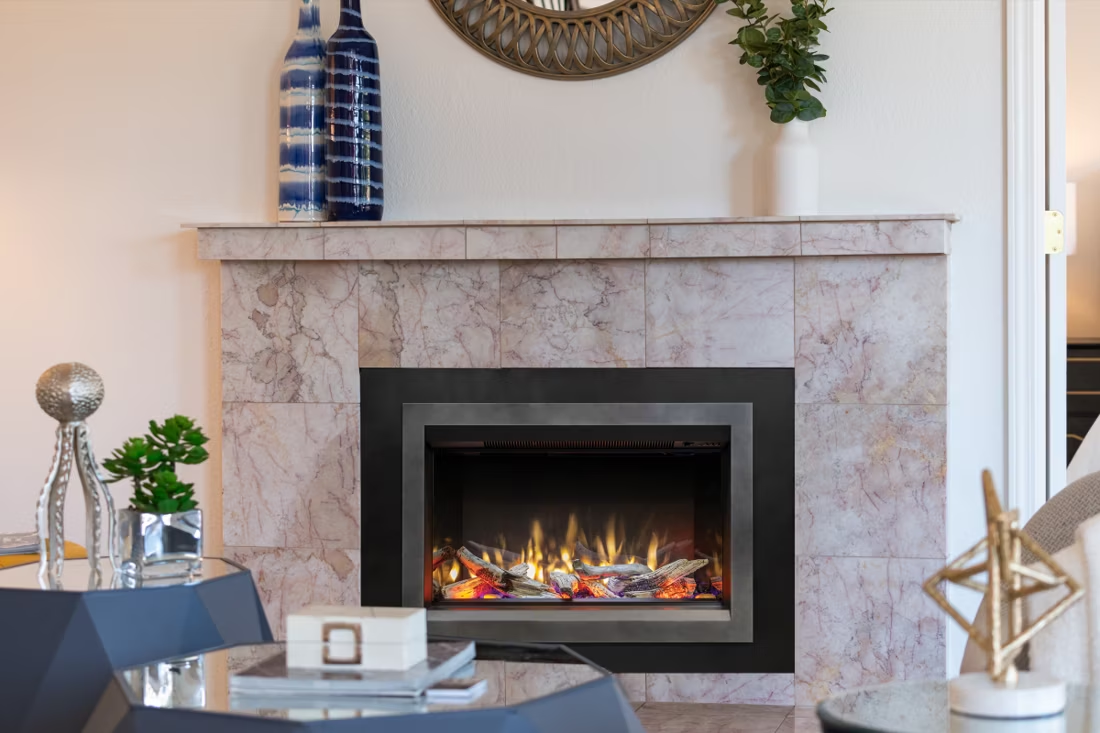
An electric insert is built to drop into an existing masonry fireplace opening, giving you the look of a working fireplace without removing your existing surround. A wall-mount (or built-in linear) unit is designed into new framing or a media wall—common in newer construction and remodels around Joplin's Newton County suburbs. A freestanding electric stove sits on the floor like a traditional wood stove and can go in almost any room with an outlet, which makes it a popular no-commitment option for rental properties and mobile homes throughout the county. All three run on the same basic electric technology; the choice comes down to your existing structure and how permanent you want the installation to be.
How much does it cost to run an electric fireplace in Newton County?
Running cost depends on your Liberty Utilities rate and how many hours a day you use the heater function versus just the flame effect with heat off. Most residential electric fireplaces draw around 1,500 watts on the heat setting—roughly comparable to a space heater—so running one for four hours a day typically adds somewhere in the range of $10 to $20 a month to a Liberty Utilities bill, depending on current rates. Running the flame visual alone without the heater element uses a fraction of that. It's worth asking your local dealer about models with adjustable wattage settings if you want ambiance most of the year and heat only on the coldest nights.
Can an electric fireplace be my primary heat source?
For most Newton County homes, no—electric fireplaces are built for supplemental zone heat, not to replace a furnace or heat pump. That said, in a well-insulated single room, a manufactured home, or an outbuilding, a properly sized electric unit can serve as the main heat source for that space, especially given Newton County's moderate winters (average lows around 25°F rather than the deep-cold extremes seen further north). If you're looking for true whole-home backup heat during a power outage, keep in mind electric units won't run without power—a consideration if you're in a rural part of the county prone to ice-storm outages.
Electric vs. gas—which is right for my home?
Gas fireplaces put out real, sustained heat and can be sized to actually warm a room on a cold night, but they require either natural gas service or a propane tank, plus venting work and a professional gas-line hookup. Electric fireplaces skip all of that—no gas line, no venting, no combustion byproducts—but the heat output is lower and it's genuinely supplemental rather than a primary heat source. For a lot of Newton County homeowners, especially renters, mobile-home owners, or anyone adding a fireplace look to a room where running gas isn't practical, electric is the simpler and cheaper path. For a home that already has gas service and wants real heat output, gas is usually the better long-term investment.
Are electric fireplaces safe for older homes and manufactured housing?
Yes, and that's actually one of the reasons they're common in Newton County's manufactured-home stock and older farmhouses around Granby and Seneca. There's no open flame, no creosote buildup, and no chimney to inspect, which removes several of the fire-risk factors that come with wood stoves in older structures. The main thing to check is your home's electrical panel and wiring—a larger built-in unit on its own dedicated circuit is safer and more reliable than plugging a high-wattage unit into an older outlet shared with other appliances. A licensed electrician can confirm your panel has the capacity before installation.
Do electric fireplaces need any maintenance?
Very little compared to wood or gas. There's no annual chimney sweep and no yearly gas-line inspection required. Most maintenance is limited to occasionally dusting the vents, checking the LED light strip or heating element if the unit is several years old, and replacing the blower fan if it becomes noisy—a repair most local hearth dealers or electricians can handle. There's no ash to clean up and nothing to inspect for creosote, which is part of why electric units are popular in rental properties and second homes across Newton County where low-maintenance heat matters more than the ritual of a real fire.
Does an electric fireplace need a vent or chimney?
No—that's its superpower. An electric fireplace needs a wall and an outlet, period. No vent pipe, no gas line, no clearances to design around, which is why it works in bedrooms, offices, apartments, and walls where venting a gas or wood unit would be impractical or impossible. Installation is typically the simplest and least expensive of any fireplace type.
Can I put a TV above my fireplace?
Yes—with an asterisk. Fireplaces are hot and TVs don't like heat. Either put a mantel between them to deflect rising warmth, or choose a fireplace with heat-management technology that creates a cool zone on the wall above—the wall stays around 125 degrees, barely warm, while the room still gets full heat. If you like clean lines and don't want a mantel, heat management is the answer.
How much should I budget for a fireplace?
For an average home—covering the fireplace, the vent pipe, and basic installation—a budget between $3,900 and $5,500 gives you a lot of options across wood, gas, and pellet. By the time you add finish work, gas line, and electrical, the average complete installation lands between $5,000 and $12,000 all-in. In a remodel or new build, a good rule is to put about 2.5% of the total project cost toward the fireplace.
Can I install a fireplace myself?
If you're putting a fire in your house on purpose, it's best to work with an expert. Unless you're genuinely experienced in framing, gas line, vent pipe, and the national code on clearances to combustibles, have a professional do it—and ideally the same company that sells you the fireplace, so warranty, service, and liability all live under one roof.
Find your electric fireplace in Newton County.
Tell us a bit about your home and we'll put together a free Project Guide & Parts List—the right electric fireplace or insert for your space, plus a trusted local dealer who can install it.
Find Your Fireplace →