
Steady, low-maintenance heat for New Madrid County's Bootheel winters.
From the river-bottom farms outside New Madrid to the county's small towns, pellet heat offers thermostat-simple warmth without the wood pile. Find the right stove and connect with a trusted local dealer.
Every Project Starts From One of These Five Situations
Convenient heat that fits Bootheel farm life.
New Madrid County sits in Missouri's Bootheel, a flat Mississippi River delta of cotton, soybean, and rice ground with a population just over 10,500. Winters here are moderate by Midwest standards—an average low around 28°F and roughly 3,960 heating degree days, well under half of what a place like Duluth, MN sees in a given season. That's mild enough that a lot of local homes don't need a blast-furnace heat source; they need something that runs efficiently for a few cold months, holds a steady temperature overnight, and doesn't demand daily attention from someone also running a farm.
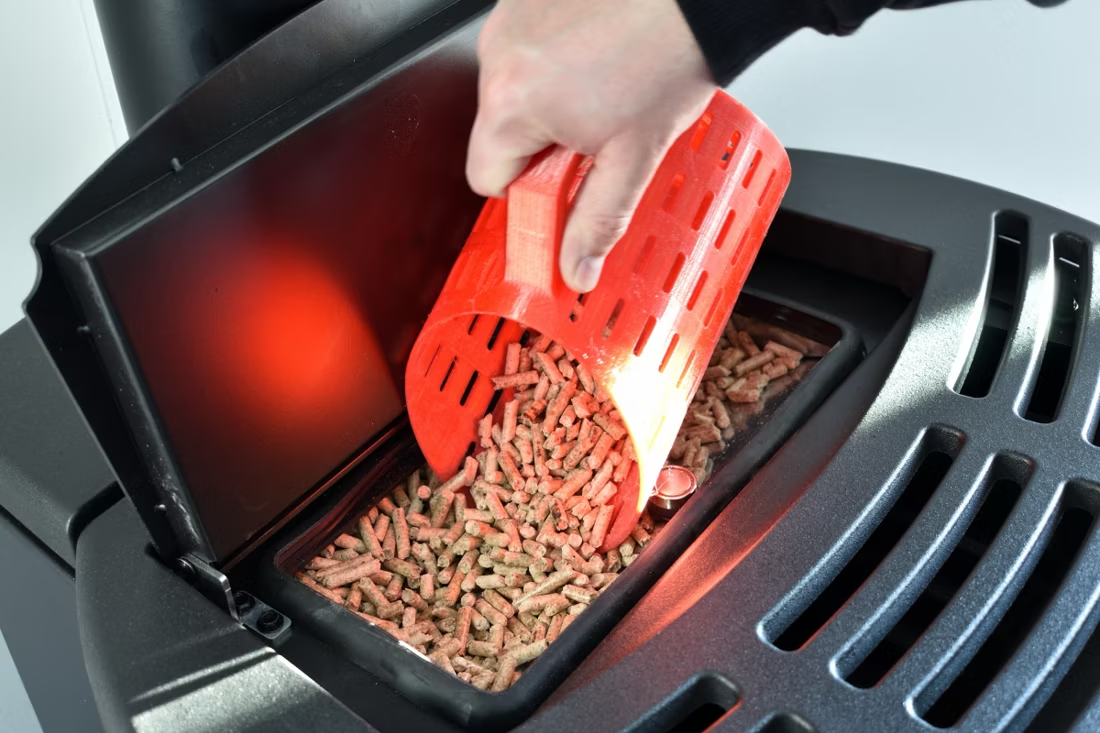
That's the pellet stove's case in New Madrid County. The area carries no air-quality non-attainment designations and no burn-ban history, so pellet appliances—already among the cleanest-burning heating options available—operate here with none of the regulatory friction you'd find in a smoke-restricted basin out west. Regional suppliers including Lignetics and Indeck Energy Services keep bagged pellets in reach of local dealers, which matters in a rural county where hauling fuel long distances gets old fast. And while the hardwood bottomland around the county grows plenty of oak, hickory, walnut, and maple for those who want to burn cordwood, a pellet stove gives you comparable heat without the splitting, stacking, and hauling.
Three steps. No salesperson until you're ready.
Tell us about your project
Your zip code, your situation, and the fuel you're leaning toward—or let the answers point you to one.
See what's actually available
The brands dealers within 100 miles genuinely carry—real options, never a catalog mirage.
Get your dealer & Project Guide
A trusted local dealer, plus the free Project Guide & Parts List that names every component of the job.
Frequently Asked Questions
How much does a pellet stove installation cost in New Madrid County?
Cost depends mainly on the unit size, whether it's a freestanding stove or an insert going into an existing fireplace, and how much vent pipe and wall penetration work is involved. A straightforward insert conversion tends to run less than a new freestanding stove that needs fresh venting run through an exterior wall. Because Find My Fireplace doesn't sell or install anything ourselves, we can't quote a number here—instead we match you with a trusted local dealer and send you a free Project Guide & Parts List that lays out the exact parts, including the vent kit, for your specific New Madrid County home.
What size pellet stove do I need for a Bootheel farmhouse?
With New Madrid County's relatively mild winter profile—around 3,960 heating degree days and winter lows that average in the upper 20s—a small-to-medium pellet stove (roughly 1,000 to 1,800 square feet of rated heating capacity) is often enough for a well-sealed home used as primary heat. Older Bootheel farmhouses with higher ceilings, less insulation, or a lot of glass typically need to size up, even though the outdoor design temperature isn't as harsh as it is farther north. A local dealer can walk your home and size the unit correctly rather than guessing off square footage alone.
What's the difference between a pellet stove and a pellet insert?
A pellet stove is a freestanding, self-contained unit that vents through a wall or existing chimney chase and can go almost anywhere in a room. A pellet insert is built to slide into an existing masonry fireplace opening, turning an old open hearth into a sealed, thermostatically controlled heat source while reusing the chimney as the vent path. For New Madrid County homes with an existing but rarely-used masonry fireplace, an insert is usually the more cost-effective route since it borrows infrastructure you already have.
Where do pellet fuel supplies come from for New Madrid County?
Regional brands including Lignetics and Indeck Energy Services supply dealers serving the county, typically in 40-pound bags sold individually or by the ton. Because pellets need to stay dry, most homeowners store a season's supply in a garage, barn, or covered shed rather than outdoors—a practical consideration on flat delta ground where flooding and humidity are real factors. Your local dealer can tell you which brands they stock and whether they offer seasonal delivery for larger orders.
Will my pellet stove work during a power outage?
Not without a backup power source. Pellet stoves rely on an electric auger to feed fuel and a blower to move heat into the room, so a standard unit shuts down when the power goes out. In a rural county like New Madrid, where ice storms and severe spring weather can knock out power for stretches, that's worth planning around—a small battery backup or a generator sized for the stove's low wattage draw will keep it running. If uninterrupted heat during outages is a priority, ask your local dealer how it compares to a wood stove, which needs no electricity at all.
Do I need a permit to install a pellet stove in New Madrid County?
Most new installations that involve running vent pipe through a wall or altering an existing fireplace opening require a building permit through your local county building department. The good news is that pellet stove venting is simpler than a masonry chimney project, and most local installers handle the permit paperwork as part of the job rather than leaving it to the homeowner.
How often does a pellet stove need to be cleaned and serviced?
Plan on emptying and vacuuming the ash pan every few days to weekly during regular use, and a deeper cleaning of the burn pot, heat exchanger tubes, and venting once a season—typically before cold weather starts. Homes running the stove as a primary heat source through a full New Madrid County winter will need more frequent ash removal than homes using it only for supplemental warmth on the coldest nights. Local dealers and service techs can handle the annual deep clean and inspect the auger motor and blower at the same time.
Pellet stove vs. wood stove—which makes more sense in New Madrid County?
Wood is abundant here—the county's river-bottom hardwood forests produce plenty of oak, hickory, walnut, and maple, and a wood stove keeps working with zero electricity, which matters when outages hit during a winter storm. A pellet stove trades that off for convenience: load the hopper, set the thermostat, and walk away, with far less ash and no splitting or stacking required. Given New Madrid County's relatively mild heating season, a lot of homeowners here run pellet stoves as their main heat source and lean on a fireplace or backup wood stove only during the coldest stretches or power outages.
Can a pellet stove heat my whole house, or is it just supplemental?
With the county's moderate climate—an average winter low around 28°F and under 4,000 heating degree days—a properly sized pellet stove can serve as primary heat for a lot of New Madrid County homes, especially newer or well-insulated construction. Older, larger, or draftier farmhouses often use the pellet stove to heat the main living areas while keeping a furnace or ductless system for bedrooms and other zones. A local dealer walking your specific floor plan is the best way to know which category your home falls into.
What's the difference between an insert and a zero-clearance fireplace?
An insert is a fireplace that slides into a pre-existing wood-burning fireplace—if you don't have one, there's nothing to insert it into. A zero-clearance fireplace is built into a framed wall, which makes it the answer for remodels and new construction. Simple test: existing masonry fireplace means insert; blank or framed wall means zero-clearance.
How often does a pellet stove need cleaning?
A clean pellet stove is a happy pellet stove. Plan on cleaning the burn pot about once a week when you're burning regularly—ash and clinkers gum up the air holes just like a pellet barbecue. Most pellet stove problems trace back to skipped cleaning that nobody explained up front. Some designs make it easy with a trapdoor burn pot: pull a lever and the gunk drops into the ash pan.
Can a fireplace actually lower my heating bill?
Yes—by creating a comfort zone. A furnace heats every square foot of the house just to warm the one room you're in; a gas fireplace on low burns roughly a sixth of the gas a typical furnace does. Set the furnace around 55–60 degrees as a baseline, then heat the rooms your family actually uses. Families who heat this way commonly save $20–$60 a month.
Does a fireplace add value to my home?
On average, a fireplace adds back to the home about the same amount you spent installing it. Add the monthly savings from heating the rooms you actually use instead of the whole house—often hundreds of dollars a year—and the value case is strong before you even count what a fire does for how your family uses the room.
Pellet Brands Stocked Around New Madrid County
Manufacturers will point you to the nearest stocking dealer.
Find your pellet stove in New Madrid County.
Tell us a bit about your home and we'll match you with a trusted local dealer and send a free Project Guide & Parts List—the exact parts, including the vent kit, for your pellet stove project.
Find Your Fireplace →