
Warm up the Bootheel without a chimney.
No venting, no wood to split, no gas line to run—just plug-in or hardwired warmth for homes across New Madrid, Portageville, Marston, and the farmland in between. Find the right unit and connect with a trusted local dealer.
Every Project Starts From One of These Five Situations
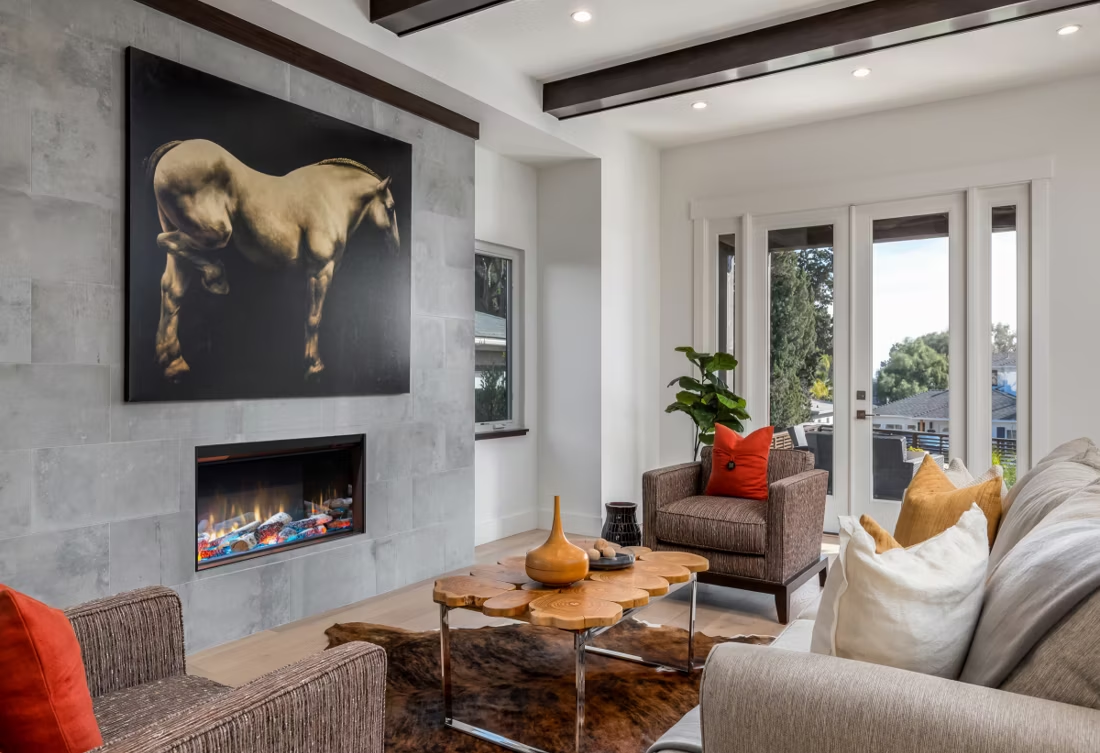
Electric heat fits the Bootheel's mild winters.
New Madrid County sits low and flat along the Mississippi River in Missouri's Bootheel, with winters that are noticeably gentler than the rest of the state—average lows around 28°F and a winter heating load closer to the Mid-South than the upper Midwest. It's cold enough for supplemental heat several months a year, but rarely cold enough to demand a full-time primary heat source in every room. That combination—real but moderate winter chill, plus a county built on scattered farmhouses, manufactured homes, and older river towns—is exactly where electric fireplaces earn their keep.
Oak, hickory, walnut, and maple are the wood species that dominate local land and plenty of county homes still burn cordwood, but electric units solve a different problem: zero clearance to combustibles, no chimney or venting to maintain, and installation that a licensed electrician can often finish in an afternoon. That matters in a county where many homes—especially manufactured and modular housing common on farm properties—aren't set up for masonry chimneys or gas lines. In town, service typically runs through Ameren Missouri; in the unincorporated farmland that makes up most of the county, a rural electric cooperative is more likely to be your provider. Either way, an electric fireplace draws modest, predictable power and adds heat and ambiance to a single room without touching the rest of the house's heating system.
Three steps. No salesperson until you're ready.
Tell us about your project
Your zip code, your situation, and the fuel you're leaning toward—or let the answers point you to one.
See what's actually available
The brands dealers within 100 miles genuinely carry—real options, never a catalog mirage.
Get your dealer & Project Guide
A trusted local dealer, plus the free Project Guide & Parts List that names every component of the job.
Frequently Asked Questions
How much does an electric fireplace installation cost in New Madrid County?
A plug-in freestanding or wall-mount electric fireplace typically runs $150 to $800 for the unit itself, and if it plugs into an existing standard outlet, there's no real installation cost beyond mounting hardware. Built-in electric fireplaces or inserts that require a new dedicated 120V or 240V circuit, wall framing, or a mantel surround run higher—usually $1,000 to $3,000 installed, with the bulk of that being electrical and carpentry labor rather than venting work, since electric units don't need a chimney or flue. That's a meaningfully lower ceiling than wood or gas installs, which is part of the appeal for county homeowners on a budget or in manufactured housing where chimney work isn't practical.
Do I need a permit for an electric fireplace in New Madrid County?
A portable plug-in unit that runs off an existing outlet generally doesn't require a permit anywhere in the county. A built-in electric fireplace or insert that needs a new dedicated circuit is electrical work, and most licensed electricians will pull the appropriate permit as part of the job. Incorporated towns like New Madrid and Portageville typically handle permitting through their own city offices, while unincorporated areas—which cover a large share of the county's farmland—fall under county building requirements. A local dealer or electrician can tell you exactly what applies to your address before work starts.
What size electric fireplace do I need?
Electric fireplaces are built around a fixed heating element, usually rated around 1,500 watts, which is enough to noticeably warm a single room of roughly 400 to 1,000 square feet depending on insulation and ceiling height—they're not sized the way wood stoves or gas units are for whole-home heat. Given New Madrid County's moderate winters, most homeowners here use electric units as zone heat for a living room, bedroom, or sunroom rather than as the sole heat source for the house. If you're trying to knock the chill off a larger open floor plan, a local dealer can tell you whether one larger unit or two smaller ones makes more sense for your layout.
Will my electric fireplace work during a power outage?
No—and this is the one honest tradeoff worth knowing up front. Electric fireplaces require power to run the heating element, fan, and flame effect, so they go dark the moment the grid does. That matters in a county that sees its share of ice storms and severe spring weather along the Mississippi River corridor. If you want a heat source that still works when the power's out, a wood stove or a battery-backed gas insert is the better call for at least one room in the house. Plenty of New Madrid County homeowners run electric for daily convenience and ambiance while keeping a wood stove or propane heater on hand for outages.
What's the difference between an electric insert, stove, and wall-mount unit?
An electric insert is built to slide into an existing fireplace opening—a common fix for older county homes with a masonry firebox that's no longer safe or convenient to burn wood in. An electric stove is a freestanding cabinet-style unit that mimics a wood stove's look and can sit almost anywhere with an outlet nearby. A wall-mount unit hangs flush on a wall like a large flat-screen and works well in newer construction or a remodeled living room where floor space is tight. All three use the same basic heating technology; the choice mostly comes down to what opening or wall space you're working with.
Electric vs. wood vs. gas—which fits my New Madrid County home?
Wood remains a strong choice for county homes with access to local oak and hickory and a want for real heat during outages, but it means chimney maintenance and ash cleanup. Gas offers instant, higher-output heat but usually requires either a natural gas hookup—not universal in this rural county—or a propane tank and regular servicing. Electric skips both the venting and the fuel supply question entirely: no chimney, no gas line, no tank, just an outlet or a dedicated circuit. For a supplemental-heat room, a rental property, or a manufactured home where running new gas or masonry work isn't realistic, electric is often the simplest and least expensive path. For a primary heat source in the coldest stretch of a New Madrid County winter, wood or gas still has the edge.
Are electric fireplaces a good fit for manufactured and modular homes?
Yes, and this is one of the strongest use cases for the fuel in a county where manufactured and modular housing is common on farm properties. Wood stoves and gas fireplaces both come with clearance, venting, and structural requirements that can be difficult or costly to meet in a manufactured home. Electric units have no combustion, no flue, and minimal clearance requirements, which makes them one of the few heat-and-ambiance options that installs cleanly in a mobile or modular home without triggering major structural changes.
How much does it cost to run an electric fireplace, and who provides the power?
Running costs are low. On flame-only mode with no heat, an electric fireplace draws only a few watts—pennies a day. On the heat setting, a typical 1,500-watt unit costs roughly 15 to 25 cents an hour to run, depending on local electric rates, making it inexpensive supplemental heat for the mild stretches of a New Madrid County winter. Power in town is generally supplied by Ameren Missouri, while much of the surrounding unincorporated farmland is served by a rural electric cooperative—check your bill or ask your dealer if you're unsure which applies to your address, since it can affect rebate or rate-plan eligibility.
Can I put an electric insert into an old fireplace that I no longer use for wood?
Yes, and it's one of the most common projects for older homes in New Madrid, Portageville, and the county's river towns, where a masonry fireplace may be decades old, cracked, or simply not worth repairing for wood use. An electric insert slides into the existing opening, uses no chimney or venting, and restores both the look of a working fireplace and usable supplemental heat without the cost of relining a flue or rebuilding a firebox. It's typically the fastest and least expensive way to bring an old, unused fireplace back into service.
Does an electric fireplace need a vent or chimney?
No—that's its superpower. An electric fireplace needs a wall and an outlet, period. No vent pipe, no gas line, no clearances to design around, which is why it works in bedrooms, offices, apartments, and walls where venting a gas or wood unit would be impractical or impossible. Installation is typically the simplest and least expensive of any fireplace type.
Can I put a TV above my fireplace?
Yes—with an asterisk. Fireplaces are hot and TVs don't like heat. Either put a mantel between them to deflect rising warmth, or choose a fireplace with heat-management technology that creates a cool zone on the wall above—the wall stays around 125 degrees, barely warm, while the room still gets full heat. If you like clean lines and don't want a mantel, heat management is the answer.
How much should I budget for a fireplace?
For an average home—covering the fireplace, the vent pipe, and basic installation—a budget between $3,900 and $5,500 gives you a lot of options across wood, gas, and pellet. By the time you add finish work, gas line, and electrical, the average complete installation lands between $5,000 and $12,000 all-in. In a remodel or new build, a good rule is to put about 2.5% of the total project cost toward the fireplace.
Does a fireplace add value to my home?
On average, a fireplace adds back to the home about the same amount you spent installing it. Add the monthly savings from heating the rooms you actually use instead of the whole house—often hundreds of dollars a year—and the value case is strong before you even count what a fire does for how your family uses the room.
Find your electric fireplace in New Madrid County.
Tell us a bit about your home and we'll put together a free Project Guide & Parts List—the right electric fireplace or insert, the exact parts needed, and a trusted local dealer to install it.
Find Your Fireplace →