
Steady, automated heat for Montgomery County winters.
From Montgomery City to Wellsville, New Florence, and the farm roads in between, pellet heat gives rural households in Montgomery County a low-maintenance way to hold steady warmth through the coldest stretches. Find the right stove or insert, and get matched with a trusted local dealer.
Every Project Starts From One of These Five Situations
Consistent warmth without tending the wood pile.
Montgomery County sits in east-central Missouri along the bluffs and bottomland of the Missouri River, with a population of roughly 6,450 spread thin across Montgomery City, Wellsville, New Florence, Jonesburg, Bellflower, and a lot of open farmland between them. Zone 4A puts the county in a moderate-cold band—winters that average around 20°F on the low end and add up to a solid five-month heating season. That's a real heating season, though notably less punishing than places like Madison, WI, where the heating season stretches well beyond seven months. Still, for a farmhouse or a rural double-wide out past the blacktop, five months of consistent supplemental heat matters, especially when someone in the household is also managing chores, livestock, or a work schedule that doesn't leave time to babysit a fire all day.
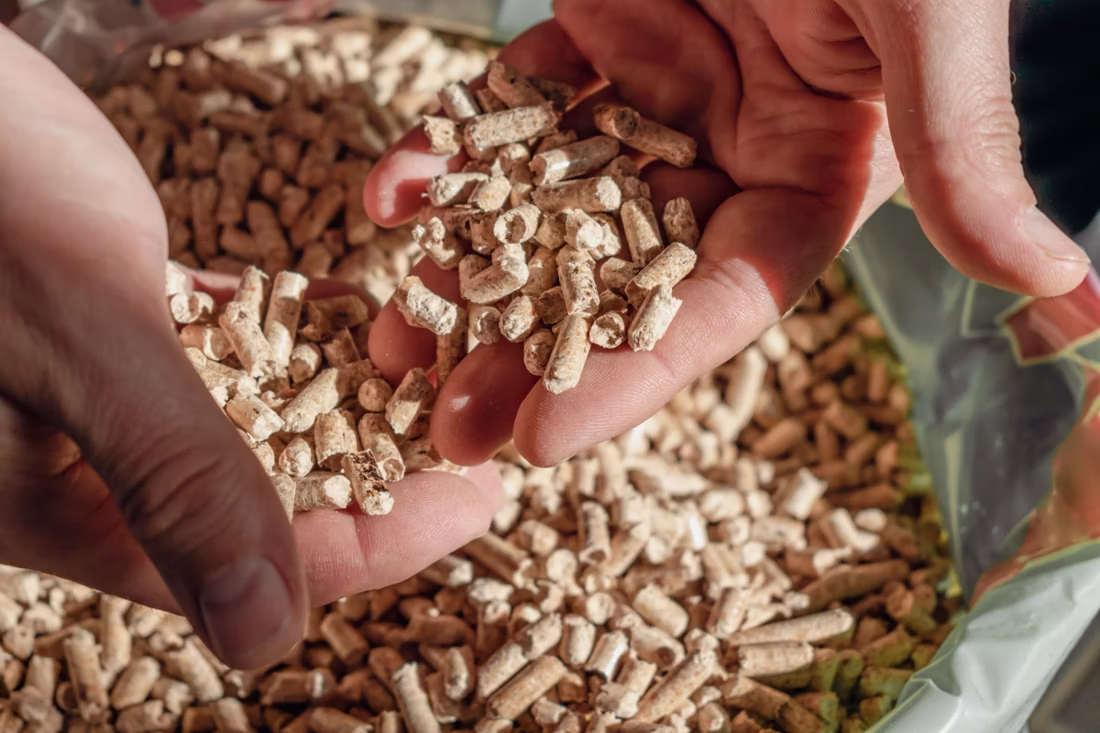
That's where pellet heat earns its place here. Local dealers stock hardwood pellets from regional suppliers including Lignetics and Indeck Energy Services, and Montgomery County's own timber—oak, hickory, walnut, and maple—mirrors the species mix that goes into a lot of Midwest hardwood pellet production. A pellet stove or insert loads from a hopper, runs on a thermostat, and holds a steady burn without the splitting, stacking, and constant feeding that cordwood demands. There are no air quality curtailment periods to work around here, unlike counties dealing with winter inversions, so a pellet appliance runs on its own schedule rather than the local air board's.
Three steps. No salesperson until you're ready.
Tell us about your project
Your zip code, your situation, and the fuel you're leaning toward—or let the answers point you to one.
See what's actually available
The brands dealers within 100 miles genuinely carry—real options, never a catalog mirage.
Get your dealer & Project Guide
A trusted local dealer, plus the free Project Guide & Parts List that names every component of the job.
Frequently Asked Questions
How much does a pellet stove installation cost in Montgomery County?
Most pellet stove and insert installations in Montgomery County run in the $4,000 to $7,500 range, depending on the unit, whether you're inserting into an existing masonry fireplace, and whether new electrical or venting work is needed. Homes with an existing fireplace opening are typically on the lower end since the chimney chase can often be reused with a liner. Freestanding installs in a home without a fireplace—common in the older farmhouses scattered around Wellsville and New Florence—run a bit higher once hearth pad and wall-thimble venting are factored in. A local dealer can give you a firm number after an in-home look at the space.
What size pellet stove do I need for my home?
Sizing comes down to square footage, ceiling height, and insulation, but as a starting point for Montgomery County's climate: smaller units (up to around 1,200 sq ft) suit a single living area or a modest farmhouse room, while larger units (1,500-2,200+ sq ft) can carry a whole main floor through a stretch of 20-degree nights. Older, less-insulated farmhouses common in the rural stretches of the county often need to size up compared to a newer build in Montgomery City with tighter construction. A local dealer will walk the space and size it properly—oversizing wastes fuel and undersizing leaves you running the auger nonstop on the coldest nights.
Where can I find a certified pellet stove installer near me?
Montgomery County doesn't enforce a countywide building code, so permitting and inspection requirements for hearth appliances are handled at the municipal level—Montgomery City and Wellsville each have their own process, while unincorporated areas often have no formal permit step at all. That makes choosing a dealer who actually installs pellet appliances for a living, rather than a general contractor doing it as a side job, the real safeguard. Look for NFI-certified technicians, and confirm the installer will handle the electrical hookup for the auger and blower along with the vent run—pellet appliances need both done correctly to run safely and efficiently.
What's the difference between a pellet stove and a pellet insert?
A pellet stove is a freestanding unit that vents through a wall thimble or a short run of pipe—it doesn't need an existing chimney and can go almost anywhere with access to a wall or roof for venting. A pellet insert is built to slide into an existing masonry fireplace opening, using the existing chimney chase (with a proper liner) as its venting path. For the older homes around Montgomery County that already have a wood-burning fireplace sitting unused, an insert is usually the more straightforward and less expensive route. Homes without an existing fireplace opening are better suited to a freestanding stove.
Do I need a permit to install a pellet stove in Montgomery County?
It depends on where in the county you're located. Inside Montgomery City or Wellsville, check with the city office before installing—some hearth appliance work requires a permit, particularly if it involves new electrical circuits for the stove's auger and blower. In unincorporated parts of the county, there's no countywide building department enforcing a permit requirement, though your homeowner's insurance carrier may still want documentation that the install was done to code. Either way, a reputable local dealer will know exactly what's required in your specific township and can walk you through it.
What's the best pellet stove for Montgomery County's climate?
Zone 4A winters here—averaging around 20°F with a solid five-month heating season—don't demand the extreme-cold engineering that a stove in International Falls or Bozeman would need, so a mid-size hopper (40-60 lb capacity) is usually plenty for most homes. For rural households where someone's out doing chores or working off the farm for hours at a stretch, look for a stove with a larger hopper and a longer burn-per-load rating so it can run unattended through a full workday. Local dealers can match hopper size and BTU output to your specific square footage and daily routine.
Where can I buy pellets in Montgomery County?
Hardwood pellets from regional suppliers like Lignetics and Indeck Energy Services are typically available through local hearth dealers and farm supply stores serving the county, often sold by the ton or in 40-lb bags by the pallet. Pricing generally runs in line with regional Midwest averages, and buying a season's supply early—before the first cold snap hits—tends to get better availability and pricing than waiting until January. Given the oak, hickory, and walnut that grow throughout the county, hardwood pellet blends are a natural fit and burn cleanly with low ash output.
How much maintenance does a pellet stove need?
Pellet stoves need more routine attention than a gas fireplace but far less than a wood stove's annual chimney sweep. Plan on cleaning the burn pot and glass every few days during heavy use, emptying the ash pan weekly, and running a full teardown-and-clean at least once a season—ideally before the first cold nights hit in Montgomery County. An annual professional service checks the auger, exhaust fan, and gaskets, which matters most for the appliance's electrical components since a pellet stove won't run at all without power to the auger and blower.
Pellet vs. wood—which is right for my home?
Wood stoves burn the oak, hickory, and walnut that's plentiful throughout Montgomery County, and they'll keep running through a power outage—a real consideration on rural lines where restoration can take a while after an ice storm. Pellet stoves trade that off for convenience: load the hopper, set the thermostat, and walk away, with less ash and a cleaner burn, but they need continuous electricity to run the auger and blower. For farm households managing chores and unpredictable hours, the set-and-forget nature of a pellet stove is often worth it. For households that want backup heat guaranteed during winter outages, a wood stove—or a pellet stove paired with a small backup generator—covers both bases.
What's the difference between an insert and a zero-clearance fireplace?
An insert is a fireplace that slides into a pre-existing wood-burning fireplace—if you don't have one, there's nothing to insert it into. A zero-clearance fireplace is built into a framed wall, which makes it the answer for remodels and new construction. Simple test: existing masonry fireplace means insert; blank or framed wall means zero-clearance.
How often does a pellet stove need cleaning?
A clean pellet stove is a happy pellet stove. Plan on cleaning the burn pot about once a week when you're burning regularly—ash and clinkers gum up the air holes just like a pellet barbecue. Most pellet stove problems trace back to skipped cleaning that nobody explained up front. Some designs make it easy with a trapdoor burn pot: pull a lever and the gunk drops into the ash pan.
Can a fireplace actually lower my heating bill?
Yes—by creating a comfort zone. A furnace heats every square foot of the house just to warm the one room you're in; a gas fireplace on low burns roughly a sixth of the gas a typical furnace does. Set the furnace around 55–60 degrees as a baseline, then heat the rooms your family actually uses. Families who heat this way commonly save $20–$60 a month.
Can I install a fireplace myself?
If you're putting a fire in your house on purpose, it's best to work with an expert. Unless you're genuinely experienced in framing, gas line, vent pipe, and the national code on clearances to combustibles, have a professional do it—and ideally the same company that sells you the fireplace, so warranty, service, and liability all live under one roof.
Pellet Brands Stocked Around Montgomery County
Manufacturers will point you to the nearest stocking dealer.
Find your pellet stove in Montgomery County.
Tell us a bit about your home and we'll match you with a trusted local dealer and send over a free Project Guide & Parts List—the right pellet stove or insert, sized correctly, with the vent kit and installation details spelled out.'}
Find Your Fireplace →