
Warm up your Montgomery County home without a chimney.
No chimney, no gas line, no permit hassle—just plug it in. Electric fireplaces are a practical fit for Montgomery City, Wellsville, Jonesburg, New Florence, Rhineland, and every farmhouse and river town in between. Find the right unit and connect with a trusted local dealer.
Every Project Starts From One of These Five Situations
Simple heat for old farmhouses and river towns alike.
Montgomery County sits along the Missouri River in east-central Missouri, home to about 6,450 people spread across Montgomery City, Wellsville, Jonesburg, New Florence, High Hill, Bellflower, and Rhineland. At climate zone 4A with roughly 5,041 heating degree days and winter lows averaging 20°F, the county sees a real heating season—colder than St. Louis to the east, though nowhere near the stretch a place like Bismarck, ND logs every winter. Wood heat runs deep here, with oak, hickory, walnut, and maple standing timber common on rural properties, but a growing number of households are adding electric fireplaces alongside—or instead of—traditional wood heat.
The appeal is practical. There's no chimney to build, no gas line to run, and for a plug-in unit, no permit to pull—which matters in a county where much of the housing stock is older farmhouses, manufactured homes, and river-town properties where adding venting isn't simple or cheap. With no air quality restrictions in the county, there's no regulatory push toward electric over wood—it comes down to convenience, cost, and where you want supplemental heat. Most homes here are served by Cuivre River Electric Cooperative or Ameren Missouri, and a local dealer will size the right unit to the room, not the whole house—an electric fireplace supplements, it doesn't replace, your primary heat source.
Three steps. No salesperson until you're ready.
Tell us about your project
Your zip code, your situation, and the fuel you're leaning toward—or let the answers point you to one.
See what's actually available
The brands dealers within 100 miles genuinely carry—real options, never a catalog mirage.
Get your dealer & Project Guide
A trusted local dealer, plus the free Project Guide & Parts List that names every component of the job.
Frequently Asked Questions
How much does an electric fireplace installation cost in Montgomery County?
A plug-in electric fireplace insert or freestanding unit runs $150 to $600 installed—most homeowners in Montgomery City, Wellsville, or Jonesburg just need an existing 120V outlet, no electrician required. Built-in wall units or mantel-package fireplaces run $1,200 to $3,000 once you add a surround and any minor wall framing, and if the unit needs a dedicated 20-amp circuit—common for larger 1,500-watt models—expect another $300 to $800 for an electrician to run new wiring. Compared to a wood stove install with chimney work, or a propane line extension out to a rural property near Rhineland, electric is consistently the least expensive way to add heat to a room.
Do I need a permit to install an electric fireplace in Montgomery County?
For a standard plug-in electric fireplace, no permit is needed—it's treated the same as any other appliance you plug into the wall. If you're having a built-in unit hardwired or adding a new dedicated circuit, that electrical work typically requires a permit and inspection, and in Montgomery County that generally means pulling a permit through the county or the local building authority depending on whether you're inside Montgomery City limits or out in unincorporated areas like High Hill or Bellflower. A licensed electrician handling the wiring will usually manage that paperwork for you.
What size electric fireplace do I need for my home?
Most Montgomery County homes—whether it's a century-old farmhouse outside New Florence or a newer build near Montgomery City—do well with a 1,500-watt electric insert or stove rated to heat 400 to 1,000 square feet, depending on ceiling height and how drafty the room is. Older farmhouses with single-pane windows and uninsulated walls will feel the heat more as supplemental warmth in one room rather than whole-house heat, which is exactly how most local buyers use them: heating the living room or a bedroom without running the furnace as hard on a 20-degree night.
Will my electric fireplace work during a power outage?
No—a standard electric fireplace stops working the moment the power goes out, which matters in a rural county like Montgomery where ice storms and downed lines can knock out power for a day or more. If backup heat during outages is a priority, pair the electric fireplace (for everyday convenience and ambiance) with a wood stove or fireplace as the true emergency backup—plenty of local homes with oak and hickory on the property do exactly that. A battery or generator setup is the only way to keep an electric unit running through an outage.
Electric vs. wood—which is right for my Montgomery County home?
Wood is still deeply practical in Montgomery County—oak, hickory, walnut, and maple are all common on local timber, self-cut firewood is inexpensive, and a wood stove keeps working when the power doesn't. Electric fireplaces trade that off for convenience: no ash, no chimney to sweep, no smoke, and instant on-off heat with a remote. With no air quality restrictions or burn bans in the county, there's no regulatory push toward electric—it's purely a matter of what you want day to day. Many households end up with both: wood for the shop or main living space, electric in a bedroom or den where hauling firewood isn't practical.
Electric vs. pellet stove—which should I choose?
Both need electricity to run—a pellet stove's auger and blower motor won't function in an outage any more than an electric fireplace will, so if backup heat is the goal, neither beats a wood stove. Where they differ: pellet stoves, fed by bagged pellets from brands like Lignetics or Indeck Energy Services that circulate regionally, put out real heat and require venting, a hopper you refill, and periodic ash cleanout. Electric fireplaces need none of that—plug it in and it runs—but they're heaters with a flame effect, not a comparable BTU source for whole-room heating in the coldest stretches of a Montgomery County winter.
Where can I install an electric fireplace—do I need a chimney or vent?
Electric fireplaces work almost anywhere because there's no venting or clearance-to-combustible requirement like a wood or gas unit—that makes them a common choice in manufactured and modular homes around Jonesburg and Wellsville, where a real chimney isn't an option. Wall-mounted units need a stud bay or surface mount and a nearby outlet; freestanding stoves just need floor space and a plug. Built-in linear units set into a wall or existing fireplace opening give the most finished look but need a bit more planning around framing and trim.
How much does it cost to run an electric fireplace in Montgomery County?
Running cost depends on the wattage and your rate from your electric provider—most of Montgomery County is served by Cuivre River Electric Cooperative or Ameren Missouri depending on location. A typical 1,500-watt unit costs roughly 15 to 25 cents an hour to run on the heat setting, so a few hours a night through a cold spell adds a modest amount to a monthly bill—far less than heating a whole house with electric resistance heat, since you're only warming the room you're in.
Are electric fireplaces safe for kids, pets, and older homes?
Yes—most modern electric fireplaces use LED flame effects behind cool-touch glass, so there's no risk of burns from the glass front the way there is with a gas or wood unit, and no open flame, sparks, or real smoke to worry about. That makes them a common choice for households with young kids or pets, and for older residents in Montgomery County who want fireplace ambiance without the physical work of tending a wood stove or the safety concerns of an open flame.
Can I put a TV above my fireplace?
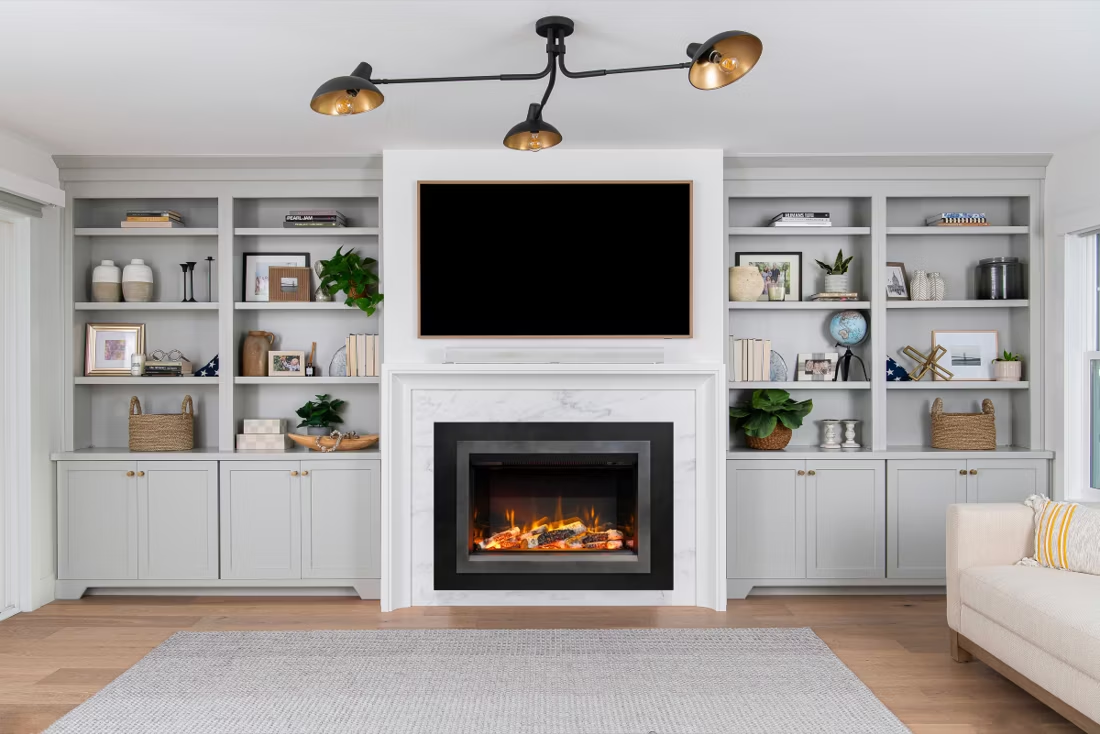
Yes—with an asterisk. Fireplaces are hot and TVs don't like heat. Either put a mantel between them to deflect rising warmth, or choose a fireplace with heat-management technology that creates a cool zone on the wall above—the wall stays around 125 degrees, barely warm, while the room still gets full heat. If you like clean lines and don't want a mantel, heat management is the answer.
Do electric fireplaces actually produce heat?
Yes—most put out around 4,800–5,000 BTUs from a standard outlet, which comfortably warms a bedroom, office, or den as a comfort-zone heater. What they won't do is carry a whole house the way wood, gas, or pellet can. Think of electric as ambiance-first with honest supplemental heat: flames on with no heat in July, flames plus warmth in January.
How much should I budget for a fireplace?
For an average home—covering the fireplace, the vent pipe, and basic installation—a budget between $3,900 and $5,500 gives you a lot of options across wood, gas, and pellet. By the time you add finish work, gas line, and electrical, the average complete installation lands between $5,000 and $12,000 all-in. In a remodel or new build, a good rule is to put about 2.5% of the total project cost toward the fireplace.
Does a fireplace add value to my home?
On average, a fireplace adds back to the home about the same amount you spent installing it. Add the monthly savings from heating the rooms you actually use instead of the whole house—often hundreds of dollars a year—and the value case is strong before you even count what a fire does for how your family uses the room.
Find your electric fireplace in Montgomery County.
Tell us a bit about your home and we'll send a free Project Guide & Parts List—the right electric fireplace, the parts you need, and a trusted local dealer in Montgomery County to handle the install.
Find Your Fireplace →