
Keep Your Family Warm and Safe—No Matter What
Most homes here run on gas and electric heat, but a wood stove or insert still has a place—especially as backup heat when North County loses power in an ice storm. Here's how to figure out if it fits your house.
Every Project Starts From One of These Five Situations
Why wood isn't the default heat source in Moline Acres
Moline Acres is a small, densely built residential city of about 2,800 people in North St. Louis County, sitting at roughly 450 feet of elevation with a Climate Zone 4A designation. Winters are real—average lows around 24°F and a solidly cold winter heating season—but that's a moderate cold-climate profile, closer to a typical Midwest winter than the extreme, sustained sub-zero stretches you'd see in a place like Fargo or International Falls. With natural gas and electric service both well established across the St. Louis metro, most households here heat with a furnace or heat pump rather than cordwood, and lot sizes and setback requirements in a compact, built-out community like this one leave little room for the chimney clearances and wood storage that a serious wood-burning setup requires.
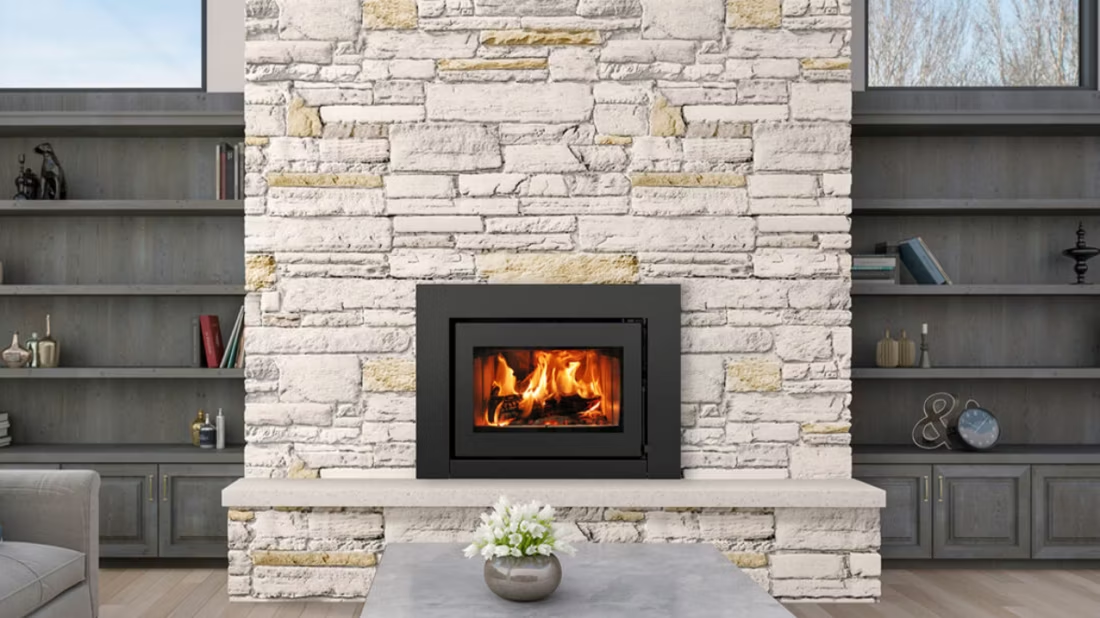
That said, wood isn't off the table. Older homes in Moline Acres with an existing masonry fireplace are reasonable candidates for a wood-burning insert, and the region's hardwood supply—oak, hickory, walnut, and maple grow throughout St. Louis County—makes fuel easy to source if you go that route. The most common reason homeowners here ask about wood stoves isn't primary heat; it's backup. Union Electric Co. (Ameren Missouri) service can go down during ice storms, and a wood stove is one of the few heat sources that keeps working with no power at all.
Three steps. No salesperson until you're ready.
Tell us about your project
Your zip code, your situation, and the fuel you're leaning toward—or let the answers point you to one.
See what's actually available
The brands dealers within 100 miles genuinely carry—real options, never a catalog mirage.
Get your dealer & Project Guide
A trusted local dealer, plus the free Project Guide & Parts List that names every component of the job.
Frequently Asked Questions
Does it actually make sense to install a wood stove in Moline Acres?
For most households, no—not as a primary heat source. Lots in Moline Acres are small and closely spaced, and gas or electric heat already covers the moderate winters here without the chimney clearances, hearth pad space, and wood storage a stove needs. Where it does make sense is in an older home with an existing masonry fireplace, where a wood-burning insert reuses the chimney you already have, or for homeowners who specifically want off-grid backup heat. If either applies to you, it's worth a conversation with a local dealer rather than assuming it's a non-starter.
What does a wood stove or insert cost to install here?
Because wood heat is uncommon in this part of St. Louis County, there isn't a deep bench of local wood-stove specialists the way there would be in a rural, wood-dependent market. Expect a typical installed cost in the $3,000–$7,000 range for a stove or insert, depending on whether you're venting through an existing masonry chimney or need new Class A pipe run through a wall or roof. Get a firm number from a dealer who actually services North County—some hearth retailers cover the wider St. Louis metro even if they're not based in Moline Acres itself.
Do I need a permit for a wood stove in Moline Acres?
Likely yes, through the City of Moline Acres building department or St. Louis County's permitting office, depending on jurisdiction for your address. A new wood-burning appliance typically needs a building permit and, if you're adding a new chimney, a mechanical inspection. Air quality concerns are listed as none for this area, so unlike some Western cities you won't run into wood-burning curtailment days or non-attainment restrictions—the permitting here is about structural and fire-code compliance, not smoke regulation.
Why is wood heat considered rare here if winters get cold?
Moline Acres has a solidly cold winter heating season—genuinely cold, but a moderate Midwest cold, not the sustained deep-freeze conditions of a place like Duluth or Bismarck. Natural gas and electric infrastructure are well built out across St. Louis County, so most homes never developed a wood-heating habit the way rural, off-grid-prone areas do. Wood here tends to be a choice—for ambiance, for an existing fireplace, or for storm backup—rather than a climate necessity.
What firewood species are available locally?
St. Louis County hardwood forests supply oak, hickory, walnut, and maple, all of which burn well and are available through regional firewood sellers. Oak and hickory are the workhorses—dense, long-burning, and easy to season. Walnut burns cleanly with a distinctive aroma but shows up less often as firewood since it's more valuable as lumber. Maple splits easily and is a solid mid-range choice. None of these require specialty sourcing; any firewood dealer serving the North County area will carry a mix of these species.
Can a wood stove serve as backup heat during a power outage?
Yes, and this is the most common reason wood comes up for Moline Acres homeowners. Union Electric Co. (Ameren Missouri) service can be knocked out for days during a significant ice storm—a recurring risk in this part of Missouri—and a wood stove or insert keeps producing heat with zero electricity required, unlike a gas furnace with an electric blower or an electric heat pump. If backup heat is your main motivation, prioritize a simple, non-electronic stove design over a high-tech model with electronic ignition or blowers.
Insert or freestanding stove—which fits a Moline Acres home better?
If your home already has a masonry fireplace, an insert is almost always the better fit—it uses the chimney you already have and avoids adding new structural clearances on a small lot. A freestanding stove needs its own hearth pad and code-required clearances to combustibles, which can be a real constraint in the smaller floor plans common in Moline Acres. If you don't have an existing fireplace, a freestanding stove is still possible, but expect the installer to spend more time on clearance planning than they would in a larger rural home.
How often does a wood-burning chimney need inspection?
The CSIA recommends an annual inspection for any wood-burning appliance, and that holds regardless of how often the region as a whole uses wood heat. If you install an insert into an older masonry chimney in Moline Acres, get that chimney inspected before first use—older flues in homes of this vintage sometimes need a liner to safely vent a modern insert. After that, plan on a yearly sweep and inspection, typically in late summer before the burning season starts.
Wood vs. gas or electric—what's the honest comparison for this area?
Gas and electric heat are the practical default in Moline Acres—natural gas service and Union Electric Co.'s grid cover the area reliably, and neither requires wood handling, ash cleanup, or chimney maintenance. Wood's real advantage here is independence: it keeps producing heat when the power is out, which matters during ice storms. For most homeowners, gas or electric will be the primary system, with wood—if installed at all—serving as a deliberate backup or an upgrade to an existing fireplace rather than a full heating replacement.
Why is a fireplace insert so efficient?
An insert does two things: it seals the chimney completely, so you stop losing air you already paid to heat, and it radiates warmth into the room through the firebox and glass. Most add a heat-exchange fan that pulls cool room air underneath, wraps it around the hot firebox, and pushes it back out warm. Your home is more efficient before you've even lit the first fire.
Why is my open fireplace making my house colder?
Open fireplaces suck—literally. As the fire burns, it consumes air your furnace already paid to heat and pulls it out through the chimney, so the house is actually colder after the fire goes out than before you lit it. An insert fixes this: it seals the chimney, puts fixed glass across the front, and turns that hole in your house into a real heat source.
Can a fireplace actually lower my heating bill?
Yes—by creating a comfort zone. A furnace heats every square foot of the house just to warm the one room you're in; a gas fireplace on low burns roughly a sixth of the gas a typical furnace does. Set the furnace around 55–60 degrees as a baseline, then heat the rooms your family actually uses. Families who heat this way commonly save $20–$60 a month.
Does a fireplace add value to my home?
On average, a fireplace adds back to the home about the same amount you spent installing it. Add the monthly savings from heating the rooms you actually use instead of the whole house—often hundreds of dollars a year—and the value case is strong before you even count what a fire does for how your family uses the room.
Nearby Dealers
Hearth shops serving Moline Acres and the surrounding area. Every listing shows whether it is a WhyFire partner, a dealer we have verified as authorized for the brands we recommend, or a local business carrying hearth products. No manufacturer pays for placement. How we verify dealers →
Villa Lighting Supply
Gas Appliance Service LLC
Savvy Surroundings
Forshaws
Fireside Hearth & Grill Center
Fireplace And Grill Center
English Sweep
Bel-O Fireplaces & More
Summer Classics By Forshaw
Hearthside Grill & Fireplace
Brighthouse Living
Arnold Stove & Fireplace Center
Suhre'S Gas Co.
Find your wood stove option in Moline Acres.
Tell us about your home and whether you're after backup heat, an existing fireplace upgrade, or something else—we'll match you with a trusted local dealer and send over a free Project Guide & Parts List with the exact parts, vent kit, and dealer recommendation for your Moline Acres project.
Find Your Fireplace →