
Steady, low-maintenance heat for Johnson County winters.
From Warrensburg to Knob Noster to Holden, pellet stoves give Johnson County homeowners consistent, thermostat-controlled warmth without splitting or stacking cordwood. Find the right unit and get matched with a trusted local dealer.
Every Project Starts From One of These Five Situations
Consistent heat without the woodpile.
Johnson County sits in the rolling farmland of west-central Missouri, anchored by Warrensburg—home to the University of Central Missouri—and Knob Noster, next door to Whiteman Air Force Base. Winters here are a solid, unglamorous cold: an average low around 18°F and a moderately long, steady heating season, a climate zone 4A profile that's colder than the Missouri Bootheel but nowhere near the brutal stretches of the Upper Midwest. Homeowners have relied for generations on the oak, hickory, walnut, and maple that fill the county's hardwood stands for wood heat—but plenty of Johnson County households, especially busy military families near Whiteman and commuters into Kansas City, want that same radiant warmth without the chainsaw, the splitting maul, or the woodshed.
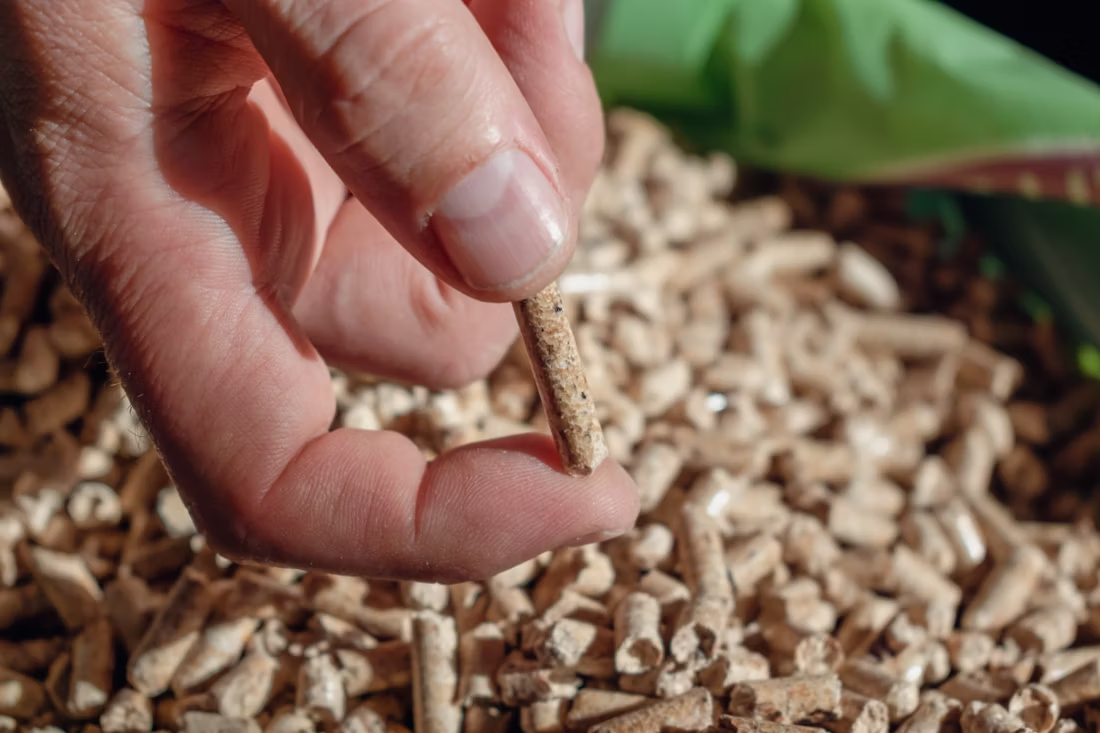
That's where pellet stoves fit. Regional suppliers like Lignetics and Indeck Energy Services keep hardwood and softwood pellet fuel reasonably accessible throughout this part of Missouri, and Johnson County has no air quality non-attainment issues or wintertime burn curtailments to work around—pellet or wood, you're not fighting local smoke restrictions here. A pellet stove loads from a bag instead of a cord, runs on a thermostat instead of a bed of coals you have to tend, and produces a fraction of the ash of an open wood fire. For a lot of Johnson County homes, that trade—a little dependence on electricity and a hopper refill every day or two, in exchange for real automated heat—is an easy one.
Three steps. No salesperson until you're ready.
Tell us about your project
Your zip code, your situation, and the fuel you're leaning toward—or let the answers point you to one.
See what's actually available
The brands dealers within 100 miles genuinely carry—real options, never a catalog mirage.
Get your dealer & Project Guide
A trusted local dealer, plus the free Project Guide & Parts List that names every component of the job.
Frequently Asked Questions
How much does a pellet stove installation cost in Johnson County?
Most Johnson County pellet stove installations run in the $3,000 to $6,500 range, with the spread driven by the stove itself, whether you're venting through an existing masonry chimney or need a new through-wall vent kit, and any hearth pad work required for clearance. A pellet insert going into an existing fireplace opening in a Warrensburg or Holden home tends to land on the lower end, since the masonry chimney can often be adapted with a liner. A freestanding stove in a home with no existing fireplace or chimney—common in newer construction near Knob Noster—runs a bit higher once venting is built from scratch. Local dealers will give you a firm number after seeing the space.
What size pellet stove do I need for my home?
With Johnson County seeing a moderately long, steady heating season and winter lows near 18°F, most homes don't need the largest hopper-and-BTU combinations built for harsher climates—a mid-size pellet stove rated for 1,200 to 2,000 square feet handles a typical Warrensburg or Centerview home comfortably as either primary or supplemental heat. Older farmhouses with less insulation, or homes trying to heat an open floor plan with a single stove, should size up. A local dealer can walk your square footage, ceiling height, and insulation level and steer you toward the right hopper capacity so you're not refilling constantly on the coldest nights.
Where can I find certified pellet stove installers near me?
Look for installers with NFI (National Fireplace Institute) certification, which covers proper venting, clearance, and electrical setup for pellet appliances specifically—it's a different skill set than wood stove or gas installation. Hearth dealers serving Johnson County typically cover Warrensburg, Holden, Knob Noster, and the smaller communities like Leeton and Chilhowee, sometimes with a modest travel charge for the more rural addresses. Since pellet stoves need a dedicated electrical outlet in addition to venting, it's worth confirming your installer handles both the vent kit and the electrical work rather than leaving one piece to a separate contractor.
What's the difference between a pellet stove and a pellet insert?
A pellet stove is a freestanding unit that sits on a hearth pad and vents through a wall or existing chimney—it can go almost anywhere in a room with the right clearances. A pellet insert is built to slide into an existing masonry fireplace opening, using a liner run through your current chimney rather than a separate through-wall vent. For Johnson County homes with an old open wood fireplace that's rarely used, an insert is often the simpler upgrade since it repurposes a chimney you already have. Homes without an existing fireplace—including a lot of newer construction near Knob Noster—are usually better matched to a freestanding stove.
Do I need a permit to install a pellet stove in Johnson County?
Yes—a building permit is standard for a new pellet stove installation, covering the venting path and clearance-to-combustibles for the appliance. In Warrensburg, permits go through the city; in unincorporated parts of Johnson County, they're handled through the county building office. Most hearth dealers pull the permit as part of the installation, so this generally isn't something you need to manage yourself. There's no ongoing burn-curtailment paperwork to worry about here—Johnson County doesn't have the wintertime air quality restrictions that some regions impose on solid-fuel appliances.
What's the best pellet stove for Johnson County's climate?
Because winter lows here average around 18°F rather than the sub-zero stretches you'd see farther north, Johnson County homeowners generally don't need the largest-hopper, longest-burn-time pellet stoves on the market—a mid-tier model with a 40-to-60-pound hopper is enough to get most households through an overnight without a refill. Brands commonly serviced by regional dealers stocking Lignetics and Indeck Energy Services fuel tend to work well across this range. If you're heating a larger farmhouse or an older home with real air infiltration, ask your local dealer about a higher-capacity hopper rather than running a smaller unit on high constantly, which shortens auger and igniter life.
How often does a pellet stove need to be cleaned and serviced?
Pellet stoves need more frequent light maintenance than wood stoves but less heavy chimney work. Plan on emptying the ash pan every few days during regular winter use, a deeper burn-pot and glass cleaning every couple of weeks, and a full professional service—checking the auger, igniter, exhaust fan, and venting—once a year, typically before the season starts in early fall. Johnson County dealers who sell pellet stoves generally offer this annual service directly, and it's worth scheduling before the first cold snap rather than after.
Where can I buy pellet fuel in Johnson County?
Regional suppliers including Lignetics and Indeck Energy Services distribute hardwood and softwood pellets throughout this part of Missouri, and local hearth dealers frequently stock bags or can point you to the nearest farm supply or hardware retailer that carries them seasonally. Pricing in this part of the Midwest typically runs in the $230 to $280 per ton range, though it's worth buying early in the fall—pellet fuel can get harder to find at individual bags once cold weather hits and demand spikes. Buying a full ton or more at once, rather than bag by bag, is usually the better value if you have dry storage space.
Pellet stove vs. wood stove—which is right for my Johnson County home?
Wood stoves burn the oak, hickory, walnut, and maple that are abundant across Johnson County, work with zero electricity, and are the better choice if you want a backup heat source during a power outage—a real consideration in rural parts of the county where outages can run long. Pellet stoves trade that off-grid independence for convenience: no splitting or stacking, a thermostat instead of constant tending, and a cleaner burn with less ash, but they need a live electrical outlet to run the auger, igniter, and exhaust fan. For a primary residence with reliable power, especially for households near Warrensburg or Knob Noster who want heat without the wood-handling routine, pellet is usually the easier day-to-day fit. For a cabin, a rural property prone to outages, or anyone wanting a true emergency backup, wood remains the safer bet.
Why is a fireplace insert so efficient?
An insert does two things: it seals the chimney completely, so you stop losing air you already paid to heat, and it radiates warmth into the room through the firebox and glass. Most add a heat-exchange fan that pulls cool room air underneath, wraps it around the hot firebox, and pushes it back out warm. Your home is more efficient before you've even lit the first fire.
What's the difference between an insert and a zero-clearance fireplace?
An insert is a fireplace that slides into a pre-existing wood-burning fireplace—if you don't have one, there's nothing to insert it into. A zero-clearance fireplace is built into a framed wall, which makes it the answer for remodels and new construction. Simple test: existing masonry fireplace means insert; blank or framed wall means zero-clearance.
Does a fireplace add value to my home?
On average, a fireplace adds back to the home about the same amount you spent installing it. Add the monthly savings from heating the rooms you actually use instead of the whole house—often hundreds of dollars a year—and the value case is strong before you even count what a fire does for how your family uses the room.
Can a fireplace actually lower my heating bill?
Yes—by creating a comfort zone. A furnace heats every square foot of the house just to warm the one room you're in; a gas fireplace on low burns roughly a sixth of the gas a typical furnace does. Set the furnace around 55–60 degrees as a baseline, then heat the rooms your family actually uses. Families who heat this way commonly save $20–$60 a month.
Stove and Fireplace Dealers in Johnson County
Pellet Brands Stocked Around Johnson County
Manufacturers will point you to the nearest stocking dealer.
Find your pellet stove in Johnson County.
Tell us about your home and we'll match you with a trusted local dealer and send over a free Project Guide & Parts List—the exact parts, including the vent kit, for your pellet project in Johnson County.
Find Your Fireplace →