
Real gas heat for Warrensburg, Knob Noster, and all of Johnson County.
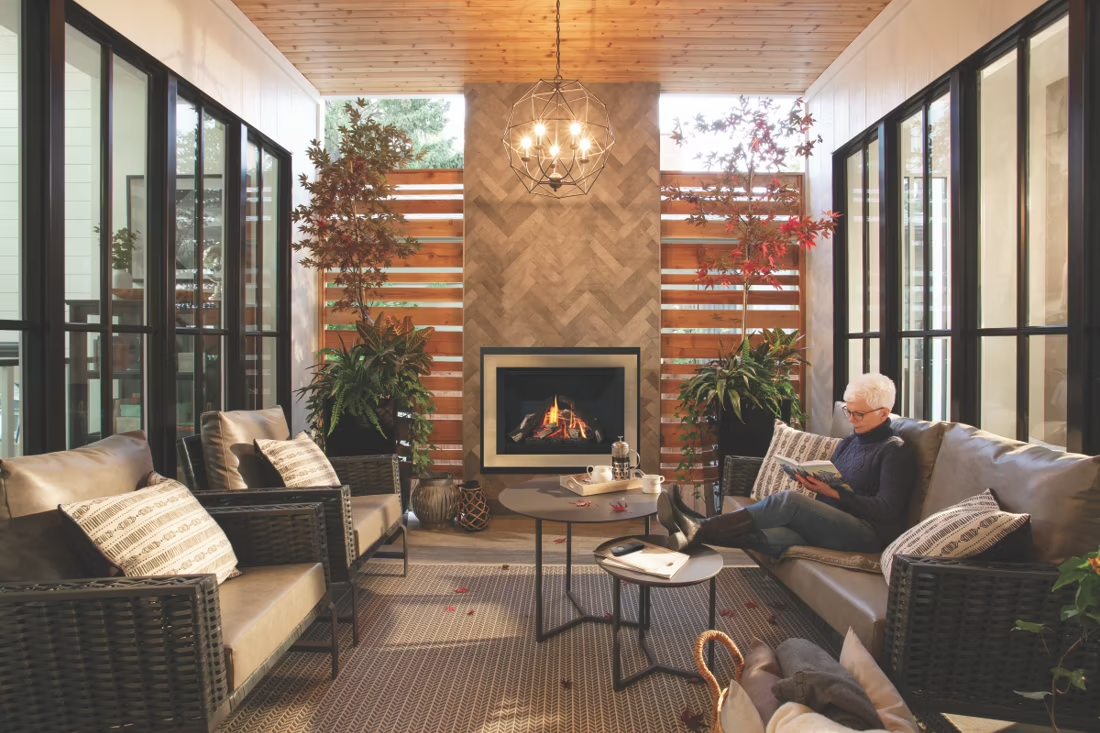
Clean, instant gas heat for west-central Missouri winters—natural gas in town, propane out on the farm ground. Find the right unit and connect with a trusted local dealer.
Every Project Starts From One of These Five Situations
Clean heat that keeps up with west-central Missouri winters.
Johnson County sits in the rolling farmland of west-central Missouri, roughly halfway between Kansas City and Columbia, anchored by the county seat of Warrensburg—home to the University of Central Missouri—and Knob Noster, just down the road from Whiteman Air Force Base. Winters here average lows around 18°F with roughly 4,997 heating degree days a year: colder than most of the Deep South, milder than places like Bismarck, ND, but cold enough that heating bills are a real line item every January. Generations of Johnson County families have leaned on the oak, hickory, walnut, and maple growing across the county's woodlots and fencerows for wood heat, but gas fireplaces and inserts have become the default in a lot of newer construction, remodeled farmhouses, and in-town homes around Warrensburg and Holden where instant, no-mess heat matters more than tending a fire.
Natural gas service reaches most of Warrensburg, Holden, Knob Noster, and the county's other incorporated towns through regional distribution lines. Once you're outside city limits—which describes a large share of Johnson County's farm and ranch acreage—propane is the standard fuel, delivered and tanked by regional suppliers who already serve the county's rural customers. Johnson County carries no air-quality non-attainment designation and no winter burn restrictions, so gas installations here move through permitting without the curtailment-period complications some Western counties deal with. Either way, a properly installed gas fireplace or insert gives you heat at the flip of a switch, works as zone heat alongside a central furnace, and—with the right ignition system—can still light during an ice storm or summer derecho outage, which this part of Missouri sees its share of.
Three steps. No salesperson until you're ready.
Tell us about your project
Your zip code, your situation, and the fuel you're leaning toward—or let the answers point you to one.
See what's actually available
The brands dealers within 100 miles genuinely carry—real options, never a catalog mirage.
Get your dealer & Project Guide
A trusted local dealer, plus the free Project Guide & Parts List that names every component of the job.
Frequently Asked Questions
How much does a gas fireplace installation cost in Johnson County?
Most gas fireplace installations in Johnson County run $3,500 to $9,000, depending on the unit, whether you're converting an existing masonry fireplace or building venting from scratch, and whether propane tank work is involved. A direct-vent insert dropped into an existing chimney with gas already piped to the house sits at the low end. New construction or a remodel that needs fresh gas line runs, framing, and venting from an interior wall runs toward the higher end—and rural Johnson County homes on propane sometimes add tank installation or a line extension to that total. A local dealer will walk your home before quoting a firm number.
Can I convert my existing wood fireplace to gas?
Yes, and it's a common project for homes in and around Warrensburg with an older masonry fireplace built for oak or hickory cordwood. A gas insert slides into that existing firebox and vents through the same chimney with a stainless liner, so you keep the fireplace's look while gaining push-button heat. Expect to pay somewhere in the $3,500 to $8,000 range in Johnson County, with the exact number driven by whether your home already has a gas line nearby or needs one run, and whether you're on natural gas in town or converting for propane out in the county.
Do I need natural gas, or can I use propane?
Either works, and which one you use mostly comes down to where in Johnson County you live. Homes inside Warrensburg, Holden, and Knob Noster are generally within reach of natural gas distribution lines. Once you're out on county roads and farm ground—which is most of Johnson County's land area—propane is the standard, delivered by regional suppliers who already serve rural customers with tanks for water heaters, ranges, and grain dryers. Nearly every gas fireplace and insert on the market can be set up for either fuel; your installer just configures the correct orifice and regulator for whichever you have.
Will my gas fireplace work during a power outage?
Most current gas fireplaces will, provided they use IPI (intermittent pilot ignition) with a battery backup—a small battery pack inside the unit takes over the moment power drops, so the fireplace lights on demand just like normal. That matters in Johnson County, where ice storms and the occasional summer derecho can knock out power for a day or more. Worth knowing: Valor's gas fireplaces skip batteries altogether and generate their own current off the pilot's thermocouple, so there's nothing to remember to replace. Ask any local dealer about the ignition system before you buy if outage backup matters to you.
What's the difference between a gas fireplace, gas insert, and gas stove?
A gas fireplace is a built-in unit framed into a wall—the right call for new construction or a remodel with no existing chimney. A gas insert is sized to slide into an existing masonry firebox, which describes a lot of the older farmhouses and in-town homes around Warrensburg, and it uses your current chimney as the vent path. A gas stove is a freestanding cabinet-style unit that sits out in the room like a wood stove but burns gas—a good fit if you want supplemental zone heat in a room without a fireplace at all, like a finished basement or an addition.
Do I need a permit to install a gas fireplace in Johnson County?
Yes. Inside Warrensburg or one of the county's other incorporated towns, the local building department issues the permit; in unincorporated Johnson County, that falls to the Johnson County Building Codes office. Both a construction permit and a gas line permit are typically required for a new installation, and the gas line work itself needs a licensed gas-fitter. Most hearth dealers pull the permits and coordinate the gas line and venting inspections as part of the install, so you're not juggling multiple trades yourself. Since Johnson County has no air-quality non-attainment designation, there's no curtailment-period paperwork to worry about the way there is with wood stoves in some Western counties.
What's the difference between vented and vent-free gas fireplaces?
Vented (direct-vent) gas fireplaces draw combustion air from outside and exhaust it back outside through sealed pipe—they're the cleanest, safest option and the one most Johnson County dealers install by default. Vent-free units burn directly into the room air; they're legal in Missouri and can be a reasonable fit for a tight room with no venting path available, but they require careful room-sizing and an oxygen-depletion sensor, and they add some moisture and combustion byproducts to indoor air. For most homes in Johnson County, especially the older farmhouse-style construction common around the county, a direct-vent unit is the more straightforward and more universally recommended choice.
How often should my gas fireplace be serviced?
Plan on an annual inspection, ideally in late summer or early fall before the heating season starts. A technician checks the burner, pilot assembly, venting, and gas connections, and cleans the glass and interior—a lighter job than sweeping a wood chimney, but not one to skip. Local gas appliance service providers in the Warrensburg area typically charge in the $150 to $250 range for a standard annual inspection.
Gas vs. wood—which is right for my home?
Wood has deep roots in Johnson County—oak, hickory, walnut, and maple are all common in the county's woodlots, and plenty of longtime residents still cut and split their own firewood, plus wood keeps working with the power out, which matters during ice storms. Gas trades that self-sufficiency for convenience: instant on-off heat, no splitting or ash cleanup, and a consistent flame with no smoke. For homes in town where daily convenience matters more than backup heat, gas is usually the better fit; a lot of rural Johnson County households end up with both—gas for the everyday living room fire, a wood stove or insert somewhere else for backup heat when the lines go down.
Is my gas fireplace wasting gas?
If it was installed more than 15 years ago, probably. Older gas fireplaces keep a standing pilot light burning all the time, and that little flame can cost a couple hundred dollars a year. Newer models use pilot-on-demand ignition—the pilot lights only when you use the fireplace and goes out when you turn it off.
Does a gas fireplace work when the power is out?
Yes—modern gas fireplaces have a battery backup for the ignition system that lasts for weeks, so no power equals no problem. Your furnace can't say that: no electricity, no blower, no heat. It's one of the most common reasons families add a fireplace, and worth confirming on any model you're considering.
Does a fireplace add value to my home?
On average, a fireplace adds back to the home about the same amount you spent installing it. Add the monthly savings from heating the rooms you actually use instead of the whole house—often hundreds of dollars a year—and the value case is strong before you even count what a fire does for how your family uses the room.
Can I install a fireplace myself?
If you're putting a fire in your house on purpose, it's best to work with an expert. Unless you're genuinely experienced in framing, gas line, vent pipe, and the national code on clearances to combustibles, have a professional do it—and ideally the same company that sells you the fireplace, so warranty, service, and liability all live under one roof.
Stove and Fireplace Dealers in Johnson County
Find your gas fireplace in Johnson County.
Tell us about your home and we'll match you with a trusted local Johnson County dealer, plus a free Project Guide & Parts List—the exact parts, vent kit, and recommended dealer for your gas fireplace project.
Find Your Fireplace →