
Find your pellet stove in Howard County.
Steady, low-maintenance heat for Howard County's Missouri River bluffs and farmland—from Fayette to Glasgow to New Franklin. Get matched with a trusted local dealer who knows what actually fits your home.
Every Project Starts From One of These Five Situations
Consistent heat for a county built on farming.
Howard County sits along the Missouri River bluffs in mid-Missouri, with a heating season similar in length and severity to Madison, WI and average winter lows around 20 degrees—a moderate but real cold season, closer to Madison, WI in severity than to the Deep South. Homes here run the gamut from historic Fayette farmhouses to newer construction near Glasgow, and a growing number of homeowners want dependable, set-it-and-forget-it heat without the daily hauling and stacking that oak, hickory, and walnut firewood demand.
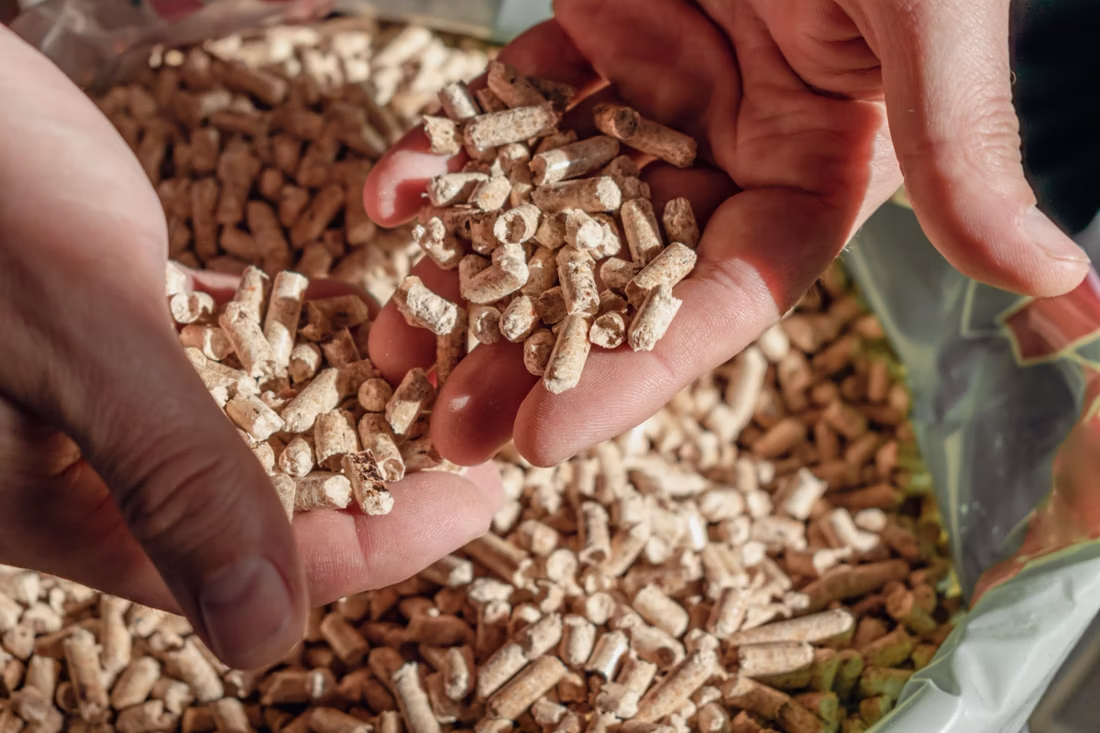
That's where pellet appliances have found real traction locally. A hopper-fed stove or insert holds a steady, programmable burn for a day or more on a single load, produces a fraction of the ash of cordwood, and burns cleaner overall—which matters even in a county with no reported air quality restrictions, since it simply means less chimney maintenance and less smoke drifting across a rural property line. Regional suppliers like Lignetics and Indeck Energy Services keep pellets reasonably accessible in this part of Missouri, so fuel supply isn't the obstacle it can be in more remote parts of the country.
Three steps. No salesperson until you're ready.
Tell us about your project
Your zip code, your situation, and the fuel you're leaning toward—or let the answers point you to one.
See what's actually available
The brands dealers within 100 miles genuinely carry—real options, never a catalog mirage.
Get your dealer & Project Guide
A trusted local dealer, plus the free Project Guide & Parts List that names every component of the job.
Frequently Asked Questions
How much does a pellet stove installation cost in Howard County?
Pellet stove and insert installations in Howard County typically land in the $4,500 to $7,500 range, depending on the unit, whether you're venting through an existing masonry chimney or running a new through-wall vent, and whether electrical work is needed for the hopper's auger and blower motor. A pellet insert going into an existing fireplace in a Fayette or New Franklin home is usually toward the lower end; a freestanding stove requiring new wall penetration and dedicated electrical runs sits higher. A local dealer will give you a firm number after seeing the install site in person.
What size pellet stove do I need for my home?
Sizing depends on square footage, insulation, and ceiling height more than anything else. For Howard County's older farmhouses—often less insulated than newer builds near Glasgow or Armstrong—a stove rated for a bit more heat output than the square footage alone would suggest is usually the safer call. Most manufacturers rate units for anywhere from 500 to 2,500+ square feet. A stove that's undersized won't keep pace on the coldest nights when lows dip into the teens; one that's oversized will short-cycle and burn through pellets faster than it should. A local dealer can size your space correctly during an in-home visit, which is free through most retailers in the area.
Where can I buy pellets locally in Howard County?
Pellets aren't produced in Howard County itself, but regional suppliers like Lignetics and Indeck Energy Services distribute into mid-Missouri, and most hearth dealers who sell pellet stoves also stock or special-order bags and ton pallets. Buying a full ton pallet ahead of the season—rather than bag by bag as needed—is the more economical route and avoids scrambling if a cold snap hits and local stock runs low. Ask your dealer about seasonal pre-buy pricing, which is common in this part of the state.
What's the difference between a pellet stove and a pellet insert?
A pellet stove is a freestanding unit that sits on its own hearth pad and vents through a wall or existing chimney—it can go almost anywhere in a room with the right clearances. A pellet insert is built to slide into an existing masonry fireplace opening, converting an old wood-burning fireplace into a much more efficient, thermostat-controlled heat source. For Howard County's older homes around Fayette that already have a masonry fireplace, an insert is often the simpler and more cost-effective upgrade. Homes without an existing fireplace, or new construction, are typically better suited to a freestanding stove.
Do I need a permit to install a pellet stove in Howard County?
Most pellet stove and insert installations require a building permit, and any new electrical circuit for the unit's hopper motor may require an electrical permit as well, since pellet stoves—unlike wood stoves—depend on electricity to run the auger and combustion blower. Requirements and the permitting office depend on whether the home is inside city limits (Fayette, Glasgow, New Franklin) or in unincorporated Howard County. Most local dealers handle the permitting process as part of the installation, so this typically isn't something you have to coordinate yourself.
What's the best pellet stove for Howard County's climate?
With winter lows averaging around 20 degrees and a heating season comparable in length and severity to Madison, WI, Howard County doesn't demand the extreme-cold engineering you'd need in a place like Duluth, MN—a mid-size pellet stove rated for 1,200 to 2,000 square feet handles most local homes well as either primary or supplemental heat. Look for a unit with a large hopper (40+ pounds) if you want to minimize refilling during multi-day cold stretches, and prioritize models with a reliable auger feed system since consistent burn quality matters more here than raw BTU output. A local dealer can match specific brands to your square footage and insulation level.
Does a pellet stove work during a power outage?
No—this is the single biggest tradeoff with pellet appliances. Because the auger, igniter, and combustion blower all run on electricity, a pellet stove shuts down the moment power is lost, unlike a wood stove which keeps burning regardless. For rural Howard County homes where winter storms can knock out power for a stretch, some homeowners pair a pellet stove with a small battery backup or generator, or keep a wood-burning option as backup. It's worth discussing your outage history and backup plans with a local dealer before deciding between pellet and wood.
How often does a pellet stove need to be cleaned and serviced?
Pellet stoves need more frequent light cleaning than wood stoves but far less heavy maintenance. Plan on emptying the ash pan every few days to weekly depending on use, cleaning the burn pot every one to two weeks during heavy winter use, and scheduling a full annual service—including venting inspection, auger and blower check, and gasket inspection—before each burning season. Because there's no creosote buildup like a wood-burning chimney, the annual service is quicker and generally less expensive than a wood chimney sweep, typically in the $150–$250 range through local service providers.
Pellet stove vs. wood stove—which is right for my Howard County home?
Wood stoves burn oak, hickory, walnut, or maple that's plentiful in this part of Missouri, work without electricity, and give you the classic radiant fire experience—but they require cutting, splitting, stacking, and regular chimney sweeping. Pellet stoves are far more convenient: load the hopper, set the thermostat, and let it run for a day or more with minimal ash, but they need electricity and won't function during an outage. For Howard County homeowners who want reliable, hands-off heat and don't want to deal with firewood logistics, pellet is usually the better fit. For those who value self-sufficiency and backup heat during storms, wood still has the edge. A local dealer carries both and can walk through the tradeoffs for your specific home.
Why is my open fireplace making my house colder?
Open fireplaces suck—literally. As the fire burns, it consumes air your furnace already paid to heat and pulls it out through the chimney, so the house is actually colder after the fire goes out than before you lit it. An insert fixes this: it seals the chimney, puts fixed glass across the front, and turns that hole in your house into a real heat source.
Why is a fireplace insert so efficient?
An insert does two things: it seals the chimney completely, so you stop losing air you already paid to heat, and it radiates warmth into the room through the firebox and glass. Most add a heat-exchange fan that pulls cool room air underneath, wraps it around the hot firebox, and pushes it back out warm. Your home is more efficient before you've even lit the first fire.
What is an in-home preview and do I need one?
It's a visit where a hearth professional measures your space, confirms the model you picked actually works in your home, and walks the specs—framing, gas line, venting, finish work—before anything is ordered. Some details you just can't know until you see the house. Never make a down payment without one; it's the single most-skipped step that burns buyers.
Can I install a fireplace myself?
If you're putting a fire in your house on purpose, it's best to work with an expert. Unless you're genuinely experienced in framing, gas line, vent pipe, and the national code on clearances to combustibles, have a professional do it—and ideally the same company that sells you the fireplace, so warranty, service, and liability all live under one roof.
Pellet Brands Stocked Around Howard County
Manufacturers will point you to the nearest stocking dealer.
Get matched with a Howard County pellet dealer.
Tell us about your home and heating goals, and we'll match you with a trusted local dealer and send over a free Project Guide & Parts List—sized for your space, with the exact parts and vent kit your pellet project needs.
Find Your Fireplace →