
Warm up your Howard County home—no chimney required.
From the Federal-era homes of Fayette and Glasgow to the farmhouses scattered across the Boonslick countryside, electric fireplaces bring real ambiance and zone heat without touching a flue. Find the right unit and get matched with a trusted local dealer.
Every Project Starts From One of These Five Situations
Real fire ambiance without the chimney work.
Howard County sits along the Missouri River in the Boonslick region, a county of about 5,440 people anchored by Fayette, with Glasgow and New Franklin nearby. Climate zone 4A and a genuinely cold, lengthy winter heating season mean winters here are genuinely cold—average lows around 20°F, though nothing close to the deep-freeze totals you'd see in Fargo or Duluth. Oak, hickory, walnut, and maple grow throughout the county and have fueled wood stoves here for generations, but a lot of Howard County's housing stock is old: 19th-century farmhouses and Boonslick-era homes in Fayette, Glasgow, and New Franklin that were never built with a masonry chimney positioned where a modern family actually wants heat.
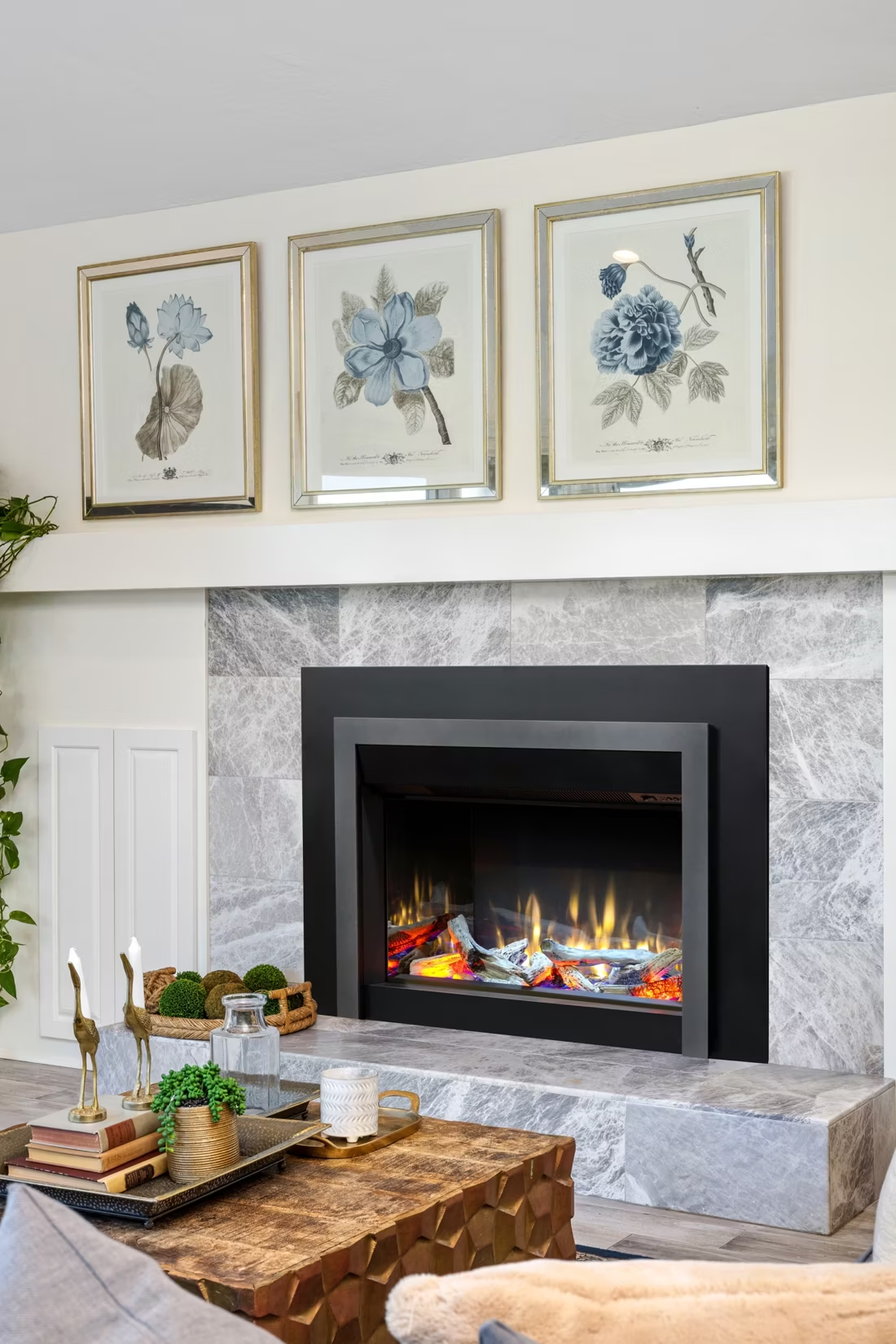
That's where electric fits in. A wall-mounted electric fireplace, a built-in electric insert, or a freestanding electric stove plugs into a standard outlet or a dedicated circuit—no flue, no combustion, no clearance-to-combustibles headaches. For a rental property in Fayette, a sunroom addition, a mobile or manufactured home outside town, or a historic house where opening up a new chimney chase isn't practical, electric heat delivers instant, controllable warmth to the room you're actually using. It won't replace a furnace on Howard County's coldest nights, but as supplemental zone heat—the kind that lets you turn the thermostat down in the rest of the house—it's hard to beat for simplicity.
Three steps. No salesperson until you're ready.
Tell us about your project
Your zip code, your situation, and the fuel you're leaning toward—or let the answers point you to one.
See what's actually available
The brands dealers within 100 miles genuinely carry—real options, never a catalog mirage.
Get your dealer & Project Guide
A trusted local dealer, plus the free Project Guide & Parts List that names every component of the job.
Frequently Asked Questions
How much does an electric fireplace cost to install in Howard County?
Electric fireplaces are the least expensive hearth option to install because there's no chimney, no venting, and usually no gas line involved. A basic plug-in electric insert or wall-mounted unit typically runs a few hundred dollars for the unit itself, with straightforward installation. A built-in electric fireplace that requires a dedicated 120V or 240V circuit and some trim carpentry costs more once an electrician is involved—often in the low thousands once framing and finish work are included. Because Howard County's older homes in Fayette, Glasgow, and New Franklin sometimes have outdated wiring, it's worth having a local dealer or electrician confirm your panel can handle a dedicated circuit before you commit to a higher-wattage built-in unit.
Will an electric fireplace actually heat my home?
Most electric fireplaces top out around 1,500 watts, which translates to roughly 5,000 BTUs—enough to comfortably heat a single room, but not a whole house, especially with Howard County's genuinely cold, lengthy winter heating season and winter lows near 20°F. Think of electric heat as zone heat: it's excellent for warming up a living room, a converted porch, or a bedroom addition while your furnace handles the rest of the house, or for standalone heat in a small outbuilding or guest space that doesn't justify running gas or wood venting. If you're trying to heat a drafty older farmhouse as a primary source through a full Missouri winter, wood or gas will generally outperform electric.
Where can I find a local dealer to install an electric fireplace near me?
Howard County is small and rural, so dealer options are thinner here than in a larger Missouri market—most homeowners in Fayette, New Franklin, and Glasgow end up working with a hearth retailer or electrician based in the broader mid-Missouri area who serves the county. Find My Fireplace matches you with a trusted local dealer who knows what's actually installable in a Howard County home—whether that's a recessed wall unit in a new build or a retrofit insert into an old masonry firebox in one of the county's historic houses—and hands you a free Project Guide & Parts List so you walk into that conversation prepared.
What's the difference between an electric fireplace, insert, and stove?
An electric fireplace is typically a built-in or wall-mounted unit designed to look like a framed hearth—common in new construction or remodels around Fayette and New Franklin. An electric insert is sized to slide into an existing masonry firebox, which makes it a popular option for Howard County's older homes that have a fireplace opening but no working chimney liner or no interest in burning wood. An electric stove is a freestanding cabinet-style unit that mimics a traditional wood stove's look and can sit almost anywhere near an outlet. All three produce the same style of heat—the choice usually comes down to whether you're filling an existing opening or adding a fireplace where none existed.
Do I need a permit to install an electric fireplace in Howard County?
In most cases, no—a plug-in electric fireplace that uses a standard household outlet doesn't require a permit anywhere in Howard County. If you're installing a built-in unit that needs a new dedicated circuit, that electrical work typically does require a permit and inspection through the county, and it should be done by a licensed electrician regardless of whether a permit is pulled. If your property sits within one of Howard County's historic districts around Fayette or Glasgow, exterior changes can draw extra scrutiny, but an interior electric fireplace installation generally doesn't affect a home's historic exterior and isn't treated the same as a new chimney or vent penetration would be.
What's the best electric fireplace for an older Howard County farmhouse?
For the 19th-century farmhouses and Federal-style homes common around Fayette, Glasgow, and New Franklin, an electric insert built to fit an existing masonry firebox is often the cleanest solution—it uses the opening that's already there without requiring any chimney work, and it hides the mechanics behind a traditional-looking surround. If the home doesn't have an existing firebox, a wall-mounted or built-in linear electric fireplace framed into a stud wall gives a modern look without disturbing original plaster or brick. Either way, have a local dealer confirm your electrical panel and wiring can support the unit's draw before installation, since older Howard County homes sometimes need a panel upgrade first.
Will my electric fireplace still work if the power goes out?
No—this is the one honest tradeoff with electric heat. Because the unit runs entirely on household current, it shuts off the moment the power does, with no battery backup or standby option the way some gas fireplaces have. For Howard County homeowners who want a heat source that keeps working through a winter storm-related outage, a wood stove or a gas unit with a properly rated ignition system is a better backup choice. Many households pair an electric fireplace for everyday convenience and ambiance in the main living space with wood heat elsewhere in the house for storm resilience—a common setup in this part of Missouri.
How much does it cost to run an electric fireplace day to day?
A typical 1,500-watt electric fireplace run on medium-to-high heat costs somewhere in the range of 15 to 20 cents per hour to operate at average Missouri electric rates, though your exact cost depends on whether your home is served by a municipal utility or a rural electric cooperative, both of which are common across Howard County's mix of in-town and unincorporated areas. Run several hours a day through a cold stretch, that adds up to a modest monthly increase—generally far less than heating an equivalent space with propane, and comparable to running a space heater, since that's essentially what it is.
Electric vs. wood—which makes more sense for my Howard County home?
Wood has deep roots here—oak, hickory, walnut, and maple are all abundant locally, and a wood stove or insert delivers real heat output plus backup warmth during power outages, which matters given how storms can knock out rural lines in Howard County. Electric wins on simplicity: no chimney, no ash, no wood to split and stack, and installation that's often done in an afternoon rather than a multi-day project. For a primary heat source in an old farmhouse through a full Missouri winter, wood or a combination of wood and central heat tends to perform better. For a secondary living space, a rental, a room addition, or anywhere a chimney simply isn't practical, electric is the more sensible fit. A local dealer can walk through both options against your specific house.
Does an electric fireplace need a vent or chimney?
No—that's its superpower. An electric fireplace needs a wall and an outlet, period. No vent pipe, no gas line, no clearances to design around, which is why it works in bedrooms, offices, apartments, and walls where venting a gas or wood unit would be impractical or impossible. Installation is typically the simplest and least expensive of any fireplace type.
Can I put a TV above my fireplace?
Yes—with an asterisk. Fireplaces are hot and TVs don't like heat. Either put a mantel between them to deflect rising warmth, or choose a fireplace with heat-management technology that creates a cool zone on the wall above—the wall stays around 125 degrees, barely warm, while the room still gets full heat. If you like clean lines and don't want a mantel, heat management is the answer.
How much should I budget for a fireplace?
For an average home—covering the fireplace, the vent pipe, and basic installation—a budget between $3,900 and $5,500 gives you a lot of options across wood, gas, and pellet. By the time you add finish work, gas line, and electrical, the average complete installation lands between $5,000 and $12,000 all-in. In a remodel or new build, a good rule is to put about 2.5% of the total project cost toward the fireplace.
What is an in-home preview and do I need one?
It's a visit where a hearth professional measures your space, confirms the model you picked actually works in your home, and walks the specs—framing, gas line, venting, finish work—before anything is ordered. Some details you just can't know until you see the house. Never make a down payment without one; it's the single most-skipped step that burns buyers.
Find your electric fireplace in Howard County.
Tell us a bit about your home in Fayette, Glasgow, New Franklin, or elsewhere in Howard County, and we'll match you with a trusted local dealer and send over a free Project Guide & Parts List for your electric fireplace project.
Find Your Fireplace →