
Find a pellet stove that fits your Grain Valley home—even where natural gas dominates.
Pellet heat is a niche choice here, not the default—but for real-flame ambiance or a hedge against outages, we'll match you with a local dealer who can install it right.
Every Project Starts From One of These Five Situations
A niche option in gas-and-electric country.
Grain Valley sits at 829 feet in Jackson County, in climate zone 4A, with an average winter low around 22 degrees and a moderate winter heating load. That's a moderate heating load—nothing like the much longer, harsher winters that push pellet stoves into daily use in places like Fargo, ND. Here, a well-sized gas furnace or electric heat pump handles the season without much drama, which is exactly why pellet stoves haven't caught on as a mainstream heat source in this part of Missouri.
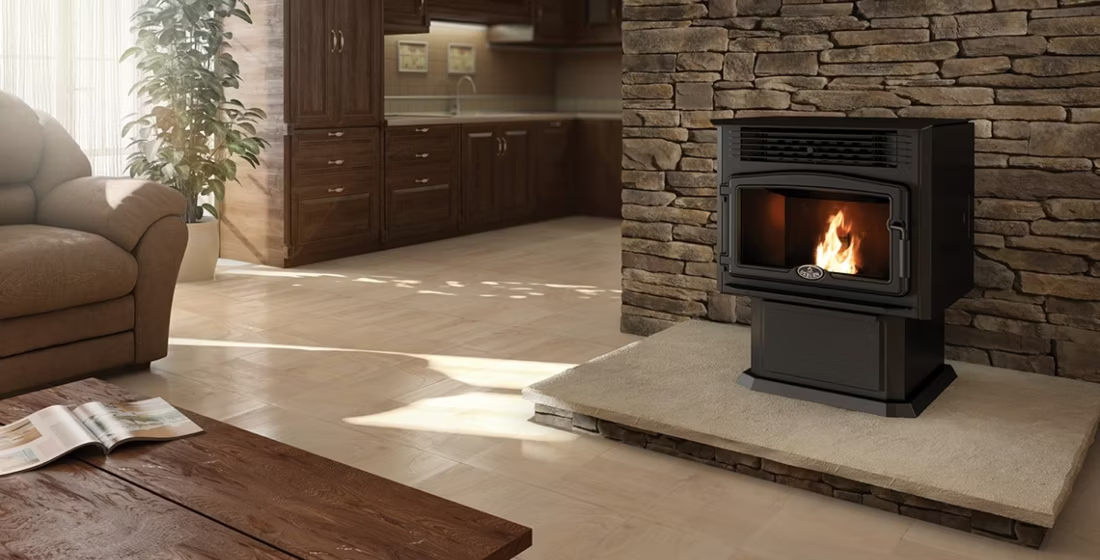
Natural gas and electric service (through Evergy Missouri West and, for some Grain Valley addresses near the state line, City of Kansas City utility territory) are both standard and reliable here, so most households never look past a furnace or heat pump. Pellet stoves still show up in a handful of Grain Valley homes—usually for the look and feel of a live flame without splitting and stacking cordwood, or as a supplemental heat source in a sunroom or finished basement. Bagged pellets from regional producers like Lignetics and Indeck Energy Services are available through hearth retailers and some farm supply stores in the Kansas City metro, so fuel sourcing isn't the obstacle—it's simply that pellet heat is a preference here, not a necessity.
Three steps. No salesperson until you're ready.
Tell us about your project
Your zip code, your situation, and the fuel you're leaning toward—or let the answers point you to one.
See what's actually available
The brands dealers within 100 miles genuinely carry—real options, never a catalog mirage.
Get your dealer & Project Guide
A trusted local dealer, plus the free Project Guide & Parts List that names every component of the job.
Frequently Asked Questions
Are pellet stoves actually common in Grain Valley?
Not especially. Most homes in Jackson County heat with a gas furnace or an electric heat pump served by Evergy Missouri West, and Grain Valley's moderate winters don't create the same pressure for a dedicated wood-pellet heat source you'd see in a colder climate. The pellet stoves that do get installed here tend to go into finished basements, sunrooms, or as a secondary heat source in an older farmhouse-style home—chosen for the flame and ambiance rather than as a primary furnace replacement.
What does a pellet stove installation cost in Grain Valley?
There isn't a large enough local installer base in Grain Valley to quote a tight local range, but nationally, pellet stove installations (unit plus venting through an exterior wall) typically run in the $3,000 to $6,000 range depending on the model and whether you're venting through an existing chimney or a new wall penetration. Because pellet installs are less common here than gas or electric work, it's worth getting two or three quotes from Kansas City-area hearth dealers before committing—venting distance and any electrical work for the auger and blower circuit will move the number more than the stove itself.
Where do I actually buy pellets in Grain Valley?
You won't find pellets stocked on every corner the way you would in a heavier pellet-heating region, but bagged hardwood and softwood pellets from producers like Lignetics and Indeck Energy Services are carried by hearth retailers and some farm and home supply stores in the greater Kansas City metro. Because demand is lower here, it's smart to buy a season's worth (typically 1 to 3 tons for supplemental use) in late summer or early fall rather than assuming you can restock mid-winter on short notice.
Can I count on a pellet stove for heat during a power outage?
Not without extra equipment. Pellet stoves rely on an electric auger to feed fuel and a blower to circulate heat, so they shut down when the power does—unlike a standard wood stove. If backup heat during an ice storm is your main goal, plan on pairing the stove with a small battery backup or portable generator, or consider whether your gas furnace (with a generator for the blower) is the more practical fallback for Grain Valley's occasional winter ice events.
Do I need a special chimney, or can a pellet stove vent through the wall?
Most pellet stoves vent directly through an exterior wall using a small-diameter PL venting pipe, which is one reason they can be less expensive to install than a wood stove requiring a full Class A chimney. If your Grain Valley home already has a masonry fireplace, a pellet insert can use the existing chimney with a liner instead. Either way, a local dealer will look at your home's layout to determine the shortest, most code-compliant vent path.
What size pellet stove do I need for a Grain Valley home?
Given the area's moderate winters (average lows around 22 degrees, a moderate winter heating load), most Grain Valley installations are sized for supplemental heat in a single room or open living area rather than whole-home heating—a small to mid-size stove rated for 1,000 to 1,800 square feet typically covers a great room, finished basement, or addition. Homes using pellet as a genuine primary heat source are the exception here, and a local dealer can size accordingly during an in-home visit.
Do I need a permit to install a pellet stove in Grain Valley?
Yes, in most cases you'll need a building permit through the City of Grain Valley (or Jackson County if your address falls outside city limits), since a pellet stove involves a wall or roof vent penetration and often a dedicated electrical circuit for the auger and blower. Most established hearth dealers in the Kansas City area handle this permitting as part of the installation, which is one advantage of going through a trusted local installer rather than a DIY big-box purchase.
Gas fireplace or pellet stove—which makes more sense for my house?
For most Grain Valley homes, gas wins on convenience: instant on-off operation, no fuel storage, and a fully built infrastructure of natural gas service and local installers. Pellet stoves make sense when you specifically want a real, visible flame fed by an actual fuel rather than a gas burner, or when you want a supplemental heat source that isn't tied to your home's central HVAC. If low-maintenance daily use is the priority, gas is the more common choice here; if the wood-fire look and feel matters to you and you don't mind loading a hopper every day or two, pellet is worth a look with a local dealer.
How much does it cost to run a pellet stove in Grain Valley?
The pellets themselves are the main cost, but the electricity to run the auger, igniter, and blower is minor—most units draw somewhere between 100 and 400 watts. At Evergy Missouri West's residential rate of about 12.6 cents per kWh (or roughly 15.4 cents if you're served by City of Kansas City utility), running a pellet stove for a full heating season typically adds only a few dollars a month to your electric bill. The bigger cost driver is how many bags or tons of pellets you burn, which depends on how much supplemental heat you're asking the stove to provide.
Why is my open fireplace making my house colder?
Open fireplaces suck—literally. As the fire burns, it consumes air your furnace already paid to heat and pulls it out through the chimney, so the house is actually colder after the fire goes out than before you lit it. An insert fixes this: it seals the chimney, puts fixed glass across the front, and turns that hole in your house into a real heat source.
What's the difference between an insert and a zero-clearance fireplace?
An insert is a fireplace that slides into a pre-existing wood-burning fireplace—if you don't have one, there's nothing to insert it into. A zero-clearance fireplace is built into a framed wall, which makes it the answer for remodels and new construction. Simple test: existing masonry fireplace means insert; blank or framed wall means zero-clearance.
Does a fireplace add value to my home?
On average, a fireplace adds back to the home about the same amount you spent installing it. Add the monthly savings from heating the rooms you actually use instead of the whole house—often hundreds of dollars a year—and the value case is strong before you even count what a fire does for how your family uses the room.
What is an in-home preview and do I need one?
It's a visit where a hearth professional measures your space, confirms the model you picked actually works in your home, and walks the specs—framing, gas line, venting, finish work—before anything is ordered. Some details you just can't know until you see the house. Never make a down payment without one; it's the single most-skipped step that burns buyers.
Nearby Dealers
Hearth shops serving Grain Valley and the surrounding area. Every listing shows whether it is a WhyFire partner, a dealer we have verified as authorized for the brands we recommend, or a local business carrying hearth products. No manufacturer pays for placement. How we verify dealers →
Dillon Heating & Cooling Solutions
The Hayes Co.
Pellet Brands Stocked Around Grain Valley
Manufacturers will point you to the nearest stocking dealer.
Find your pellet stove in Grain Valley.
Pellet heat is a specialty choice in a gas-and-electric town like Grain Valley, so getting matched with the right local dealer matters more here, not less. Tell us about your home and we'll send over a free Project Guide & Parts List—the exact parts, including the vent kit, and our recommended local dealer for your project.
Find Your Fireplace →