
Find the right fireplace for your Jackson County home.
Fireplace resources for every city in Jackson County—Kansas City, Independence, Lee's Summit, Blue Springs, and beyond—plus help for the craftsman-era homes that still have a masonry fireplace. Connect with a trusted local hearth retailer who knows what's actually installable on your street.
Every Project Starts From One of These Five Situations
Gas and electric heat lead in Jackson County, Missouri.
Jackson County sits in climate zone 4A with about 4,613 heating degree days a year and winter lows averaging 22°F—a real but moderate heating season, nowhere near the six-month deep freeze of Minneapolis or Duluth. That climate, paired with dense urban and suburban development across Kansas City, Independence, Lee's Summit, and Blue Springs, means most homes here heat with natural gas through Spire's local distribution network or with electric service from Evergy. New wood stove and pellet stove installations are genuinely uncommon in this county—not because of air quality rules (Jackson County has none of the winter burn restrictions you'd see in a mountain basin), but because most lots are small, most homes already have gas service, and city fire codes in dense neighborhoods make new solid-fuel installs a harder sell than a gas insert.
That said, wood isn't absent from the county's housing stock. Older Kansas City craftsman homes, Independence bungalows, and farmhouses on the county's rural eastern edge near Grain Valley and Buckner often still have a working masonry wood fireplace, and local oak, hickory, walnut, and maple are the firewood species you'll actually find split and stacked here. What you'll find on this hub: hearth retailers, service technicians, and fuel suppliers covering the whole county. Pick your fuel below for local dealer listings, install costs, and recommended units—whether you're putting a gas insert into a 1920s Kansas City fireplace or adding an electric unit to a Lee's Summit basement.
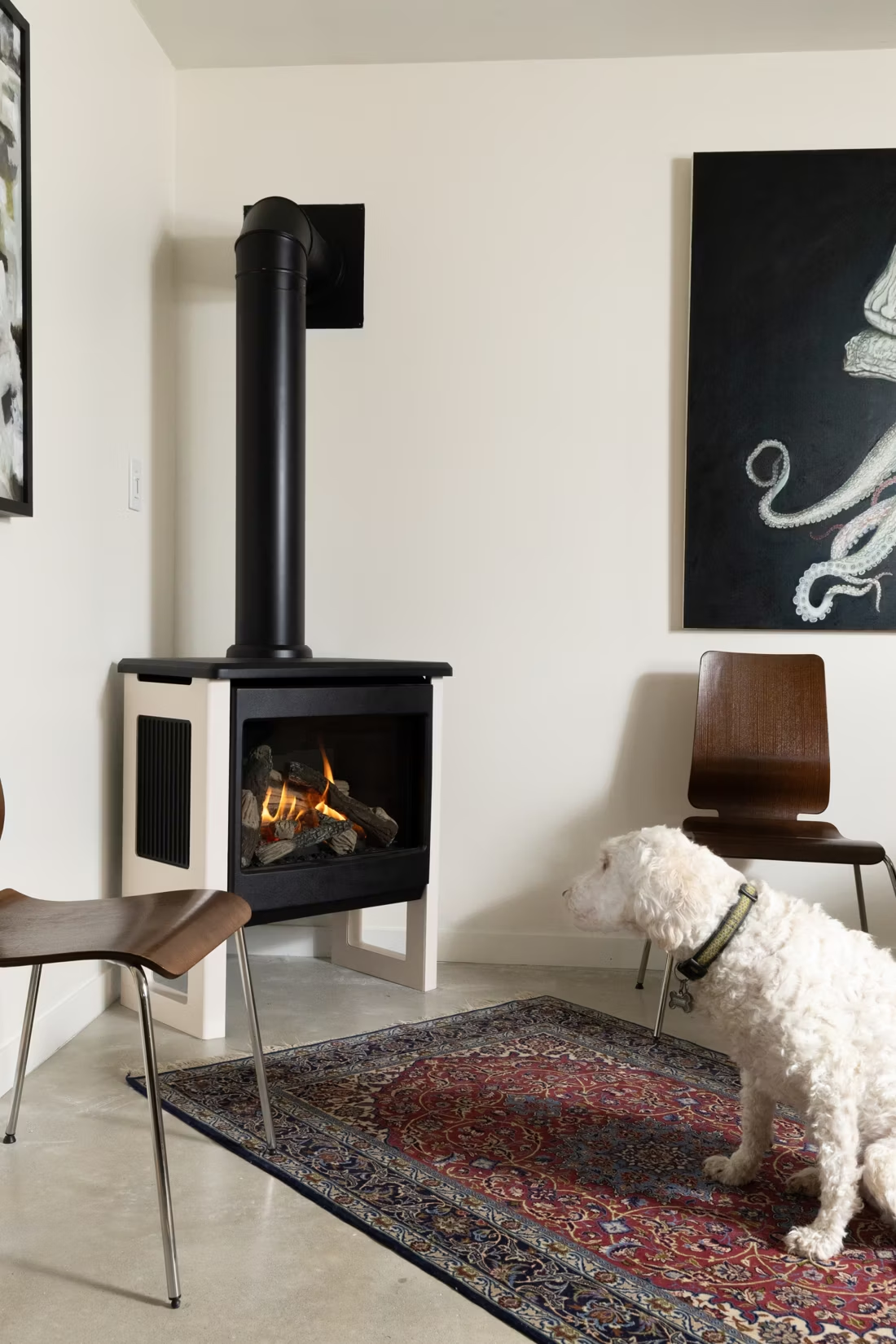
Four fuels. One honest answer for Jackson County.
Three steps. No salesperson until you're ready.
Tell us about your project
Your zip code, your situation, and the fuel you're leaning toward—or let the answers point you to one.
See what's actually available
The brands dealers within 100 miles genuinely carry—real options, never a catalog mirage.
Get your dealer & Project Guide
A trusted local dealer, plus the free Project Guide & Parts List that names every component of the job.
Frequently Asked Questions
Which fuel works best in Jackson County?
For most Jackson County homes, it comes down to gas or electric. Gas fireplaces and inserts are the default choice in Kansas City, Independence, and Lee's Summit neighborhoods with existing Spire natural gas service—instant heat, no wood to manage, and a straightforward retrofit into an existing chimney or a new direct-vent install. Electric fireplaces work well as supplemental heat in condos, apartments, and finished basements across the county, especially where running a gas line isn't practical. Wood stoves and pellet stoves are the exception rather than the rule here—most new construction and most in-town lots don't have the clearances or demand to support them, and residential pellet dealers are scarce (Lignetics and Indeck Energy Services in this region are mostly industrial/commercial pellet suppliers, not retail hearth shops). If you've got an older home with a working masonry wood fireplace, keeping it or converting it to gas is far more common than adding a new wood-burning appliance from scratch.
Do I need a permit to install a fireplace in Jackson County?
Usually, yes, and the permitting authority depends on which city you're in—Kansas City, Independence, Lee's Summit, and Blue Springs each issue their own building permits rather than routing through a single county office. Gas fireplace and insert installs typically require both a building permit and a separate gas line permit pulled by a licensed gas fitter, since Spire requires proper line sizing and shutoff placement. Electric fireplace installs usually don't need a permit for plug-in units, but built-in electric inserts with new wiring or a dedicated circuit do. If you're keeping or reactivating an older masonry wood fireplace, most cities in the county still require an inspection to confirm the flue and firebox are sound before you burn in it again. Most local retailers handle the permit paperwork as part of the installation quote.
Are there air quality restrictions on burning in Jackson County?
No—Jackson County doesn't have the winter inversion problems or mandatory burn-ban programs you'd see in a mountain basin like Klamath Falls or Reno. There's no county-level wood smoke advisory system here. The reason new wood-burning installs are uncommon in this county isn't air quality regulation, it's simply that most homes already have gas or electric service and most in-town lots don't have room for the clearances a wood stove needs. If you do have an existing masonry wood fireplace—common in older Kansas City and Independence homes—you're free to use it, and periodic chimney sweeping (not air quality compliance) is the main maintenance concern.
I have an old wood fireplace in my Kansas City home—what are my options?
This is one of the most common situations we see in this county. Craftsman-era homes in Kansas City and bungalows in Independence often came with a masonry wood fireplace that's still structurally sound but rarely used. The two most popular paths: a gas insert, which drops into the existing masonry opening and connects to Spire's gas service for push-button heat without any wood at all, or an electric insert, which needs no venting or gas line and is the simplest retrofit if running gas isn't an option. Straight wood-burning use is still possible if the flue passes inspection, and local firewood—oak, hickory, walnut, maple—is easy to source regionally, but very few homeowners in this county are installing brand-new wood stoves from scratch; the conversion route is far more common.
What's the typical cost range for fireplace installation in Jackson County?
Gas fireplace, insert, or stove: roughly $4,000–$10,000 depending on whether you're converting an existing masonry opening (lower end) or running new gas line and venting for a fresh install (higher end). Electric fireplace: $200–$3,000 for the unit itself, plus $300–$1,000 in labor for anything beyond a plug-and-play wall unit—built-ins with new electrical runs land at the higher end. Reactivating or sweeping an existing wood-burning masonry fireplace: typically $150–$400 for inspection and cleaning, more if masonry or flue repair is needed. Because new wood stove and pellet stove installs are rare here, retailer pricing for those fuels is limited and often quoted case-by-case rather than as a standard package.
How does heating work in the rural parts of Jackson County?
The eastern and southern edges of the county—around Grain Valley, Buckner, and Oak Grove—sit outside dense Spire gas coverage, so propane and electric heat pumps are more common primary systems out there than in the Kansas City core. Wood still plays a real role as backup heat on these rural properties, where oak and hickory are readily available and a wood-burning fireplace or stove can keep a home warm through an ice storm power outage even though it's not the primary heat source. If you're in one of these outlying areas, a technician's travel radius and propane delivery schedule matter more for planning than they do for in-town Kansas City or Independence homeowners.
Does a fireplace add value to my home?
On average, a fireplace adds back to the home about the same amount you spent installing it. Add the monthly savings from heating the rooms you actually use instead of the whole house—often hundreds of dollars a year—and the value case is strong before you even count what a fire does for how your family uses the room.
Can a fireplace actually lower my heating bill?
Yes—by creating a comfort zone. A furnace heats every square foot of the house just to warm the one room you're in; a gas fireplace on low burns roughly a sixth of the gas a typical furnace does. Set the furnace around 55–60 degrees as a baseline, then heat the rooms your family actually uses. Families who heat this way commonly save $20–$60 a month.
Should the dealer who sells my fireplace also install it?
Ideally, yes. A fireplace project involves vent pipe, gas line, electrical, and often tile or stone. Hire three or four separate trades and you own the liability and the game of telephone between them. One company selling and installing means one accountable party, start to finish—ask about factory training, on-time completion records, and what happens if an inspection fails.
How much should I budget for a fireplace?
For an average home—covering the fireplace, the vent pipe, and basic installation—a budget between $3,900 and $5,500 gives you a lot of options across wood, gas, and pellet. By the time you add finish work, gas line, and electrical, the average complete installation lands between $5,000 and $12,000 all-in. In a remodel or new build, a good rule is to put about 2.5% of the total project cost toward the fireplace.
Stove and Fireplace Dealers in Jackson County
Listings include WhyFire partner dealers, dealers we have verified as authorized for the brands we recommend, and established local businesses that carry hearth products. Every listing shows which one it is. The ones marked Preferred run on WhyFire's software, so they can show you real pricing and book your appointment right here. No manufacturer pays for placement. How we verify dealers →
The Hayes Co.
Dillon Heating & Cooling Solutions
Complete Home Concepts - Riverside
Find your fireplace in Jackson County.
Tell us about your home and we'll match you with a trusted local dealer and send a free Project Guide & Parts List—a plan for your gas or electric fireplace project in Jackson County, with the exact parts, venting, and your recommended local installer.
Find Your Fireplace →