
Steady Heat, Without the Wood Pile.
Franklin County winters average lows near 20°F with a moderate heating season—cold enough to matter, mild enough that automated pellet heat keeps up without a woodshed. Find the right stove or insert and connect with a trusted local dealer.
Every Project Starts From One of These Five Situations
All the warmth of Franklin County hardwood, none of the splitting.
Franklin County runs along the Missouri River between the St. Louis metro and the Ozark foothills, from Washington and New Haven down through Union, Pacific, St. Clair, and Sullivan. The county sits in climate zone 4A with a moderate winter heating season and average winter lows around 20°F—cold enough for real heating demand, but not the deep-freeze territory of Duluth or Bismarck. It's classic Missouri hardwood country: oak, hickory, walnut, and maple cover the ridges, and plenty of homes here still burn cordwood the traditional way.
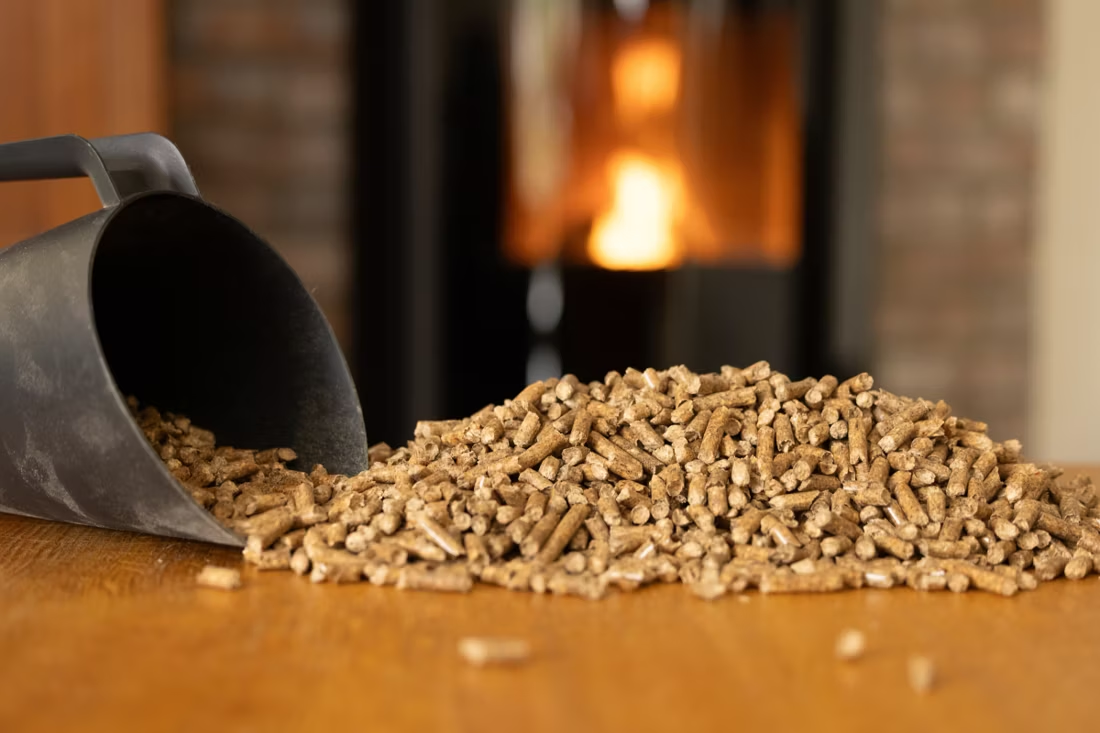
Pellet stoves have found a strong following alongside that wood-burning tradition, particularly with homeowners who want thermostat-controlled, hands-off heat without processing and stacking firewood. Franklin County has no air quality non-attainment designation and no winter burn curtailment periods, so there's nothing stopping a pellet stove from running whenever you need it. Lignetics and Indeck Energy Services both supply pellets to the region, and local hearth dealers around Washington, Union, and Pacific carry the stoves and inserts to go with them—plus the know-how to size and vent them correctly for a Franklin County home.
Three steps. No salesperson until you're ready.
Tell us about your project
Your zip code, your situation, and the fuel you're leaning toward—or let the answers point you to one.
See what's actually available
The brands dealers within 100 miles genuinely carry—real options, never a catalog mirage.
Get your dealer & Project Guide
A trusted local dealer, plus the free Project Guide & Parts List that names every component of the job.
Frequently Asked Questions
How much does a pellet stove installation cost in Franklin County?
Most pellet stove and insert installations in Franklin County land between $3,000 and $6,500, with the spread coming down to venting and electrical work rather than the appliance itself. A pellet insert going into an existing masonry fireplace with a liner run is usually on the lower end. A freestanding stove in a new location—needing a through-wall vent kit, a dedicated electrical outlet for the auger and blower, and hearth pad clearance work—sits toward the higher end. Because pellet units require power to operate, homes without a nearby outlet sometimes need a small electrical add, which a local installer will flag during the in-home estimate.
What size pellet stove do I need for my Franklin County home?
Sizing depends on square footage, insulation, and whether the stove is your primary heat or backup. With Franklin County's moderate winter heating season and winter lows around 20°F, most homes fall into the mid-range: a stove rated for 1,200 to 2,000 square feet handles a typical living area comfortably without running at max output all winter. Older farmhouses and homes with less insulation around Sullivan or New Haven often need to size up a step, while newer, tighter construction near Pacific or St. Clair can run a smaller unit efficiently. A local dealer will walk your space and confirm sizing during a free in-home consultation rather than guessing off square footage alone.
Where can I find certified pellet stove installers near me?
Look for installers with NFI (National Fireplace Institute) pellet certification—it signals training specific to pellet appliances, which have different venting and electrical requirements than wood stoves. Hearth dealers based around Washington, Union, and Pacific typically cover the whole county, including Sullivan, St. Clair, and New Haven, sometimes with a small travel charge for the more rural stretches. Because pellet stoves need both proper venting and a reliable power connection, it's worth avoiding a general handyman install—a dealer who sells and services the specific brand will also stand behind the warranty if something needs adjustment after the first heating season.
What's the difference between a pellet stove and a pellet insert?
A pellet stove is a freestanding unit that sits on a hearth pad and vents through a wall or existing chimney chase—it can go almost anywhere with the right clearances. A pellet insert is built to slide into an existing masonry fireplace opening, using a liner run up your current chimney and a surround panel to seal the front. For Franklin County homes with an older brick fireplace—common in the county's historic river towns like Washington and New Haven—an insert is often the simpler retrofit, since it reuses the existing masonry rather than requiring new through-wall venting.
Do I need a permit to install a pellet stove in Franklin County?
In most cases, yes. If you're within city limits—Washington, Union, Pacific, St. Clair, or Sullivan—the local building department handles the permit and inspection. In unincorporated parts of the county, it runs through the Franklin County building department. The permit typically covers the venting termination and any electrical work for the outlet. Most local dealers include the permit application as part of the installation, so it's rarely something homeowners have to file themselves—but it's worth confirming before work starts, since skipping the permit can complicate insurance or resale down the line.
What's the best pellet stove for Franklin County's climate?
Franklin County's winters—average lows around 20°F, with a heating season that's real but not extreme—don't demand the oversized hopper capacity you'd see in a place like Bismarck or International Falls, so mid-capacity stoves with a 40-to-60-pound hopper generally run fine on an overnight fill during the coldest stretches. Pellets from Lignetics and Indeck Energy Services are both readily available in the region, and either burns cleanly in most standard pellet stoves without needing a specialty model. For a primary heat setup in a larger or older farmhouse, look at units with a higher BTU ceiling and a bigger hopper; for supplemental heat in a smaller space, a compact stove will do the job without excess cycling.
How much maintenance does a pellet stove need?
Pellet stoves need more frequent attention than a gas unit but less than a wood stove. Plan on emptying the ash pan every few days to weekly depending on use, wiping the glass as needed, and vacuuming the burn pot and heat exchanger tubes every couple of weeks during heavy winter use. Once a year—typically before the season starts in the fall—a full professional cleaning and inspection is worth scheduling, covering the exhaust fan, gaskets, and venting. Local dealers around Union and Washington offer this service, and it's a good habit to pair with your annual pellet order.
Where can I buy pellets in Franklin County?
Lignetics and Indeck Energy Services pellets are both distributed through farm and hardware retailers in the area, including Rural King and Orscheln Farm & Home locations around Washington and Union—both common stops for Franklin County homeowners stocking up before winter. Pellets typically come in 40-pound bags, and buying by the ton (usually 50 bags) ahead of the cold season is the more economical route rather than restocking bag by bag once temperatures drop. Availability tightens up in November and December as demand spikes, so ordering early is worth doing if you're heating with pellets as a primary source.
Pellet stove vs. wood stove—which is right for my Franklin County home?
Wood stoves run on split cordwood—plentiful in Franklin County given the oak, hickory, walnut, and maple that cover the county's ridges—and they keep working during a power outage, which matters if you're out toward Sullivan or New Haven where storm-related outages can run longer. Pellet stoves trade that off for convenience: load the hopper, set the thermostat, and let the auger feed itself, with a cleaner burn and less ash than cordwood—but they need continuous electricity to run the auger and blower, so they go dark in an outage unless paired with a battery backup. For a primary living space where hands-off, consistent heat matters most, pellet usually wins. For a rural property that leans on wood heat as a backup during storms, a wood stove still has the edge.
Why is my open fireplace making my house colder?
Open fireplaces suck—literally. As the fire burns, it consumes air your furnace already paid to heat and pulls it out through the chimney, so the house is actually colder after the fire goes out than before you lit it. An insert fixes this: it seals the chimney, puts fixed glass across the front, and turns that hole in your house into a real heat source.
Why is a fireplace insert so efficient?
An insert does two things: it seals the chimney completely, so you stop losing air you already paid to heat, and it radiates warmth into the room through the firebox and glass. Most add a heat-exchange fan that pulls cool room air underneath, wraps it around the hot firebox, and pushes it back out warm. Your home is more efficient before you've even lit the first fire.
Can I install a fireplace myself?
If you're putting a fire in your house on purpose, it's best to work with an expert. Unless you're genuinely experienced in framing, gas line, vent pipe, and the national code on clearances to combustibles, have a professional do it—and ideally the same company that sells you the fireplace, so warranty, service, and liability all live under one roof.
What is an in-home preview and do I need one?
It's a visit where a hearth professional measures your space, confirms the model you picked actually works in your home, and walks the specs—framing, gas line, venting, finish work—before anything is ordered. Some details you just can't know until you see the house. Never make a down payment without one; it's the single most-skipped step that burns buyers.
Stove and Fireplace Dealers in Franklin County
Pellet Brands Stocked Around Franklin County
Manufacturers will point you to the nearest stocking dealer.
Find your pellet stove in Franklin County.
Tell us a bit about your home and we'll match you with the right pellet stove or insert, plus a free Project Guide & Parts List—the exact parts, vent kit, and a trusted local Franklin County dealer to install it.
Find Your Fireplace →