
Find the right electric fireplace for your Franklin County home.
Zone heat and instant ambiance for homes from Washington to Union to Pacific—no chimney, no gas line, no venting required. Get matched with a trusted local dealer.
Every Project Starts From One of These Five Situations
Simple heat for a climate that doesn't demand extremes.
Franklin County sits in climate zone 4A along the Missouri River corridor, with a moderate winter heating season and average winter lows around 20 degrees—a real but manageable Midwest winter, nothing like the sustained sub-zero stretches you'd see in Bismarck or Fargo. That moderate profile is exactly where electric fireplaces perform best: they're not built to be a home's sole heat source through a brutal cold snap, but as supplemental zone heat in a family room in Union or a finished basement in Washington, they do the job cleanly and without any of the venting, gas lines, or masonry work other fuels require.
Electricity throughout Franklin County is delivered primarily by Ameren Missouri, with Union Electric Cooperative and a handful of municipal utilities serving some of the smaller towns and rural stretches. That reliable grid coverage—paired with straightforward 120V or 240V installs—is a big part of why electric fireplaces have become a popular choice for renovations, additions, and homes where running a gas line or building a masonry chimney simply isn't practical. Add in the fact that electric units carry none of the wood-species or air-quality considerations that come with burning oak or hickory, and it's an easy fit for a county where convenience often outweighs the desire for a wood-fired ritual.
Three steps. No salesperson until you're ready.
Tell us about your project
Your zip code, your situation, and the fuel you're leaning toward—or let the answers point you to one.
See what's actually available
The brands dealers within 100 miles genuinely carry—real options, never a catalog mirage.
Get your dealer & Project Guide
A trusted local dealer, plus the free Project Guide & Parts List that names every component of the job.
Frequently Asked Questions
How much does an electric fireplace installation cost in Franklin County?
Most electric fireplace and insert installations in Franklin County run between $400 and $1,200, which is dramatically lower than wood, gas, or pellet options because there's no venting, chimney, or gas line work involved. A plug-in unit that simply drops into an existing fireplace opening or a wall-mounted model on a standard outlet sits at the low end. Costs move toward the higher end for built-in units that need a dedicated 240V circuit or minor electrical panel work, which a licensed electrician handles alongside the installer. Local dealers can tell you within a few minutes of an in-home look which category your project falls into.
Do electric fireplaces actually produce meaningful heat, or are they just for looks?
Both, depending on the model. Most residential electric fireplaces and inserts are rated around 4,600 to 5,000 BTU and can supplement heat in a room up to roughly 400 square feet—enough to take the edge off a chilly family room or basement in a typical Franklin County home without replacing the furnace. Some homeowners buy them purely for the flame-effect ambiance and run them with the heater off most of the year, only using supplemental heat during the shoulder seasons before Ameren Missouri's typical heating season really kicks in around late fall.
Do I need a permit to install an electric fireplace in Franklin County?
Plug-in units generally don't require a permit since they use a standard outlet like any other appliance. Built-in electric fireplaces that require new wiring or a dedicated circuit typically need an electrical permit through the local building department—in unincorporated Franklin County that runs through the county, and cities like Washington, Union, and Pacific each handle their own permitting. Most local dealers coordinate the electrical work and permitting as part of the installation, so it's rarely something homeowners have to manage on their own.
Will an electric fireplace work during a power outage?
No—this is the one real tradeoff to understand. Electric fireplaces require grid power to run the heating element, fan, and flame effect, so during an Ameren Missouri outage they go dark along with everything else. For Franklin County homes where winter storm outages are a real concern, a wood stove or a gas unit with battery-backup ignition offers backup heat that an electric unit simply can't. Many homeowners in the county actually run both: wood or gas for reliable backup heat, electric for everyday convenience and ambiance in rooms where running a chimney or gas line doesn't make sense.
What's the difference between an electric fireplace, insert, and stove?
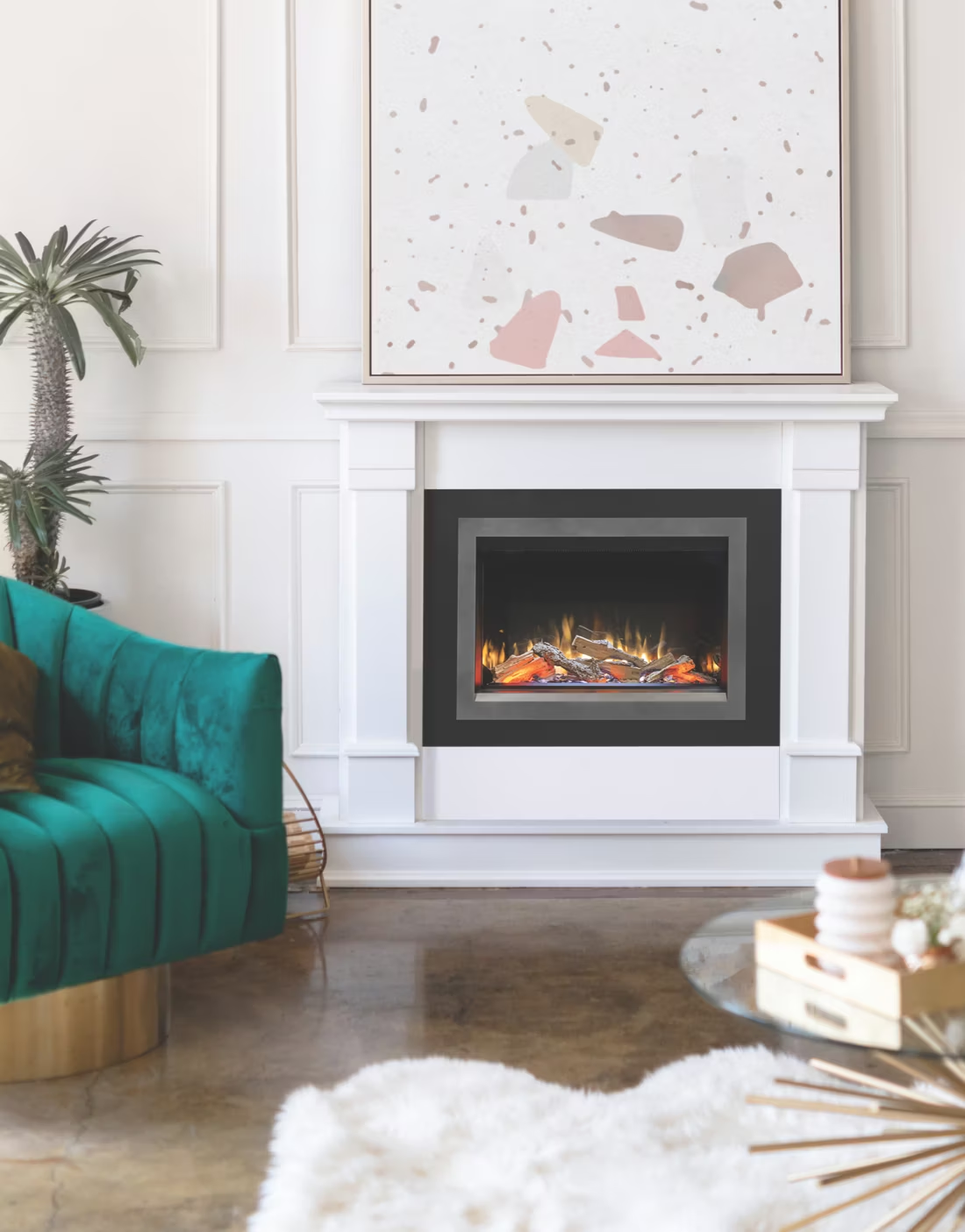
An electric fireplace is typically a built-in unit set into a wall or mantel surround, designed to look like a traditional fireplace. An electric insert is sized to slot into an existing masonry fireplace opening, giving old wood-burning fireplaces in older Franklin County farmhouses a clean, low-maintenance upgrade without touching the chimney. An electric stove is a freestanding cabinet-style unit that can go virtually anywhere there's an outlet—popular in Franklin County for finished basements, sunrooms, or bedrooms where a fixed fireplace isn't practical. All three run off the same underlying heating technology; the choice comes down to your existing structure and the look you want.
Can I put an electric fireplace anywhere in my house?
Almost anywhere with an outlet, which is the main appeal. Since there's no combustion, no venting, and no clearance-to-combustible rules like a wood or gas unit requires, electric fireplaces work in bedrooms, apartments, condos, and rental properties throughout Franklin County where a wood or gas installation wouldn't be allowed or practical. The main limitation is electrical capacity—some larger built-in units need a dedicated 240V circuit, which matters most in older homes around Washington or Union with older panels that may need an upgrade first.
How energy-efficient is an electric fireplace to run?
Electric fireplaces are 100% efficient at converting electricity to heat at the point of use, since there's no flue losing heat up a chimney like with wood or gas. Running costs depend on your Ameren Missouri or Union Electric Cooperative rate and how many hours a day you run it, but most units cost somewhere between a few cents and around 40-50 cents an hour on the heat setting, and far less if you're only running the flame-effect visual without heat. For supplemental zone heating in a single room, that's typically far cheaper than raising the thermostat for the whole house.
Are electric fireplaces a good fit for a county where wood heat is common?
Yes, and in Franklin County they usually complement wood heat rather than compete with it. With abundant oak, hickory, walnut, and maple available locally, plenty of homeowners still burn wood as a primary or backup heat source, especially in rural parts of the county. Electric fireplaces fill a different role—a bedroom, a basement rec room, a rental property, or any space where a wood stove's chimney and clearance requirements don't make sense. It's common to see a home with a wood stove in the main living area and an electric insert or freestanding unit somewhere else in the house.
Electric vs. gas—which is right for my Franklin County home?
Gas fireplaces put out significantly more real heat and can serve as a genuine supplemental or even primary heat source during a Franklin County winter, and many models keep working during a power outage with battery-backup ignition. Electric fireplaces cost far less to install, involve no gas line or venting work, and can go in almost any room including spaces where gas isn't practical or available. If you want a room to feel warmer on a cold January night, gas usually wins. If you want low-cost, low-hassle ambiance and light supplemental heat in a bedroom, basement, or rental unit, electric is the more practical choice. Some homeowners in the county install both, choosing fuel by room.
Can I put a TV above my fireplace?
Yes—with an asterisk. Fireplaces are hot and TVs don't like heat. Either put a mantel between them to deflect rising warmth, or choose a fireplace with heat-management technology that creates a cool zone on the wall above—the wall stays around 125 degrees, barely warm, while the room still gets full heat. If you like clean lines and don't want a mantel, heat management is the answer.
Do electric fireplaces actually produce heat?
Yes—most put out around 4,800–5,000 BTUs from a standard outlet, which comfortably warms a bedroom, office, or den as a comfort-zone heater. What they won't do is carry a whole house the way wood, gas, or pellet can. Think of electric as ambiance-first with honest supplemental heat: flames on with no heat in July, flames plus warmth in January.
How much should I budget for a fireplace?
For an average home—covering the fireplace, the vent pipe, and basic installation—a budget between $3,900 and $5,500 gives you a lot of options across wood, gas, and pellet. By the time you add finish work, gas line, and electrical, the average complete installation lands between $5,000 and $12,000 all-in. In a remodel or new build, a good rule is to put about 2.5% of the total project cost toward the fireplace.
What is an in-home preview and do I need one?
It's a visit where a hearth professional measures your space, confirms the model you picked actually works in your home, and walks the specs—framing, gas line, venting, finish work—before anything is ordered. Some details you just can't know until you see the house. Never make a down payment without one; it's the single most-skipped step that burns buyers.
Stove and Fireplace Dealers in Franklin County
Find your electric fireplace in Franklin County.
Tell us a bit about your home and we'll match you with a trusted local dealer and a free Project Guide & Parts List—the exact parts for your electric fireplace project in Franklin County, including any electrical work needed, and the local pro we recommend for the install.
Find Your Fireplace →