
Reliable, Low-Maintenance Heat for Ozark Winters.
Set-it-and-forget-it heat for Douglas County homes, from Ava to the outlying hollows—no splitting, no stacking, just a hopper you fill every day or two. Find the right unit and connect with a trusted local dealer.
Every Project Starts From One of These Five Situations
A steady burn for rural Douglas County.
Douglas County sits in the Missouri Ozarks, a heavily forested, sparsely populated stretch of south-central Missouri with under 3,000 residents and no incorporated air quality restrictions to navigate. Winters here are moderate by national standards—Climate Zone 4A, a moderate overall winter heating load, and winter lows that settle around 20°F—cold enough to demand real heat for months, but not the brutal, sustained sub-zero stretches you'd see somewhere like Fargo or Duluth. That's actually the sweet spot for pellet appliances: consistent, programmable heat output without needing the extreme overnight burn times a place like International Falls would require.
Douglas County's oak, hickory, walnut, and maple forests make wood the traditional heat source here, and plenty of households still split and stack for a woodstove. But pellet stoves have carved out a real niche for homeowners who want dependable heat without the labor of cutting and hauling cordwood—especially in a county where many homes are on rural electric cooperative service and a stable, thermostatically controlled burn matters. Bagged pellets from regional producers like Lignetics and Indeck Energy Services are widely available through farm supply and hearth retailers across the region, which keeps fuel costs reasonable and delivery logistics simple compared to more remote parts of the Ozarks.
Three steps. No salesperson until you're ready.
Tell us about your project
Your zip code, your situation, and the fuel you're leaning toward—or let the answers point you to one.
See what's actually available
The brands dealers within 100 miles genuinely carry—real options, never a catalog mirage.
Get your dealer & Project Guide
A trusted local dealer, plus the free Project Guide & Parts List that names every component of the job.
Frequently Asked Questions
How much does a pellet stove installation cost in Douglas County?
Pellet stove and insert installations in Douglas County typically run in the $3,000 to $6,500 range, depending on the unit, whether venting needs to be run through an exterior wall, and whether a hearth pad upgrade is required for code clearance. Pellet inserts going into an existing masonry fireplace tend to land on the lower end since the chimney chase is already in place. New freestanding units in a room without existing venting—common in older Douglas County farmhouses—run closer to the top of that range once wall penetration and venting hardware are factored in. A local dealer can give you a firm number after seeing the install site.
What size pellet stove do I need for my Douglas County home?
Sizing depends on square footage, ceiling height, and how drafty the home is—a real consideration in Douglas County's older farmhouse and manufactured housing stock. With a moderate overall winter heating load, most homes here don't need the largest hopper capacity or highest-BTU units sold nationally; a mid-size pellet stove (40,000–50,000 BTU) comfortably heats 1,200 to 2,000 square feet in this climate zone. Larger, poorly insulated homes or those using pellet heat as the sole heat source should size up and look for larger hopper capacity to reduce daily refilling. A local dealer will walk your space and size it for free.
Where can I find certified pellet stove installers near me?
Look for installers with NFI (National Fireplace Institute) certification, which covers pellet-specific venting and clearance requirements. Given Douglas County's rural layout—Ava, Squires, Drury, Vanzant, and the outlying county roads—installer availability is thinner than in a metro area, and it's common for dealers based in Ava or neighboring counties to cover the whole county with a modest travel charge. Avoid handyman installs on pellet venting; improper pipe slope or termination clearance is the most common cause of poor draft and nuisance shutdowns on pellet units.
What's the difference between a pellet stove and a pellet insert?
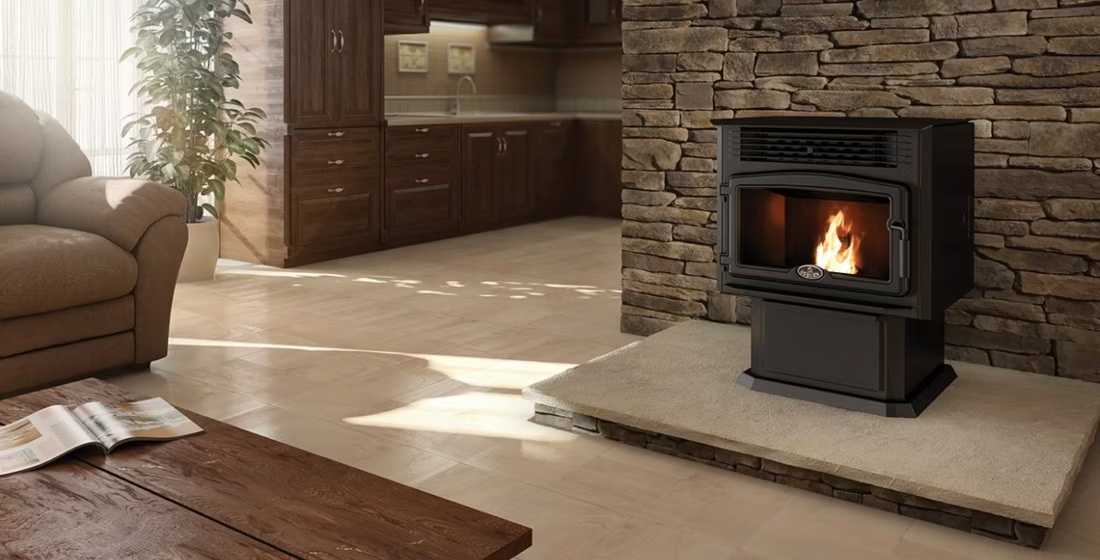
A pellet stove is a freestanding unit that sits on a hearth pad and vents through a wall or existing chimney—it can go almost anywhere with the right clearances. A pellet insert is built to slide into an existing masonry fireplace opening, converting an old wood-burning fireplace into an efficient, thermostatically controlled heat source using the existing chimney chase for venting. For Douglas County homes with an older masonry fireplace already in place, an insert is usually the simpler and less invasive upgrade. Homes without an existing fireplace opening are better suited to a freestanding stove.
Do I need a permit to install a pellet stove in Douglas County?
Most pellet stove installations require a building permit through Douglas County, particularly when new wall venting is being cut or a hearth pad is being modified. Since much of the county is unincorporated, permitting typically runs through the county rather than a city office—your dealer or installer can confirm the current process and, in most cases, will handle the paperwork as part of the install. Douglas County has no air quality non-attainment status and no burn curtailment periods, so unlike some Western counties, there's no seasonal restriction on when you can run a pellet appliance.
What's the best pellet stove for Douglas County's climate?
Given the county's moderate winter lows (around 20°F on average) and a mid-range overall winter heating load, most Douglas County homes don't need the extreme-cold-rated units built for places like Bozeman or Burlington. A standard mid-size pellet stove with a 40- to 60-pound hopper, giving roughly 24 to 40 hours of burn time on a load, covers typical daily use well. If the stove will be your primary heat source rather than a supplement to central heat, look for a model with a larger hopper and a reliable auger feed system so you're not refilling multiple times a day during the coldest stretches. A local dealer can match hopper size and BTU output to your home's actual heat loss.
Where can I buy pellet fuel in Douglas County?
Bagged pellets from regional producers like Lignetics and Indeck Energy Services are available through farm supply stores and hearth dealers serving the county, and pricing in this part of the Ozarks generally runs in line with Midwest averages—buying by the ton ahead of the season, rather than by the individual bag through winter, is the more economical route. Because Douglas County sits within reasonable trucking distance of regional pellet mills, delivery logistics are simpler here than in more remote parts of the Ozark Plateau, and stocking up before the first cold snap avoids the price bump that can hit local suppliers mid-winter when demand spikes.
How often does a pellet stove need to be cleaned and serviced?
Pellet stoves need more frequent attention than gas but less than wood: plan on emptying and vacuuming the ash pan every few days during heavy use, cleaning the burn pot weekly, and scheduling a full professional service—including auger, exhaust fan, and venting inspection—once a year, ideally before the season starts. Skipping the annual service is the most common reason pellet stoves start throwing error codes or losing efficiency partway through a Douglas County winter. Local hearth dealers who sell pellet units typically also offer this service.
Pellet stove vs. wood stove—which is right for my Douglas County home?
Douglas County's oak, hickory, walnut, and maple forests make wood a genuinely practical, low-cost heat source if you're willing to cut, split, stack, and season it—and a wood stove keeps working with zero electricity, which matters on rural electric cooperative lines during ice storms. A pellet stove trades that self-sufficiency for convenience: load the hopper, set the thermostat, and let the auger do the work, with cleaner burns and less daily mess—but it needs continuous electricity to run the auger and blower, so it's not a fallback during an outage unless paired with a battery backup or generator. For Douglas County homes with reliable power and a preference for hands-off heat, pellet is often the better fit. For homes that want an off-grid backup or already have easy access to cut wood, a wood stove still makes sense—and plenty of local households end up with both.
What's the difference between an insert and a zero-clearance fireplace?
An insert is a fireplace that slides into a pre-existing wood-burning fireplace—if you don't have one, there's nothing to insert it into. A zero-clearance fireplace is built into a framed wall, which makes it the answer for remodels and new construction. Simple test: existing masonry fireplace means insert; blank or framed wall means zero-clearance.
Why is a fireplace insert so efficient?
An insert does two things: it seals the chimney completely, so you stop losing air you already paid to heat, and it radiates warmth into the room through the firebox and glass. Most add a heat-exchange fan that pulls cool room air underneath, wraps it around the hot firebox, and pushes it back out warm. Your home is more efficient before you've even lit the first fire.
Can a fireplace actually lower my heating bill?
Yes—by creating a comfort zone. A furnace heats every square foot of the house just to warm the one room you're in; a gas fireplace on low burns roughly a sixth of the gas a typical furnace does. Set the furnace around 55–60 degrees as a baseline, then heat the rooms your family actually uses. Families who heat this way commonly save $20–$60 a month.
Does a fireplace add value to my home?
On average, a fireplace adds back to the home about the same amount you spent installing it. Add the monthly savings from heating the rooms you actually use instead of the whole house—often hundreds of dollars a year—and the value case is strong before you even count what a fire does for how your family uses the room.
Pellet Brands Stocked Around Douglas County
Manufacturers will point you to the nearest stocking dealer.
Find your pellet stove in Douglas County.
Tell us a bit about your home and we'll put together a free Project Guide & Parts List—the right pellet stove or insert, the exact venting parts you'll need, and a trusted local dealer to install it.
Find Your Fireplace →