
Heat Your Ozark Farmhouse—Wood, Gas, Pellet, or Electric.
Fireplace and stove resources for every town and rural holler in Douglas County—from Ava to Squires, Rome, Drury, and Vanzant. Find the right fuel for your Ozark home and connect with a trusted local hearth retailer.
Every Project Starts From One of These Five Situations
Ozark hardwood heating in Douglas County, Missouri.
Douglas County sits on the Ozark Plateau in south-central Missouri—rolling timbered hills, hay pasture, and creek bottoms, with a population under 3,000 spread across the county seat of Ava and a scattering of small unincorporated communities. Winters are moderate by national standards: average lows near 20°F and roughly 4,825 heating degree days a year, less than half the heating load of a place like Fargo, North Dakota. Still, the season runs from late fall into March, and wood heat is woven into the local economy—the same oak, hickory, walnut, and maple stands that shade the pastures also fill a lot of woodsheds around the county.
What you'll find on this hub: hearth retailers, service technicians, and fuel suppliers covering every corner of Douglas County—Ava at the center, out to Drury and Rome, south toward Squires and Vanzant. Pick your fuel below to see local dealers, typical installed costs, and recommended units for a county this rural, where the nearest big-box store is often an hour's drive and a good local dealer matters even more.
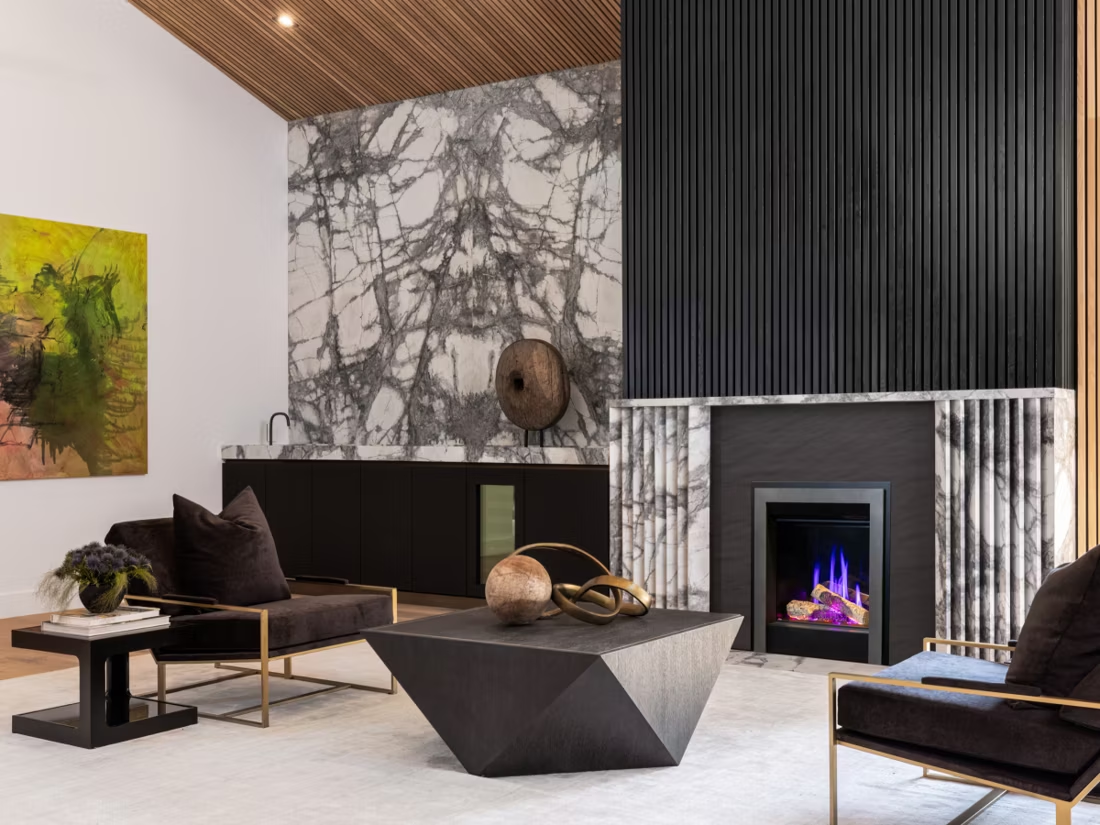
Four fuels. One honest answer for Douglas County.
Three steps. No salesperson until you're ready.
Tell us about your project
Your zip code, your situation, and the fuel you're leaning toward—or let the answers point you to one.
See what's actually available
The brands dealers within 100 miles genuinely carry—real options, never a catalog mirage.
Get your dealer & Project Guide
A trusted local dealer, plus the free Project Guide & Parts List that names every component of the job.
Frequently Asked Questions
Which fuel works best in Douglas County?
It depends on the property and the budget. Wood is the traditional backbone fuel here—county residents have easy access to oak, hickory, walnut, and maple, and a well-seasoned load of hardwood burns hot and long through the moderate 20°F winter lows. Gas, in practice, almost always means propane rather than piped natural gas, since most of rural Douglas County isn't on a gas main—propane fireplaces and inserts are popular for their instant heat and low-maintenance operation on farms without wood-cutting time. Pellet stoves are a solid middle ground for homeowners who want wood-like heat without splitting and stacking, and both Lignetics and Indeck Energy Services pellets are reasonably available through regional suppliers. Electric fireplaces work well as supplemental heat in bedrooms or additions, but they're not the primary heat source in most farmhouses through a full Ozark winter.
Do I need a permit to install a fireplace in Douglas County?
It depends on where you're located. Within the city limits of Ava, hearth appliance installations—wood stoves, inserts, gas or propane units, and pellet stoves—typically require a building permit through the city. Outside city limits, in the unincorporated parts of the county where most residents live, there is generally no county-wide building code enforcement for hearth appliances, though propane line work still needs to go through a licensed propane installer for the tank connection and regulator setup. Electric fireplaces usually don't require a permit unless you're hardwiring a built-in unit into a new circuit. If you're unsure, most local hearth retailers will tell you upfront whether your specific address needs a permit before they quote the job.
Are there any air quality restrictions on wood burning in Douglas County?
No. Douglas County has no nonattainment designation, winter inversion advisories, or wood-burning curtailment program—the kind of restrictions you'd see in a basin like the Klamath or Salt Lake valleys simply don't apply here. That said, an EPA-certified wood stove is still worth the money even without a regulatory reason: it burns oak and hickory more completely, produces less creosote in the chimney, and gets more heat out of every split log than an old uncertified box stove. It's a performance upgrade first, not a compliance requirement.
Can one local hearth retailer handle all four fuel types?
Some can, though in a county this small it's less common than in a larger market. Dealers based in Ava or serving the county from West Plains and Mountain Grove often carry wood and propane as their core lines, since those two cover the bulk of local demand, with pellet stoves and electric units as secondary offerings. If you want to compare across all four fuels side by side, it's worth checking whether your nearest retailer stocks working display units or has to special-order—in a rural county, some product lines arrive by special order rather than off a showroom floor, so ask about lead times before you commit to a specific model.
How does hearth service work in a low-population, rural county like Douglas?
Most technicians covering Douglas County are based out of Ava or a neighboring town and drive out to farms and rural addresses for sweeps, propane inspections, and pellet stove cleanings. Expect a modest trip fee for calls out to the far edges of the county—toward Squires, Vanzant, or the Rome area—and plan on booking your annual chimney sweep or propane system check in late summer or early fall, before the pre-winter rush hits every technician's schedule at once. Given how much oak and hickory gets burned locally, an annual sweep isn't optional if you're running wood as a primary heat source—creosote accumulates faster with dense hardwood than with softer species.
What's the typical installed cost across fuel types in Douglas County?
Costs run lower here than in many metro markets, but they still vary a lot by fuel. Wood stove or insert installation: roughly $3,500–$7,500 for a typical retrofit, climbing toward $11,000 if new chimney construction is involved. Propane fireplace, insert, or stove: about $3,800–$9,000, with the top end driven by new tank placement, regulator work, and gas line runs on properties without existing propane service. Pellet stove or insert: generally $3,500–$6,500 installed. Electric fireplace: $150–$2,500 for the unit itself, plus $300–$1,000 in labor for anything beyond a simple plug-and-play placement. For a firmer number, the county + fuel pages above break these down against real local retailer pricing.
Wood, gas, pellet, or electric—how do I choose?
Match the fuel to your life, not the other way around. Wood: lowest fuel cost and total power-outage independence, but you're hauling and stacking. Gas: press a button, set a thermostat, no maintenance to speak of. Pellet: wood economics with automatic feeding, in exchange for weekly cleaning and a need for electricity. Electric: plugs in anywhere with honest supplemental heat. Nobody regrets the fuel that fits how they actually live.
Does a fireplace add value to my home?
On average, a fireplace adds back to the home about the same amount you spent installing it. Add the monthly savings from heating the rooms you actually use instead of the whole house—often hundreds of dollars a year—and the value case is strong before you even count what a fire does for how your family uses the room.
Can a fireplace actually lower my heating bill?
Yes—by creating a comfort zone. A furnace heats every square foot of the house just to warm the one room you're in; a gas fireplace on low burns roughly a sixth of the gas a typical furnace does. Set the furnace around 55–60 degrees as a baseline, then heat the rooms your family actually uses. Families who heat this way commonly save $20–$60 a month.
Can I install a fireplace myself?
If you're putting a fire in your house on purpose, it's best to work with an expert. Unless you're genuinely experienced in framing, gas line, vent pipe, and the national code on clearances to combustibles, have a professional do it—and ideally the same company that sells you the fireplace, so warranty, service, and liability all live under one roof.
Stove and Fireplace Dealers in Douglas County
Listings include WhyFire partner dealers, dealers we have verified as authorized for the brands we recommend, and established local businesses that carry hearth products. Every listing shows which one it is. The ones marked Preferred run on WhyFire's software, so they can show you real pricing and book your appointment right here. No manufacturer pays for placement. How we verify dealers →
Missouri Stove & Chimney
Heritage Stoves And Grills
Nixa Hardware
Country Side Cottage
Hmi Fireplace Shop
Abc Block And Brick
Meek's The Builder's Choice
Mountain Home Chimney & Flame
Find the right fireplace for your Douglas County home.
Pick your fuel below to see installation costs, compare recommended units, and get matched with a trusted local hearth retailer serving your part of the county.
Find Your Fireplace →