
Automated warmth for Clinton County's hardwood country winters.
With a solid winter heating load and winter lows averaging 15°F, Clinton County gets a real heating season without the extremes of the northern plains. A pellet stove gives you wood-fire ambiance with thermostat-level control—no splitting, stacking, or seasoning required. I'll match you with a trusted local dealer who knows what actually fits a Clinton County home.
Every Project Starts From One of These Five Situations
Reliable heat without cutting your own cordwood.
Clinton County is a rural county of roughly 16,683 people in northwest Missouri, anchored by the county seat in Plattsburg and towns like Cameron, Lathrop, Gower, and Trimble on the northern edge of the Kansas City exurban ring. The timberland and fence rows here run heavy to oak, hickory, walnut, and maple, and plenty of county households still burn that cordwood the traditional way. But a growing number of homeowners—especially those on acreages who don't want to fell, split, and season their own wood every fall—are choosing pellet stoves instead. With a solid winter heating load and a real heating season stretching from October into April, a pellet appliance gives you consistent, auto-fed heat output without daily fire-tending.
Clinton County has no designated air quality non-attainment concerns and no wood-burning curtailment periods, so there's no regulatory reason to choose pellet over wood on emissions grounds—the appeal here is purely convenience and control. The tradeoff worth knowing: pellet stoves run on an electric auger and blower, and rural Clinton County, like much of northwest Missouri, sees periodic winter ice storms that can knock out power to rural lines for a day or more. Most local dealers will walk you through battery backup or small-generator options so a pellet stove keeps running through an outage. Regional brands like Lignetics and Indeck Energy Services, milled from the same hardwood byproduct streams common across this part of Missouri, are readily available through area hearth dealers without the delivery lead times or price swings that come with propane in rural parts of the county.
Three steps. No salesperson until you're ready.
Tell us about your project
Your zip code, your situation, and the fuel you're leaning toward—or let the answers point you to one.
See what's actually available
The brands dealers within 100 miles genuinely carry—real options, never a catalog mirage.
Get your dealer & Project Guide
A trusted local dealer, plus the free Project Guide & Parts List that names every component of the job.
Frequently Asked Questions
How much does a pellet stove installation cost in Clinton County?
Most pellet stove and insert installations in this part of Missouri run roughly $3,000 to $6,500, depending on the unit and whether it's a freestanding stove or an insert going into an existing fireplace. A pellet insert dropped into a masonry firebox in an older Plattsburg or Cameron home, using the existing chimney chase for the smaller flexible vent liner pellet stoves require, tends to land on the lower end. A freestanding stove for a rural acreage home with no existing chimney—common on the farmhouses scattered around Lathrop and Trimble—needs a new through-wall vent kit and electrical run for the hopper and blower, which pushes the job toward the higher end. A local dealer will give you a firm number after seeing the space and your electrical setup.
What size pellet stove do I need for my Clinton County home?
It depends more on layout than raw square footage. Many homes in Clinton County are older farmhouses with separated rooms rather than open floor plans, so a stove that heats a rated 1,500 sq ft on paper may only comfortably carry the living area and adjoining kitchen if walls block airflow to the rest of the house. With winter lows averaging 15°F and a real cold season that runs long and hard, undersizing means the stove runs on high constantly and still can't keep up on the coldest nights; oversizing means it short-cycles and burns pellets less efficiently. A local dealer will size the unit around your actual floor plan rather than a generic square-footage chart.
Do I need a permit to install a pellet stove in Clinton County?
In most cases, yes—a building permit covering the appliance install and venting is standard practice, whether you're inside city limits in Plattsburg, Cameron, or Lathrop, or out in unincorporated Clinton County. City installations typically go through the local city hall's building office, while unincorporated county properties fall under the county's building authority based in Plattsburg. Most full-service hearth dealers handle the permit application and inspection scheduling as part of the installation, which is one good reason to go through a licensed local installer rather than a DIY setup.
Will my pellet stove keep working during a power outage?
Not without backup power, and this matters more in Clinton County than in a lot of places—northwest Missouri sees periodic winter ice storms that can down rural power lines for a day or longer. A pellet stove's auger, igniter, and blower motor all need electricity to run, so a standard unit goes cold the moment the power does. Homeowners who want pellet heat as genuine backup, not just supplemental warmth, typically pair the stove with a small battery backup unit sized for the appliance or a portable generator. If reliable off-grid heat during an ice storm outage is your top priority, it's worth discussing with your dealer before you buy, since not every model handles a battery inverter setup the same way.
Where do Clinton County homeowners buy pellets, and what do they cost?
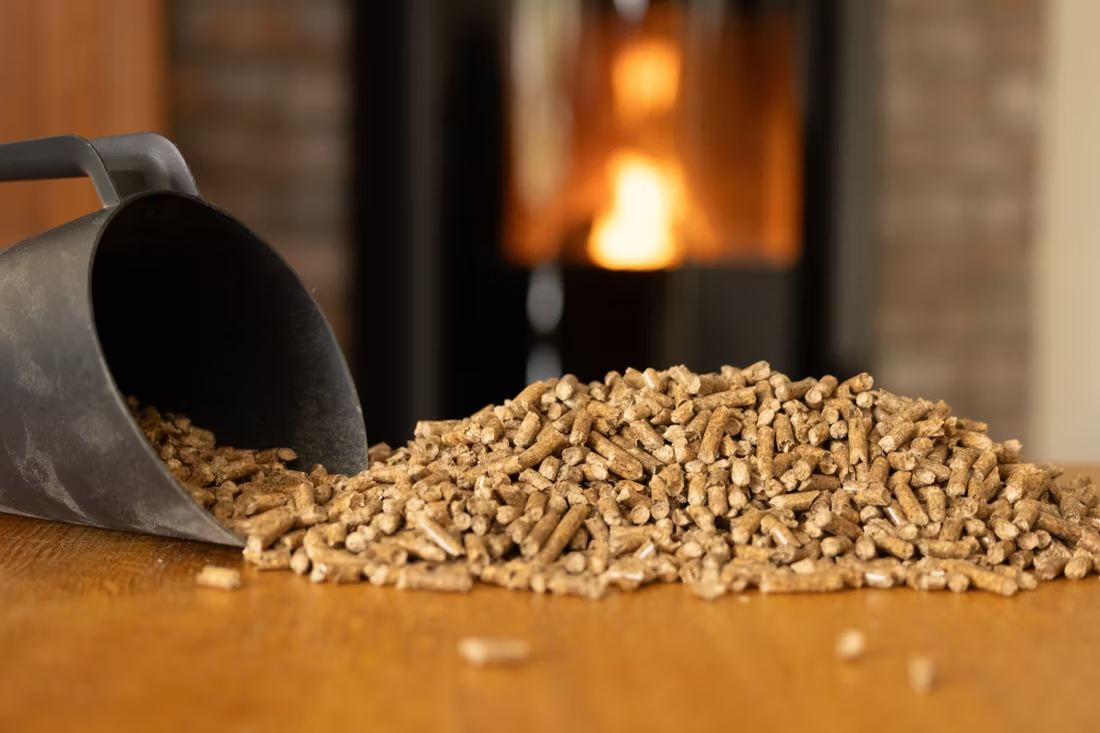
Regional brands like Lignetics and Indeck Energy Services are the two most commonly stocked through hearth dealers serving northwest Missouri, milled from hardwood byproduct sourced from mills processing the same oak, hickory, and maple common in Clinton County's own timberland. Most households buy by the pallet (roughly 50 forty-pound bags, or one ton) ahead of the heating season rather than bag by bag, both for better per-ton pricing and to avoid a supply crunch during a cold snap. Rural acreage owners around Gower and Turney often have room to store a season's worth of pallets in a barn or outbuilding, which is worth factoring into your stove decision if you're comparing pellet to propane delivery.
Pellet stove vs. a wood stove burning local oak and hickory—which makes more sense?
Both are legitimate choices in Clinton County, and the decision usually comes down to labor versus convenience rather than cost. A wood stove burning oak, hickory, walnut, or maple cut locally has no fuel bill at all if you're already cutting your own, and it runs with zero electricity—a real advantage during a winter ice storm outage. A pellet stove trades that self-sufficiency for consistent, thermostat-controlled heat and none of the felling, splitting, and seasoning that cordwood demands, at the cost of needing both purchased fuel and steady electricity. Households on rural acreage with existing woodlots often lean wood; homeowners who value hands-off convenience and don't have time to manage a woodpile tend to land on pellet.
How much maintenance does a pellet stove need?
Plan on daily or every-other-day ash removal from the burn pot during heavy winter use, a weekly hopper and auger check, and a full professional cleaning of the exhaust venting and blower once a year—ideally in late summer before Clinton County's heating season ramps up in October. Pellet appliances generate far less creosote than wood stoves, so there's no annual chimney sweep in the CSIA sense, but the mechanical components—igniter, auger motor, blower—do wear and benefit from an annual inspection by a local service tech, especially for a stove running as a primary heat source through a long, demanding winter.
Is propane a better option than pellet for a rural Clinton County home?
For whole-home heating, propane furnaces remain common across rural Clinton County where natural gas mains don't reach, but propane pricing fluctuates with delivery schedules and regional demand, and tank refills during a hard winter can get expensive fast. A pellet stove won't replace a whole-house furnace, but as a supplemental heat source for the main living area, it lets you cut propane usage significantly during the shoulder seasons and moderate cold snaps, reserving the furnace for the coldest stretches. Many homeowners around Lathrop and Trimble run this exact combination—propane furnace as the backbone, pellet stove carrying the load most of the season.
What's driving demand for pellet stoves over wood stoves in Clinton County right now?
Convenience is the biggest factor. Clinton County has plenty of oak, hickory, walnut, and maple for anyone willing to cut and season their own wood, but that's a multi-year commitment—wood cut this fall often isn't ready to burn well until the following winter. A pellet stove skips that entirely: load the hopper, set it, and it runs on a thermostat like a furnace. With no local air quality restrictions or burn curtailment periods pushing the decision, it really comes down to whether a household wants the self-sufficiency of cutting its own fuel or the low-maintenance convenience of a bagged, ready-to-burn product delivered on a pallet.
What's the difference between an insert and a zero-clearance fireplace?
An insert is a fireplace that slides into a pre-existing wood-burning fireplace—if you don't have one, there's nothing to insert it into. A zero-clearance fireplace is built into a framed wall, which makes it the answer for remodels and new construction. Simple test: existing masonry fireplace means insert; blank or framed wall means zero-clearance.
How often does a pellet stove need cleaning?
A clean pellet stove is a happy pellet stove. Plan on cleaning the burn pot about once a week when you're burning regularly—ash and clinkers gum up the air holes just like a pellet barbecue. Most pellet stove problems trace back to skipped cleaning that nobody explained up front. Some designs make it easy with a trapdoor burn pot: pull a lever and the gunk drops into the ash pan.
Does a fireplace add value to my home?
On average, a fireplace adds back to the home about the same amount you spent installing it. Add the monthly savings from heating the rooms you actually use instead of the whole house—often hundreds of dollars a year—and the value case is strong before you even count what a fire does for how your family uses the room.
What is an in-home preview and do I need one?
It's a visit where a hearth professional measures your space, confirms the model you picked actually works in your home, and walks the specs—framing, gas line, venting, finish work—before anything is ordered. Some details you just can't know until you see the house. Never make a down payment without one; it's the single most-skipped step that burns buyers.
Pellet Brands Stocked Around Clinton County
Manufacturers will point you to the nearest stocking dealer.
Get your free Project Guide & Parts List for a pellet stove in Clinton County.
Tell me about your home, its layout, and how you plan to use the stove, and I'll match you with a trusted local Clinton County dealer and send over a free Project Guide & Parts List—the exact parts, including the vent kit, for your pellet heat project.
Find Your Fireplace →