
Pellet Heat Is Rare in Clay County—Here's What Still Works.
Clay County's winters are cold but not extreme—average lows around 17°F and a moderate winter heating season overall—and natural gas reaches most neighborhoods from Liberty to Gladstone. That combination means pellet stoves stay a small niche here, not the default. For the homeowners who still want one, we'll connect you with a dealer who actually stocks and installs them.
Every Project Starts From One of These Five Situations
A Niche Heat Source, Not a Mainstream One.
Clay County sits in climate zone 4A with a winter low average of 17°F and a moderate winter heating season overall—noticeably milder than places like Duluth or Fargo, where pellet and wood heat carry real load-bearing importance. Most of the county's 103,000-plus residents, spread across Liberty, Kearney, Excelsior Springs, Smithville, Gladstone, and North Kansas City, already have natural gas or reliable electric service at the house. That infrastructure covers the everyday heating need well enough that pellet stoves never became a common secondary purchase the way they did in colder, more rural parts of the Midwest.
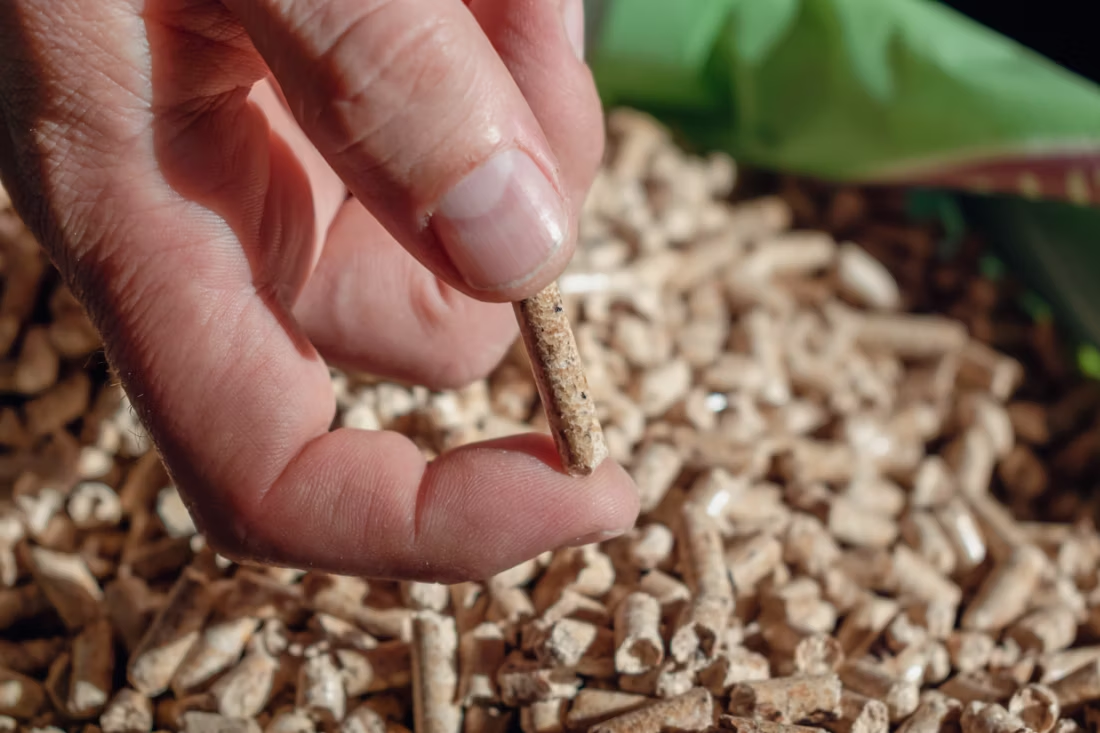
That doesn't mean pellet heat has no place in Clay County. A handful of homeowners install pellet stoves for supplemental warmth in a bonus room, for the self-feeding convenience without hauling cordwood, or for rural properties along the Missouri River bluffs where a second heat source makes sense. Pellets themselves are available regionally through producers like Lignetics and Indeck Energy Services, though you'll often need to special-order bulk bags or drive into the greater Kansas City market rather than pick them up at a corner hardware store. If you're one of the homeowners who wants pellet heat despite the thin local market, we can still match you with a dealer who knows how to source both the stove and the fuel.
Three steps. No salesperson until you're ready.
Tell us about your project
Your zip code, your situation, and the fuel you're leaning toward—or let the answers point you to one.
See what's actually available
The brands dealers within 100 miles genuinely carry—real options, never a catalog mirage.
Get your dealer & Project Guide
A trusted local dealer, plus the free Project Guide & Parts List that names every component of the job.
Frequently Asked Questions
How much does a pellet stove installation cost in Clay County?
Nationally, a pellet stove installation typically runs $3,000 to $6,500 depending on the unit, venting path, and whether an existing masonry fireplace is being converted with an insert. Because pellet installs are infrequent in Clay County compared to gas or electric work, expect a wider range in quotes than you'd see for a common fuel—some installers may need to order a specialty unit rather than pull one off a showroom floor. Get two or three quotes from dealers who specifically stock pellet appliances rather than a general contractor who occasionally installs one.
Why aren't pellet stoves more common in Clay County?
Two things work against pellet stoves here: mild-to-moderate winters (a 17°F average low and a winter heating season well short of what a place like Bismarck or Minneapolis carries) and broad natural gas coverage across Liberty, Gladstone, North Kansas City, and most of the rest of the county. When a homeowner already has efficient gas heat and doesn't need a wood-heat culture the way rural Ozark or northern Missouri counties sometimes do, the case for adding a pellet stove shrinks to specific situations—a detached workshop, a rural property, or someone who simply prefers the pellet burn experience.
Where can I buy pellets in Clay County?
Regional producers Lignetics and Indeck Energy Services supply pellets to the broader Kansas City market, but dedicated pellet retail in Clay County itself is limited given how few households burn them. Most pellet-stove owners either special-order pallets through a hearth dealer, stock up seasonally from farm-supply stores that carry bagged pellets, or buy in bulk once a year and store a season's supply in a garage or shed. If you're planning a pellet stove purchase, ask your dealer about fuel sourcing before you commit—it's a bigger logistics question here than in a place where pellets are sold on every corner.
Is a pellet stove a good backup heat source during a power outage?
Not on its own. Pellet stoves rely on an electric auger and blower to feed fuel and circulate heat, so a standard unit shuts down the moment the power goes out—unlike a wood stove, which keeps burning regardless. Some models accept a small battery backup or inverter setup for short outages, but that's an add-on, not standard equipment. Clay County's grid, served primarily by Evergy, is generally reliable, so this is less of a dealbreaker here than in areas with frequent multi-day outages—but it's worth knowing before you buy if backup heat is part of your reasoning.
What size pellet stove do I need for a Clay County home?
Sizing depends on square footage, insulation, and whether the stove is primary or supplemental heat. As a general guide: smaller units (under 1,000 sq ft) suit a single room or bonus space, mid-size units (1,000–1,800 sq ft) handle an open living area, and larger units (1,800+ sq ft) can supplement whole-home heating in a well-insulated newer build. Given Clay County's moderate climate zone 4A conditions, most local installs skew toward supplemental rather than whole-house sizing—a local dealer can size the space correctly during an in-home visit.
Can I install a pellet stove in a home with an existing masonry fireplace?
Yes—a pellet insert can be fitted into an existing masonry fireplace opening, venting through a smaller flue liner rather than requiring the full chimney draft a wood fireplace needs. This is a common route for Clay County homes with an older brick fireplace that's rarely used for wood but where the homeowner wants a cleaner-burning, thermostat-controlled heat source. Because pellet inserts vent horizontally in many cases, they're often more flexible about placement than a wood conversion would be.
Do I need a permit to install a pellet stove in Clay County?
Most municipalities within Clay County—including Liberty, Kearney, Excelsior Springs, and Smithville—require a building permit for new solid-fuel appliance installations, covering hearth clearances and venting. Unincorporated areas go through the county building department. Because pellet installs are uncommon locally, it's worth confirming with your specific city's building office before work starts rather than assuming the process mirrors a gas fireplace permit, which most local inspectors see far more often.
Pellet stove vs. gas fireplace—which makes more sense in Clay County?
For most Clay County homes, gas wins on convenience: natural gas service reaches most of the county, a gas fireplace lights instantly with no fuel storage, and gas is the fuel local dealers install and service most often. Pellet stoves offer a renewable, self-feeding fuel source and a real flame with visible combustion, but they need a fuel supply chain that isn't well established here and require electricity to run. Pellet makes the most sense for a homeowner without gas access, someone drawn specifically to the pellet-burning experience, or a rural property where a second heat source is genuinely useful—for most everyone else in the county, gas is the more practical everyday choice.
Pellet stove vs. wood stove—since both are uncommon here, which is better?
Both fuels are niche in Clay County for the same underlying reason—natural gas covers most of the county's heating need, and the local wood-species availability (oak, hickory, walnut, maple) supports wood heat more than it supports pellet manufacturing. Between the two, wood stoves work without electricity and pair with locally abundant firewood, while pellet stoves are cleaner-burning and easier to operate but depend on both grid power and an outside pellet supply chain. If you're choosing between them for a rural or backup-heat scenario, wood is generally the more self-sufficient option in this county; pellet is the more convenient one if you don't mind sourcing fuel from outside the immediate area.
Why is a fireplace insert so efficient?
An insert does two things: it seals the chimney completely, so you stop losing air you already paid to heat, and it radiates warmth into the room through the firebox and glass. Most add a heat-exchange fan that pulls cool room air underneath, wraps it around the hot firebox, and pushes it back out warm. Your home is more efficient before you've even lit the first fire.
How often does a pellet stove need cleaning?
A clean pellet stove is a happy pellet stove. Plan on cleaning the burn pot about once a week when you're burning regularly—ash and clinkers gum up the air holes just like a pellet barbecue. Most pellet stove problems trace back to skipped cleaning that nobody explained up front. Some designs make it easy with a trapdoor burn pot: pull a lever and the gunk drops into the ash pan.
Can I install a fireplace myself?
If you're putting a fire in your house on purpose, it's best to work with an expert. Unless you're genuinely experienced in framing, gas line, vent pipe, and the national code on clearances to combustibles, have a professional do it—and ideally the same company that sells you the fireplace, so warranty, service, and liability all live under one roof.
Does a fireplace add value to my home?
On average, a fireplace adds back to the home about the same amount you spent installing it. Add the monthly savings from heating the rooms you actually use instead of the whole house—often hundreds of dollars a year—and the value case is strong before you even count what a fire does for how your family uses the room.
Stove and Fireplace Dealers in Clay County
Pellet Brands Stocked Around Clay County
Manufacturers will point you to the nearest stocking dealer.
Find your pellet stove in Clay County.
Pellet heat is a niche choice in Clay County, but it's not an impossible one. Tell us about your home and situation, and we'll match you with a trusted local dealer who actually carries pellet appliances—plus a free Project Guide & Parts List with the exact parts, including the vent kit, for your specific install.
Find Your Fireplace →