
Steady, Efficient Heat for Butler County Winters.
Thermostat-controlled warmth for Poplar Bluff and the rest of Butler County—no wood splitting, no ash shoveling, just a hopper of pellets and a set-it-and-forget-it stove. Find the right unit and connect with a trusted local dealer.
Every Project Starts From One of These Five Situations
A modern option in a region built on wood heat.
Butler County sits in southeast Missouri along the Black River, with Poplar Bluff as its largest town and hub. In Climate Zone 4A, the county has a moderate winter heating season and an average winter low near 26°F—nowhere near the sustained negative-degree stretches you'd see in Bismarck, ND, but cold enough that December through February brings weeks of real heating demand, plus the occasional ice storm that knocks out power for days at a time. That combination—moderate but genuine cold, plus a real risk of outages—shapes what kind of secondary heat makes sense here.
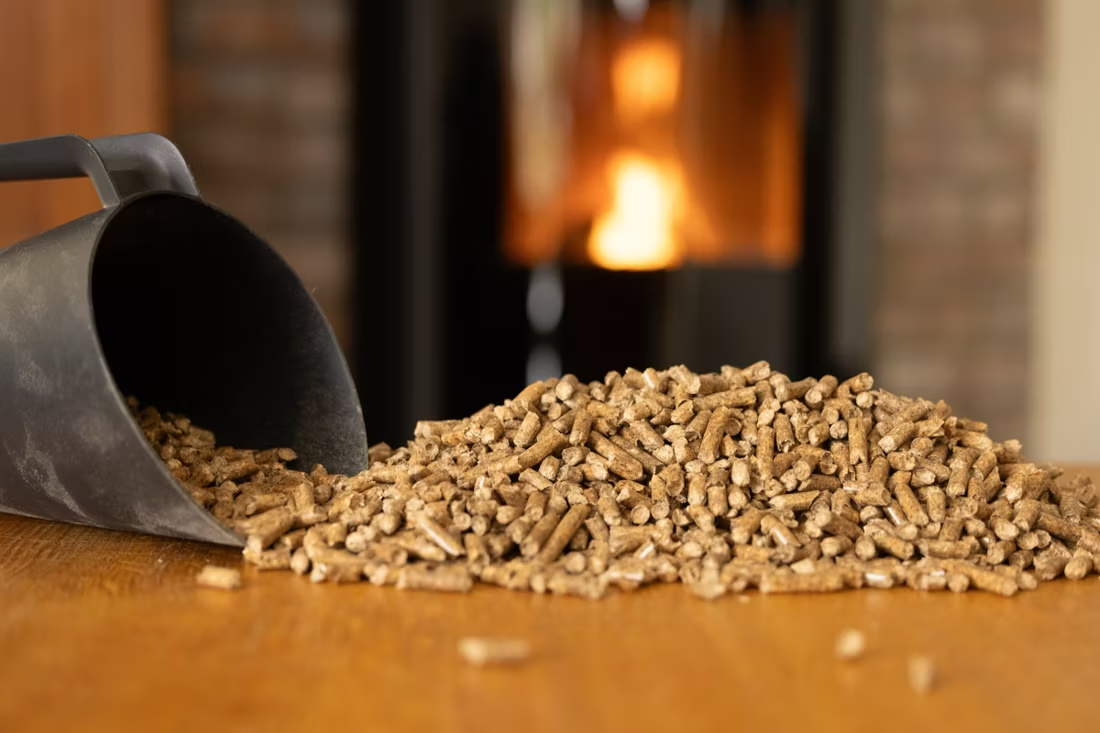
This part of Missouri has deep firewood roots: oak, hickory, walnut, and maple are all common in local wood lots, and plenty of Butler County households still burn cordwood. Pellet stoves have carved out their own niche alongside that tradition for homeowners who want consistent, thermostat-driven heat without cutting, stacking, or hauling wood. Regional suppliers like Lignetics and Indeck Energy Services keep pellets reasonably accessible in this part of the state, and with no local air-quality non-attainment issues or wood-burning curtailment periods to navigate, pellet appliances install and operate without the extra regulatory layer you'd find in stricter air-basin counties out West.
Three steps. No salesperson until you're ready.
Tell us about your project
Your zip code, your situation, and the fuel you're leaning toward—or let the answers point you to one.
See what's actually available
The brands dealers within 100 miles genuinely carry—real options, never a catalog mirage.
Get your dealer & Project Guide
A trusted local dealer, plus the free Project Guide & Parts List that names every component of the job.
Frequently Asked Questions
How much does a pellet stove installation cost in Butler County?
Most pellet stove and insert installations in Butler County land in the $3,000 to $6,000 range, with the spread coming down to the venting path (a simple through-wall vent kit versus running a liner up an existing chimney), whether a dedicated electrical circuit needs to be added for the auger and blower, and any hearth pad work required for clearance. A pellet insert going into an existing masonry fireplace with a chimney already in place tends to sit toward the lower end; a freestanding stove in a room with no existing venting runs higher. Your local dealer will walk the site and give you a firm number.
What size pellet stove do I need for my Butler County home?
With Butler County's moderate winter heating season and winter lows that regularly dip into the mid-20s, most homes here fall into the small-to-medium pellet stove range rather than needing a maximum-output unit. A stove rated for 1,200-1,800 square feet handles most single-story homes in and around Poplar Bluff as a primary or near-primary heat source; larger or less-insulated farmhouses on the county's outskirts may need a unit rated closer to 2,200 square feet. Older homes with higher ceilings and less insulation will need more output than the square footage alone suggests—a local dealer can size this correctly during an in-home visit rather than relying on a chart.
Where can I buy pellet fuel in Butler County?
Wood pellets aren't sold at every hardware store, but regional brands like Lignetics and Indeck Energy Services show up at farm and feed stores and hearth retailers throughout southeast Missouri, and most pellet stove dealers either stock bags themselves or can point you to a reliable local source. Buying a season's supply early—before the first cold snap sends everyone to the same shelf—is the standard advice from dealers in this part of the state.
Will my pellet stove work if the power goes out?
Not without a backup power source. Pellet stoves rely on an electric auger to feed fuel and a blower to distribute heat, so a power outage stops the stove completely—which matters in Butler County, where ice storms have knocked out electricity for extended stretches in past winters. If backup heat during outages is a priority, ask your dealer about pairing the stove with a small battery backup unit or a generator sized to run it, or consider a wood stove as a second heat source that doesn't depend on the grid at all.
Pellet stove vs. wood stove—which makes more sense in Butler County?
Given how much oak, hickory, walnut, and maple grows locally, plenty of Butler County households already have easy access to cordwood, and a wood stove works fine during power outages since it needs no electricity. Pellet stoves trade that off for convenience: load the hopper, set the thermostat, and the stove self-regulates without you tending a fire or hauling ash as often. For households burning firewood already, or wanting outage-proof backup heat, wood often wins. For those who want consistent, low-maintenance heat and don't mind depending on the grid, pellet is usually the easier day-to-day appliance to live with.
Do I need a permit to install a pellet stove in Butler County?
Most jurisdictions require a building permit for a new pellet stove installation, particularly when it involves new venting through a wall or roof, and Butler County is no exception—check with your local building department, whether that's the City of Poplar Bluff or the county for homes outside city limits. Most established hearth dealers handle the permit paperwork as part of the installation, so this typically isn't something homeowners have to manage themselves.
How much maintenance does a pellet stove need?
Pellet stoves need more routine attention than a gas fireplace but less than a wood stove's chimney sweeping schedule. Plan on emptying the ash pan every few days during heavy use, cleaning the burn pot weekly to keep the fire feeding evenly, and scheduling a full professional cleaning of the exhaust venting and hopper components once a year, ideally before the start of the burning season. Skipping the annual service is the most common cause of feed jams and inconsistent heat output that homeowners in this climate run into mid-winter.
How much do wood pellets cost, and how many bags will I need for a Butler County winter?
Pellets typically run in the $200 to $300 per ton range depending on brand and where you buy locally, with regional suppliers like Lignetics offering competitive pricing in this part of Missouri. A ton is usually packaged as fifty 40-pound bags. For a Butler County home using a pellet stove as a significant heat source through a winter with a moderate amount of heating demand, expect to burn somewhere between 1.5 and 3 tons depending on square footage, insulation, and how much you also rely on central heat. Buying pellets by the ton rather than by the bag usually saves money if you have dry storage space.
Pellet vs. gas—which is the better fit for my home?
Gas fireplaces offer instant on-off operation with no fuel storage or ash cleanup, and with a battery-backup ignition system, some models keep working through a power outage—a real plus given Butler County's occasional ice storms. Pellet stoves need electricity to run the auger and blower no matter what, but they burn a renewable fuel, tend to cost less to operate than propane in a county without widespread natural gas infrastructure, and give you a visible, crackling flame that many homeowners prefer to a gas unit's more uniform look. If reliable heat during outages is the top priority, ask your dealer about gas units with battery-backed ignition; if efficient, budget-friendly ambiance is the priority, pellet is usually the stronger fit.
Why is my open fireplace making my house colder?
Open fireplaces suck—literally. As the fire burns, it consumes air your furnace already paid to heat and pulls it out through the chimney, so the house is actually colder after the fire goes out than before you lit it. An insert fixes this: it seals the chimney, puts fixed glass across the front, and turns that hole in your house into a real heat source.
Can a pellet stove heat a whole house?
It genuinely can. I burned a pellet stove as my only heat source for years after a furnace died, and it kept the entire house warm. Pellets feed automatically from a hopper, so you get wood-heat economics with thermostat-style control. Two honest caveats: it needs weekly cleaning during the season, and most models need electricity to run—ask about battery backup if outages are a concern.
Does a fireplace add value to my home?
On average, a fireplace adds back to the home about the same amount you spent installing it. Add the monthly savings from heating the rooms you actually use instead of the whole house—often hundreds of dollars a year—and the value case is strong before you even count what a fire does for how your family uses the room.
What is an in-home preview and do I need one?
It's a visit where a hearth professional measures your space, confirms the model you picked actually works in your home, and walks the specs—framing, gas line, venting, finish work—before anything is ordered. Some details you just can't know until you see the house. Never make a down payment without one; it's the single most-skipped step that burns buyers.
Stove and Fireplace Dealers in Butler County
Pellet Brands Stocked Around Butler County
Manufacturers will point you to the nearest stocking dealer.
Find your pellet stove in Butler County.
Tell us a bit about your home and we'll match you with a trusted local dealer, plus send over a free Project Guide & Parts List—the exact parts, including the vent kit, and the dealer we recommend for your pellet project in Butler County.
Find Your Fireplace →