
The easiest fireplace upgrade in Butler County, Missouri.
No chimney, no gas line, no venting to plan around—just clean zone heat and real ambiance for homes from Poplar Bluff to Qulin. Find the right unit and get matched with a trusted local dealer.
Every Project Starts From One of These Five Situations
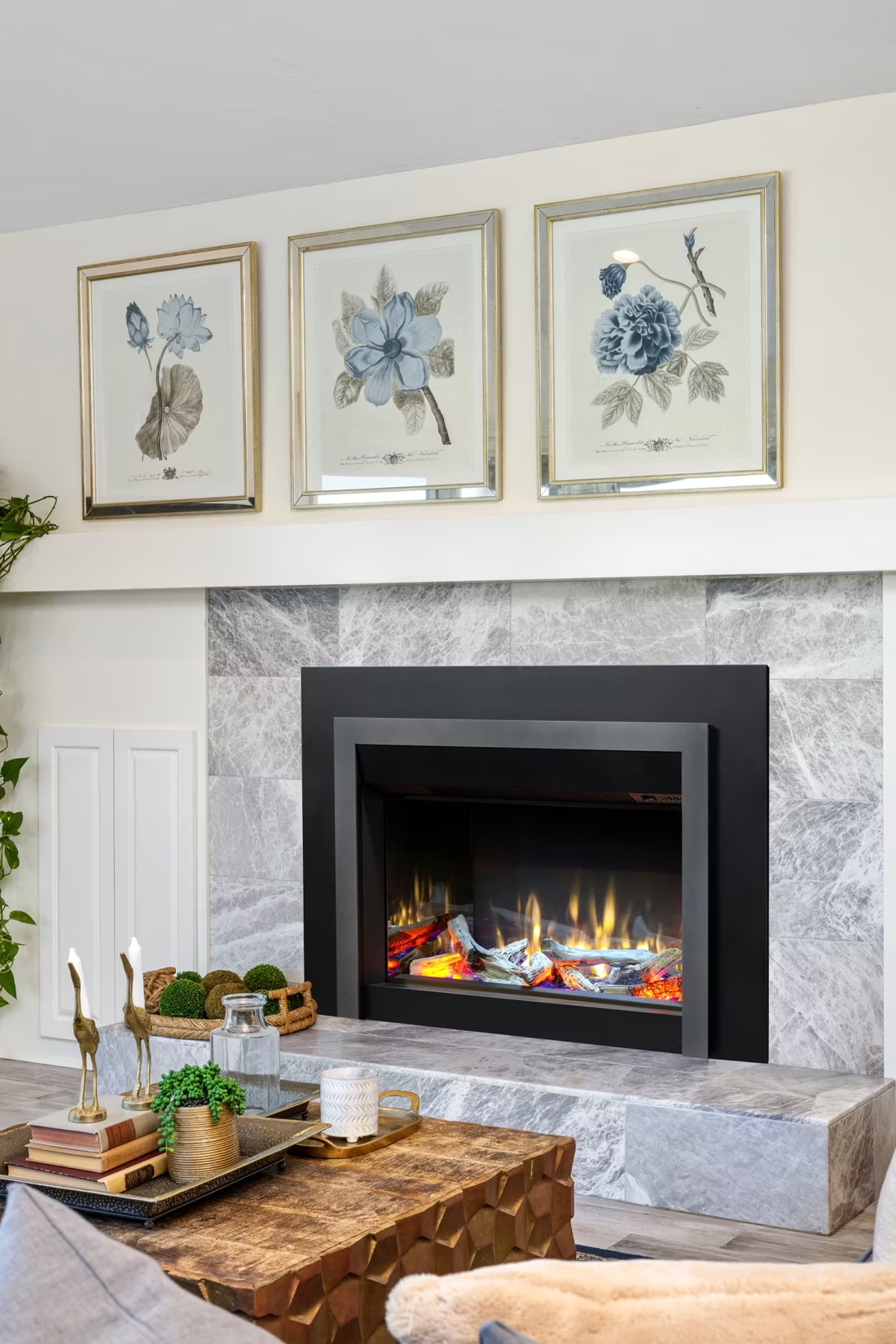
Heat and ambiance without the venting headache.
Butler County sits in southeastern Missouri's Bootheel region, anchored by Poplar Bluff with smaller communities like Neelyville, Qulin, and Fisk spread across the county's roughly 17,900 residents. The climate here is Zone 4A, mixed-humid, with about 4,027 heating degree days and winter lows averaging around 26°F—a far gentler heating season than places like Minneapolis or Buffalo, where HDD counts run 6,000 or higher. That milder profile is exactly why electric fireplaces make sense for a lot of homes here: most households aren't looking for a primary heat source, they want a warm, good-looking focal point in a living room, bedroom, or den that doesn't demand a chimney or gas line.
Electric units also sidestep a lot of the logistics that come with other fuels in this county—no cutting or splitting oak and hickory, no propane tank to schedule deliveries for, no masonry chimney to inspect. In town, Poplar Bluff Municipal Utilities keeps the grid steady enough that a 1,500-watt electric insert or built-in unit is a dependable everyday heater; in the more rural stretches served by Ozark Border Electric Cooperative, electric fireplaces are a popular add for room additions, finished basements, and manufactured homes where running new gas line or venting isn't practical. The tradeoff worth knowing going in: these units are supplemental heaters, not furnace replacements, and they won't run during an outage—something to plan around given the ice storms that occasionally hit this part of the Bootheel.
Three steps. No salesperson until you're ready.
Tell us about your project
Your zip code, your situation, and the fuel you're leaning toward—or let the answers point you to one.
See what's actually available
The brands dealers within 100 miles genuinely carry—real options, never a catalog mirage.
Get your dealer & Project Guide
A trusted local dealer, plus the free Project Guide & Parts List that names every component of the job.
Frequently Asked Questions
How much does an electric fireplace installation cost in Butler County?
Plug-in electric inserts and freestanding stoves are the cheapest path—unit costs typically run $150 to $600, and if there's already a standard outlet nearby, there's no installation labor at all. Built-in wall units or mantel-style electric fireplaces that need a dedicated 120V or 240V circuit run higher, typically $800 to $2,500 once you factor in the unit, a licensed electrician to run the new circuit, and any framing or finish work. Homes in older parts of Poplar Bluff with dated panels sometimes need a panel upgrade first, which adds to the total—a local electrician or hearth dealer can tell you quickly which situation you're in.
Do I need a permit to install an electric fireplace in Butler County?
A simple plug-in electric fireplace that uses an existing outlet doesn't typically require a permit—there's no venting, no gas line, and no structural change. If you're having a dedicated circuit run for a built-in unit, that electrical work generally does require a permit and inspection, whether you're inside Poplar Bluff city limits or in unincorporated Butler County. Most licensed electricians pull this permit as a standard part of the job, so it's worth confirming with whoever does the wiring rather than assuming it's covered.
Will an electric fireplace actually heat a room in Butler County's winters?
For the climate here, yes—as supplemental heat. Most electric fireplace inserts put out around 5,000 to 5,200 BTU on the heat setting, enough to noticeably warm a single room in the 26°F average winter lows Butler County sees. With only about 4,027 heating degree days a year, this county's heating season is considerably milder than northern climates like Duluth or Fargo, which is exactly the profile where an electric unit as the sole heat source for a den, sunroom, or bedroom addition works well. It's not a furnace replacement for the whole house, but for zone heating a room you actually spend time in, it holds up fine.
Are electric fireplaces a good fit for manufactured and mobile homes?
Yes, and it's one of the more common installs we see requested for this reason. Manufactured and mobile homes make up a meaningful share of the housing stock in the rural parts of Butler County, and altering exterior walls for gas venting or adding a wood chimney often isn't practical or approved by the home's manufacturer. A plug-in or low-amp built-in electric unit sidesteps that entirely—no penetration through the wall or roof, no clearance-to-combustibles calculations for venting, just an outlet or a properly sized circuit. It's usually the simplest fireplace upgrade available for this type of home.
Electric vs. wood—which makes more sense for my home?
Wood is still common in Butler County, where oak, hickory, walnut, and maple are all locally available and burn well, and a wood stove keeps working during a power outage—a real consideration given the ice storms that periodically hit the Bootheel. But wood means chimney maintenance, ash cleanup, and sourcing or cutting fuel. Electric skips all of that: no venting, no annual chimney sweep, no smoke, and instant on-off convenience. For a primary living space where you want reliable backup heat, wood or a wood insert still has an edge. For a bedroom, den, or secondary space where convenience and clean operation matter more than off-grid resilience, electric is usually the better fit.
Electric vs. propane—which is better for my Butler County home?
Outside Poplar Bluff, propane is the common alternative to natural gas across rural Butler County, and a propane fireplace or insert delivers more heat output and can be configured to run during a power outage with the right ignition system. But propane means tank rental or purchase, scheduled deliveries, and periodic servicing. Electric fireplaces need none of that—just an outlet or circuit—which makes them appealing for secondary rooms, rental properties, or anyone who'd rather not manage a fuel delivery schedule. If you're weighing the two for a primary heated space, a local dealer can walk through the tradeoffs based on your specific room and budget.
Will my electric fireplace still work if the power goes out?
No—electric fireplaces require power to run the heater, blower, and typically the flame effect too, so they go dark in an outage just like any other electrical appliance. This matters in Butler County because ice storms occasionally knock out power across Ozark Border Electric Cooperative's rural lines for extended stretches. If backup heat during outages is a real priority for your household, a wood stove or a battery-backup gas unit is worth pairing with your electric fireplace rather than relying on electric alone as your only heat source.
What size electric fireplace do I need for my room?
Most electric fireplace heaters are rated to comfortably heat 400 to 1,000 square feet, depending on the unit and your home's insulation. For a typical living room or den in a Butler County home, a standard 1,500-watt insert or built-in unit is usually plenty given the moderate winter lows here—you're not fighting the kind of extreme cold that pushes northern climates toward oversized units. Larger open-concept spaces or rooms with vaulted ceilings may need a bigger unit or a secondary heater to fully close the gap; a local dealer can size it based on your actual floor plan rather than square footage alone.
Which local utility will affect my electric fireplace running costs?
Homes inside Poplar Bluff are typically served by Poplar Bluff Municipal Utilities, while much of the surrounding rural county runs on Ozark Border Electric Cooperative lines. Rates differ between the two, so your actual cost to run a 1,500-watt fireplace a few hours a night will vary a bit depending on which provider serves your address. As a rough baseline, a standard electric fireplace insert costs only a few cents per hour to run on the heat setting, which is one of the reasons they're popular as a supplemental heat source rather than a whole-home solution in this climate.
Does an electric fireplace need a vent or chimney?
No—that's its superpower. An electric fireplace needs a wall and an outlet, period. No vent pipe, no gas line, no clearances to design around, which is why it works in bedrooms, offices, apartments, and walls where venting a gas or wood unit would be impractical or impossible. Installation is typically the simplest and least expensive of any fireplace type.
Do electric fireplaces actually produce heat?
Yes—most put out around 4,800–5,000 BTUs from a standard outlet, which comfortably warms a bedroom, office, or den as a comfort-zone heater. What they won't do is carry a whole house the way wood, gas, or pellet can. Think of electric as ambiance-first with honest supplemental heat: flames on with no heat in July, flames plus warmth in January.
Can a fireplace actually lower my heating bill?
Yes—by creating a comfort zone. A furnace heats every square foot of the house just to warm the one room you're in; a gas fireplace on low burns roughly a sixth of the gas a typical furnace does. Set the furnace around 55–60 degrees as a baseline, then heat the rooms your family actually uses. Families who heat this way commonly save $20–$60 a month.
Can I install a fireplace myself?
If you're putting a fire in your house on purpose, it's best to work with an expert. Unless you're genuinely experienced in framing, gas line, vent pipe, and the national code on clearances to combustibles, have a professional do it—and ideally the same company that sells you the fireplace, so warranty, service, and liability all live under one roof.
Stove and Fireplace Dealers in Butler County
Find your electric fireplace in Butler County.
Tell us about your room and your home, and we'll send you a free Project Guide & Parts List—the right electric fireplace or insert for your space, plus a match with a trusted local dealer who can install it.
Find Your Fireplace →