
Find the right pellet stove for your Barton County home.
Consistent, low-maintenance heat for the moderate winter heating season Barton County sees each year—from Lamar to Golden City to the farms in between. Get matched with a trusted local dealer.
Every Project Starts From One of These Five Situations
A steady hopper of heat for southwest Missouri winters.
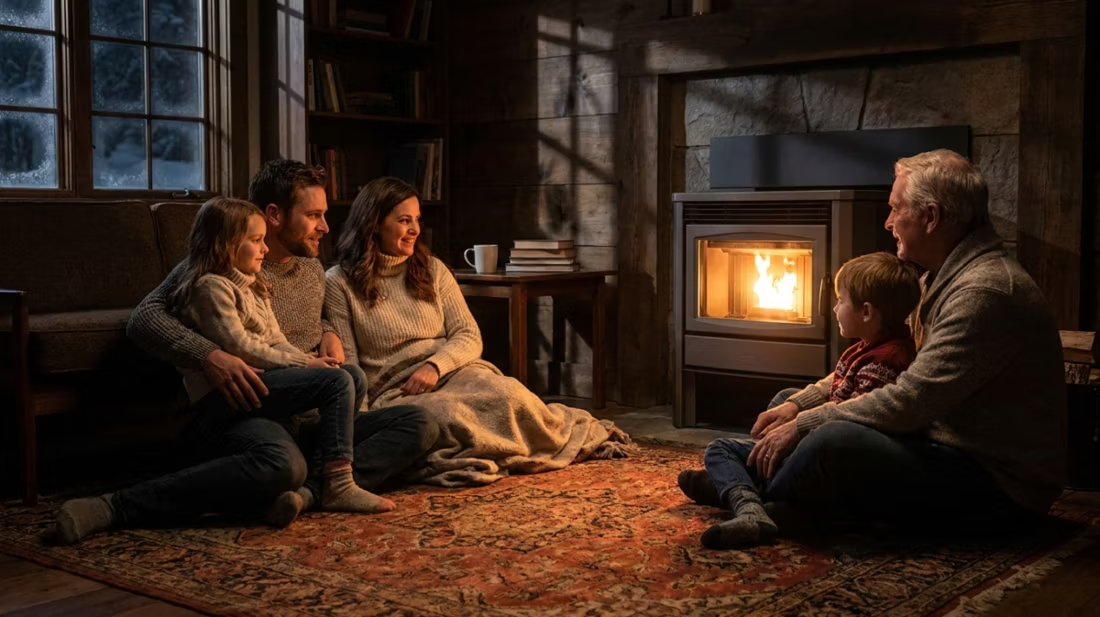
Barton County sits in USDA climate zone 4A, with winter lows averaging around 22°F and a moderate but real heating season—cooler than Kansas City but nowhere near the extremes of a place like Fargo or Bismarck. Homes here are surrounded by oak, hickory, walnut, and maple stands, and plenty of rural Barton County households already heat with wood. Pellet stoves offer a different trade-off: the radiant comfort of a real fire without the splitting, stacking, and daily tending that cordwood demands.
With no air quality non-attainment issues in the county, pellet stoves here are chosen less for regulatory reasons and more for convenience and consistency. Set the hopper, set the thermostat, and the stove holds a steady temperature overnight—useful for Lamar and Golden City households who want dependable heat in a bedroom, sunroom, or main living area without the labor of a wood-burning setup. Regional pellet supply comes through brands like Lignetics and Indeck Energy Services, both distributed through the wider Midwest corridor, so fuel availability isn't a concern even in a smaller county like Barton.
Three steps. No salesperson until you're ready.
Tell us about your project
Your zip code, your situation, and the fuel you're leaning toward—or let the answers point you to one.
See what's actually available
The brands dealers within 100 miles genuinely carry—real options, never a catalog mirage.
Get your dealer & Project Guide
A trusted local dealer, plus the free Project Guide & Parts List that names every component of the job.
Frequently Asked Questions
How much does a pellet stove installation cost in Barton County?
Pellet stove and insert installations in Barton County typically run in line with regional Midwest pricing—expect $2,500 to $6,000 depending on whether you're installing a freestanding stove with simple through-wall venting or a full insert conversion into an existing masonry fireplace. Rural properties around Golden City or Liberal may see a modest travel charge added by installers based out of Lamar or nearby Joplin-area dealers. Ask any local retailer for a firm quote after an in-home look at your venting path.
What size pellet stove do I need for my home?
With Barton County's moderate 4A climate and average winter lows around 22°F, most homes don't need the largest hopper capacity on the market. A small to mid-size unit (rated for 1,000-1,800 sq ft) comfortably handles a main living area or a drafty older farmhouse room, while larger homes on acreage outside Lamar may want a unit sized toward the 2,000+ sq ft range if they're using it as a primary heat source rather than supplemental. A local dealer will look at your insulation, ceiling height, and floor plan before recommending a specific model.
Where can I find pellet fuel near Barton County?
Pellet fuel isn't produced locally in Barton County, but regional brands like Lignetics and Indeck Energy Services are widely distributed through farm supply stores and hardware retailers across southwest Missouri. Because Barton County sits along regional distribution routes, most homeowners can stock up for the season at nearby retailers in Lamar or by ordering ahead in bulk before the coldest months—pellet demand tends to spike in December and January, so buying early avoids the scramble.
What's the difference between a pellet stove and a pellet insert?
A pellet stove is a freestanding unit that vents through an exterior wall or existing chimney and can be placed almost anywhere in a room with proper clearances. A pellet insert is built to slide into an existing masonry fireplace opening, turning an old wood-burning hearth into a thermostat-controlled heat source. For Barton County's older farmhouses with existing brick fireplaces, an insert is often the simpler retrofit since it reuses the existing chimney chase. Homes without an existing fireplace opening are better suited to a freestanding stove.
Do I need a permit to install a pellet stove in Barton County?
Requirements vary by jurisdiction within the county—homes inside Lamar city limits should check with the city building office before installation, while unincorporated Barton County generally has lighter permitting requirements than incorporated towns. Regardless of the paperwork, any pellet appliance should still be installed to current manufacturer specifications and NFPA 211 clearance standards. Most local dealers handle any required permitting as part of the installation, so it's rarely something the homeowner has to sort out alone.
How does a pellet stove perform in a power outage?
This is worth knowing before you buy: pellet stoves require electricity to run the auger that feeds fuel and the blower that distributes heat. In rural Barton County, where ice storms and line outages happen most winters, that's a real limitation compared to a wood stove, which needs no power at all. Some homeowners pair a pellet stove with a small battery backup or generator to bridge short outages, but if backup heat during extended outages is your top priority, it's worth discussing wood options with your local dealer as well.
How often does a pellet stove need cleaning and maintenance?
Pellet stoves need more frequent light maintenance than wood stoves but far less heavy chimney work. Plan to empty the ash pan every few days during regular use, clean the burn pot weekly, and have the exhaust venting and hopper mechanism professionally serviced once a year—typically in late summer before the heating season starts. Because pellet appliances burn cleaner and more consistently than cordwood, Barton County owners generally find upkeep manageable even without a dedicated chimney sweep, though the venting should still be checked annually.
Pellet vs. wood—which is right for my Barton County home?
Wood is abundant in Barton County—oak, hickory, walnut, and maple are all common locally, and many rural households already have a source lined up, whether self-cut or purchased by the cord. Wood stoves also keep working with the power out, which matters given how often ice and wind take down rural lines here. Pellet stoves trade that off for convenience: no splitting or stacking, a steadier burn, and easier day-to-day operation for households that want set-and-forget heat in a living room or bonus space. Many Barton County homes end up choosing wood for primary or backup heat and pellet for a secondary, low-maintenance zone.
What pellet stove brands are available to Barton County homeowners?
Regional supply through Lignetics and Indeck Energy Services keeps fuel accessible for whatever stove brand you choose—the appliance brand and the pellet brand are independent choices. A local dealer serving Barton County can walk you through stove options and confirm which models pair well with the pellet fuel that's most readily available in southwest Missouri, so you're not stuck hunting for a specific fuel type each winter.
Why is a fireplace insert so efficient?
An insert does two things: it seals the chimney completely, so you stop losing air you already paid to heat, and it radiates warmth into the room through the firebox and glass. Most add a heat-exchange fan that pulls cool room air underneath, wraps it around the hot firebox, and pushes it back out warm. Your home is more efficient before you've even lit the first fire.
What's the difference between an insert and a zero-clearance fireplace?
An insert is a fireplace that slides into a pre-existing wood-burning fireplace—if you don't have one, there's nothing to insert it into. A zero-clearance fireplace is built into a framed wall, which makes it the answer for remodels and new construction. Simple test: existing masonry fireplace means insert; blank or framed wall means zero-clearance.
Can I install a fireplace myself?
If you're putting a fire in your house on purpose, it's best to work with an expert. Unless you're genuinely experienced in framing, gas line, vent pipe, and the national code on clearances to combustibles, have a professional do it—and ideally the same company that sells you the fireplace, so warranty, service, and liability all live under one roof.
Does a fireplace add value to my home?
On average, a fireplace adds back to the home about the same amount you spent installing it. Add the monthly savings from heating the rooms you actually use instead of the whole house—often hundreds of dollars a year—and the value case is strong before you even count what a fire does for how your family uses the room.
Pellet Brands Stocked Around Barton County
Manufacturers will point you to the nearest stocking dealer.
Get your free Project Guide & Parts List for pellet heat in Barton County.
Tell us a bit about your home and we'll match you with a trusted local dealer, plus a free Project Guide & Parts List—the exact parts, including the vent kit, for your pellet stove project.
Find Your Fireplace →