
Find the right hearth heat for Barton County winters.
Wood, gas, pellet, and electric fireplace resources for every town in Barton County—from Lamar to Golden City. Find a real local dealer and get matched with the right unit for your home.
Every Project Starts From One of These Five Situations
Prairie-country heating in southwest Missouri.
Barton County sits in the rolling prairie of southwest Missouri, where winter lows average around 22°F, giving it a real, sustained heating season that runs from November into March but still well below the total cold-season demand of places like Madison, WI. There's no mandated air-quality curtailment program here—this is open farm and small-town country, not a smoke-prone basin—so wood heat has stayed a practical, low-friction choice for generations. Local woodlots run heavy to oak, hickory, walnut, and maple, all dense hardwoods that split clean and burn long, which is part of why wood stoves and inserts remain common on rural properties around Lamar and Golden City.
What you'll find on this hub: hearth retailers, service technicians, and fuel suppliers serving every community in the county—from the county seat in Lamar out to Liberal, Mindenmines, and the unincorporated crossroads towns in between. Pick your fuel below to drill into specifics—local dealers, installation costs, recommended units, and the resources that match your project. Whether you're heating a farmhouse woodlot property or a small-town home near the square, this is the starting point.
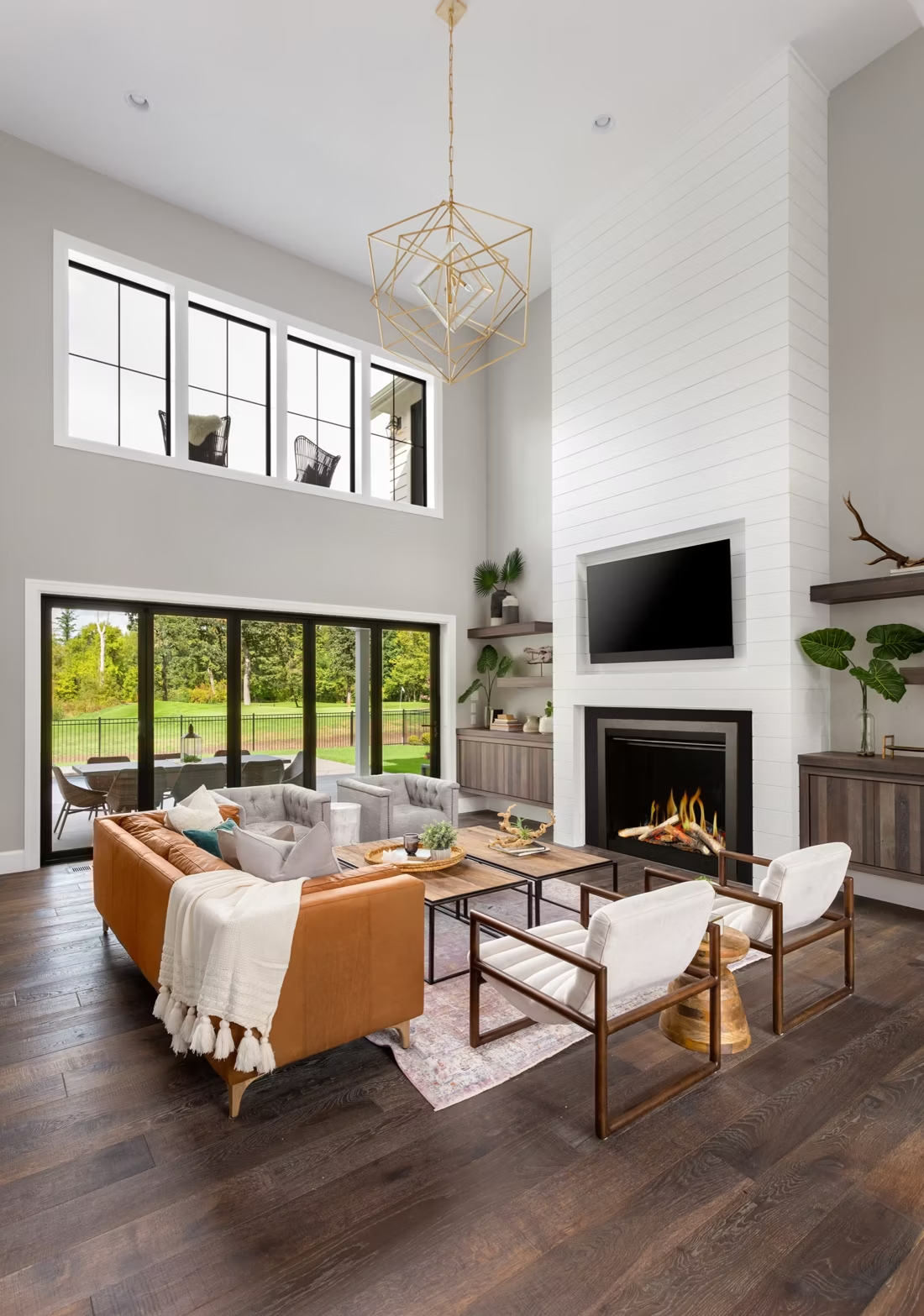
Four fuels. One honest answer for Barton County.
Three steps. No salesperson until you're ready.
Tell us about your project
Your zip code, your situation, and the fuel you're leaning toward—or let the answers point you to one.
See what's actually available
The brands dealers within 100 miles genuinely carry—real options, never a catalog mirage.
Get your dealer & Project Guide
A trusted local dealer, plus the free Project Guide & Parts List that names every component of the job.
Frequently Asked Questions
Which fuel works best in Barton County?
It depends on the home and how you use it. Wood is a strong fit for rural Barton County properties—abundant local oak, hickory, walnut, and maple keep fuel costs down for anyone with woodlot access or a chainsaw, and a well-run stove or insert handles the county's real, sustained November-to-March heating season without strain. Gas is the convenience choice in Lamar and other towns with propane or natural gas service—no wood handling, consistent heat, easy to run on a thermostat. Pellet splits the difference, offering wood-style ambiance with less labor; Lignetics and Indeck Energy Services both supply pellets into this part of Missouri. Electric fireplaces work well as supplemental heat in bedrooms or additions, but with winter lows only averaging around 22°F, they're rarely anyone's sole heat source here. Many Barton County homes pair wood or pellet as a primary heater with gas or electric for secondary rooms.
Do I need a permit to install a fireplace in Barton County?
In most cases, yes, though requirements are lighter here than in larger jurisdictions. New wood stoves, wood inserts, gas fireplaces, gas inserts, gas stoves, and pellet stoves generally need a building permit through the applicable city or the county, and gas installations require a licensed gas-fitter for the line connection. Within Lamar or Golden City, permits are handled at the city level; in unincorporated Barton County, you'll go through the county building office. Electric fireplaces usually skip the permit process unless you're hardwiring a built-in unit into a new circuit. Most local hearth retailers pull the permit as part of the installation, so it's rarely something you have to manage on your own.
Are there air quality restrictions on wood burning in Barton County?
No—Barton County doesn't have any winter inversion problems or non-attainment air quality designations, unlike smoke-prone basins in the Pacific Northwest or Intermountain West. There's no burn-ban or curtailment program here. That said, it's still worth installing an EPA-certified stove for efficiency and lower smoke output, since modern catalytic and non-catalytic units get significantly more heat out of the same cord of oak or hickory than an older uncertified stove. It's a fuel-economy argument here more than a regulatory one.
Can one local hearth retailer handle all four fuel types?
In a county of Barton's size—just over 6,400 people—most hearth retailers carry two to three fuel types rather than a full four-fuel lineup, since the customer base doesn't support the inventory of a large multi-fuel showroom. Some dealers based in Lamar cover wood, gas, and pellet as their core business, with electric fireplaces available as a secondary line more suited to smaller footprints and secondary rooms. If you're cross-shopping fuel types, ask up front what's in stock versus special-order—rural dealers in a county this size often bring in gas or pellet units to order rather than keeping large floor displays.
How does service work in rural areas of Barton County?
Most chimney sweeps and hearth technicians serving Barton County are based in or near Lamar and travel out to Golden City, Liberal, Mindenmines, and the farm roads in between. Expect a modest travel fee for the more remote calls. Scheduling annual chimney sweeping or gas inspection in the fall—before the first hard cold snap—is easier than trying to book a mid-January emergency visit. For farmhouse properties running wood as primary heat, keeping a spare stovepipe brush and basic tools on hand between professional sweeps isn't unusual, given the drive times involved.
What's the typical cost range for fireplace installation across all fuel types in Barton County?
Costs vary by fuel. Wood stove or insert installation: roughly $3,800–$8,000 for a typical install, more if new chimney or hearth work is required. Gas fireplace, insert, or stove: roughly $4,000–$9,500 depending on whether a new gas line has to be run. Pellet stove or insert: roughly $4,000–$6,500 for a standard install. Electric fireplace: $200–$2,800 for the unit itself, with $300–$1,000 in labor for anything beyond a simple plug-in setup. For more detail tied to local retailer pricing, see the county + fuel pages above.
Does a fireplace add value to my home?
On average, a fireplace adds back to the home about the same amount you spent installing it. Add the monthly savings from heating the rooms you actually use instead of the whole house—often hundreds of dollars a year—and the value case is strong before you even count what a fire does for how your family uses the room.
What is an in-home preview and do I need one?
It's a visit where a hearth professional measures your space, confirms the model you picked actually works in your home, and walks the specs—framing, gas line, venting, finish work—before anything is ordered. Some details you just can't know until you see the house. Never make a down payment without one; it's the single most-skipped step that burns buyers.
Wood, gas, pellet, or electric—how do I choose?
Match the fuel to your life, not the other way around. Wood: lowest fuel cost and total power-outage independence, but you're hauling and stacking. Gas: press a button, set a thermostat, no maintenance to speak of. Pellet: wood economics with automatic feeding, in exchange for weekly cleaning and a need for electricity. Electric: plugs in anywhere with honest supplemental heat. Nobody regrets the fuel that fits how they actually live.
I know I want a fireplace—where do I actually start?
Do two things today: snap a photo of the wall or fireplace you want to transform, and take a tape measure to the space—width, height, depth. Those two artifacts answer most of a hearth professional's first questions. Then settle fuel (wood, gas, pellet, or electric) and set a realistic budget: $3,900–$5,500 covers fireplace, vent, and basic install for most homes.
Stove and Fireplace Dealers in Barton County
Listings include WhyFire partner dealers, dealers we have verified as authorized for the brands we recommend, and established local businesses that carry hearth products. Every listing shows which one it is. The ones marked Preferred run on WhyFire's software, so they can show you real pricing and book your appointment right here. No manufacturer pays for placement. How we verify dealers →
The Fireplace And More Store
Flames For Home & Hearth
Find your fireplace in Barton County.
Pick your fuel below and I'll match you with a trusted local dealer and a free Project Guide & Parts List—the exact parts, vent kit included, plus the dealer I'd recommend for your home.
Find Your Fireplace →