
Instant heat and real ambiance for Washington County homes.
From Greenville to Leland, Hollandale, and Metcalfe, Delta winters are short and mild—but a gas fireplace still earns its place for cold snaps, ice storms, and everyday ambiance. Find the right unit and connect with a trusted local dealer.
Every Project Starts From One of These Five Situations
Zone heat that matches a mild Delta climate.
Washington County sits in the flat, fertile heart of the Mississippi Delta, with Greenville as the county seat and around 37,700 residents spread across Leland, Hollandale, Metcalfe, and the surrounding farmland. This is climate zone 3A—winters average a low of 34°F and the county's annual winter heating need adds up to only about 2,636 for the year, a fraction of what a place like Duluth, MN racks up in a single cold month. Hard freezes happen, but they're brief. That's a big part of why wood heat never took hold here as a primary fuel source the way it does farther north—local oak, pine, and pecan are common in yard trees and the occasional outdoor pit, but they're not stacked as winter fuel.
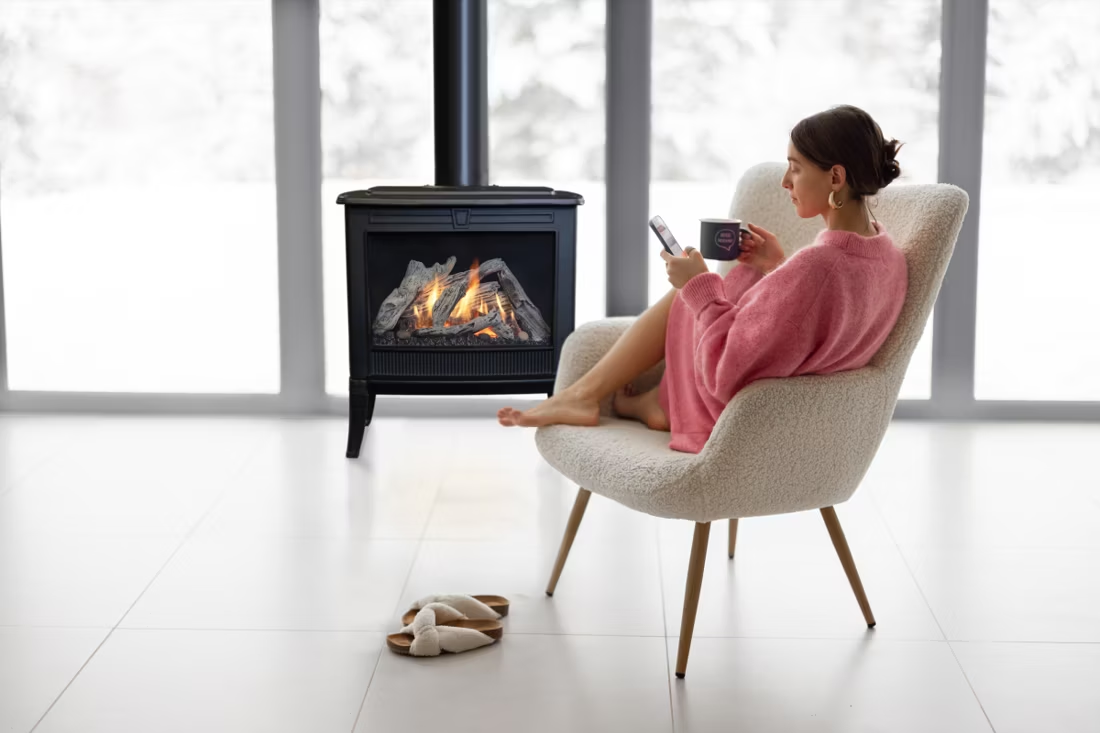
Gas fills that gap. Natural gas service reaches Greenville and the incorporated areas around it, with propane the standard fallback in unincorporated Delta communities like Metcalfe and Arcola. A direct-vent gas fireplace or insert gives Washington County homeowners instant heat on the handful of nights it actually gets cold, a reliable backup when winter ice storms knock out power on rural lines, and the kind of clean, always-ready ambiance that a wood fire here would rarely get enough use to justify. It's a fuel choice built for a climate where heating is occasional, not constant.
Three steps. No salesperson until you're ready.
Tell us about your project
Your zip code, your situation, and the fuel you're leaning toward—or let the answers point you to one.
See what's actually available
The brands dealers within 100 miles genuinely carry—real options, never a catalog mirage.
Get your dealer & Project Guide
A trusted local dealer, plus the free Project Guide & Parts List that names every component of the job.
Frequently Asked Questions
How much does a gas fireplace installation cost in Washington County?
A typical gas fireplace or insert installation in Washington County runs roughly $3,500 to $8,500, depending on the unit, whether a gas line already exists, and the venting path. A direct-vent insert going into an existing masonry fireplace in a Greenville home already plumbed for gas sits toward the lower end. New construction or a built-in unit in a remodel—with fresh gas line runs and framing—lands higher. Homes outside the natural gas footprint that need a new propane tank set will see additional cost for the tank and line work. A local dealer will give you a firm number after seeing the space.
Can I convert my existing fireplace to gas?
Yes, and it's a common project in Washington County's older homes, many of which have a masonry fireplace that rarely gets used for actual heat given how mild the winters run. A gas insert typically drops into that existing firebox and vents through the current chimney with a stainless liner, which keeps the cost down and the original mantel intact. Expect somewhere in the $4,000 to $7,500 range depending on the insert and whether you're on natural gas in Greenville or propane out in Leland or Hollandale. The result is a fireplace that's actually used, instead of one that sits cold most of the year.
Do I need natural gas, or can I use propane?
Either works, and which one you use mostly comes down to where you live. Natural gas service covers Greenville and its immediate surroundings, so homes already running gas appliances there can usually add a fireplace without much extra plumbing. Outside that footprint—much of unincorporated Washington County, including areas around Hollandale, Metcalfe, and Arcola—propane is the standard choice, supplied by tank from a local propane dealer. Most gas fireplace models can be set up for either fuel; your installer simply configures the correct orifice and regulator for the one you have.
Will my gas fireplace work if the power goes out?
Most modern gas fireplaces will, which matters in a county where winter ice storms occasionally take down rural power lines for a day or more. Units with intermittent pilot ignition include a battery backup that keeps the fireplace lighting on demand even with the power off—you just need to keep fresh batteries in the unit. Valor fireplaces handle it differently: their pilot assembly generates its own electricity through the thermocouple, so there are no batteries to maintain at all. If backup heat during an outage is a priority, ask your local dealer which ignition system a given model uses.
What's the difference between a gas fireplace, insert, and stove?
A gas fireplace is a fully built-in unit framed into a wall, typically chosen for new construction or a remodel. A gas insert is sized to slide into an existing masonry firebox, which is the more common route for Washington County's older homes with a fireplace already in place. A gas stove is a freestanding cast-iron or steel unit that sits out in the room rather than being built in—a good option if you don't have an existing chimney or fireplace opening to work with. For most homes here with an existing hearth, an insert is the straightforward upgrade.
Do I need a permit to install a gas fireplace in Washington County?
Yes. New gas fireplace installations require a building permit, and the gas line work requires its own permit pulled by a licensed gas-fitter. Inside city limits, that's handled through the City of Greenville's building and codes office; in unincorporated parts of the county it runs through the Washington County Building Department. A licensed hearth dealer typically handles all of this as part of the install, coordinating the gas line, venting, and inspection so you're not managing separate trades yourself.
Should I choose a vented or vent-free gas fireplace?
Vented (direct-vent or B-vent) units draw combustion air from outside and exhaust it back outside through sealed venting—they're the cleaner, more universally recommended option. Vent-free units burn directly into the room and release a small amount of water vapor and combustion byproducts indoors, which is a real consideration in a climate as humid as the Mississippi Delta's—added indoor moisture is the last thing most Washington County homes need during already-humid stretches of the year. Vent-free models are legal in Mississippi with proper room sizing and oxygen depletion sensors, but most local dealers steer homeowners toward direct-vent for both comfort and air quality reasons.
How often should a gas fireplace be serviced?
Plan on an annual inspection, ideally before the short Delta heating season ramps up in December. A technician checks the burner, pilot assembly, venting, and gas connections, and cleans the glass and interior—a much quicker visit than a wood chimney sweep, but just as important for safe operation. Local gas appliance service providers typically charge $150 to $250 for this visit, and it's worth keeping on a yearly schedule even though the unit may only run a few weeks a year.
Gas vs. electric fireplace—which makes more sense here?
Given how mild Washington County winters run—a 34°F average low and an annual heating need of only about 2,636—both are reasonable choices, and the decision usually comes down to what you want from the fireplace. Gas delivers real flame, real radiant heat, and can double as backup warmth during an ice-storm outage if you choose an IPI or Valor unit. Electric fireplaces need no venting or gas line at all, install almost anywhere with a standard outlet, and are the simpler pick for a bedroom or den where ambiance matters more than heat output. Wood and pellet stoves, by contrast, see very little use in this climate—the heating season is too short and mild to justify a cord of firewood or a pellet hopper for most households, so gas and electric are where nearly every local homeowner ends up.
Why is my open fireplace making my house colder?
Open fireplaces suck—literally. As the fire burns, it consumes air your furnace already paid to heat and pulls it out through the chimney, so the house is actually colder after the fire goes out than before you lit it. An insert fixes this: it seals the chimney, puts fixed glass across the front, and turns that hole in your house into a real heat source.
What's the difference between an insert and a zero-clearance fireplace?
An insert is a fireplace that slides into a pre-existing wood-burning fireplace—if you don't have one, there's nothing to insert it into. A zero-clearance fireplace is built into a framed wall, which makes it the answer for remodels and new construction. Simple test: existing masonry fireplace means insert; blank or framed wall means zero-clearance.
What is an in-home preview and do I need one?
It's a visit where a hearth professional measures your space, confirms the model you picked actually works in your home, and walks the specs—framing, gas line, venting, finish work—before anything is ordered. Some details you just can't know until you see the house. Never make a down payment without one; it's the single most-skipped step that burns buyers.
Does a fireplace add value to my home?
On average, a fireplace adds back to the home about the same amount you spent installing it. Add the monthly savings from heating the rooms you actually use instead of the whole house—often hundreds of dollars a year—and the value case is strong before you even count what a fire does for how your family uses the room.
Stove and Fireplace Dealers in Washington County
Listings include WhyFire partner dealers, dealers we have verified as authorized for the brands we recommend, and established local businesses that carry hearth products. Every listing shows which one it is. The ones marked Preferred run on WhyFire's software, so they can show you real pricing and book your appointment right here. No manufacturer pays for placement. How we verify dealers →
Perkins Farm Supply
Sayle Oil Company Inc.
Neill Gas
Allen's Of Durant Inc.
O'Neal Gas Inc.
Blossman Gas And Appliance
The Old Store
Sayle Oil Company Inc.
H&M Gas Company
Partridge Propane- Canton
Scott Petroleum
Madison Fireplace
Callaways Yard And Garden
O'Neal Gas
Builder’s Specialties Inc.
Neill Gas, Inc.
Lakeland Fireplaces LLC
Lampton-Love Gas Co., Inc.
Louisiana Stone
Blossman Gas - Jackson
Acme Brick
Dale's Camping Center
Find your gas fireplace in Washington County.
Tell us a bit about your home and we'll match you with a trusted local dealer and send over a free Project Guide & Parts List—the right unit, the vent kit, and everything needed to get it installed correctly.
Find Your Fireplace →