
Find your fireplace in Washington County.
From Greenville down through the Delta towns of Leland, Hollandale, and Arcola, we match homeowners with the local dealer who actually installs what fits their home and climate—no guesswork, no big-box lot.
Every Project Starts From One of These Five Situations
Mild Delta winters, 2,636 heating degree days, and a hearth market built around gas and electric.
Washington County sits in the heart of the Mississippi Delta, a flat alluvial plain built by centuries of river flooding, with Greenville as the county seat and roughly 37,700 residents spread across farmland and river towns like Leland, Hollandale, Metcalfe, Glen Allan, and Arcola. Winters here are short and mild—an average low of 34°F and just 2,636 heating degree days put the county in an entirely different heating-load category than the northern climates most hearth guidance is written for; Duluth, Minnesota logs more than five times that many heating degree days in an average winter. The bottomland hardwoods that ring the Delta's farm fields—oak, pine, and pecan—are common locally, but with a heating season this short, few households burn them as a primary fuel source.
That mild climate is the biggest thing shaping the hearth market here. There are no air-quality non-attainment concerns or wood-burning curtailment days to navigate, so the choice of fuel comes down to preference and practicality rather than regulation. Gas fireplaces are the standard choice in Greenville and the larger Delta towns, and electric units cover the rest—both are well suited to a county where you're heating a room for a handful of cold snaps and the occasional Delta ice storm rather than a five-month season. Pellet stoves have almost no local footing despite pellet brands like Lignetics, Hamer Pellet Fuel, and Greenway Renewable Energy operating in the broader region; those brands mostly serve colder markets to the north. Wood-burning fireplaces and stoves show up occasionally—mostly in older farmhouses, hunting camps along the river, or homes that want the look and feel of a wood fire more than the heat output—but they're the exception, not the default, in Washington County.
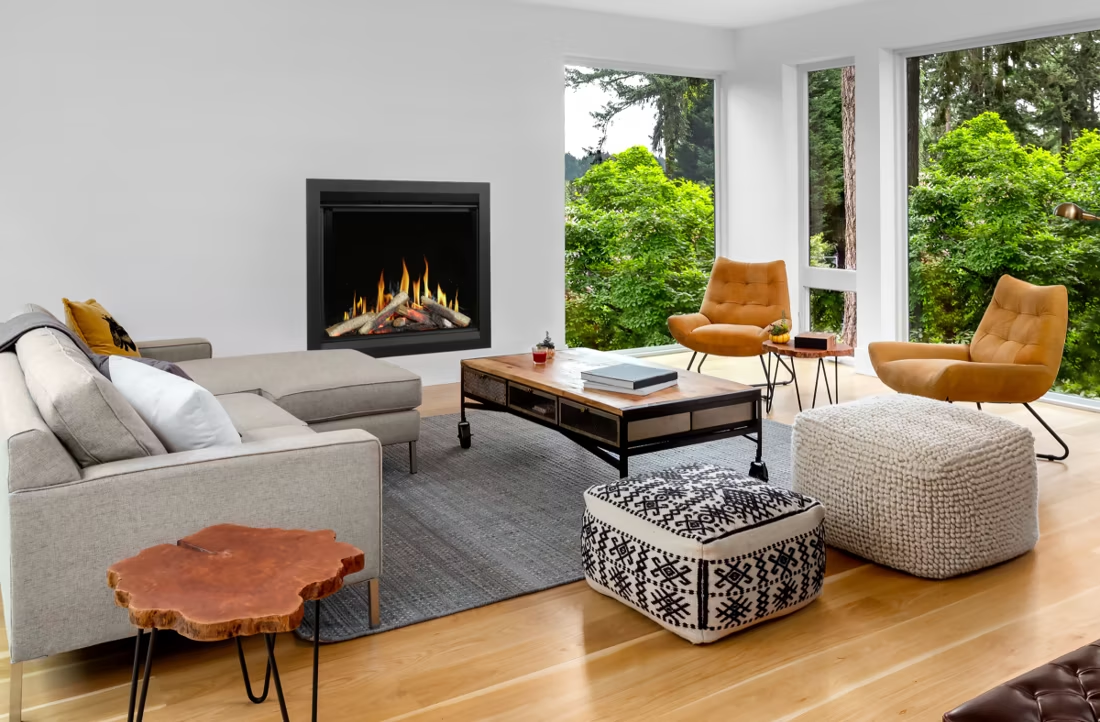
Four fuels. One honest answer for Washington County.
Wood
12 models available near Washington County.
Find your wood stove →Gas
See what's available near Washington County.
Find your gas fireplace →Pellet
See what's available near Washington County.
Find your pellet stove →Electric
See what's available near Washington County.
Find your electric fireplace →Three steps. No salesperson until you're ready.
Tell us about your project
Your zip code, your situation, and the fuel you're leaning toward—or let the answers point you to one.
See what's actually available
The brands dealers within 100 miles genuinely carry—real options, never a catalog mirage.
Get your dealer & Project Guide
A trusted local dealer, plus the free Project Guide & Parts List that names every component of the job.
Frequently Asked Questions
Which fireplace fuel makes the most sense in Washington County?
Gas and electric are the two fuels that actually fit how mild winters are here. With an average low of 34°F and only 2,636 heating degree days, most Washington County homes don't need—or want—a fuel source built for sustained sub-freezing cold. Gas fireplaces and inserts are common in Greenville, Leland, and Hollandale wherever gas service reaches, prized for instant on-off convenience during the county's short cold snaps. Electric fireplaces cover the rest of the market well, since they don't need to carry a heating load through months of hard freezes—they're a strong fit for supplemental warmth in a den or bedroom, or as the main hearth feature in newer construction. Wood-burning units are the outlier: a small number of rural homeowners and river camps still burn local oak, pine, or pecan, mostly for the look of a fire rather than as their heat source. Pellet stoves see almost no local demand, even though brands like Lignetics and Hamer Pellet Fuel distribute through the wider region.
Do I need a permit to install a gas or electric fireplace in Washington County?
Yes, for gas. Any new gas line or gas-fireplace install needs to go through the county building department for homes outside city limits, or through the City of Greenville's permitting office if you're inside town, and the gas connection itself has to be run by a licensed gas fitter—that's standard practice whether you're in Greenville, Leland, or out in the farmland. Electric fireplaces are simpler: a plug-and-play unit on an existing circuit usually doesn't need a permit, but a built-in electric fireplace that requires a new dedicated circuit will need an electrical permit and inspection. Most local retailers we match homeowners with handle this paperwork as part of the install, so it's rarely something you're chasing down on your own.
Are wood-burning fireplaces realistic in the Mississippi Delta?
They're workable, just uncommon as a primary heat source. There's no air-quality non-attainment designation and no curtailment restriction working against wood here—Washington County doesn't have the winter inversion problems that push some western counties toward pellet-only rules—so a wood stove or fireplace burning local oak, pine, or pecan is a legal and reasonable choice if that's what you want. What limits wood here isn't regulation, it's the math: with only 2,636 heating degree days and an average low of 34°F, a wood stove sits idle most of the year, which is why most Washington County wood installs we see are in older farmhouses, hunting camps, or homes that want the ambiance of a live fire more than a functional backup heat source.
I've seen pellet brands like Lignetics and Hamer Pellet Fuel around—does pellet heat make sense in Washington County?
Those brands are real and regionally distributed, but they're mostly serving colder markets north and west of the Delta, not the everyday Washington County homeowner. Pellet stoves need a heating season long enough to justify the equipment and the fuel storage, and at 2,636 heating degree days, this county's season is roughly a fifth of what a place like Fargo, North Dakota sees in an average winter. A handful of local buyers still choose pellet for the clean, steady flame and low mess, but it's a niche pick here rather than a mainstream one—most Washington County dealers we work with lean their inventory toward gas and electric instead.
Can an electric fireplace actually keep a room warm during a Washington County winter?
For most rooms, yes. Electric fireplaces are typically rated for a few thousand BTUs of supplemental heat, and that's genuinely enough to carry a bedroom, den, or sunroom through the county's short cold snaps—the kind of weather where temperatures dip into the 20s and 30s overnight rather than staying there for months. Because Washington County's heating season is so mild compared to a place like Buffalo, New York, an electric unit doesn't need to do the heavy lifting a whole-home heat source would elsewhere; it just needs to take the edge off during a Delta cold front or an ice storm when the primary heat is working overtime. For a larger open floor plan, pairing electric with your existing gas or central heat still makes more sense than expecting one electric insert to cover the whole house.
What does a fireplace installation typically cost in Washington County?
Gas fireplace and insert installs generally run $4,000–$9,000, with the higher end covering a new gas line run from the meter for homes that don't already have one nearby. Electric fireplaces are the more affordable option—$200–$2,500 for the unit depending on style, plus $300–$1,000 in labor if you're wiring in a built-in rather than plugging in a freestanding model. Wood-burning installs, for the smaller number of buyers who want one, typically land at $4,500–$8,500 once you account for a masonry or factory-built chimney system, since most Delta homes don't already have a chimney in place. Pellet stove installs run similarly to wood but are rare enough locally that pricing is usually quoted case-by-case by whichever dealer stocks one.
Can I install a fireplace myself?
If you're putting a fire in your house on purpose, it's best to work with an expert. Unless you're genuinely experienced in framing, gas line, vent pipe, and the national code on clearances to combustibles, have a professional do it—and ideally the same company that sells you the fireplace, so warranty, service, and liability all live under one roof.
Wood, gas, pellet, or electric—how do I choose?
Match the fuel to your life, not the other way around. Wood: lowest fuel cost and total power-outage independence, but you're hauling and stacking. Gas: press a button, set a thermostat, no maintenance to speak of. Pellet: wood economics with automatic feeding, in exchange for weekly cleaning and a need for electricity. Electric: plugs in anywhere with honest supplemental heat. Nobody regrets the fuel that fits how they actually live.
How much should I budget for a fireplace?
For an average home—covering the fireplace, the vent pipe, and basic installation—a budget between $3,900 and $5,500 gives you a lot of options across wood, gas, and pellet. By the time you add finish work, gas line, and electrical, the average complete installation lands between $5,000 and $12,000 all-in. In a remodel or new build, a good rule is to put about 2.5% of the total project cost toward the fireplace.
What are the biggest mistakes people make buying a fireplace?
Five come up constantly: budgeting for the unit but not the full job (vent, gas line, electrical, finish work); drowning in options instead of starting from style and fuel; buying without an in-home preview; handing installation to a handyman instead of a pro; and giving up out of sheer indecision. Every one is avoidable with a clear plan—step one, step two, step three.
Stove and Fireplace Dealers in Washington County
Listings include WhyFire partner dealers, dealers we have verified as authorized for the brands we recommend, and established local businesses that carry hearth products. Every listing shows which one it is. The ones marked Preferred run on WhyFire's software, so they can show you real pricing and book your appointment right here. No manufacturer pays for placement. How we verify dealers →
Perkins Farm Supply
Sayle Oil Company Inc.
Neill Gas
Allen's Of Durant Inc.
O'Neal Gas Inc.
Blossman Gas And Appliance
The Old Store
Sayle Oil Company Inc.
H&m Gas Company
Partridge Propane- Canton
Scott Petroleum
Madison Fireplace
Callaways Yard And Garden
O'Neal Gas
Builder’s Specialties Inc.
Neill Gas, Inc.
Lakeland Fireplaces LLC
Lampton-Love Gas Co., Inc.
Louisiana Stone
Blossman Gas - Jackson
Acme Brick
Dale's Camping Center
Get matched with a local Washington County dealer.
Tell us about your home in Greenville, Leland, or anywhere else in Washington County, and we'll put together a free Project Guide & Parts List—the right unit for a mild Delta winter, the parts it needs, and the local dealer we recommend for your project.
Find Your Fireplace →