
Warm up your Washington County home without a single wood log.
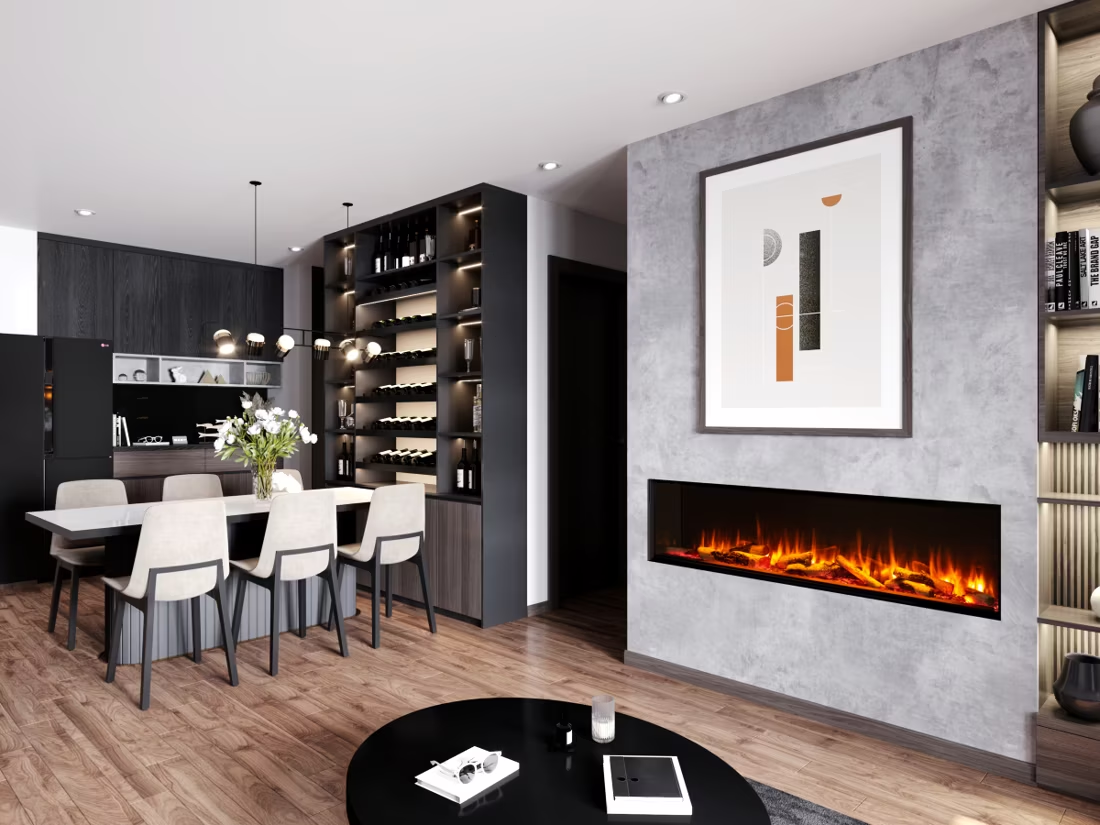
With winter lows averaging 34°F and only a short, mild winter heating season each year, most Washington County homes need supplemental warmth and ambiance—not a wood-burning furnace. Electric fireplaces deliver both, with no chimney and no gas line required.
Every Project Starts From One of These Five Situations
Mild Delta winters call for modern electric heat.
Washington County sits in the heart of the Mississippi Delta, with Greenville as its largest city and a climate that rarely demands the kind of aggressive heating a place like Fargo, ND or Burlington, VT needs to survive January. At climate zone 3A with a short, mild winter heating season and average winter lows around 34°F, the county's heating season is short and mild by national standards. That's exactly the profile where an electric fireplace shines—it's not being asked to replace a furnace, it's being asked to take the chill off a room on the handful of genuinely cold nights and add real fire-like ambiance the rest of the year.
Oak, pine, and pecan grow throughout the Delta and plenty of historic Greenville homes still have a fireplace opening or chimney from an earlier era, but active wood burning has fallen off here—the climate simply doesn't call for it the way it does further north, and there are no local air quality restrictions pushing homeowners toward or away from any particular fuel. Electric service throughout the county runs through Entergy Mississippi in and around Greenville, with Delta Electric Power Association serving many of the county's rural areas—either way, plugging in or hardwiring a fireplace insert is straightforward, and a local dealer can tell you whether your home's existing circuit can handle it or whether a dedicated line makes sense.
Three steps. No salesperson until you're ready.
Tell us about your project
Your zip code, your situation, and the fuel you're leaning toward—or let the answers point you to one.
See what's actually available
The brands dealers within 100 miles genuinely carry—real options, never a catalog mirage.
Get your dealer & Project Guide
A trusted local dealer, plus the free Project Guide & Parts List that names every component of the job.
Frequently Asked Questions
How much does an electric fireplace installation cost in Washington County?
Costs vary a lot by type. A plug-in electric insert that drops into an existing masonry fireplace opening typically runs $400 to $1,500 installed, since there's no venting or gas line to run—just fitting the unit and confirming the outlet is adequate. A built-in wall unit or a linear electric fireplace set into new framing runs higher, often $1,500 to $3,500, because it usually involves a licensed electrician running a dedicated 120V or 240V circuit, plus any trim carpentry. Homes in older Greenville neighborhoods with original knob-and-tube or aluminum wiring sometimes need panel or circuit upgrades first, which a local dealer will flag during a home visit rather than after the unit is already on the wall.
What size electric fireplace do I need for my room?
Because Washington County's heating need is modest—average winter lows only dip to the mid-30s—most homeowners here are sizing for the room, not the whole house. A 30 to 40-inch insert or wall unit comfortably supplements a living room or den in a typical Delta home, while a 50-inch-plus linear unit suits open-concept spaces or larger rebuilt farmhouses outside Greenville. Unlike a wood stove where undersizing means you're cold, an undersized electric unit just means less visual impact and less supplemental heat on a cool February evening—it won't leave you creosote-caked or smoking out the room. A local dealer will walk your space and match wattage and screen size to the room rather than guessing off square footage alone.
Do I need a permit or an electrician to install an electric fireplace?
It depends on the unit. A freestanding or plug-in electric insert that uses a standard household outlet generally doesn't require a permit—it's treated like any other large appliance. A built-in electric fireplace that needs a new dedicated circuit does require an electrical permit, typically pulled through the City of Greenville Building Department if you're inside city limits, or Washington County's building office if you're outside them. Either way, a licensed electrician should handle any new wiring—Delta housing stock includes a lot of older homes where panel capacity and wiring condition matter more than the fireplace brand itself.
What's the difference between an electric insert, a built-in unit, and a wall-mounted fireplace?
An electric insert is built to slide into an existing fireplace opening, which is common in Greenville's older homes with unused wood-burning fireboxes—it reuses the opening you already have. A built-in electric fireplace is designed to be framed into a wall during a remodel or new build, giving a flush, custom look with no visible unit. A wall-mounted fireplace hangs directly on the wall like a large flat-screen TV, requiring only a bracket and power source, and it's popular in newer construction or apartments around the county where landlords want zero structural changes. Which one fits depends on whether you're retrofitting an old firebox or starting from a blank wall.
Will an electric fireplace actually heat my home in Washington County winters?
For most of the county's climate, yes—as supplemental heat. With only a short, mild winter heating season each year and winter lows that rarely drop much below the low 30s, an electric fireplace with a 4,000 to 5,000-watt heater can noticeably warm a single room during the cold snaps that do come through, often paired with central HVAC for the rest of the house. It's not designed to replace your furnace on a whole-home basis the way a wood stove might in a place like Duluth, MN—it's designed to let you turn off central heat in one room and rely on the fireplace instead, which is exactly how most Delta homeowners use them.
Electric vs. gas fireplace—which is right for my Washington County home?
Gas fireplaces, run on natural gas where Atmos Energy serves Greenville or on propane elsewhere in the county, put out more real heat and give you a live flame, but they require venting and periodic service. Electric units skip the venting and gas line entirely, cost less to install, and can go anywhere there's a power source—a real advantage in older Delta homes where running new gas line or venting through brick walls gets expensive fast. Given how mild Washington County winters run, many homeowners here choose electric specifically because they're after the look and light supplemental warmth of a fire, not maximum BTU output. If you want a stronger, more traditional flame and heat output, gas is the better call; if you want simple installation and flexibility, electric usually wins.
Can I install an electric fireplace in a historic Greenville home or a rental?
Yes, and it's one of the more common reasons homeowners in the county's older neighborhoods choose electric over gas or wood. Because there's no chimney work, no masonry cutting, and often no permanent alteration required with a plug-in insert or wall-mounted unit, it's a low-risk option for historic homes with original fireplace openings you don't want to modify structurally, and for rental properties where landlords want a fireplace amenity without permanent gas or wood installation. A local dealer can recommend units specifically designed to slide into older, non-standard firebox openings common in Greenville's historic housing stock.
Does an electric fireplace work during a power outage?
No—unlike a wood stove, an electric fireplace needs power to run, so it won't provide heat during an outage. This matters more in parts of Washington County served by Delta Electric Power Association's rural lines, where storm-related outages can occasionally run longer than in town. If backup heat during outages is a real priority for your household, that's worth discussing with a local dealer—some homeowners pair an electric fireplace for everyday ambiance and easy supplemental heat with a small generator or a separate propane heater for true outage backup, rather than relying on the fireplace itself.
Why don't more Washington County homes use wood or pellet stoves?
It comes down to climate. With winter lows averaging around 34°F and a heating season a fraction as long as northern states like Minnesota or Montana, the Delta simply doesn't generate the sustained cold that makes wood or pellet heat worth the chimney, venting, and fuel handling for most homeowners—even though oak, pine, and pecan are all common local wood species. A small number of rural properties still keep an old wood-burning fireplace for occasional atmosphere, but it's not a primary heating strategy here the way it is farther north. Electric and gas cover the vast majority of Washington County's real heating and ambiance needs.
Does an electric fireplace need a vent or chimney?
No—that's its superpower. An electric fireplace needs a wall and an outlet, period. No vent pipe, no gas line, no clearances to design around, which is why it works in bedrooms, offices, apartments, and walls where venting a gas or wood unit would be impractical or impossible. Installation is typically the simplest and least expensive of any fireplace type.
Can I put a TV above my fireplace?
Yes—with an asterisk. Fireplaces are hot and TVs don't like heat. Either put a mantel between them to deflect rising warmth, or choose a fireplace with heat-management technology that creates a cool zone on the wall above—the wall stays around 125 degrees, barely warm, while the room still gets full heat. If you like clean lines and don't want a mantel, heat management is the answer.
What is an in-home preview and do I need one?
It's a visit where a hearth professional measures your space, confirms the model you picked actually works in your home, and walks the specs—framing, gas line, venting, finish work—before anything is ordered. Some details you just can't know until you see the house. Never make a down payment without one; it's the single most-skipped step that burns buyers.
Can a fireplace actually lower my heating bill?
Yes—by creating a comfort zone. A furnace heats every square foot of the house just to warm the one room you're in; a gas fireplace on low burns roughly a sixth of the gas a typical furnace does. Set the furnace around 55–60 degrees as a baseline, then heat the rooms your family actually uses. Families who heat this way commonly save $20–$60 a month.
Stove and Fireplace Dealers in Washington County
Listings include WhyFire partner dealers, dealers we have verified as authorized for the brands we recommend, and established local businesses that carry hearth products. Every listing shows which one it is. The ones marked Preferred run on WhyFire's software, so they can show you real pricing and book your appointment right here. No manufacturer pays for placement. How we verify dealers →
Perkins Farm Supply
Sayle Oil Company Inc.
Neill Gas
Allen's Of Durant Inc.
O'Neal Gas Inc.
Blossman Gas And Appliance
The Old Store
Sayle Oil Company Inc.
H&M Gas Company
Partridge Propane- Canton
Scott Petroleum
Madison Fireplace
Callaways Yard And Garden
O'Neal Gas
Builder’s Specialties Inc.
Neill Gas, Inc.
Lakeland Fireplaces LLC
Lampton-Love Gas Co., Inc.
Louisiana Stone
Blossman Gas - Jackson
Acme Brick
Dale's Camping Center
Find your electric fireplace in Washington County.
Tell us a bit about your home and we'll put together a free Project Guide & Parts List for your Washington County electric fireplace project—matched with a trusted local dealer who can confirm your wiring, size the unit, and get it installed correctly.
Find Your Fireplace →