
Keep Your Family Warm and Safe—No Matter What
Tupelo winters rarely demand a wood stove to stay warm—but for ice storm backup, a hunting cabin, or the look of a real hearth, a properly installed unit still makes sense. We'll connect you with a local dealer who can size it right.
Every Project Starts From One of These Five Situations
Wood heat isn't the norm here—and that's fine.
Tupelo sits at 275 feet in the Mississippi hill country, in climate zone 3A with a mixed-humid classification. The winter heating load here is modest—less than half of what a place like Bismarck, ND or Duluth, MN sees—and winter lows average a mild 32°F. Gas and electric heat cover the vast majority of homes in Lee County for good reason: you simply don't need to feed a firebox to make it through a Tupelo winter.
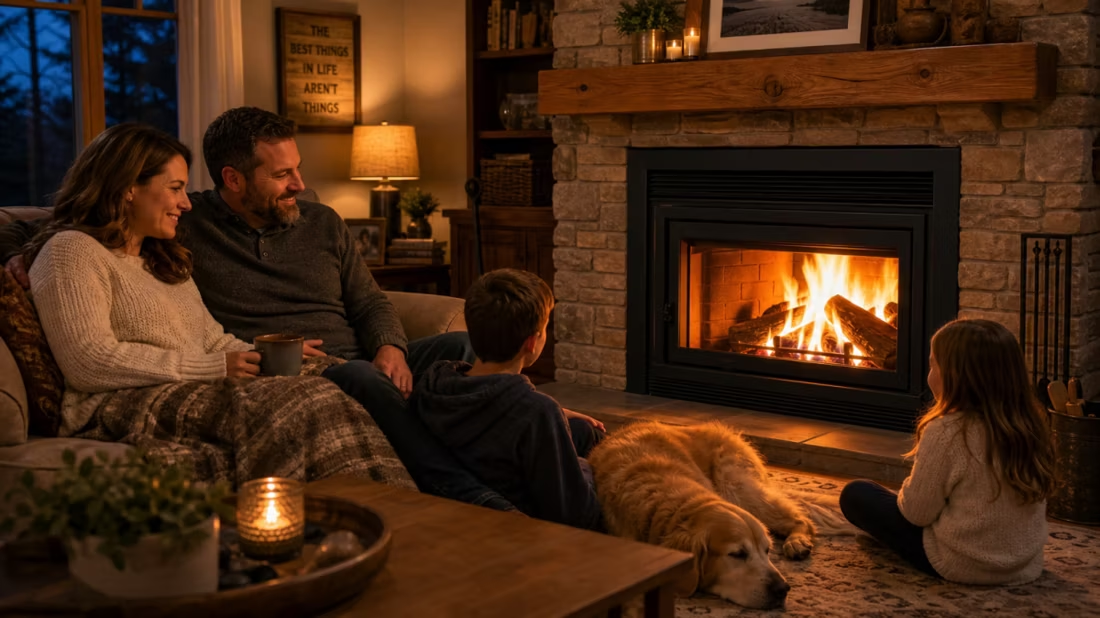
That doesn't mean wood is off the table. Plenty of Tupelo homeowners still want the look and feel of a real fireplace, and some want a stove specifically as backup heat for the occasional ice storm that knocks out power across northeast Mississippi—the region has seen serious ice events that left parts of Lee County without electricity for days. Locally available oak, pine, and pecan (pecan orchards are common around the area and produce dense, long-burning splits) all season and burn well. If a wood fireplace or stove is what you want—for ambiance, resale appeal, or emergency backup—a trusted local dealer can install it correctly even though it's not the default heating choice here.
Three steps. No salesperson until you're ready.
Tell us about your project
Your zip code, your situation, and the fuel you're leaning toward—or let the answers point you to one.
See what's actually available
The brands dealers within 100 miles genuinely carry—real options, never a catalog mirage.
Get your dealer & Project Guide
A trusted local dealer, plus the free Project Guide & Parts List that names every component of the job.
Frequently Asked Questions
How much does a wood stove or fireplace installation cost in Tupelo?
Expect somewhere in the $3,500 to $8,000 range for a freestanding wood stove or a factory-built wood fireplace in a Tupelo home, depending on whether you're adding a new chase and chimney or working with an existing masonry opening. Because wood heat isn't common demand here the way it is in colder states, fewer dealers stock wood-burning units compared to gas—expect to work with a regional hearth retailer who special-orders the stove or insert you want and handles the Class A chimney venting, which is really the bulk of the labor cost in a mixed-humid climate like this one.
Do I actually need a wood stove to heat my Tupelo home?
Almost certainly not as a primary heat source. With a winter heating load less than half that of a Duluth, MN or Fargo, ND home and winter lows averaging 32°F, Tupelo's heating needs are much lighter. Central gas and electric heat pumps handle the vast majority of homes here comfortably and affordably. Wood makes sense in Tupelo as a supplemental or backup source—not because the climate demands it.
Can I still get a wood-burning fireplace installed if I just want the look and feel?
Yes. A number of Tupelo homeowners choose a wood-burning fireplace purely for ambiance, resale value, or the tradition of a real fire on the rare cold night—even though the climate doesn't require it. In these cases sizing is less about BTU output and more about matching the firebox to the room and making sure the chimney draft is sound. A local dealer can walk you through freestanding stove options versus a built-in masonry or factory-built fireplace based on what you're actually going for.
What firewood species are available locally, and how do I season them?
Oak, pine, and pecan are the three most common woods around Lee County. Oak is the workhorse—split and stack it 6 to 12 months before burning. Pecan, thanks to the orchards scattered around northeast Mississippi, burns dense and hot with a pleasant aroma, similar to hickory. Pine is plentiful and easy to source but needs a full season (sometimes longer in Mississippi's humidity) to dry out sap content before it burns cleanly—green pine in a Tupelo summer humidity level can take longer to season than the same wood in a drier climate.
Is a wood stove worth it just for ice storm backup power outages?
For some homeowners, yes. Lee County and the surrounding region have been hit by significant ice storms that knocked out power for days at a time, and a wood stove is one of the few heating appliances that keeps working with zero electricity. If backup heat during outages is your main motivation rather than daily use, a smaller freestanding stove sized for one or two rooms is usually the more practical (and more affordable) choice than a whole-house unit you'll rarely need at full output.
Do I need a permit to install a wood stove in Tupelo?
Yes—new wood-burning appliance installations typically require a building permit through the City of Tupelo Building Department, or the Lee County Building Department if you're outside city limits. Because Mississippi doesn't have the wintertime air-quality inversion issues you see in mountain-basin cities out West, there are no wood-burning curtailment periods or non-attainment restrictions to worry about here—the permit process is mainly about verifying clearances, hearth pad sizing, and proper Class A chimney venting.
Will my homeowners insurance require anything special for a wood stove?
Most insurers serving the Tupelo area will ask for proof of a permitted, code-compliant installation before adding a wood-burning appliance to your policy, and some require a WETT or NFI-style inspection afterward. Because wood stoves are less common in this part of Mississippi than gas inserts, it's worth calling your carrier before installation to confirm what documentation they'll want—a certified local installer can typically provide the paperwork you need.
How often does a wood stove need chimney service if I only use it occasionally?
Even light or occasional use—a handful of fires a year for ambiance, or standby use during ice storm season—warrants an annual inspection before burning season starts. Creosote buildup happens more slowly with infrequent use, but Mississippi's humidity can accelerate corrosion and moisture issues in unused flues between seasons, so a yearly check is still the right call rather than skipping years.
Wood vs. gas vs. electric—what actually makes sense for a Tupelo home?
For year-round comfort, gas and electric are the practical choices in Tupelo, and that's reflected in how common they are locally—both Tombigbee Electric Power Association and the City of Tupelo utility serve the area at roughly $0.11 to $0.12 per kWh, and gas fireplaces or heat pumps handle daily heating without any fuel storage or ash cleanup. Wood earns its place here for a different reason: it's the one option that still works when an ice storm takes the power grid down, and it delivers the ambiance a gas insert can't fully replicate. Many Tupelo homeowners who want a wood-burning fireplace are adding it as a second appliance alongside gas or electric as their main heat, not replacing it.
Why won't my new wood stove get going like my old one?
New wood stoves are 70%+ efficient, so far less heat goes up the flue—which also means less draft to get a fire established. The rule: build a genuinely hot fire for about 45 minutes before you choke it down. Skip that and you get smoke in the room, creosote in the chimney, and a fire that never takes off. Most performance complaints trace straight back to this.
Why is my open fireplace making my house colder?
Open fireplaces suck—literally. As the fire burns, it consumes air your furnace already paid to heat and pulls it out through the chimney, so the house is actually colder after the fire goes out than before you lit it. An insert fixes this: it seals the chimney, puts fixed glass across the front, and turns that hole in your house into a real heat source.
How much should I budget for a fireplace?
For an average home—covering the fireplace, the vent pipe, and basic installation—a budget between $3,900 and $5,500 gives you a lot of options across wood, gas, and pellet. By the time you add finish work, gas line, and electrical, the average complete installation lands between $5,000 and $12,000 all-in. In a remodel or new build, a good rule is to put about 2.5% of the total project cost toward the fireplace.
Can a fireplace actually lower my heating bill?
Yes—by creating a comfort zone. A furnace heats every square foot of the house just to warm the one room you're in; a gas fireplace on low burns roughly a sixth of the gas a typical furnace does. Set the furnace around 55–60 degrees as a baseline, then heat the rooms your family actually uses. Families who heat this way commonly save $20–$60 a month.
Nearby Dealers
Hearth shops serving Tupelo and the surrounding area.
Find your wood fireplace in Tupelo.
Tell us about your home and what you're after—ambiance, backup heat, or both—and we'll match you with a trusted local dealer and a free Project Guide & Parts List for your Tupelo wood fireplace project.
Find Your Fireplace →