
Instant Warmth for Tupelo's Mild Winters.
Northeast Mississippi doesn't need a woodpile to stay warm—it needs a gas fireplace that lights instantly on the handful of nights it actually matters. Find the right unit and get matched with a trusted Lee County dealer.
Every Project Starts From One of These Five Situations
Ambiance-first heat for a mild-winter market.
Tupelo sits at 275 feet in the Mississippi hill country, in climate zone 3A, with an average winter low around 32°F and a mild, short winter heating season—about half the heating load of a place like Madison, WI. Winters here are short, and most days a furnace handles things fine. But Lee County still sees the occasional Arctic blast that drops temperatures into the teens for a few days, plus the ice storms that periodically knock out power across the Tombigbee Electric Power Assn and City of Tupelo service areas. That combination is exactly why gas fireplaces are common here—not as a primary heat source, but as instant, reliable supplemental warmth and a hedge against outages.
In-town Tupelo neighborhoods generally have access to natural gas service, making a direct-vent gas insert or built-in fireplace a straightforward retrofit into an existing gas line. Out in the surrounding Lee County communities, propane is the more typical fuel, supplied by a local tank and delivery service rather than a utility main. Either way, the most common projects we see locally are gas log conversions in older masonry fireplaces near downtown Tupelo and direct-vent inserts and built-ins in the newer subdivisions around Saltillo, Guntown, and Verona.
Three steps. No salesperson until you're ready.
Tell us about your project
Your zip code, your situation, and the fuel you're leaning toward—or let the answers point you to one.
See what's actually available
The brands dealers within 100 miles genuinely carry—real options, never a catalog mirage.
Get your dealer & Project Guide
A trusted local dealer, plus the free Project Guide & Parts List that names every component of the job.
Frequently Asked Questions
How much does a gas fireplace installation cost in Tupelo?
Most Tupelo installations run somewhere between $3,500 and $8,500. A direct-vent gas log set or insert into an existing masonry fireplace with a gas line already nearby lands on the lower end. A new built-in gas fireplace in a remodel or new-construction home—where venting has to be run through an exterior wall or roof and a fresh gas line installed—pushes toward the higher end. Homes on propane in outlying Lee County sometimes see a bit more cost if a new tank has to be set. A local dealer will give you a firm number after seeing your home.
Do I need natural gas, or is propane the better option in Tupelo?
Both are common depending on where you live. Inside Tupelo city limits, natural gas service reaches most established neighborhoods, so if your home already has gas for a water heater or range, adding a fireplace is usually a simple tap-in. Outside the city—in the more rural stretches of Lee County—propane is the standard, supplied by a local delivery company with either a buried or above-ground tank. Nearly every gas fireplace on the market can be set up for either fuel; your installer just configures the correct orifice and regulator for whichever you have.
Will my gas fireplace still work if an ice storm knocks out power?
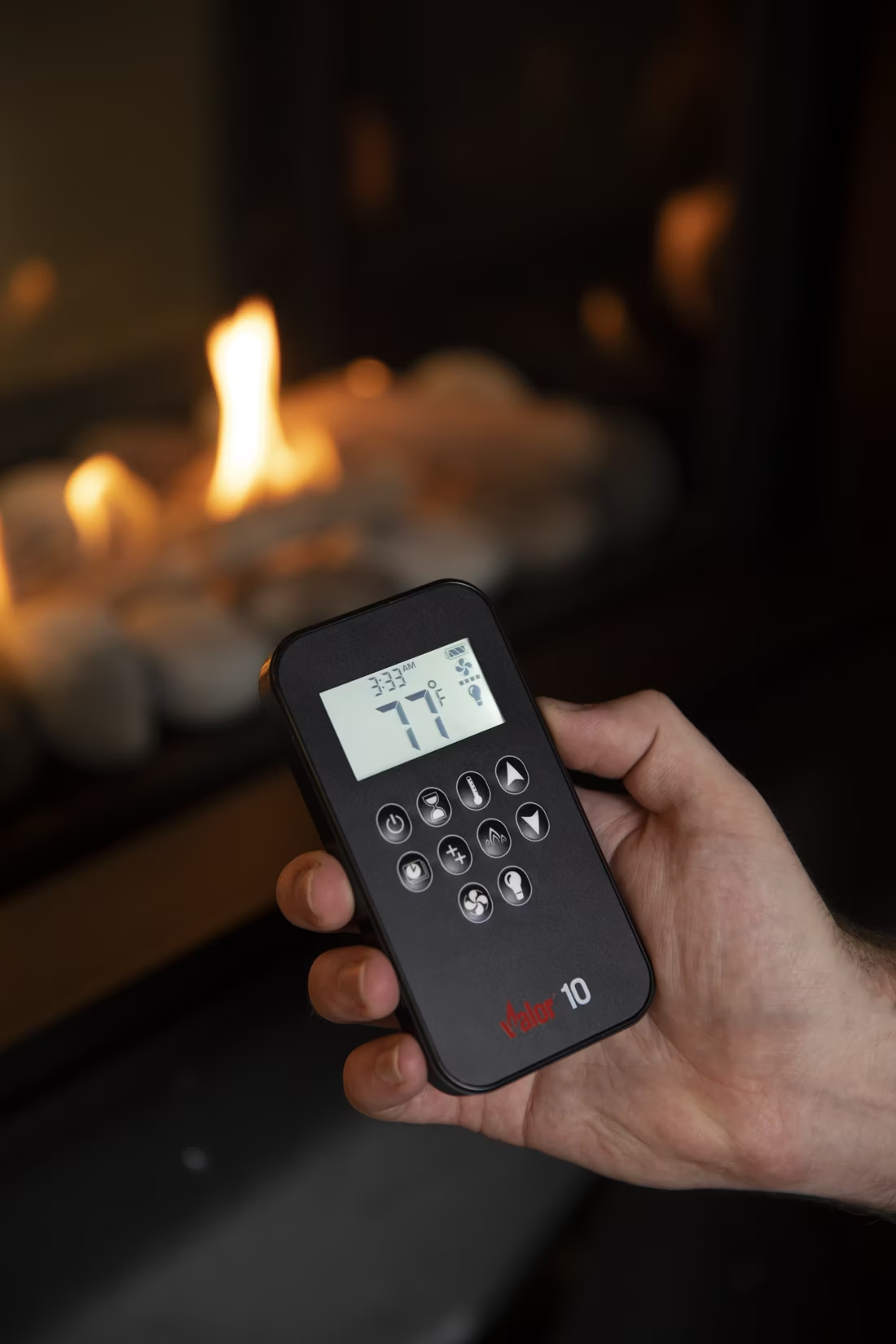
It depends on the ignition system, and this matters more in Lee County than you'd think—ice storms here have taken down power across the Tombigbee Electric Power Assn service area for days at a stretch. Units with intermittent pilot ignition (IPI) run on AA batteries that kick in automatically when the power drops, so the fireplace keeps working as long as the batteries are fresh. Valor fireplaces go a step further: the pilot's thermocouple generates its own electricity, so there's no battery to check or replace at all. If backup heat during outages is a priority, ask your local dealer specifically about the ignition type before you buy.
What's the difference between a gas fireplace, insert, and stove?
A gas fireplace is a fully built-in unit framed into a wall—the right call for new construction or a remodel without an existing hearth. A gas insert slides into an existing masonry fireplace opening and uses your current chimney (lined) or a direct-vent kit to exhaust safely, which is the most common upgrade for Tupelo's older brick-fireplace homes near downtown. A gas stove is a freestanding cabinet-style unit that sits on the floor, useful in a room without any existing fireplace opening. For most Tupelo homeowners with an old wood-burning fireplace they no longer use, an insert is the straightforward answer.
Do I need a permit to install a gas fireplace in Tupelo?
Yes. Work inside city limits goes through the City of Tupelo Building Department, and homes elsewhere in Lee County go through the county building office—both require a permit for the appliance install and a separate check on the gas line work, which has to be done by a licensed gas-fitter. A reputable local hearth dealer coordinates the permitting, the gas line, and the final inspection as part of the job, so you're not left managing three different trades yourself.
Are vent-free gas fireplaces legal to install in Tupelo?
Yes—Mississippi doesn't restrict vent-free (ventless) gas units the way states like California or Colorado do. Vent-free fireplaces burn gas directly into the room without exterior venting, which makes them cheap to install but means they release some water vapor and combustion byproducts indoors, so they come with strict room-sizing and oxygen-depletion-sensor rules. Vented direct-vent units, which draw combustion air from outside and exhaust it back outside, are the more common recommendation for full-time use and are what most Tupelo dealers install by default. Vent-free tends to show up more in cabins, sunrooms, or supplemental spaces.
How often does a gas fireplace need to be serviced?
Plan on an annual inspection, even though gas units need far less attention than a wood-burning chimney. A technician checks the burner, pilot assembly, gas connections, and venting, and cleans the glass and interior—typically a $150 to $250 visit. Because Tupelo's mild winters mean many gas fireplaces sit unused for months at a stretch, that yearly check is also when a technician catches spider nests or debris in the vent termination before the first cold snap of the season.
Would a wood fireplace make more sense than gas in Tupelo?
For most Tupelo homes, no—and that's a fair thing to say plainly. With only a mild, short winter heating season and a mild winter low near 32°F, wood heat here is mostly nostalgic rather than functional; oak, pine, and pecan are the traditional local firewoods, but few homeowners want to manage a woodpile for the handful of genuinely cold nights each winter. Most people with an old masonry fireplace convert it to gas logs or a gas insert rather than keep burning wood, trading the ritual of a real fire for something that lights with a switch and doesn't need tending. If ambiance without any wood handling is the goal, gas logs in your existing fireplace are usually the easiest upgrade.
Gas vs. electric fireplace—which fits my Tupelo home better?
Gas delivers real, radiant heat and the look of an actual flame, and with a battery-backup or Valor ignition it keeps working through the ice-storm outages that periodically hit Tombigbee Electric Power Assn and City of Tupelo customers. Electric fireplaces cost far less to install, need no gas line or venting at all, and are simple to add to a bedroom or den for supplemental warmth—running at roughly 11 to 12 cents per kWh locally, they're inexpensive to operate for occasional use but won't function if the power's out, which is exactly when Lee County households tend to want backup heat most. For a primary living space, gas is usually the better long-term fit; for a secondary room where installation simplicity matters more, electric is hard to beat.
Why is my open fireplace making my house colder?
Open fireplaces suck—literally. As the fire burns, it consumes air your furnace already paid to heat and pulls it out through the chimney, so the house is actually colder after the fire goes out than before you lit it. An insert fixes this: it seals the chimney, puts fixed glass across the front, and turns that hole in your house into a real heat source.
Can I put a TV above my fireplace?
Yes—with an asterisk. Fireplaces are hot and TVs don't like heat. Either put a mantel between them to deflect rising warmth, or choose a fireplace with heat-management technology that creates a cool zone on the wall above—the wall stays around 125 degrees, barely warm, while the room still gets full heat. If you like clean lines and don't want a mantel, heat management is the answer.
Can I install a fireplace myself?
If you're putting a fire in your house on purpose, it's best to work with an expert. Unless you're genuinely experienced in framing, gas line, vent pipe, and the national code on clearances to combustibles, have a professional do it—and ideally the same company that sells you the fireplace, so warranty, service, and liability all live under one roof.
Does a fireplace add value to my home?
On average, a fireplace adds back to the home about the same amount you spent installing it. Add the monthly savings from heating the rooms you actually use instead of the whole house—often hundreds of dollars a year—and the value case is strong before you even count what a fire does for how your family uses the room.
Nearby Dealers
Hearth shops serving Tupelo and the surrounding area.
Find your gas fireplace in Tupelo.
Tell us about your home and we'll match you with a trusted local Lee County dealer and send you a free Project Guide & Parts List—the exact fireplace or insert, vent kit, and parts recommended for your project.
Find Your Fireplace →