
Steady, low-maintenance heat for Quitman County's mild Delta winters.
From Marks to Lambert to Sledge, pellet stoves give Delta homes consistent, thermostat-controlled warmth without the woodpile. Find the right unit and connect with a trusted local dealer.
Every Project Starts From One of These Five Situations
A practical fit for flat Delta farmland.
Quitman County sits in the flat Mississippi Delta, home to about 4,100 residents spread across Marks, Lambert, Sledge, and the surrounding farmland. Winters here are mild by national standards—climate zone 3A, an average winter low near 32°F, and roughly 3,029 heating degree days a year, a fraction of what a place like Duluth, MN or Bismarck, ND racks up. Most Quitman County homes need real heat for maybe four or five months, with the occasional hard freeze into the 20s, rather than months of sustained sub-zero cold.
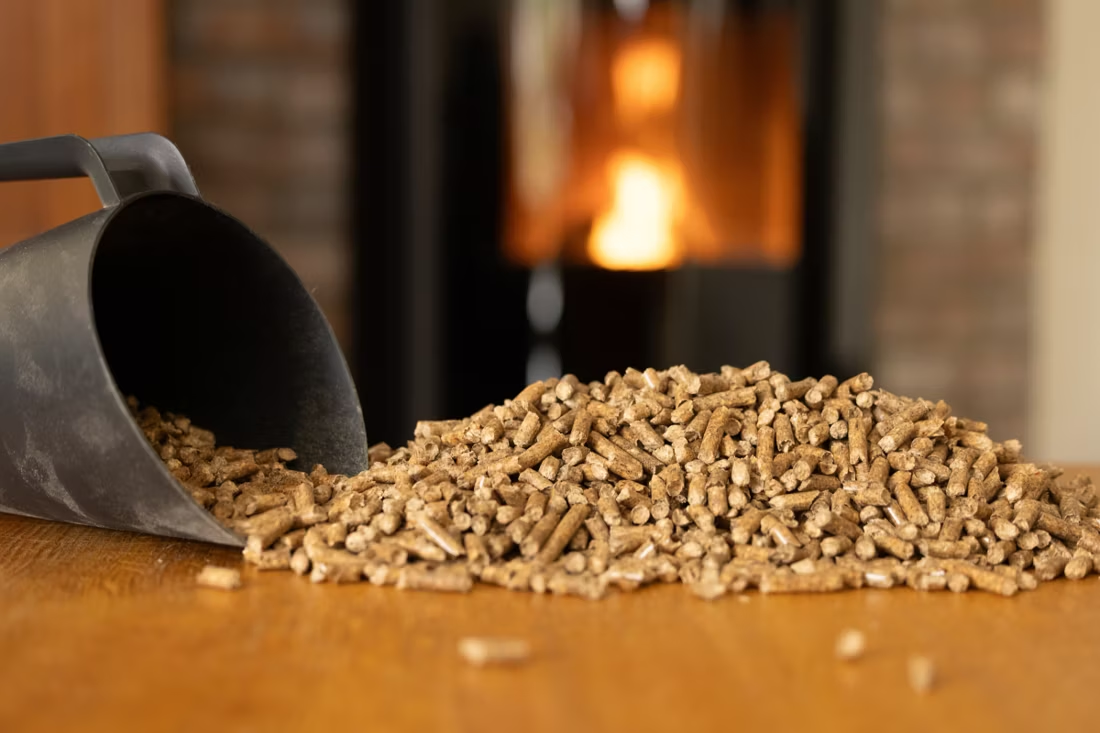
What makes pellet heat a particularly good fit locally isn't the cold—it's the land. Quitman County is row-crop country, not national forest. There's no nearby public timberland issuing firewood-cutting permits the way a mountain county might, so sourcing your own cordwood from oak, pine, or the county's pecan groves generally means buying from a private landowner or a local supplier, not a Forest Service permit. Bagged pellets from regional producers like Lignetics, Hamer Pellet Fuel, and Greenway Renewable Energy sidestep that problem entirely—no chainsaw, no splitting, no seasoning wood for a year before you can burn it. For many Delta homes, a pellet stove serves as efficient zone heat in the main living space alongside a central heat pump or propane furnace, cutting the power bill during the coldest stretches of a short winter.
Three steps. No salesperson until you're ready.
Tell us about your project
Your zip code, your situation, and the fuel you're leaning toward—or let the answers point you to one.
See what's actually available
The brands dealers within 100 miles genuinely carry—real options, never a catalog mirage.
Get your dealer & Project Guide
A trusted local dealer, plus the free Project Guide & Parts List that names every component of the job.
Frequently Asked Questions
How much does a pellet stove installation cost in Quitman County?
A freestanding pellet stove installation typically runs $3,000 to $6,000 in Quitman County, depending on the unit, the venting run, and whether a hearth pad is needed for clearance. Pellet inserts installed into an existing masonry fireplace tend to land in a similar range, since venting can usually reuse part of the existing chimney with a smaller liner. Because pellet stoves vent horizontally through an exterior wall rather than requiring a full Class A chimney, installs here are generally simpler and less expensive than a comparable wood stove setup—one reason pellet has caught on in a county without much existing masonry fireplace stock in older farmhouses.
What size pellet stove do I need for a Quitman County home?
With Quitman County's mild winters—an average low around 32°F and roughly 3,029 heating degree days—most homes don't need a large-capacity stove sized for sustained sub-zero cold. A small to mid-size pellet stove (rated for 1,000 to 1,800 square feet) is usually plenty as supplemental or zone heat for a living room or open floor plan, even in an older, less-insulated Delta farmhouse. Homes using a pellet stove as the sole heat source, or heating a larger open layout, should size up and talk to a dealer about hopper capacity so you're not refilling constantly during a cold snap.
Where can I find a certified pellet stove dealer near Quitman County?
Given Quitman County's population of just over 4,100, most homeowners in Marks, Lambert, or Sledge end up working with a hearth dealer based in a larger nearby town—Clarksdale, Batesville, or Senatobia are common service areas for pellet stove sales and installation in this part of the Delta. Look for NFI-certified installers, since proper venting placement and clearance-to-combustible work matters even on a horizontally-vented pellet unit. A dealer that also stocks or can order Lignetics, Hamer Pellet Fuel, or Greenway Renewable Energy pellets locally is worth prioritizing so you're not driving long distances every time you need fuel.
What's the difference between a pellet stove and a pellet insert?
A pellet stove is a freestanding unit that sits on a hearth pad and vents through an exterior wall or existing chimney chase—it can go almost anywhere in a room with a clear wall behind it. A pellet insert is built to slide into an existing masonry fireplace opening, converting an old wood-burning fireplace into an efficient, thermostat-controlled heat source using a smaller liner run up the existing chimney. Quitman County has fewer older homes with built-in masonry fireplaces than some regions, so freestanding pellet stoves are the more common installation, though inserts are a good option for the farmhouses and older homes that do have an existing hearth.
Do I need a permit to install a pellet stove in Quitman County?
Most jurisdictions require a building permit for a new solid-fuel appliance installation, and Quitman County is no exception—check with the county building department before work begins, or have your installer pull it as part of the job, which is standard practice with most local dealers. Unlike some western counties with wintertime burn curtailment tied to air quality non-attainment status, Quitman County has no listed air quality restrictions, so there are no seasonal burn bans to plan around here—permitting is strictly a building-code and safety matter, not an air-quality one.
What's the best pellet stove for Quitman County's climate?
Because Quitman County's winters are short and mild compared to northern climates, homeowners here generally don't need the largest catalytic or high-output units built for places with 6,000+ heating degree days. A mid-size, non-catalytic pellet stove with a moderate hopper capacity (40-60 lbs) and automatic ignition is usually the sweet spot—enough output for supplemental heat in a Delta living room without running on the lowest, least efficient setting all winter because it's oversized. Ask a local dealer about models with a wide turndown range, which matters more here than raw maximum BTU output.
How much maintenance does a pellet stove need?
Pellet stoves need less upkeep than a wood stove, but they're not maintenance-free. Plan on emptying the ash pan every few days during regular use, cleaning the burn pot and glass weekly, and vacuuming the hopper and auger area periodically to prevent pellet dust buildup. An annual professional service—checking the exhaust fan, gaskets, and venting—is recommended before each burning season, which in Quitman County typically means sometime in October ahead of the first cold snap. Skipping the annual service is the most common reason pellet stoves start throwing error codes mid-winter.
Where can I buy pellet fuel in Quitman County?
Regional pellet brands including Lignetics, Hamer Pellet Fuel, and Greenway Renewable Energy supply much of the Mid-South, and local hearth dealers and farm supply stores in the area typically stock or can order bagged pellets from one or more of these producers. Pellets commonly run in the $220 to $300 per ton range regionally, sold either by the individual 40-lb bag or by the pallet (roughly a ton) for better per-bag pricing. Buying by the pallet ahead of the winter season and storing bags off the ground in a dry outbuilding is the standard approach for Delta homeowners looking to avoid a mid-winter supply run.
Pellet stove vs. wood stove—which makes more sense in Quitman County?
Wood stoves burn oak, pine, or pecan cordwood, run without electricity, and tend to appeal to homeowners with access to their own timber or a reliable local firewood source. But Quitman County has no national forest or public timberland issuing cutting permits—most land here is farmland—so sourcing consistent firewood usually means buying from a private supplier. Pellet stoves solve that by running on bagged fuel from regional mills like Lignetics and Greenway Renewable Energy, load easily, burn cleaner, and hold a steady output with far less daily tending. The tradeoff is that pellet stoves need electricity to run the auger and blower, so they're not a backup source during a power outage the way a wood stove is. For most Quitman County homes prioritizing convenience and consistent heat over an off-grid backup option, pellet is the more practical fit.
What do I measure to size a fireplace insert?
Four numbers tell you what fits: the front width, the front height, the back width, and the overall depth of your existing fireplace opening. Grab a tape measure, jot those down, and snap a photo of the wall—those two things do more to move your project forward than anything else you can do today.
What's the difference between an insert and a zero-clearance fireplace?
An insert is a fireplace that slides into a pre-existing wood-burning fireplace—if you don't have one, there's nothing to insert it into. A zero-clearance fireplace is built into a framed wall, which makes it the answer for remodels and new construction. Simple test: existing masonry fireplace means insert; blank or framed wall means zero-clearance.
Can I install a fireplace myself?
If you're putting a fire in your house on purpose, it's best to work with an expert. Unless you're genuinely experienced in framing, gas line, vent pipe, and the national code on clearances to combustibles, have a professional do it—and ideally the same company that sells you the fireplace, so warranty, service, and liability all live under one roof.
Can a fireplace actually lower my heating bill?
Yes—by creating a comfort zone. A furnace heats every square foot of the house just to warm the one room you're in; a gas fireplace on low burns roughly a sixth of the gas a typical furnace does. Set the furnace around 55–60 degrees as a baseline, then heat the rooms your family actually uses. Families who heat this way commonly save $20–$60 a month.
Pellet Brands Stocked Around Quitman County
Manufacturers will point you to the nearest stocking dealer.
Find your pellet stove in Quitman County.
Tell us a bit about your home and we'll match you with the right pellet stove or insert, plus a free Project Guide & Parts List—the exact parts, vent kit included, and a trusted local dealer to install it.
Find Your Fireplace →