
Find the right electric fireplace for your Quitman County home.
Mild Delta winters mean electric heat can carry a room on its own here—no chimney, no gas line, no permit headaches. Find the right unit and connect with a trusted local dealer.
Every Project Starts From One of These Five Situations
Simple heat for a Delta climate that doesn't demand much more.
Quitman County sits in Mississippi's climate zone 3A, where winter lows average around 32°F and the heating season runs light—about 3,029 heating degree days a year, a fraction of what a place like Duluth, MN sees. That means the coldest stretches in Marks or Lambert are usually short cold snaps rather than sustained deep freezes, and a lot of homes here get through winter with modest supplemental heat rather than a heavy-duty primary system.
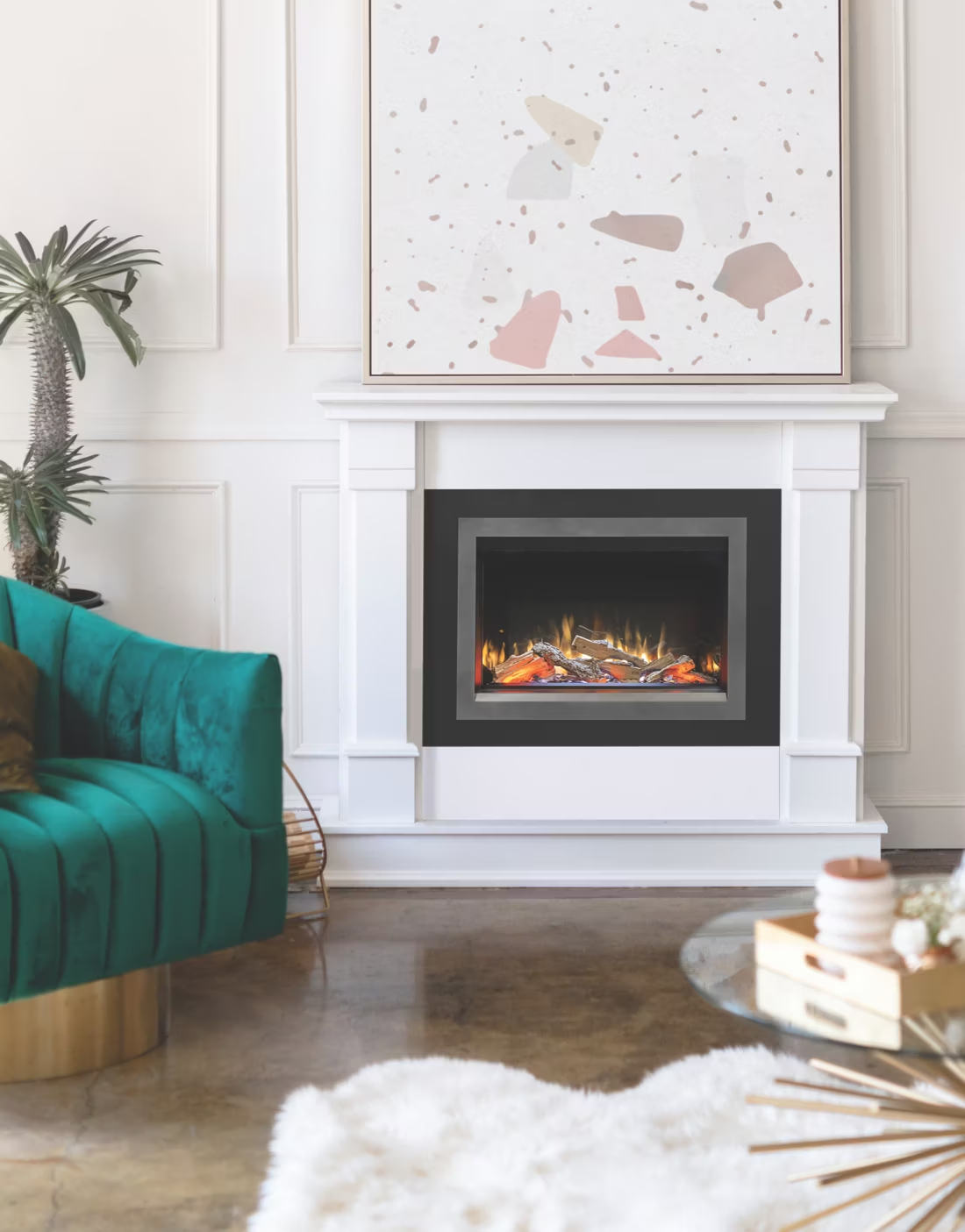
That's exactly the profile where electric fireplaces earn their keep. There's no chimney to build, no gas line to run, and no cutting permit to track down—an electric insert or built-in plugs into an existing outlet or a simple dedicated circuit and starts producing heat immediately. For older homes around Quitman County with existing but unused masonry fireplaces, an electric insert converts that dead space into usable heat and ambiance without touching the flue. For newer construction, a built-in electric unit gives you the look of a fireplace in a bonus room or bedroom without any of the venting complexity that a wood or gas project would require.
Three steps. No salesperson until you're ready.
Tell us about your project
Your zip code, your situation, and the fuel you're leaning toward—or let the answers point you to one.
See what's actually available
The brands dealers within 100 miles genuinely carry—real options, never a catalog mirage.
Get your dealer & Project Guide
A trusted local dealer, plus the free Project Guide & Parts List that names every component of the job.
Frequently Asked Questions
How much does an electric fireplace installation cost in Quitman County?
Most electric fireplace and insert installations in Quitman County run $400 to $1,200, and that range covers nearly everything short of a major remodel. A plug-in insert that drops into an existing fireplace opening sits at the low end—often just the cost of the unit itself with minimal labor. A built-in electric fireplace that needs a dedicated 120V or 240V circuit run by an electrician, plus some framing or trim work, lands toward the higher end. Because there's no venting or chimney work involved, electric is consistently the least expensive fireplace project available to Quitman County homeowners, whether you're in Marks, Lambert, or out in the county.
Do I need a permit to install an electric fireplace in Quitman County?
Generally no, if you're installing a plug-in unit into an existing outlet. If your project requires a new dedicated circuit or panel work, that electrical work should be permitted and done by a licensed electrician, which most local dealers coordinate directly. Because electric units don't burn fuel or produce combustion byproducts, they fall outside the building permit requirements that apply to wood stoves and gas fireplaces elsewhere in Mississippi. This is one of the reasons electric is a popular choice for renters and homeowners who want to avoid a lengthy permitting process.
Is electric heat enough for a Quitman County winter?
For most homes, yes. With winter lows averaging around 32°F and roughly 3,029 heating degree days a year, Quitman County's heating season is mild compared to much of the country—nowhere close to the sustained cold of a place like Bismarck, ND. Electric fireplaces are typically rated for supplemental zone heating of a single room (usually 400-1,500 square feet depending on the model), which lines up well with how most local homeowners actually use them: to take the edge off a living room or bedroom during cold snaps, alongside a central HVAC system that handles the rest of the house. Very few homes in this part of the Delta rely on electric fireplace heat as their sole heat source, and that's by design—it's a supplement, not a furnace replacement.
What's the difference between an electric insert and a built-in electric fireplace?
An electric insert is sized to slide into an existing masonry fireplace opening—a common upgrade for older homes in Quitman County with a fireplace that's gone unused for years. A built-in electric fireplace is a standalone unit designed to be framed into a wall, similar to how you'd install a TV, and works in homes without an existing fireplace opening at all. Both plug into standard household power in most cases, though larger built-in units sometimes call for a dedicated circuit. A local dealer can look at your space and tell you which format actually fits.
Can an electric fireplace double as a heater during a power outage?
No—this is worth being upfront about. Electric fireplaces require power to run the heating element, fan, and flame effects, so they go dark the moment the power does. That's the opposite of a wood stove, which is often the go-to choice for county residents who want backup heat during ice storms or outages. If backup heat during outages is a priority for your household, an electric fireplace should be viewed purely as everyday supplemental heat and ambiance—not as your winter storm plan.
Are electric fireplaces expensive to run in Quitman County?
Running costs are modest and predictable, since you're paying a fixed electric rate rather than fluctuating propane or firewood prices. A typical electric fireplace draws around 1,500 watts on the heat setting, which works out to a few cents per hour of use depending on your local utility rate. Given that Quitman County's heating season is short—winter lows average around 32°F rather than the deep, sustained cold of northern climates—most households aren't running these units for months on end, which keeps the overall seasonal cost low compared to homes further north.
Will an electric fireplace work in an older Quitman County home with a masonry fireplace?
Yes, and it's one of the more common projects in this part of the Delta. Many older homes around Marks and Lambert have a masonry fireplace and chimney that hasn't been used for wood burning in years, sometimes because the flue was never relined or the chimney has deteriorated. An electric insert drops into that existing opening without needing the chimney to be functional at all—no flue inspection, no relining, no sweep required. It's a straightforward way to bring an old, unused fireplace back into daily use.
How do electric fireplaces compare to wood heat for a Quitman County home?
Wood heat, using local oak, pine, or pecan, still has a place in Quitman County for homeowners who want real backup heat during power outages or simply prefer the look and feel of a live fire—and with a fairly mild heating season here, wood use tends to be occasional rather than constant. Electric fireplaces trade that authenticity for convenience: no ash, no wood to source or split, no chimney maintenance, and instant on-off operation with a remote. For a lot of households here, the choice comes down to whether you want a fireplace for daily supplemental warmth and ambiance in a specific room, or a wood-burning setup for real heat security when the power lines go down.
Do I need natural gas or propane service to consider an electric fireplace instead?
Not at all—that's part of the appeal. Quitman County has limited natural gas infrastructure in many areas, and propane requires tank installation, deliveries, and ongoing fuel costs. An electric fireplace sidesteps all of that by running on the household electrical service you already have. For homeowners who've looked into a gas fireplace and found the gas line work or propane tank setup more involved than they want, electric is often the simpler fallback that still delivers a realistic flame appearance and real heat output.
Do electric fireplaces actually produce heat?
Yes—most put out around 4,800–5,000 BTUs from a standard outlet, which comfortably warms a bedroom, office, or den as a comfort-zone heater. What they won't do is carry a whole house the way wood, gas, or pellet can. Think of electric as ambiance-first with honest supplemental heat: flames on with no heat in July, flames plus warmth in January.
Does an electric fireplace need a vent or chimney?
No—that's its superpower. An electric fireplace needs a wall and an outlet, period. No vent pipe, no gas line, no clearances to design around, which is why it works in bedrooms, offices, apartments, and walls where venting a gas or wood unit would be impractical or impossible. Installation is typically the simplest and least expensive of any fireplace type.
Can I install a fireplace myself?
If you're putting a fire in your house on purpose, it's best to work with an expert. Unless you're genuinely experienced in framing, gas line, vent pipe, and the national code on clearances to combustibles, have a professional do it—and ideally the same company that sells you the fireplace, so warranty, service, and liability all live under one roof.
Can a fireplace actually lower my heating bill?
Yes—by creating a comfort zone. A furnace heats every square foot of the house just to warm the one room you're in; a gas fireplace on low burns roughly a sixth of the gas a typical furnace does. Set the furnace around 55–60 degrees as a baseline, then heat the rooms your family actually uses. Families who heat this way commonly save $20–$60 a month.
Get your Quitman County electric fireplace Project Guide.
Tell us a bit about your home and we'll put together a free Project Guide & Parts List for your electric fireplace project, matched with a trusted local dealer who can install it right.
Find Your Fireplace →