
Warm, Clean-Burning Heat for Mild Mississippi Winters.
Prentiss County's winters are short and mild, but January cold snaps still call for real heat. Find the right pellet stove or insert and connect with a trusted local dealer near Booneville and the surrounding county.
Every Project Starts From One of These Five Situations
Convenient heat built for a short heating season.
Prentiss County sits in Mississippi's mixed-humid climate zone 3A, with an average winter low around 29°F and roughly 3,412 heating degree days a year. That's a fraction of what a place like Duluth, MN sees in a single winter—so most homes here don't need a heating appliance running around the clock from October through April. Instead, the demand is for something that can knock the chill off a living room on a 30-degree January morning and then sit idle the rest of the year without maintenance headaches.
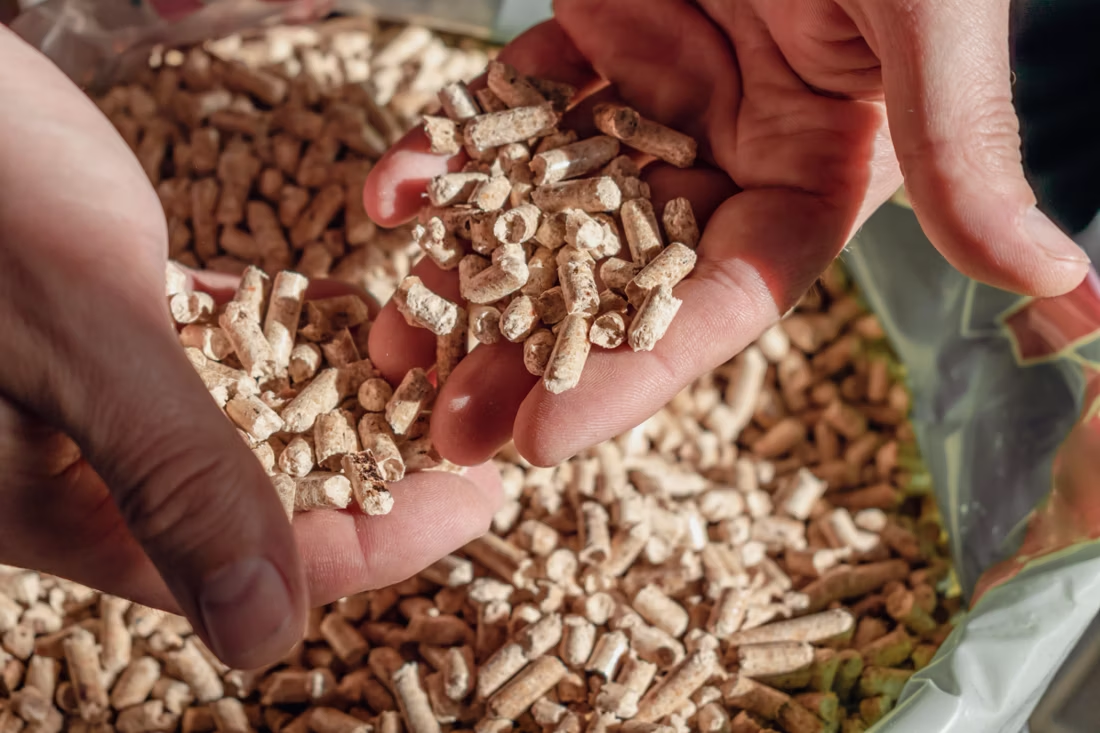
That's the niche pellet stoves fill well. A hopper-fed pellet stove or insert lights with the push of a button, holds a thermostat setting, and needs no chimney sweeping the way a wood stove burning local oak or pine would. Prentiss County has no air quality non-attainment issues or winter burn curtailment restrictions, so pellet appliances can run freely on the coldest days without the kind of regulatory limits some Western counties deal with. Regional pellet brands including Lignetics, Hamer Pellet Fuel, and Greenway Renewable Energy are commonly stocked by dealers serving this part of northeast Mississippi, giving homeowners a reliable local fuel supply without having to drive to Tupelo or Memphis for bags.
Three steps. No salesperson until you're ready.
Tell us about your project
Your zip code, your situation, and the fuel you're leaning toward—or let the answers point you to one.
See what's actually available
The brands dealers within 100 miles genuinely carry—real options, never a catalog mirage.
Get your dealer & Project Guide
A trusted local dealer, plus the free Project Guide & Parts List that names every component of the job.
Frequently Asked Questions
How much does a pellet stove installation cost in Prentiss County?
Most pellet stove and insert installations in this part of Mississippi run in the $3,000 to $6,000 range, and Prentiss County installs tend to land toward the lower end of that because venting is usually simple. Unlike a wood stove that needs a full Class A chimney, pellet appliances vent horizontally through an exterior wall with PL pipe, which cuts labor time significantly. Costs move up if you're installing into a mobile or manufactured home (common in rural parts of the county) since those require specific listed venting kits and floor protection, or if the unit is going into a room without an existing exterior wall nearby for venting.
What size pellet stove do I need for a Prentiss County home?
Because winter lows here average around 29°F rather than the single digits or below-zero temperatures seen further north, most homes don't need the largest pellet stoves on the market. A small to mid-size unit (rated for 1,000 to 1,800 square feet) is usually enough to heat a main living area or open-concept space during the coldest stretches of January and February. Larger, whole-home pellet stoves are more common in colder climates like Fargo, ND, where the appliance runs as primary heat for months at a time. Local dealers will size a unit based on your square footage, ceiling height, and how much of the home you're trying to heat versus supplement.
Do I need a permit to install a pellet stove in Prentiss County?
Yes—new pellet stove and insert installations typically require a building permit through the county building department, along with inspection of the venting and clearances once the work is done. Most local dealers who sell and install pellet appliances handle this paperwork as part of the job. If you're installing in a manufactured or mobile home, which are common throughout rural Prentiss County, make sure the specific model is listed for mobile home use—not every pellet stove is approved for that application, and using one that isn't can void your insurance coverage.
What's the difference between a pellet stove and a pellet insert?
A pellet stove is a freestanding unit that sits on the floor and vents through a nearby wall—it can go almost anywhere in a home with access to an exterior wall. A pellet insert is built to slide into an existing masonry fireplace opening, using a liner run up through your existing chimney (or a wall-vent kit if the chimney isn't suitable). For Prentiss County homes with an older wood-burning fireplace that rarely gets used, an insert is often the more practical upgrade since it reuses infrastructure you already have while adding thermostatic, hands-off heat.
Where do I buy pellets, and how much should I store?
Lignetics, Hamer Pellet Fuel, and Greenway Renewable Energy are the regional brands most commonly carried by hardware stores and farm supply retailers serving this part of Mississippi. Because Prentiss County's heating season is short compared to colder states, most households don't need to stockpile a full ton or more the way a Minnesota homeowner would—buying 15 to 25 bags (roughly a third to half a ton) ahead of the first cold snap is usually enough to get through a typical winter, with the option to restock mid-season. Store bags off the ground in a dry space; humidity in a Mississippi garage or shed can break pellets down faster than in drier climates.
How much maintenance does a pellet stove need compared to a wood stove?
Considerably less. There's no chimney sweep required the way there is for a wood-burning appliance fed by local oak or pine—pellet stoves vent through a simple horizontal pipe that needs periodic cleaning, not annual CSIA-level chimney service. Day-to-day, you're emptying an ash pan every few days of use and running the hopper's built-in cleaning cycle if the model has one. Once a year, plan on a professional service visit to clean the exhaust fan, check the auger motor, and inspect gaskets—most local dealers who sell pellet stoves also offer this service.
Pellet stove vs. wood stove—which makes more sense in Prentiss County?
Wood is abundant and cheap here—oak, pine, and pecan are all common on rural properties, and plenty of Prentiss County homeowners already have access to a wood lot or a neighbor cutting firewood. A wood stove takes advantage of that and works during power outages without any electricity. A pellet stove trades that fuel flexibility for convenience: automated feed, a thermostat instead of tending a fire, and a cleaner burn with far less ash and smoke smell in the house. Given the county's mild winters, many homeowners here choose pellet specifically because they only need heat for scattered cold weeks, not months of daily fire-tending.
What's the best pellet stove for a climate like Prentiss County's?
You don't need the extended-burn-time, high-BTU catalytic setups that homeowners in a place like Bismarck, ND rely on to survive a whole winter. A mid-efficiency, moderate-output pellet stove from a widely available brand is typically the right fit for the occasional deep-cold week Prentiss County sees. Look for a model with a reliable auger feed and easy hopper access, since you won't be running it daily for months and want it simple to fire back up after sitting idle. Local dealers stocking Lignetics-compatible units can walk through specific models suited to supplemental, part-time use.
Are there rebates or tax credits for installing a pellet stove?
Mississippi doesn't run a state-level biomass stove rebate program the way some Western states do, but a federal tax credit is available for qualifying high-efficiency pellet stoves under the Energy Efficient Home Improvement Credit—currently 30% of the cost of equipment and installation, up to $2,000 per year, for units rated at 75% efficiency or higher (most modern EPA-certified pellet stoves qualify). Keep your dealer's invoice and the manufacturer's efficiency certification statement for tax filing purposes; a local retailer selling EPA-certified units should be able to provide both.
What's the difference between an insert and a zero-clearance fireplace?
An insert is a fireplace that slides into a pre-existing wood-burning fireplace—if you don't have one, there's nothing to insert it into. A zero-clearance fireplace is built into a framed wall, which makes it the answer for remodels and new construction. Simple test: existing masonry fireplace means insert; blank or framed wall means zero-clearance.
How often does a pellet stove need cleaning?
A clean pellet stove is a happy pellet stove. Plan on cleaning the burn pot about once a week when you're burning regularly—ash and clinkers gum up the air holes just like a pellet barbecue. Most pellet stove problems trace back to skipped cleaning that nobody explained up front. Some designs make it easy with a trapdoor burn pot: pull a lever and the gunk drops into the ash pan.
How much should I budget for a fireplace?
For an average home—covering the fireplace, the vent pipe, and basic installation—a budget between $3,900 and $5,500 gives you a lot of options across wood, gas, and pellet. By the time you add finish work, gas line, and electrical, the average complete installation lands between $5,000 and $12,000 all-in. In a remodel or new build, a good rule is to put about 2.5% of the total project cost toward the fireplace.
Does a fireplace add value to my home?
On average, a fireplace adds back to the home about the same amount you spent installing it. Add the monthly savings from heating the rooms you actually use instead of the whole house—often hundreds of dollars a year—and the value case is strong before you even count what a fire does for how your family uses the room.
Pellet Brands Stocked Around Prentiss County
Manufacturers will point you to the nearest stocking dealer.
Find your pellet stove in Prentiss County.
Tell us a bit about your home and we'll put together a free Project Guide & Parts List—the exact equipment for your pellet project, including venting, matched to a trusted local dealer serving Prentiss County.
Find Your Fireplace →