
Instant, mess-free warmth for Prentiss County homes.
From Booneville to New Site and out along the county line toward Wheeler and Marietta, electric fireplaces give Prentiss County homeowners real ambiance and zone heat without a flue, a wood pile, or a gas line. Find the right unit and get matched with a trusted local dealer.
Every Project Starts From One of These Five Situations
A short heating season built for a simpler kind of warmth.
Prentiss County sits in climate zone 3A with a winter low averaging around 29°F and a heating load comparable to other mild Mississippi winters—mostly mild with a handful of genuinely cold weeks. Households here have never needed a wood-burning setup to survive the season the way a Duluth or Fargo home would. Plenty of Prentiss County homes still burn oak, pine, and pecan in an existing fireplace for tradition and ambiance, but for a second living room, a bonus room, or a home that just wants heat without the upkeep, electric covers the cold snaps without asking for a chimney inspection.
Electric fireplaces and inserts plug into a standard outlet in most cases, or run on a dedicated circuit for larger built-ins—either way, there's no venting to size, no gas line to run, and no ash to haul out after a cold front moves through. Whether power comes through Tombigbee Electric Power Association out in the rural parts of the county or Booneville's municipal electric service in town, the wiring question is usually simple, and a local dealer can tell you in minutes whether your panel and outlet setup can handle the unit you want.
Three steps. No salesperson until you're ready.
Tell us about your project
Your zip code, your situation, and the fuel you're leaning toward—or let the answers point you to one.
See what's actually available
The brands dealers within 100 miles genuinely carry—real options, never a catalog mirage.
Get your dealer & Project Guide
A trusted local dealer, plus the free Project Guide & Parts List that names every component of the job.
Frequently Asked Questions
How much does an electric fireplace installation cost in Prentiss County?
Most electric fireplace projects in Prentiss County run from around $400 for a plug-in insert dropped into an existing masonry opening up to roughly $2,000 for a built-in wall unit with custom trim or a mantel surround. The unit itself is usually the bulk of the cost—installation labor is light compared to wood or gas because there's no venting to run. If you're adding a dedicated 20-amp circuit for a larger built-in model, expect to add a licensed electrician's fee on top, typically a few hundred dollars depending on how far the run is from your panel.
Do I need a permit to install an electric fireplace in Prentiss County?
A simple plug-in electric fireplace or insert that uses an existing outlet generally doesn't require a permit—it's treated like any other appliance. If you're having an electrician add a new dedicated circuit or breaker for a larger built-in unit, that electrical work typically does need a permit through the Prentiss County Building Department, and the electrician usually pulls it as part of the job. There's no chimney, gas line, or combustion venting involved, which is why electric is usually the fastest fuel type to get approved and installed.
What's the difference between an electric fireplace, insert, and stove?
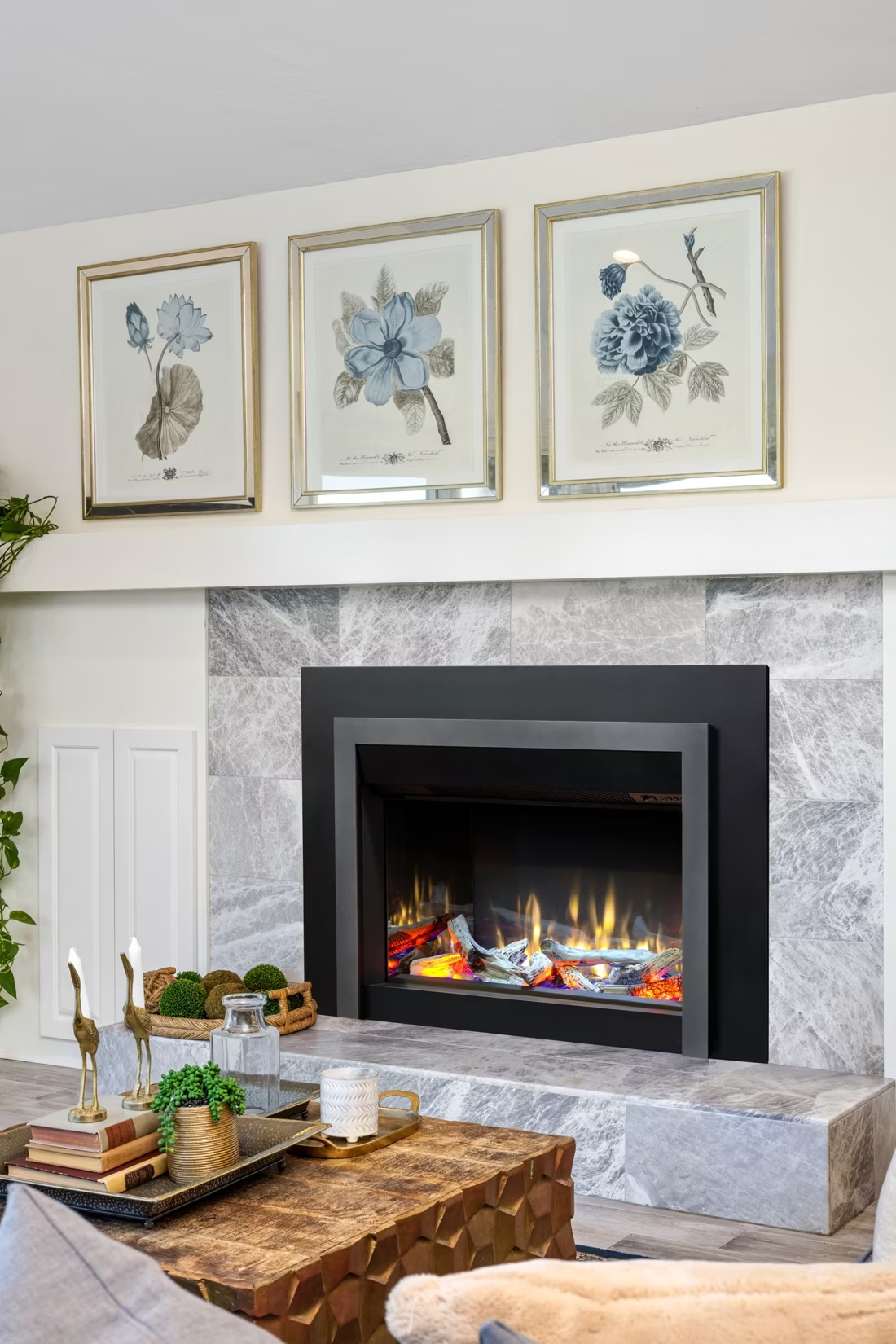
An electric fireplace is typically a built-in unit set into a wall or a custom mantel surround, often the centerpiece of a room. An electric insert is sized to slide into an existing fireplace opening—a common choice for Prentiss County homes with an old wood-burning masonry fireplace that the owner wants to retire without tearing anything out. An electric stove is a freestanding cabinet-style unit that sits on the floor, similar in footprint to a wood stove but with none of the venting requirements. All three plug in or hardwire the same way; the choice mostly comes down to the look you want and whether you're working with an existing opening.
Can I convert my existing wood fireplace to electric?
Yes, and it's a common project in Prentiss County's older homes, many of which have a masonry fireplace originally built to burn oak, pine, or pecan. An electric insert sits inside that existing opening, usually with a simple outlet added inside or just behind the firebox—no liner, no venting, and no need to touch the chimney structurally. Some homeowners choose to cap the flue afterward to stop drafts; others leave it as-is. Either way, it's a far simpler conversion than switching to gas, since there's no combustion byproduct to vent outside.
Will an electric fireplace actually heat my room, or is it just for looks?
Most electric fireplaces include a built-in fan heater, typically rated around 1,500 watts, which is enough to noticeably warm a single room in the 300 to 500 square foot range—plenty for a living room or den on a cold Prentiss County night. Given the county's relatively short heating season and mild winter lows in the high 20s, an electric unit is realistic as the primary heat source for a secondary space or a supplemental boost in a main living area, but it isn't a substitute for whole-home heating in a larger, poorly insulated house. Ask your local dealer to size the wattage to your specific room.
Will my electric fireplace work during a power outage?
No—electric fireplaces need power to run both the flame effect and any heat function, so they go dark the moment the power does. That matters in Prentiss County, where winter ice storms occasionally knock out electric service for a day or more in rural areas served by Tombigbee Electric Power Association. If backup heat during outages is a real concern for your household, it's worth keeping that in mind alongside your electric fireplace—some homeowners here pair an electric unit for everyday convenience with a wood-burning stove or fireplace elsewhere in the house for the rare week when the power's out and it's genuinely cold.
What's the best electric fireplace for a Mississippi home?
For Prentiss County's humid, mild climate, look for models with a realistic flame effect (LED-driven units from brands like Dimplex or Napoleon tend to look best up close) and an adjustable heater you can run independently of the flame—useful since most of the year you'll want the ambiance without the extra heat. Because humidity runs high here for much of the year, a unit with a sealed heating element and quality components will hold up better long-term than a bargain space-heater-in-a-box. A local dealer can walk you through which models are built for that kind of year-round humidity exposure.
Electric vs. gas fireplace—which is right for my home?
Gas delivers more real heat output and a closer approximation of a wood fire, but it depends on either a natural gas line or a propane tank, plus venting for anything beyond a vent-free unit—a bigger project and a bigger bill in rural parts of Prentiss County where natural gas service is limited. Electric skips the fuel supply question entirely: no tank, no line, no venting, just a circuit. For homeowners who want fire-like ambiance and modest supplemental warmth without adding a fuel utility to the house, electric is usually the simpler and cheaper path. For homeowners who want a gas fireplace as a genuine backup heat source, that's a different conversation worth having with a local dealer.
Electric vs. wood—which is right for my home?
Wood has deep roots in Prentiss County, where oak, pine, and pecan are all commonly burned, and a wood stove or fireplace keeps working straight through a power outage—a real advantage during ice storm season. Electric can't do that, but it also doesn't ask for firewood, ash cleanup, chimney sweeps, or any combustion byproducts in the house, and it starts and stops with the flip of a switch. Given the county's relatively mild winter lows and short heating season, plenty of homeowners here find electric covers 90 percent of what they actually need—with a wood setup reserved for the rare hard freeze or as a deliberate backup.
Do electric fireplaces actually produce heat?
Yes—most put out around 4,800–5,000 BTUs from a standard outlet, which comfortably warms a bedroom, office, or den as a comfort-zone heater. What they won't do is carry a whole house the way wood, gas, or pellet can. Think of electric as ambiance-first with honest supplemental heat: flames on with no heat in July, flames plus warmth in January.
Can I put a TV above my fireplace?
Yes—with an asterisk. Fireplaces are hot and TVs don't like heat. Either put a mantel between them to deflect rising warmth, or choose a fireplace with heat-management technology that creates a cool zone on the wall above—the wall stays around 125 degrees, barely warm, while the room still gets full heat. If you like clean lines and don't want a mantel, heat management is the answer.
Can I install a fireplace myself?
If you're putting a fire in your house on purpose, it's best to work with an expert. Unless you're genuinely experienced in framing, gas line, vent pipe, and the national code on clearances to combustibles, have a professional do it—and ideally the same company that sells you the fireplace, so warranty, service, and liability all live under one roof.
Can a fireplace actually lower my heating bill?
Yes—by creating a comfort zone. A furnace heats every square foot of the house just to warm the one room you're in; a gas fireplace on low burns roughly a sixth of the gas a typical furnace does. Set the furnace around 55–60 degrees as a baseline, then heat the rooms your family actually uses. Families who heat this way commonly save $20–$60 a month.
Find your electric fireplace in Prentiss County.
Tell us a bit about your home and we'll match you with the right electric fireplace, insert, or stove—plus a free Project Guide & Parts List with the exact components and a trusted local dealer to install it.
Find Your Fireplace →