
Efficient Heat for Newton County, Without the Wood Pile.
Steady, thermostat-controlled warmth for Newton, Decatur, Union, Hickory, and the rest of Newton County—without stacking, splitting, or hauling cordwood. Find the right pellet stove or insert and connect with a trusted local dealer.
Every Project Starts From One of These Five Situations
Consistent warmth that doesn't ask much of you.
Newton County sits in east-central Mississippi's climate zone 3A, with a winter low averaging just 33°F and a mild overall winter heating load—comparable to a place like Duluth, MN, where sub-zero nights are routine. That milder profile is exactly why pellet heat fits so well here: most homes in Newton, Decatur, Union, and Hickory don't need a stove capable of running around the clock through a brutal winter. They need dependable supplemental or zone heat for the handful of genuinely cold weeks, and pellet stoves deliver that with a thermostat, not a woodpile.
Oak, pine, and pecan are the wood species you'll see cut and split all over the county, and plenty of Newton County homes still burn cordwood. But pellet stoves offer a lower-maintenance alternative that doesn't require a woodlot, a chainsaw, or seasoned wood drying under a tarp. Local and regional pellet brands including Lignetics, Hamer Pellet Fuel, and Greenway Renewable Energy keep fuel available without long-haul shipping, and with no air quality advisories or wood-smoke restrictions in the county, the appeal here is convenience and automation, not compliance.
Three steps. No salesperson until you're ready.
Tell us about your project
Your zip code, your situation, and the fuel you're leaning toward—or let the answers point you to one.
See what's actually available
The brands dealers within 100 miles genuinely carry—real options, never a catalog mirage.
Get your dealer & Project Guide
A trusted local dealer, plus the free Project Guide & Parts List that names every component of the job.
Frequently Asked Questions
How much does a pellet stove installation cost in Newton County?
Most pellet stove installations in Newton County run between roughly $2,500 and $5,000, depending on the unit and what the venting job requires. Pellet stoves use a smaller-diameter PL-vented pipe run through an exterior wall rather than a full masonry chimney, which keeps costs down compared to a wood stove install—especially in a manufactured or single-story home, which is common throughout the county. You'll also need a dedicated 120V outlet nearby for the auger and blower motor, which a local installer will wire in as part of the job. Converting an existing wood-burning fireplace to a pellet insert typically costs a bit more once the flue liner and surround are factored in.
What size pellet stove do I need for a Newton County home?
Because Newton County's winters are mild—with a winter heating load well below what a colder climate like Bismarck, ND sees in a single season—many homes here don't need a large, whole-house pellet stove. A small to mid-size unit (rated for 1,000 to 1,800 square feet) is enough to comfortably heat a main living area or serve as supplemental heat alongside central HVAC. Larger, whole-home-rated stoves make more sense for older farmhouses with less insulation or homes where the pellet stove is meant to be the primary heat source through the coldest weeks of December and January. A local dealer will look at your square footage, insulation, and how you plan to use the stove before recommending a size.
Do I need a permit to install a pellet stove in Newton County?
Most pellet stove installations require a building permit through the Newton County building department, particularly for the wall penetration and venting work, even though pellet venting is simpler than a full wood-burning chimney. If you live within Newton, Decatur, or Union city limits, check whether the city handles permitting separately from the county. Most local hearth dealers who sell and install pellet stoves in the area are familiar with the process and will pull the permit as part of the installation rather than leaving that step to you.
Pellet stove vs. wood stove—which makes more sense in Newton County?
Wood is the traditional choice here, and with oak, pine, and pecan readily available across the county, plenty of homeowners still cut, split, and burn their own. A wood stove also keeps working during a power outage, which matters during Mississippi's occasional ice storms and summer thunderstorm outages. A pellet stove trades that off for real convenience: load a hopper, set a thermostat, and let the auger feed the fire automatically, with far less ash and none of the wood-hauling. For a mild climate like Newton County's, where the stove is often running for zone heat rather than 24/7 survival heat, that convenience tends to outweigh the tradeoffs for a lot of homeowners—though anyone worried about extended outages should ask a dealer about battery backup options.
Where can I buy pellet fuel in Newton County?
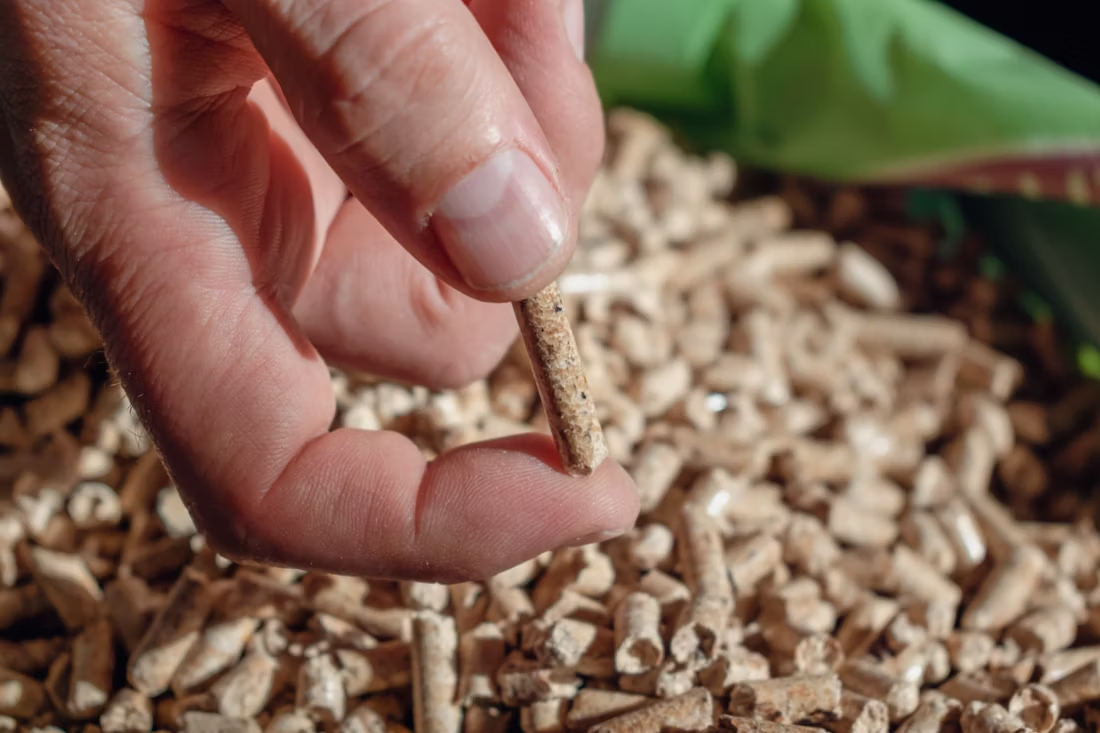
Regional brands including Lignetics, Hamer Pellet Fuel, and Greenway Renewable Energy are commonly stocked at hearth dealers and farm supply retailers serving the county, and buying by the ton (40-pound bags, roughly 50 bags per ton) ahead of the season is the most cost-effective approach. Because Newton County's winters are short and mild, many households get through a season on one to two tons rather than the four or five tons a home in a colder climate might burn. Stocking up in late summer or early fall, before demand picks up, is the easiest way to avoid scrambling for fuel once temperatures drop.
Will my pellet stove work during a power outage?
Not without a battery backup. Pellet stoves rely on electricity to run the auger that feeds fuel and the blower that distributes heat, so a standard unit won't operate if the power goes out—worth knowing in a county that sees occasional ice storm and severe weather outages. Some manufacturers offer battery backup systems that keep a stove running for a period during an outage, and a generator is another option many rural Newton County homeowners already have on hand. If uninterrupted heat during outages is a priority, ask your local dealer about backup options or consider a wood-burning unit as a secondary heat source.
How is a pellet stove vented, and does it need a chimney?
No traditional masonry chimney is required. Pellet stoves vent through a smaller PL-rated pipe that typically runs a short distance through an exterior wall, which makes them a practical option for the manufactured and single-story homes common throughout Newton County, as well as homes without an existing fireplace. For homes that do have an existing masonry fireplace, a pellet insert can use the existing chimney with a proper liner, converting an old open hearth into an automated heat source without the appearance changing much from the room side.
How much maintenance does a pellet stove need?
Pellet stoves need more routine attention than a gas unit but less than a wood stove. Plan on emptying the ash pan every few days to weekly depending on use, cleaning the burn pot and heat exchanger tubes every couple of weeks during the season, and scheduling a full professional cleaning and inspection once a year, ideally before the season starts each fall. Because Newton County's burning season is relatively short, annual maintenance is usually enough to keep a stove running efficiently through the following winter.
Pellet vs. gas—which is right for my Newton County home?
Gas fireplaces offer instant on-off operation and don't require fuel storage, but they depend on either an existing propane tank or natural gas line, and natural gas service is limited outside the more built-up parts of the county. Pellet stoves run on bagged fuel you can buy locally from suppliers carrying Lignetics, Hamer Pellet Fuel, or Greenway Renewable Energy, and they deliver a more substantial, radiant heat than most gas units at a similar price point. For homes without a nearby gas line, or homeowners who want a fuel they can stockpile themselves, pellet tends to be the more practical choice in Newton County.
Why is my open fireplace making my house colder?
Open fireplaces suck—literally. As the fire burns, it consumes air your furnace already paid to heat and pulls it out through the chimney, so the house is actually colder after the fire goes out than before you lit it. An insert fixes this: it seals the chimney, puts fixed glass across the front, and turns that hole in your house into a real heat source.
What do I measure to size a fireplace insert?
Four numbers tell you what fits: the front width, the front height, the back width, and the overall depth of your existing fireplace opening. Grab a tape measure, jot those down, and snap a photo of the wall—those two things do more to move your project forward than anything else you can do today.
Does a fireplace add value to my home?
On average, a fireplace adds back to the home about the same amount you spent installing it. Add the monthly savings from heating the rooms you actually use instead of the whole house—often hundreds of dollars a year—and the value case is strong before you even count what a fire does for how your family uses the room.
Can I install a fireplace myself?
If you're putting a fire in your house on purpose, it's best to work with an expert. Unless you're genuinely experienced in framing, gas line, vent pipe, and the national code on clearances to combustibles, have a professional do it—and ideally the same company that sells you the fireplace, so warranty, service, and liability all live under one roof.
Stove and Fireplace Dealers in Newton County
Pellet Brands Stocked Around Newton County
Manufacturers will point you to the nearest stocking dealer.
Find your pellet stove in Newton County.
Tell us a bit about your home and we'll match you with the right pellet stove or insert, plus a free Project Guide & Parts List with the exact parts—including the vent kit—and a recommended local dealer near you.
Find Your Fireplace →