
The easiest way to add real warmth in Newton County.
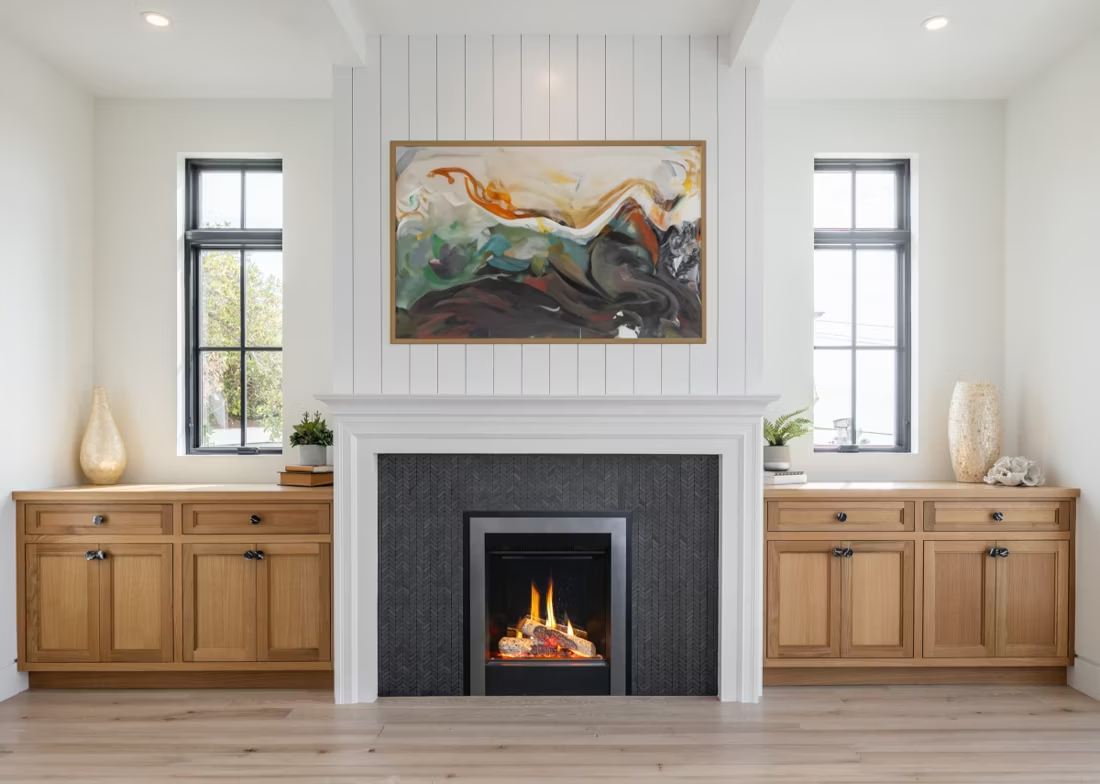
No chimney, no gas line, no venting—just a fireplace that plugs in or wires to a dedicated circuit and works the same day, from Decatur to Union to Hickory. Find the right unit and connect with a trusted local dealer.
Every Project Starts From One of These Five Situations
Mild winters, modest heating needs, zero venting hassle.
Newton County sits in climate zone 3A with about 2,469 heating degree days a year and winter lows that average around 33°F—a fraction of the heating load you'd see in a place like Duluth or Fargo. Most homes here, whether in Decatur, Newton, Union, Hickory, Chunky, or out along the rural routes, are already carrying central heat pumps or furnaces sized for a mild Deep South winter. A big EPA-certified wood stove or a large gas insert is often more capacity than the climate actually calls for. Electric fireplaces fill a different, more practical role: real supplemental warmth for a living room, den, or bedroom, plus the visual of a fire, without adding a chimney, a fuel line, or a combustion appliance to the house.
There's no air quality non-attainment issue and no burn advisory system in Newton County pushing homeowners toward or away from any fuel—the appeal of electric here is pure convenience. Plug-in inserts and mantels need nothing more than a standard outlet; built-in wall units typically call for a dedicated 20-amp circuit, which a licensed electrician can run in an afternoon. That makes electric a strong fit for the manufactured and site-built homes common throughout the county, for renters in Newton or Union who can't modify a chimney, and for anyone who wants zone heat in a specific room rather than running the central system harder on a 35-degree night.
Three steps. No salesperson until you're ready.
Tell us about your project
Your zip code, your situation, and the fuel you're leaning toward—or let the answers point you to one.
See what's actually available
The brands dealers within 100 miles genuinely carry—real options, never a catalog mirage.
Get your dealer & Project Guide
A trusted local dealer, plus the free Project Guide & Parts List that names every component of the job.
Frequently Asked Questions
How much does an electric fireplace installation cost in Newton County?
Plug-in electric fireplace inserts and mantel packages typically run $300 to $1,200 for the unit itself, with no installation labor required beyond setting it in place—a real advantage for renters and manufactured homes across the county. Built-in wall units or larger linear electric fireplaces that require a dedicated 20-amp circuit usually add $500 to $1,300 in electrician labor on top of the unit cost, putting a full built-in project in the $800 to $2,500 range. Custom surrounds, mantels, or recessed wall framing push costs higher. A local dealer can walk you through unit and labor costs together during an in-home look.
What size electric fireplace do I need for my home?
Most electric fireplaces put out 4,000 to 5,000 BTU of heat, enough to comfortably warm a 400 to 1,000 square foot room—plenty for the kind of zone heating most Newton County homes actually need given the mild 2,469 heating-degree-day climate here. A 30 to 40 inch insert or mantel unit suits a standard living room in a Decatur or Newton ranch home; larger linear units (50 inches and up) work well as a focal point in an open-concept great room. Because electric units don't need to overcome cold outside air the way a chimney-vented appliance does, sizing is more about the room's square footage and layout than about the county's climate—a local dealer can size it to your specific space.
Do I need a permit to install an electric fireplace in Newton County?
In most cases, no—a plug-in insert or mantel unit is treated like any other appliance and doesn't require a building permit. If your installation involves running a new dedicated circuit for a built-in wall unit, that electrical work generally needs to be pulled and inspected by a licensed electrician, which is standard practice regardless of county. There's no combustion appliance involved, so you won't need the chimney or gas-line permitting that wood or gas installs require. If you're unsure whether your specific project needs a permit, your electrician or local dealer can confirm with the county building department before work starts.
Will my electric fireplace work during a power outage?
No—this is the honest tradeoff with electric heat. Newton County does see winter ice storms and severe weather that can knock out power for hours or days, and an electric fireplace, like your central heat pump, goes dark the moment the grid does. If backup heat during outages matters to you, many homeowners here pair an electric fireplace for everyday convenience and ambiance in one room with a wood stove or a propane heater elsewhere in the house as a true grid-independent option. If outage resilience isn't a priority and you mainly want easy, clean supplemental warmth, electric remains the simplest choice for the vast majority of the year.
What's the difference between an electric insert, a built-in, and a freestanding electric fireplace?
An electric insert is sized to slide into an existing masonry fireplace opening or a factory-built firebox, giving an old wood-burning fireplace a clean, no-maintenance upgrade. A built-in (or wall-mount) unit is installed into new framing or a cutout in drywall, often flush-mounted for a modern look, and usually needs that dedicated circuit. A freestanding or mantel-package unit stands on the floor like furniture and simply plugs into a standard outlet—the easiest option for renters or anyone who wants to avoid any wiring or wall work. For most Newton County homes with an existing fireplace opening, an insert is the simplest upgrade; new construction or homes without a fireplace usually go with a built-in or freestanding unit.
Is electric heat a good fit for Newton County's humid climate?
Yes. Newton County's mixed-humid 3A climate means summers are hot and winters are short and mild—there's no combustion, no chimney draft, and no moisture byproduct with an electric fireplace, which sidesteps the humidity and condensation issues that unvented or poorly-drafting combustion appliances can create in a humid climate. Electric units also don't introduce any particulate or air quality concern, which matters since Newton County has no local burn restrictions in place but plenty of homeowners who'd rather not add smoke or combustion byproducts indoors either way.
Standard resistance heat or infrared—which electric fireplace heater is better?
Standard resistance-coil units heat the air blown through the unit and are the most common, most affordable option—fine for the kind of light, supplemental heating most Newton County rooms need through a mild winter. Infrared electric fireplaces use quartz infrared bulbs to warm objects and people directly rather than just the air, which some homeowners find feels more like a real fire's radiant warmth, particularly in larger or more open rooms. Given the county's modest 2,469 heating-degree-day load, either type will comfortably supplement a living space; infrared is worth the modest price premium if the unit is heating a larger or more open-concept room.
Can I install an electric fireplace in a manufactured or rented home in Newton County?
Yes, and it's one of the most common reasons homeowners in rural Newton County choose electric over wood or gas. A plug-in insert or freestanding mantel unit requires no structural changes, no chimney, and no gas line—it simply needs a nearby outlet, making it a practical option for manufactured homes, rentals in Newton or Union, and any household that wants real supplemental heat without a construction project. Built-in units are also workable in manufactured homes but should be evaluated by an electrician familiar with the home's existing panel capacity before adding a dedicated circuit.
Electric vs. wood—which is right for my Newton County home?
Wood stoves burning local oak, pine, or pecan offer real backup heat during power outages and a lower ongoing fuel cost if you have access to cut or split wood—a meaningful advantage during Newton County's occasional winter ice storms. Electric fireplaces offer instant on-off convenience, zero maintenance, no chimney or venting, and a cleaner look, but they go dark the moment the power does. Given the county's mild 33°F average winter low and modest heating-degree-day count, most homes here don't actually need a primary wood-heat source—electric works well as everyday zone heat and ambiance, with wood as a reasonable backup for households that want outage resilience. Plenty of Newton County homeowners end up with both: electric in the main living space, a small wood stove or insert kept ready elsewhere.
Can I put a TV above my fireplace?
Yes—with an asterisk. Fireplaces are hot and TVs don't like heat. Either put a mantel between them to deflect rising warmth, or choose a fireplace with heat-management technology that creates a cool zone on the wall above—the wall stays around 125 degrees, barely warm, while the room still gets full heat. If you like clean lines and don't want a mantel, heat management is the answer.
Does an electric fireplace need a vent or chimney?
No—that's its superpower. An electric fireplace needs a wall and an outlet, period. No vent pipe, no gas line, no clearances to design around, which is why it works in bedrooms, offices, apartments, and walls where venting a gas or wood unit would be impractical or impossible. Installation is typically the simplest and least expensive of any fireplace type.
Can a fireplace actually lower my heating bill?
Yes—by creating a comfort zone. A furnace heats every square foot of the house just to warm the one room you're in; a gas fireplace on low burns roughly a sixth of the gas a typical furnace does. Set the furnace around 55–60 degrees as a baseline, then heat the rooms your family actually uses. Families who heat this way commonly save $20–$60 a month.
What is an in-home preview and do I need one?
It's a visit where a hearth professional measures your space, confirms the model you picked actually works in your home, and walks the specs—framing, gas line, venting, finish work—before anything is ordered. Some details you just can't know until you see the house. Never make a down payment without one; it's the single most-skipped step that burns buyers.
Stove and Fireplace Dealers in Newton County
Find your electric fireplace in Newton County.
Tell us a bit about your home and we'll match you with the right electric fireplace, insert, or built-in—plus a free Project Guide & Parts List with the exact parts and your recommended local Newton County dealer.
Find Your Fireplace →