
Keep Your Family Warm and Safe—No Matter What
With winter lows averaging 42°F and just a short, mild winter heating season, Lyman doesn't need wood heat the way a northern town does. But for hurricane-season backup power, hunting camps, and homeowners who just want a real fire, it's worth doing right.
Every Project Starts From One of These Five Situations
Lyman's climate barely asks for wood heat.
Lyman sits at 81 feet of elevation on the Mississippi Gulf Coast in Harrison County, in climate zone 2A—hot and humid nearly year-round, with winter lows that average a mild 42°F. The area has a short, mild winter heating season. Compare that to Duluth, MN, which has a winter heating load nearly seven times as heavy—and you can see why a wood stove sized for a Minnesota winter would be wildly overbuilt for a Lyman living room. Most houses here get through the handful of genuinely cold nights each January with a space heater or the central system, not a cord of split oak.
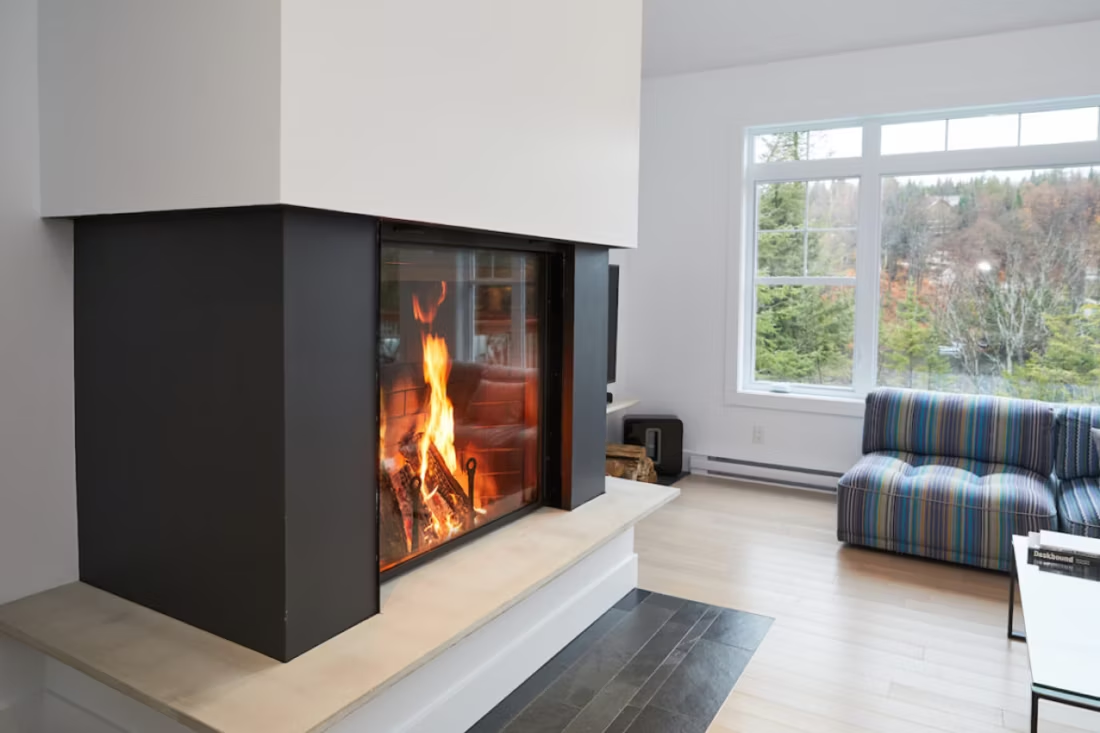
That's why wood is flagged as not-applicable for this area rather than standard—it isn't the default heating choice, and we won't pretend otherwise. Where wood-burning units still show up in Lyman: hunting camps and rural properties on the edge of town, homeowners who want a real fire for ambiance on the occasional cold snap, and folks who've lived through a hurricane-season outage and want a heat source that doesn't depend on the grid. Oak, pine, and pecan are all available locally from tree-removal services and rural land in Harrison County, so fuel sourcing isn't the obstacle—it's simply that most Lyman homeowners end up happier with a gas or electric fireplace for daily use.
Three steps. No salesperson until you're ready.
Tell us about your project
Your zip code, your situation, and the fuel you're leaning toward—or let the answers point you to one.
See what's actually available
The brands dealers within 100 miles genuinely carry—real options, never a catalog mirage.
Get your dealer & Project Guide
A trusted local dealer, plus the free Project Guide & Parts List that names every component of the job.
Frequently Asked Questions
Does a wood-burning fireplace actually make sense in Lyman's climate?
For most homes, not as a primary heat source. With winter lows averaging 42°F and only a short, mild winter heating season, Lyman's heating needs are a fraction of what a stove is designed to handle—a wood stove built for a place like Duluth, MN would run wildly oversized here and likely smolder rather than burn clean. Where it does make sense is as a secondary feature: a decorative fireplace for the rare hard freeze, a stove at a hunting camp without utility service, or a backup heat source for hurricane-season outages when the power can be out for days.
If wood heat isn't standard here, why would anyone still install one?
The most common reasons in Harrison County are hurricane preparedness, rural camps, and ambiance. Mississippi's Gulf Coast loses power for extended stretches after tropical storms, and a wood stove is one of the few heat sources that works with zero electricity—no blower, no igniter, nothing that depends on the grid. Beyond that, some homeowners on larger rural lots outside Lyman proper simply want a real wood fire on the two or three genuinely cold nights each winter, or are building a cabin or camp where running gas or a heavy electrical load isn't practical.
What does a wood stove or fireplace installation cost in Lyman?
Because demand is low, there isn't a deep bench of wood-specialist installers based in Lyman itself—most homeowners end up working with a hearth dealer out of the greater Gulfport-Biloxi area. Expect a similar range to national averages for a freestanding stove or insert, roughly $3,500 to $7,500 depending on the unit, chimney work, and hearth pad requirements, with new full masonry chimney construction running higher. Because the market here is thin, it's worth getting an in-home quote rather than assuming a price—venting a wood stove through a humid Gulf Coast roofline has its own considerations that a generic estimate won't capture.
What wood species are available locally if I do want to burn?
Oak, pine, and pecan are the three species most commonly available around Harrison County, usually from local tree-removal outfits or rural landowners clearing lots rather than a dedicated firewood industry. Oak is the workhorse—dense, slow-burning, and the best choice if you want real heat output. Pine is abundant and easy to come by but burns fast and produces more creosote, so it's better suited to occasional fires than daily use. Pecan is popular for its aroma and is often sold in small bundles for backyard fire pits and decorative use rather than home heating.
Do I need a permit to install a wood stove in Lyman?
Lyman is unincorporated, so building permit oversight runs through Harrison County rather than a city building department—it's worth calling the county directly before any installation to confirm current requirements, since permitting details aren't uniformly published for rural coastal parishes. The good news is there are no listed air quality non-attainment issues or wood-burning curtailment periods in this area, unlike some western cities, so once a permit is pulled there's no seasonal restriction on when you can burn.
If wood isn't the default, what do most Lyman homeowners choose instead?
Gas and electric fireplaces are both standard fits for this climate and cover the vast majority of installs in and around Lyman. Electric service comes through Mississippi Power Co, Coast Electric Power Association, or Singing River Electric Cooperative depending on your exact location, with residential rates running roughly 13.5 to 14.5 cents per kWh—reasonable enough that an electric fireplace insert is a low-cost way to add ambiance and supplemental heat without any venting or fuel storage at all. Gas units are the other common choice for homeowners who want real flame and heat output without dealing with cordwood.
Can a wood stove work as emergency heat during hurricane season?
Yes, and it's one of the strongest arguments for installing one here despite the mild climate. Gas furnaces need electricity to run their blowers and electric heat obviously needs grid power, but a properly installed wood stove keeps producing heat with the utility completely down—a real advantage after a storm knocks out Mississippi Power Co or Coast Electric Power Association service for days. If backup heat during outages is the main driver, tell your local dealer that up front so they size and vent the unit for reliable off-grid operation rather than just occasional ambiance use.
How do I maintain a wood-burning fireplace that only gets used a few times a year?
Infrequent use doesn't mean no maintenance—if anything, Gulf Coast humidity makes it more important. Moisture in the flue between uses can accelerate corrosion in metal chimney components, and unused chimneys are a common spot for wasps, birds, and other pests to move in over a Mississippi summer. An annual inspection before the first cold-weather use of the season, even for a unit that's lit twice a year, is the right baseline—check for nesting, moisture damage, and creosote before assuming the flue is clear.
Wood, gas, or electric—which is right for a Lyman home?
For year-round comfort and simplicity, gas or electric will serve most Lyman homes better—both are standard, well-supported choices here, gas gives instant real flame without fuel handling, and electric units are inexpensive to install and run on the area's roughly 14-cent kWh rates. Wood earns its place only in specific situations: hurricane-season backup heat that works without electricity, a hunting camp off the grid, or a homeowner who genuinely wants the ritual of a wood fire on the rare cold night. If any of those describe your situation, a local dealer can size a unit correctly for occasional, reliable use rather than daily heating.
Why is my open fireplace making my house colder?
Open fireplaces suck—literally. As the fire burns, it consumes air your furnace already paid to heat and pulls it out through the chimney, so the house is actually colder after the fire goes out than before you lit it. An insert fixes this: it seals the chimney, puts fixed glass across the front, and turns that hole in your house into a real heat source.
Do I have to leave the stove door cracked open to start a fire?
On many stoves, yes—a new fire needs extra air, and cracking the door a couple inches is how most stoves get it. But some modern stoves offer an automatic startup air system: engage it when you light, and timed air jets feed the fire for the first 20 minutes with the door fully shut, then close automatically. It's mechanical—like an egg timer, no electricity—and it means you can load it, light it, and walk away.
How much should I budget for a fireplace?
For an average home—covering the fireplace, the vent pipe, and basic installation—a budget between $3,900 and $5,500 gives you a lot of options across wood, gas, and pellet. By the time you add finish work, gas line, and electrical, the average complete installation lands between $5,000 and $12,000 all-in. In a remodel or new build, a good rule is to put about 2.5% of the total project cost toward the fireplace.
Can a fireplace actually lower my heating bill?
Yes—by creating a comfort zone. A furnace heats every square foot of the house just to warm the one room you're in; a gas fireplace on low burns roughly a sixth of the gas a typical furnace does. Set the furnace around 55–60 degrees as a baseline, then heat the rooms your family actually uses. Families who heat this way commonly save $20–$60 a month.
Nearby Dealers
Hearth shops serving Lyman and the surrounding area. Every listing shows whether it is a WhyFire partner, a dealer we have verified as authorized for the brands we recommend, or a local business carrying hearth products. No manufacturer pays for placement. How we verify dealers →
Top Hat Fireplace
Compton And Son Appliance
Magnolia Gas, Inc.
Find your wood fireplace option in Lyman.
Tell us about your home, your camp, or your backup-heat plans and we'll send a free Project Guide & Parts List—the right unit, the exact venting parts, and a trusted local dealer who actually installs wood stoves on the Mississippi Gulf Coast.
Find Your Fireplace →