
Find the right pellet stove for Lafayette County.
Mild winters, moderate heating needs, and a hopper-fed stove that runs itself—from Oxford to Taylor to Abbeville. Get matched with a trusted local dealer who can size, permit, and install it right.
Every Project Starts From One of These Five Situations
Convenient, clean heat for a mild-winter climate.
Lafayette County sits in climate zone 3A with about 3,068 heating degree days a year and average winter lows around 31°F—nowhere near the brutal stretches you'd see in a place like Duluth or Bismarck, but cold enough on the sharper January nights that a supplemental heat source pays for itself. For Oxford homes and the more rural stretches around Taylor and Abbeville, that's the sweet spot for a pellet stove: enough winter to justify the appliance, not so much that you need to feed it around the clock.
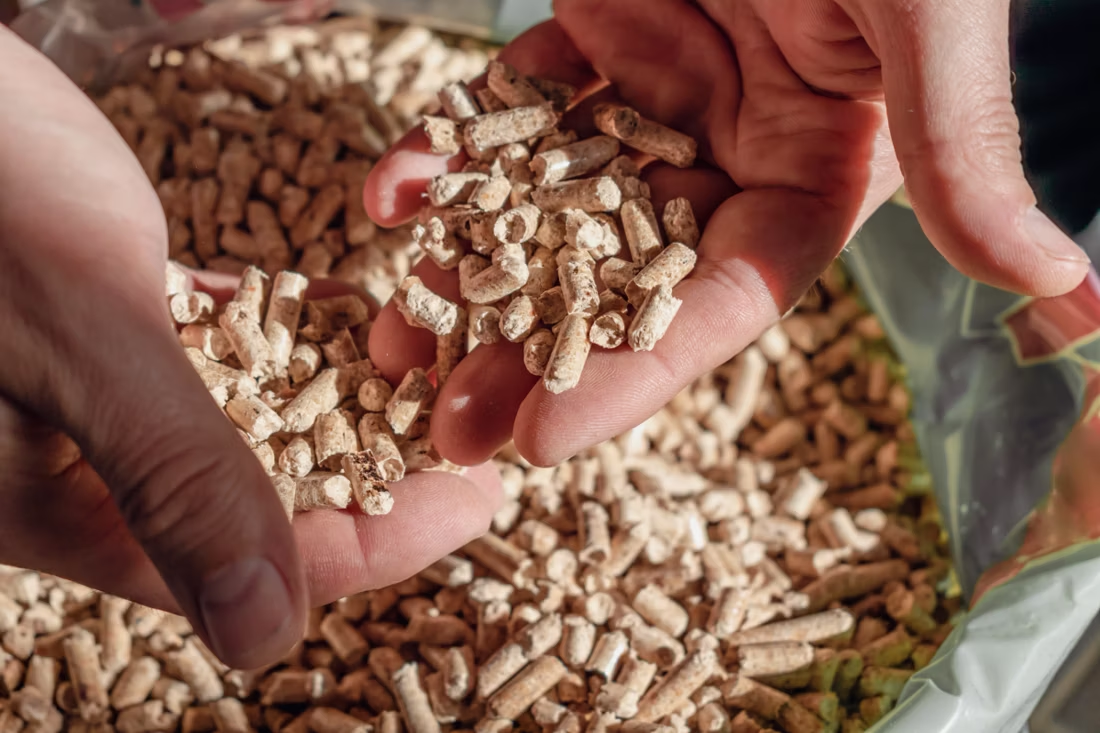
A pellet stove loads from a hopper, runs on a thermostat, and burns far cleaner than cordwood—no splitting, no stacking, no creosote buildup to worry about. Regional pellet brands including Lignetics, Hamer Pellet Fuel, and Greenway Renewable Energy supply the Mid-South, so fuel sourcing isn't a concern even though Lafayette County isn't deep pellet-stove country the way parts of the Northeast are. For a University of Mississippi rental, a farmhouse outside Taylor, or a newer build near Oxford, a pellet insert or freestanding stove delivers zone heat to the room you actually live in without touching your gas or electric bill much.
Three steps. No salesperson until you're ready.
Tell us about your project
Your zip code, your situation, and the fuel you're leaning toward—or let the answers point you to one.
See what's actually available
The brands dealers within 100 miles genuinely carry—real options, never a catalog mirage.
Get your dealer & Project Guide
A trusted local dealer, plus the free Project Guide & Parts List that names every component of the job.
Frequently Asked Questions
How much does a pellet stove installation cost in Lafayette County?
Pellet stove installations in Lafayette County typically run in line with national averages, with most freestanding units and inserts landing in the $4,500-$7,500 range once you factor in the stove, exhaust venting, and a hearth pad if code requires one. Homes with an existing masonry fireplace often come in on the lower end since a pellet insert can use the existing opening with a smaller vent kit. New construction or a stove placed away from an exterior wall—requiring longer horizontal venting runs—pushes toward the higher end. A local dealer will give you a firm number after seeing the room.
Does a pellet stove make sense in a mild climate like Lafayette County's?
Yes, though it plays a different role here than it would in a colder state. With roughly 3,068 heating degree days and winter lows averaging in the low 30s, most Lafayette County homes don't need a pellet stove as a primary heat source the way a home in International Falls or Fargo would. Instead, it works well as supplemental or zone heat—warming the living room or a converted garage on the coldest nights of the year while your existing HVAC handles the rest of the house. Because Oxford and the surrounding county don't see extended deep-freeze stretches, a mid-sized unit is usually plenty.
Where do I buy pellets in Lafayette County, and how much do they cost?
Regional brands including Lignetics, Hamer Pellet Fuel, and Greenway Renewable Energy supply the Mid-South and are typically stocked seasonally at farm supply stores and hearth retailers serving Oxford and the surrounding area. Because Lafayette County isn't a high-volume pellet market compared to colder states, expect to buy pellets by the bag or the ton in fall as supply comes in, rather than finding year-round bulk delivery like you might in the upper Midwest. A local dealer can point you to the closest reliable stock and help you estimate how many bags you'll go through in a typical Lafayette County winter.
What's the difference between a pellet stove and a pellet insert?
A pellet stove is a freestanding unit that sits on its own hearth pad and vents through an exterior wall or up through the roof—it can go almost anywhere with the right clearances. A pellet insert is built to slide into an existing masonry fireplace opening, converting that fireplace into a sealed, thermostat-controlled heat source using a smaller vent kit through the existing chimney. For Oxford homes with an older fireplace that rarely gets used, an insert is usually the more efficient upgrade. For a room without an existing fireplace—a den addition or converted garage—a freestanding stove is the better fit.
Do I need a permit to install a pellet stove in Lafayette County?
Most pellet stove installations require a building permit through the applicable jurisdiction—the City of Oxford for in-town installs, or Lafayette County for homes outside city limits—largely to confirm venting clearances and hearth pad requirements are met. Most local dealers handle the permit paperwork as part of the installation, so it's rarely something homeowners have to manage themselves. Because Lafayette County has no air quality non-attainment issues or burn restrictions, there's no curtailment period to work around—you can run the stove whenever you want, permit aside.
What's the best pellet stove for a home in Lafayette County?
Because winters here are moderate compared to a place like Burlington or Madison, most Lafayette County homes do fine with a mid-sized pellet stove rated for 1,000-1,800 square feet rather than a large-capacity unit built for round-the-clock cold-climate burning. Look for a model with a reliable auger feed and an easy-clean burn pot—since pellet stoves here often get used intermittently rather than daily, ease of startup and cleanout matters more than raw output. A local dealer can match hopper capacity and BTU output to your specific room size and how often you expect to run it.
How often does a pellet stove need to be cleaned and serviced?
Pellet stoves need the burn pot emptied and ash removed every few days of regular use, plus a deeper cleaning of the hopper, auger, and venting once a season—typically before the stove sees heavy use in December and January. Because Lafayette County's burning season is shorter than colder states', many homeowners get by with a single annual service visit in early fall rather than mid-season maintenance. A local dealer or hearth service provider can handle the annual inspection, which usually runs less than a wood-stove chimney sweep since there's no creosote buildup to deal with.
Will my pellet stove run during a power outage?
No—this is the one real tradeoff with pellet stoves. The auger, igniter, and combustion blower all run on electricity, so a pellet stove will shut down when the power goes out, unlike a wood stove which keeps burning regardless. Lafayette County doesn't see the kind of prolonged winter power outages you'd get in a heavier-snow region, but ice storms do occasionally knock out power locally. If backup heat during an outage is a priority, a wood stove or a pellet unit paired with a small battery backup or generator is worth discussing with your dealer.
Pellet stove vs. wood stove—which is right for my Lafayette County home?
Wood stoves burn local oak, pine, or pecan cordwood, work without electricity, and offer the classic look and smell of a real fire—but they require splitting, stacking, and regular chimney sweeps. Pellet stoves load from a bag, run on a thermostat, produce far less ash, and burn cleaner, but need electricity and a steady pellet supply. Given Lafayette County's moderate winters, many homeowners lean pellet for the low-maintenance convenience of occasional, thermostat-controlled heat rather than the more hands-on commitment wood requires. If you already have easy access to oak or pecan firewood and want a backup heat option that works without power, wood is worth a look too. A local dealer can walk through both options against your specific room and budget.
How often does a pellet stove need cleaning?
A clean pellet stove is a happy pellet stove. Plan on cleaning the burn pot about once a week when you're burning regularly—ash and clinkers gum up the air holes just like a pellet barbecue. Most pellet stove problems trace back to skipped cleaning that nobody explained up front. Some designs make it easy with a trapdoor burn pot: pull a lever and the gunk drops into the ash pan.
Why is a fireplace insert so efficient?
An insert does two things: it seals the chimney completely, so you stop losing air you already paid to heat, and it radiates warmth into the room through the firebox and glass. Most add a heat-exchange fan that pulls cool room air underneath, wraps it around the hot firebox, and pushes it back out warm. Your home is more efficient before you've even lit the first fire.
Does a fireplace add value to my home?
On average, a fireplace adds back to the home about the same amount you spent installing it. Add the monthly savings from heating the rooms you actually use instead of the whole house—often hundreds of dollars a year—and the value case is strong before you even count what a fire does for how your family uses the room.
Can a fireplace actually lower my heating bill?
Yes—by creating a comfort zone. A furnace heats every square foot of the house just to warm the one room you're in; a gas fireplace on low burns roughly a sixth of the gas a typical furnace does. Set the furnace around 55–60 degrees as a baseline, then heat the rooms your family actually uses. Families who heat this way commonly save $20–$60 a month.
Stove and Fireplace Dealers in Lafayette County
Pellet Brands Stocked Around Lafayette County
Manufacturers will point you to the nearest stocking dealer.
Get your Lafayette County pellet stove Project Guide & Parts List.
Tell us about your home and we'll match you with a trusted local dealer and send a free Project Guide & Parts List—the exact stove, vent kit, and installation plan for your Lafayette County pellet project.
Find Your Fireplace →